
COVER
Remove Your Knees on Nigeria’s Neck, NLC Tells IMF, World Bank

By David Torough, Abuja
Nigeria Labour Congress (NLC) yesterday took a swipe at the International Monetary Fund (IMF) saying it is to blame for the economic crisis in the country.
NLC was reacting to the denial of the international body of any role in Nigeria government’s removal of fuel subsidy and the implementation of other policies injurious to the masses.
The NLC President, Joel Ajaero in a statement told the World Bank and IMF to remove their knees from his country’s neck so it can breathe.
Ajaero said, “Nigeria Labour Congress (NLC) believes that it is cynical and indeed typical of the International Monetary Fund’s (IMF) to recently deny responsibility for the Nigerian government’s removal of petroleum subsidy.
“IMF and its cousin in economic mischief – the World Bank remains the twin forces that have longstanding pattern of recommending harsh and unworkable Economic policies to developing nations.
“In their usual subterfuge, they have continued to present these advisories as growth strategies but which have unfortunately often led to increased socioeconomic hardship and stagnation in Nigeria and other nations that have had the misfortune of drinking their poisoned chalice.
“At a press conference during the IMF and World Bank Annual Meetings in Washington DC, United States, Abebe Selassie, IMF’s African Region Director, described the decision to remove fuel subsidy by Nigeria’s government as a domestic one.
“IMF’s recent statement is a display of subterfuge and evasion. This denial of involvement in Nigeria’s subsidy removal, coupled with the assertion that it was a “domestic decision,” disregards the extensive influence that the IMF wields in policy formation within many developing countries. Despite this assertion, the IMF’s policy dialogues often suggest subsidy cuts as necessary steps toward fiscal sustainability.
“For Nigeria, where successive governments have frequently yielded to these recommendations, the IMF’s disavowal rings hollow, as it underplays the fund’s direct impact on the nation’s economic policies.
“The NLC has become more worried over this denial at this time which is another signpost of the already disturbing policies by the Nigerian government at the behest of the IMF and World Bank and which IMF is now trying to distance itself.
“It shows that the institution is working very hard to stay away from the blame or the backlash that its policy directions will bring in the future. IMF must know that Nigerians are not fools and we are always aware of the destructive influences its awful policy paths for Nigeria and indeed Africa has been.
“It is pretentious and truly too late to begin to deny complicity because we warned the government about the consequences of implementing IMF and World Bank-driven policies.
“As IMF and World Bank continue to pretend not to know the apparent obviousness of the social costs of its policy recommendations another layer of concern is added to the entire denial.
“While the IMF acknowledges the significant social costs involved, it casually suggests that governments can mitigate these hardships through its idea of expanded social protections which is a system that beggars the people forcing them to dwell on handouts in this case RICE that never gets to the people.
“The reality in Nigeria has continued to reveal a profound disconnect – subsidy removal and price hikes have pushed essential goods beyond the reach of many, with government-provided social safety nets remaining woefully inadequate.
“This gap between IMF recommendations and the lived experiences of Nigerians highlights a fundamental and deliberate oversight in the fund’s approach to economic policy.
“In distancing itself from Nigeria’s subsidy removal, the IMF also demonstrates an unsettling inconsistency in its advice to developing nations.
“It has repeatedly pressured Nigeria to undertake austerity measures, only to distance itself from the results when these recommendations bring hardship to the populace.
“This shifting narrative not only undermines the IMF’s credibility but also raises questions about the sincerity and reliability of its economic prescriptions for third-world nations.
“The IMF’s insistence that Nigeria is in full control of its economic policies stands in stark contrast to its historical and continued influence, which has often been accompanied by economic turmoil and hardship.
“NLC emphasizes the need for Nigeria and other developing countries to reclaim their economic sovereignty, resisting externally imposed policies that fail to consider local contexts and the needs of the masses.
“The NLC’s stance reflects a broader frustration with the World Bank and IMF’s recurring interventions, which prioritize fiscal metrics over social welfare.
“By advocating for policies that genuinely benefit Nigerians, we challenge the IMF’s influence and underscore the importance of economic autonomy in building a just, sustainable future.
“This once again is a powerful reminder to our leaders of the impact of international financial institutions on our people and the need to be circumspect in walking their path.
“The IMF’s denial of involvement in Nigeria’s subsidy removal rings hollow, considering its decades-long history of recommending similar austerity measures.
“We hope that our Economic handlers have learnt or are learning the appropriate lessons to sufficiently know that when ‘shit hits the fan’, IMF and World Bank will wash their hands off and leave the government carrying the burden and holding the wrong end of the stick.
“Nigeria must pursue policies that reflect the real needs of our citizens prioritize economic policies that drive growth, social welfare, and equity, not austerity measures that lead to further economic quagmire and social unrest.
“Once again, we call on the World Bank and IMF to remove their knees from our necks so that we can breathe as a nation. They have become the major problem we have as a nation and we may be forced to soon demand that they leave Nigeria entirely as their policies have continued to undermine our Economy and sabotage the people and the nation.
“IMF should not worry for we know that the Petrol price hike and the Electricity tariff hikes were domestic decisions but we also know that it is a case of Esau’s Hands but Jacob’s voice.“IMF should not present itself cowardly but should stand up and own up! That is what is called honesty and transparency which is the bedrock of IMF’s much-vaunted institutional integrity!”
By Tony Obiechina, Abuja
The Development Bank of Nigeria Plc (DBN) has launched DAWN: DBN Action for Women in Nigeria, unveiled its Impact Report and presented MSME Data Assets at the seventh edition of Annual Lecture held in Abuja.
DBN, in a statement on Thursday, said while delivering a welcome address, its Managing Director and Chief Executive Officer, Dr Tony Okpanachi, said the central challenge was no longer reforms themselves but ensuring benefits reach businesses at end of the chain.
He asked how to make sure benefits reach traders in Onitsha, fabricator in Aba, farmer in Kebbi and young founder in Yaba, noting that MSMEs accounted for about half of Nigeria’s GDP and more than eight in every ten jobs, adding that when reform works for MSMEs it works for most Nigerians.
He explained that reform becomes prosperity only when entrepreneurs can act on it whether through long tenor loans to buy equipment, banks willing to take risk or skills and records needed to grow.
He said working through Participating Financial Institutions DBN provides longer term funding, partial credit guarantees through subsidiary Impact Credit Guarantee Limited and capacity building including Entrepreneurship Training Programme.
He disclosed that as at December 2025 DBN had disbursed a cumulative N1.4 trillion to MSMEs through 84 Participating Financial Institutions creating about 1.6 million jobs nationwide.
Under the new five year strategy, the Bank aims to reach more than two million MSMEs with deliberate targets for women led businesses, youth led businesses and underserved states.
On DAWN, Okpanachi said finance alone had not enabled enough women-led businesses to scale.
He said initiative brings together financing, guarantees and credit support, technical assistance, outcome linked grants and market linkages delivered through banks, microfinance institutions, fintechs, aggregators, cooperatives and direct channels.
Its priority sectors are agriculture and exports, healthcare, arts and creatives, technology and green business.
He said DAWN is about moving gender focused lending beyond intention and turning access into opportunity.
On the sidelines of the lecture DBN and African Development Bank held a signing ceremony of AfDB DBN 61 million United States dollars Gender Line of Credit development that reinforces Bank commitment to women led enterprises.
Okpanachi urged Participating Financial Institutions to extend lending into sectors and states where access to finance has been limited, policymakers and regulators to measure reform by what changes for business at end of chain and MSMEs to formalise, keep good records and use support now available.
The Vice President as Special Guest of Honour was represented by Dr Fred Iklaga Senior Technical Adviser in the Office of Special Adviser to the President on Economy.
Keynote speakers were Chief Executive Officer of MTN Nigeria, Dr Karl Toriola, and Chairman of Nigeria Sovereign Investment Authority, Dr Segun Ogunsanya.
Fireside chat featured Chief Executive Officer of Sterling Bank Abubakar Suleiman, manufacturing and trade entrepreneur Mrs Omoyemi Chukwurah and by video Kola Masha of Babban Gona.
The Secretary to the Government of Federation, represented by Augusta Warren Bekaredebo, said 2026 tax reforms would bring relief to many small businesses expressing optimism that a lot of businesses will be smiling by next year because they will be exempted from tax.
By Tambaya Julius, Abuja
The Nigeria Labour Congress (NLC) has threatened possible nationwide industrial action following the failure of talks with the Federal Government over workers’ welfare, petrol prices and other outstanding labour demands.
The warning came after a meeting between the government and organised labour at the Ministry of Labour in Abuja on Thursday, October 22, ended without an agreement.
The congress has given the Federal Government until Tuesday, October 27, to make meaningful progress on the issues, warning that its relevant organs would decide the next line of action if the next meeting fails to produce concrete commitments.
The NLC has also directed its affiliates, state councils and civil society allies to begin mobilising members for possible nationwide action.
In a statement issued after the meeting, the NLC Acting General Secretary, Benson Upah, expressed disappointment over what he described as the government delegation’s lack of preparedness for the negotiations.
According to the congress, organised labour presented its demands in good faith but left the meeting without any concrete commitments from the government.
The demands include a reduction in petrol prices to 2024 levels, renegotiation of the national minimum wage, implementation of agreed tax relief measures and resolution of the terms of settlement involving the Joint Health Sector Unions (JOHESU).
The congress also called for the resolution of issues raised by the Joint Public Service Negotiating Council (JPSNC) over peculiar allowances, wage awards and hazard allowances.
The NLC said the government delegation lacked the necessary authority to engage meaningfully on the issues presented by labour representatives.
“The meeting between the Federal Government and organised labour, convened at the Ministry of Labour in Abuja on 22nd October 2026, has ended without resolution,” the statement said.
It added that the Minister of Labour requested that the meeting be adjourned until October 27 to allow the government to prepare adequately for further discussions.
The preparations, according to the statement, would include bringing relevant ministers and heads of departments and agencies to the negotiating table.
The congress said it remained open to dialogue but would not accept continued delays in addressing workers’ concerns.
“We will report back to our organs, and if no meaningful progress is made on Tuesday, the relevant organs of the NLC will decide the next line of action,” it said.
The labour body urged workers and members of the public to remain calm while the negotiations continue, even as it directed its affiliates and allies to prepare for possible industrial action.
“However, we urge all affiliates of NLC and TUC; all state councils and our civil society allies to be alert and start mobilising for a possible action across the nation while we hope that the tenets of our demands are met by the government,” the statement added.
The October 27 meeting is expected to provide another opportunity for both sides to address the outstanding issues and prevent a possible escalation of the dispute.
However, the NLC’s decision to begin mobilisation suggests that tensions could rise if the next round of talks fails to produce meaningful progress.
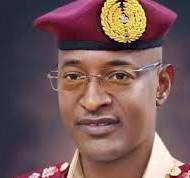
The Federal Road Safety Corps (FRSC) has barred its personnel from escorting politicians during campaigns for the 2027 general elections.
Zonal Commanding Officer, RS6, ACM Abimbola Owolabi, gave the directive during her maiden visit to the Cross River Command in Calabar on Wednesday.
Owolabi said patrol vehicles and sirens must not be used for political activities or private engagements, including weddings and funeral processions.
She directed officers deployed to campaign venues to focus exclusively on traffic management to prevent congestion and road crashes.
The zonal head warned personnel against leading political convoys or providing escorts for politicians, stressing that official vehicles must not be used for unauthorised purposes.




WPRF Delegates Leaving Nigeria with Positive Impressions, Says Customs CG
ShareBy Tambaya Julius, Abuja The Comptroller-General of the Nigeria Customs Service (NCS), Adewale Adeniyi, has said delegates attending the World...
Customs Suspends Training at Two Colleges over Recruitment Concerns
ShareBy Tambaya Julius, Abuja The Nigeria Customs Service (NCS) has temporarily suspended training activities at its two training colleges to...


INEC Shelves Comprehensive Voters’ Register Clean-Up
ShareBy Orjime Moses, Abuja The Independent National Electoral Commission (INEC) has said it will no longer conduct a comprehensive clean-up...
Protect The President, But Do Not Punish the People
ShareNo one disputes it: the security of the President of the Federal Republic of Nigeria cannot be compromised. Not for...
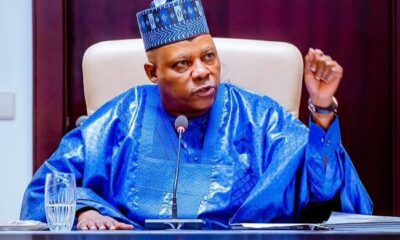

Shettima to Moniepoint: Provide Affordable Loans for Businesses
ShareBy Tony Obiechina, Abuja Vice-President Kashim Shettima has tasked Moniepoint Microfinance Bank to expand access to affordable loans for farmers,...

NDC Expresses Deep Sorrow over Bayelsa Boat Mishap
ShareFrom Mike Tayese, Yenagoa The Bayelsa State Chapter of the Nigeria Democratic Congress (NDC) has expressed deep sorrow over the...

INEC Releases 86,931 New PVCs for Collection in Kogi
ShareFrom Joseph Amedu, Lokoja A total of 86,931 PVCs for eligible registrants during the second phase registration exercise by the...
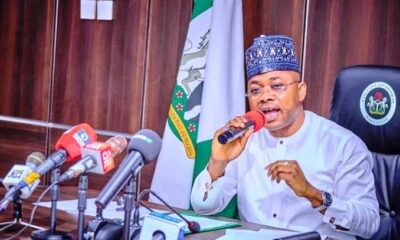

Ododo Approves Extension of Retirement Age for Health Professionals
ShareFrom Joseph Amedu, Lokoja Kogi state Governor, Ahmed Ododo has approved extension of the retirement age for eligible skilled clinical...
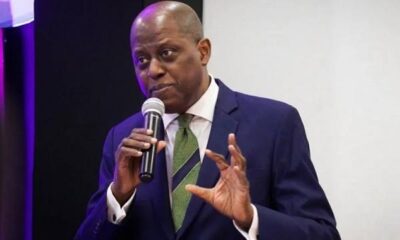

CBN Seeks Fair Representation in ECOWAS Monetary Union
ShareBy Tony Obiechina, Abuja The Governor of the Central Bank of Nigeria (CBN), Olayemi Cardoso, has called for equity, fairness...
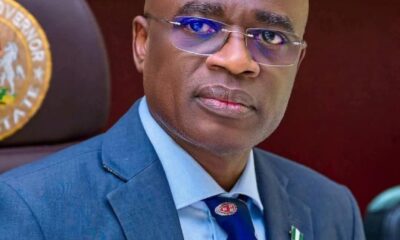

DAILY ASSET 10TH Annual Awards: Alia, Baze Varsity, Iornem Others Confirm Attendance
ShareBy Donald Andoor, Abuja Governor of Benue State, Rev Fr Hyacinth Iormem Alia, has confirmed attendance and participation at DAILY...