
NEWS
Reps pledge Support to Victims of Karu Market Inferno

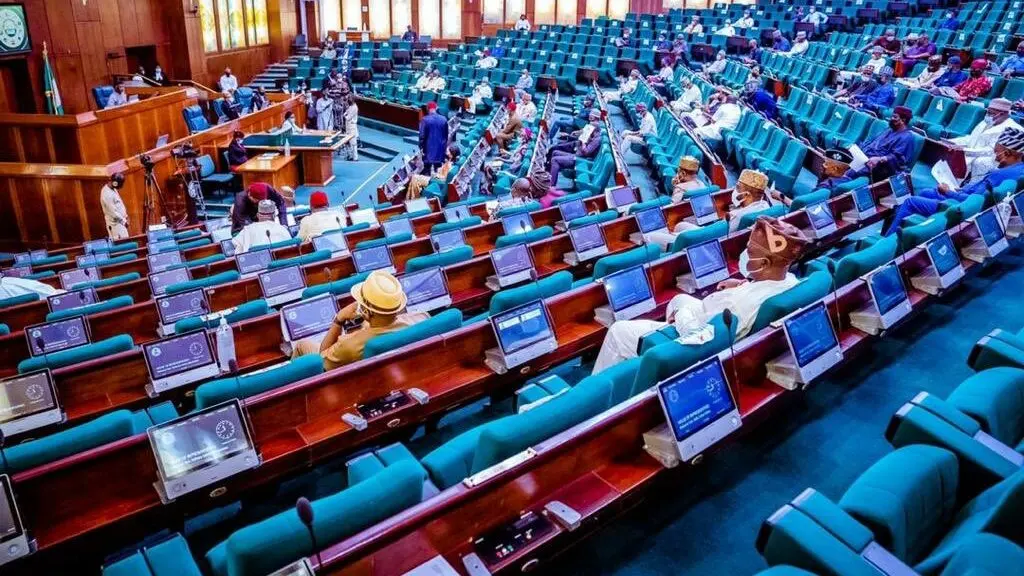
The House of Representatives has pledged support for the victims of the recent fire outbreak at Karu Market in the Federal Capital Territory
Hon. Fredrick Agbedi, Chairman House Committee on FCT Area Councils and Ancillary Matters made the pledge on Wednesday, during an assessment visit to the market
Agbebi who led other members of the committee on the visit, to assess the extent of damage by the fire outbreak, highlighted the significance of community market to local economy.
While acknowledging the severe impacts of the fire, Agbedi assured that the House would get the federal government to intervene in providing succour to the affected traders in a matter of days.
“We want to condole with our brothers and sisters who are traders in this market and have lost their valuables to the inferno.
“Upon hearing of the incident, we promptly communicated our condolences to the market association and those affected.
“As an assembly that makes laws for the FCT, we have come to identify with you as bonafide citizens who contribute to the development of the FCT and the nation,” he said
The lawmaker added that efforts were underway to collaborate with relevant authorities, including the Abuja Municipal Area Council (AMAC), the market union, FCT Administration, and federal agencies, to provide relief and support to the victims.
He also called on the National Emergency Management Agency (NEMA) and other federal agencies to assist in mitigating the impact of the disaster.
Earlier, the AMAC Chairman, Mr Christopher Maikalangu stressed the enormity of the impact of the fire outbreak, saying majority of the 1,300 traders in the market were affected.
“Honourable Chairman, the impact of the fire is devastating. You can see things for yourself.
“The affected traders need help. They need urgent intervention,” Maikalangu said.
Also speaking, the Chief of Karu, Joseph Narai, thanked the National Assembly members and AMAC Chairman for coming to commiserate with the traders.
He said many affected traders were in different hospitals as a result of shocks from the news of the inferno.
“Goods worth millions of Naira are lost to the inferno. In fact, many traders are still in shock because of the inferno.
The Chairman, Board of Trustees of the market, Suleiman Haliru, reiterated that many traders were affected and they needed urgent help .
He underscored the need for improved safety measures in FCT markets, as well as robust support systems for traders. (NAN)
Education
Makurdi Old Boys Association Inaugurates BOT October 17, Launches N1bn Secretariat Project Fund

Government College Makurdi Old Boys Association (MOBA) has completed arrangements to inaugurate its Board of Trustees (BOT) October 17, at the school premises.
The high profile event will also witness the launch of N1billion Appeal Fund for the construction of its National Secretariat Project.
A statement by the Association’s National President, Dr Cletus Akwaya and the Central Planning Committee Chairman Cmrd.
Stephen Tadawus, reminded all members of the National Executive Committee (NEC), Board of Trustees Members-designate, invited Guests, and the entire MOBA family to attend the event punctually at Government College Assembly Hall, Makurdi beginning by 10:00AMThe statement said the Governors of Benue state, Rev.
Fr. Dr. Hyacinth Iormem Alia; Plateau state, Barr. Caleb Manasseh Mutwang; Nasarawa, Engr. A. A. Sule and Bauchi, Sen. Bala Abdulkadir Mohammed are expected to grace the occasion as distinguished guests of Honour.Similarly, the Commissioner for Education and Knowledge Management, Benue State, Dr. Adamu Margaret Ijaguwa and Executive Secretary, Teaching Service Board, Benue State, Dr. Bem Tseen have been invited as Special Guests, the statement said.
It named members of the Board of Trustees (BOT) to include Prince Yandev Amaabai, Senator Joshua Chibi Dariye, Senator Gabriel Torwua Suswam, Hon Hassan El Yakub SAN- Hon, Alhaji Abubakar Giza, Prof. Terna Yawe, Chief Rebo Usman, Dr. Dader Mazadu Bako, Engr. Ali Rabiu, Prof. John Wade, Arc. Terseer Dankaro and Titus Ihunduas Secretary of the Board.
This event marks a new chapter in the life of the Association. We request all Old Boys to massively turn out and support the cause of giving back to their Almamater,” the statement further said adding, All concerned are therefore, requested to come together to make this historic event a success and to contribute generously towards the completion of Makurdi Old Boy’s Associations’ National Secretariat Project.”

Lagos State Govornor Babajide Sanwo-Olu of has described Prince Tajudeen Olusi, Chairman of the Governance Advisory Council of the Lagos Chapter of All Progressives Congress (APC), as an epitome of loyalty, trust, integrity and wisdom.
Sanwo-Olu said this in a congratulatory message to Olusi, the Baba Adini of Yorubaland and Atobatele of Ekiti, on his 90th birthday anniversary.
The governor described the nonagenarian as a father, whose counsel helped his administration to navigate challenges.
“Baba has taken me as a son; in fact, I am his political son.
He has guided me and offered advice on several occasions on matters of politics and governance while maintaining respect for the office I occupy.“He is a rare human being, whose wisdom, patience and peacemaking abilities remain invaluable,” he said.
Sanwo-Olu said Olusi remained a repository of knowledge on the political and historical development of Lagos and the old Western Region of Nigeria.
According to him, the elder statesman has an exceptional understanding of Nigeria’s political evolution.
“He can effortlessly recount events that shaped political decisions, from the days of the late sage Chief Obafemi Awolowo’s Action Group to the current republic,” he said.
The governor also commended Olusi for his loyalty to the APC.
“Baba Olusi firmly believes that the party is supreme.
“He often emphasises that no political group or association can stand the test of time if members fail to respect and abide by the party’s decisions,” Sanwo-Olu said.
He prayed for a longer life and continued good health for the elder statesman.
“On behalf of my family and the good people of Lagos State, I pray that Baba enjoys good health for the rest of his life.
“I wish Prince Oluyole Olusi a happy 90th birthday anniversary,” the governor said. (NAN)

By Tony Obiechina, Abuja
The Director-General of the National Pension Commission (PenCom), Omolola Oloworaran, on Tuesday disclosed that more than 241,000 retirees under the Contributory Pension Scheme (CPS) have benefited from increases in their monthly pensions under the reforms introduced by President Bola Tinubu’s administration.
According to Oloworaran the adjustment, implemented under Pension Boost 1.
0, raised the combined monthly pension payments to the beneficiaries from N12.15bn to N14.83bn.She described the increase as a landmark reform, noting that it was the first time retirees under the contributory pension scheme had received a pension adjustment across the board.
She said the initiative was designed to improve retirement security and ensure that pensioners benefit from reforms in the country’s pension industry.
The PenCom boss also announced a major review of pensions under the Nigeria Social Insurance Trust Fund (NSITF), saying beneficiaries had waited 21 years for an adjustment.
She said the commission invoked the relevant legal provisions to facilitate the review, which resulted in a 1,173 per cent increase in pensions for eligible NSITF retirees.
The adjustment raised the combined monthly pension payments to 2,168 NSITF retirees from N12.56m to N159.95m.
Oloworaran added that the Federal Government had paid N8.7bn in outstanding pension arrears owed to the beneficiaries, bringing relief to retirees who had waited years for their entitlements.
She said beyond the NSITF pension review, the Tinubu administration had approved a N758bn intervention to settle inherited federal government pension liabilities, some of which had remained outstanding since 2007.
According to the PenCom director-general, payments under the intervention had reached hundreds of thousands of beneficiaries, helping to clear obligations accumulated over successive administrations.
She further disclosed that accrued pension rights were being credited to eligible federal employees ahead of retirement following a verification and enrolment exercise covering workers due to retire up to December 2029.
Oloworaran said the commission had also introduced a zero-waiting-time policy to ensure that federal employees begin receiving their pensions upon retirement, eliminating the prolonged delays that previously characterised the process.
She added that retirement benefit applications, which had taken up to 21 months to process, were now subject to a mandatory 48-hour service standard for pension fund administrators.
The reforms, she explained, were aimed at improving service delivery and ensuring that retirees could access their entitlements without unnecessary bureaucratic delays.
The PenCom DG also highlighted the introduction of an exit benefit scheme for eligible employees of treasury-funded ministries, departments and agencies with at least 10 years of qualifying service.
Under the scheme, eligible retirees receive an additional benefit equivalent to 100 per cent of their annual emoluments, alongside their normal pension benefits.
Oloworaran disclosed that the first batch of 175 retirees received approximately N1.1bn under the scheme in August
While improving benefits for existing retirees, she said PenCom was also working to expand pension coverage to Nigerians in the informal sector, including traders, artisans, farmers and transport workers.
She explained that the commission was deploying accredited pension agents to markets, workshops and other business locations to encourage self-employed Nigerians to participate in the Personal Pension Plan.
The initiative, she said, was intended to address low pension penetration in the informal sector and provide more Nigerians with opportunities to build retirement savings.
Providing an update on the growth of the pension industry, Oloworaran said 938,229 Nigerians joined the pension scheme between July 2024 and June 2026.
She added that pension assets increased from N20.7tn in July 2024 to N31.48tn in June 2026, representing growth of more than N10.7tn in less than two years.
The director-general also disclosed that PenCom had recovered N36.6bn from employers who failed to remit pension contributions deducted from workers’ salaries as of July 2026.
She said recoveries in 2025 set a record for annual collections since the introduction of the Contributory Pension Scheme, adding that the commission had already surpassed the previous year’s record in 2026.
Oloworaran warned employers against deducting pension contributions without remitting them into workers’ Retirement Savings Accounts, describing the practice as a breach of trust and the law.
Going forward, she said the commission was preparing to introduce additional measures to strengthen retirement security, including a minimum pension guarantee and a healthcare programme for low-income retirees.
The proposed healthcare initiative, known as PenCare, is expected to provide essential medical services at no cost to an initial 30,000 eligible retirees.
She explained that the minimum pension guarantee would establish a floor below which eligible retirees under the contributory pension scheme should not receive pension payments.
According to her, the two initiatives are part of broader efforts to strengthen social protection, improve retirement outcomes and expand access to pension benefits.
Oloworaran also disclosed that PenCom had begun work on a Pension Transformation Agenda 2030, which would establish clear priorities and measurable targets for the industry while strengthening accountability in pension administration.
She said the commission would continue to focus on protecting contributors’ savings, improving the payment of retirement benefits and ensuring that more Nigerians could look forward to financial security after leaving active employment.



Makurdi Old Boys Association Inaugurates BOT October 17, Launches N1bn Secretariat Project Fund
ShareGovernment College Makurdi Old Boys Association (MOBA) has completed arrangements to inaugurate its Board of Trustees (BOT) October 17, at...


Sanwo-Olu Celebrates Prince Olusi at 90
ShareLagos State Govornor Babajide Sanwo-Olu of has described Prince Tajudeen Olusi, Chairman of the Governance Advisory Council of the Lagos...


Akwanga Set to Host Dignitaries for Spotlight Magazine Launch
ShareBy Tambaya Julius, Abuja Akwanga, Nasarawa State, is set to host prominent personalities from within and outside the state as...


Mbah Tasks SEDC on Gas Pipeline, Support for Industrial Revolution
ShareFrom Sylvia Udegbunam, Enugu Enugu State Governor, Dr. Peter Mbah, has urged the South East Development Commission (SEDC) to prioritise...


PVCs of 2026 Registrants Not Available Yet — INEC
ShareThe Independent National Electoral Commission (INEC) said Permanent Voter Cards (PVCs) for persons who registered between Jan. 5 and July...

Rainbow Coalition: Wike Assures APC Governors Have Nothing to Fear
ShareBy Laide Akinboade Abuja Minister of the Federal Capital Territory (FCT), Nyesom Wike, has defended the emerging political coalition supporting...

Group Welcomes Appointment of Adeleke as Tinubu’s Campaign Coordinator
ShareFrom Ayinde Akintade, Osogbo The Imole Campaign Council (TICC) has welcomed the appointment of Governor Ademola Adeleke as the Osun...


FG Raises Pensions from N12.15bn to N14.83bn for 241, 000 Retirees
ShareBy Tony Obiechina, Abuja The Director-General of the National Pension Commission (PenCom), Omolola Oloworaran, on Tuesday disclosed that more than...

Wike Accuses NLC of Politicizing FCT Teachers’ Strike
Share By Tambaya Julius, Abuja The Minister of the Federal Capital Territory (FCT), Nyesom Wike, has accused the Nigeria Labour Congress...


APC Unveils Revised 2027 Presidential Campaign Council, Retains Yari, DG
ShareBy Tambaya Julius, Abuja The All Progressives Congress (APC) has unveiled its revised Presidential Campaign Council for the 2027 general...