
Business News
Reps Reject Disengagement of Local Contractor from $100m Loan to Fight Malaria

By Ubong Ukpong, Abuja
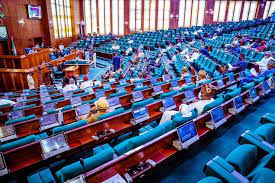
The House of Representatives Committee on HIV/AIDS, Tuberculosis and Malaria has lampooned the Ministry of Health over the disengagement of a local contractor in a $100 million loan agreement between Nigeria and the Islamic Development Bank meant to address the challenge of malaria in the country.
Chairman of the Committee, Hon Amobi Ogah in a stakeholders meeting to address the matter was displeased that succour that was expected through the intervention was yet to materialize even after signing the agreement in 2022.
In his ruling at the meeting, Amobi directed that Minister of Health, Prof Ali Muhammad Pate, who was in attendance to provide a comprehensive report of the transactions pertaining to the agreement to the committee within two weeks.
The report is expected to explain in detail why the local vendors approved for the agreement were disqualified and not given access to the job.
Amobi said the meeting was to resolve the logjam that seemed to have crippled the implementation of the Islamic Bank Loan to support malaria elimination in Nigeria under the Lives and Livelihood Project.
He said the project aims to reduce under-five mortality in Nigeria from 132 to 79 per 1,000 births by 2030.
“We are aware that Malaria continues to exert a huge burden on majority of Nigerians, with the greatest toll affecting children under 5 and pregnant women. Nigeria contributes 27% of the global malaria cases, (World Malaria Report, 2021) and 31% of global Malaria deaths. In view of this sad story every effort must be made to support any initiative that attempts to reduce or eliminate malaria burden in Nigeria.
“However we are at a loss as to the reason why the Loan agreement between Nigeria and the Islamic Bank which is expected to last for 3 years, that is terminating by end of this year, has suffered monumental setback and we as the Parliament, representing the people of Nigeria who are affected and ravaged daily by malaria epidemic cannot fold our hands and watch matters degenerate so badly, hence our intervention in this matter.
“The Committee on ATM under my leadership has set a clear vision that it will no longer be business as usual, that Nigeria and Nigerians should be the focus of Government policies and programs. It is said that when two elephants fight, it is the grass that suffers and, in this case, we know the grass; the grass is Nigerians ravaged and battered by malaria and the opportunity to receive succour through the intervention of the Islamic Bank loan is yet to materialise after the signing of agreement in 2022. We however, don’t know whether the Elephants fighting here is the Ministry of Health and Social Welfare? Or is it the Local Manufacturers of Insecticidal Nets? Or is it UNOPS?
“While the Committee is eager to hear from all the parties involved in this saga, we will make it categorically clear that as a Parliament we will not tolerate any entity that will toy with the lives of our people, we must think locally and grow our local capacity to ensure that malaria is eradicated from our Country.
“There is nowhere in the world that sovereign laws of a State are not respected and obeyed and the Parliament will guard jealously the laws of the Federal Republic of Nigeria as it relates to Executive Orders and no entity or non state actors should go contrary to these Laws.
“We must put our House in order if we must win the fight against malaria, we cannot continue to pursue shadows and keep running in cycles while leaving out the substance and our people are worst for it. We must say enough is enough and be genuinely ready to do something meaningful for Nigeria and Nigerians. Therefore this contractual logjam must be resolved today one way or the other,” he said.
The Health Minister, Pate, said the agreement was reversed because there were issues with the local producer.
He said according to the design of the loan, there was an agreement by the government to utilise a United Nations procurement agent, UNOPS, and a Memorandum of Understanding was signed.
“The provisions for all commodities, drugs test kits would be channelled through UNOPS in particular, those that are going to be produced here should be bought here. For bed nets in specific terms, the original MOU was for the bed nets to be procured using national competitive bidding on the assumption that they were three local producers who are prequalified.
“Of the three only one was prequalified and that is the company in the country that was to be involved. The tender process started in early 2023. The process ran into procedural difficulty and it was suspended by UNOPS in an open and transparent manner and investigated. Consequently the MOU was reversed because there were issues with this sole producer. Amendment was made to go for international competitive bidding and that revised MOU was signed by a member of the government,” he said.
He acknowledged that the country still has a malaria challenge and the Islamic Development Loan is a major effort that started four years ago as part of Nigeria’s effort to achieve malaria elimination.
He said, “It is a $100 million loan that was meant for five states, Bayelsa, Edo, Enugu, Kogi and FCT. The Federal Government signed and negotiated the loan and also state level legal agreements with those five entities were constructed by the Islamic Development Bank though and the Ministry of Finance so that they are borrowing that money to implement the malaria programme.”
According to him, the $100 million dollars consisted of a $90 million loan that is repayable and a $10 million grant.
He said, “This was done in 2020 and the implementation activity started. Since that loan was signed and became effective, a total of $62 million was disbursed through the UNOPS in two tranches. For the Ministry of Health only $201, 000 dollars has been spent from the proceeds at the federal level.
“Of what has been disbursed to UNOPS as the procurement agent as per the agreement that was designed and signed by the federal government on behalf of those states for this loan, there is a balance of $54 million that is still with UNOPS. So only about $8 million dollars has been utilised in buying drugs, kits, and commodities necessary as part of the programme and on their way to be delivered because UNOPS was agreed to be the procurement agents.
“So the $54 million that is at hand is what we are looking at how it can be executed. There is another part of the loan that has not yet been disbursed to UNOPS. So if you look at it almost 90 percent of this resource is yet to be activated and 98 percent of it all is yet to be activated and utilised.”
Director and Representative of the UNOPS, Ghana Multi Country Office, Ifeoma Charles-Monwuba, said there was an anomaly with local contractor lacked capacity hence the need to terminate their agreement.
She said, “The agreement with UNOPS was signed in September 2022, however there was a clause inserted that meant that that if it did not become effective until December 2022 and by January 2023 we did a training for local vendors that were supposed to participate, we did a training for them and by February 2023 the tender launched.
“Like the Minister said in evaluating particularly the bed nets, they were issues. For the antimalarial drugs, all the anti medicines have been procured and all locally procured. All have undergone quality control testing and we have written to the national malaria programme to bring the distribution list so the local manufacturer can distribute that.
“So local manufacturing and procurement of medicine has been done. For the medicine not manufactured locally, it was agreed to be procured internationally. Shipments have started arriving. All the other products are already on track and it’s the bed nets that is the issue.”
The Committee said according to a submission by UNOPS, a United Nations agent, employed as the procurement agent for the project the reasons for dropping the local contractor were unclear.
It said according to the submission there were conflicting reasons given for the action including that it was due to an anomaly, that the local contractor lacked capacity, that they needed to change specifications and that they had information from a whistleblower on why the agreement should be discontinued.
Responding, the Committee Chairman, Ogah, said, “With due respect, what UNOPS has done in this transaction is so bad because if they can tell us as a country that they cannot tell us what the local manufacturer has done that made them disqualify this local manufacturer. The reason why we are all here is because of Nigeria. If it is a grant or aid it would be different. We are here because it is a loan that we are going to pay back with interest. We demand a report from the Ministry
“Anything that would undermine our quest to encourage local producers and manufacturers we seriously frown on it. All of a sudden the whole intent and purpose were changed in favour of foreign bid to supply the materials whereas as we have one which you earlier pre-qualified and all of a sudden it was set aside to encourage foreigners to supply the net in Nigeria,” he said.
The Speaker, Rt Hon Tajudeen Abbas, who was represented by the House Leader, Prof Julius Ihonvbare, hoped the matter would be resolved amicably.
“With the calibre of members of the committee, I have no doubt that whatever is causing the challenge would be resolved.
“We have a commitment to protect the local market and producers and encourage local production to prevent capital flight and encourage the development of skills and capacity to do better.
“We are shocked the matter has lasted this long. Many of us come from rural constituencies with poor access to medical services and we know now our people are suffering, so for an Mou to be signed and it has taken over four years is an embarrassment and hope we can resolve the matter and find the way forward,” he said

By Tony Obiechina, Abuja
The Budget Office of the Federation has reaffirmed the integrity of Nigeria’s newly enacted Tax Reform Acts, cautioning against what it described as governance by speculation and unverified claims following allegations of post-passage alterations.
In a statement on Wednesday, the Budget Office said it had taken note of concerns raised by the Minority Caucus of the House of Representatives, stressing that the sanctity of the law is central to constitutional democracy and not a mere procedural formality.
According to the Office, any suggestion that a law could be altered after debate, passage, authentication, and presidential assent without due process would strike at the core of the Republic and undermine citizens’ right to be governed by transparent and stable laws.
However, it warned that democratic integrity is also endangered by the careless amplification of unverified claims. “A nation cannot be governed by insinuation or sustained on circulating documents of uncertain origin,” the statement noted, adding that public confidence, once shaken by speculation, is often difficult to restore.
The Budget Office emphasized that both government and citizens share a common interest in truth, clarity, and due process, noting that public finance depends heavily on trust in the legality and clarity of fiscal laws. It welcomed the decision of the National Assembly to investigate the allegations, describing institutional inquiry, not conjecture as the appropriate response to claims of illegality.
On public access to the law, the Office agreed that Nigerians and the business community are entitled to clear and authoritative texts of all laws they are required to obey. It clarified, however, that the authenticity of legislation is determined by certified legislative records and official publication processes, not by informal or viral reproductions.
The statement also underscored the importance of separation of powers, warning that claims suggesting Nigeria is being governed by “fake laws,” if not backed by established facts, risk eroding confidence in democratic institutions.
At the same time, it stressed that legislative scrutiny should not be dismissed by the executive, noting that oversight is a constitutional duty, not an act of hostility.
From a fiscal perspective, the Budget Office said legal certainty is essential for revenue projections, macroeconomic stability, budget credibility, and investor confidence. While it is not the custodian of legislative records, it maintained that uncertainty around operative tax provisions directly affects economic planning.
To restore confidence, the Office proposed a set of measures, including the publication of verified reference texts in a single public repository, orderly access to Certified True Copies for stakeholders, clear public explanations where discrepancies are alleged, and strict alignment of all implementing regulations with authenticated legal texts.
Addressing calls for suspension of the tax reforms, the Budget Office cautioned against allowing prudence to slide into paralysis. It argued that properly implemented tax reform is necessary to reduce dependence on borrowing and inflationary financing, while easing indirect burdens on vulnerable citizens.
“Where clarification is required, it must be provided; where correction is required, it must be effected; where investigation is required, it must proceed,” the statement said, adding that governance and reform should not be stalled by unresolved conjecture.
The Office concluded by describing taxation as a democratic covenant that binds citizens and the state, insisting that compliance depends on transparency and trust. It called on political actors to protect institutions as much as positions, urging citizens and businesses to rely on verified sources and resist the spread of unauthenticated information.
The statement was signed by Tanimu Yakubu, Director-General of the Budget Office of the Federation, who reaffirmed the agency’s commitment to fiscal transparency, institutional integrity, and reforms that advance national prosperity while safeguarding citizens’ rights.
By Jennifer Enuma, Abuja
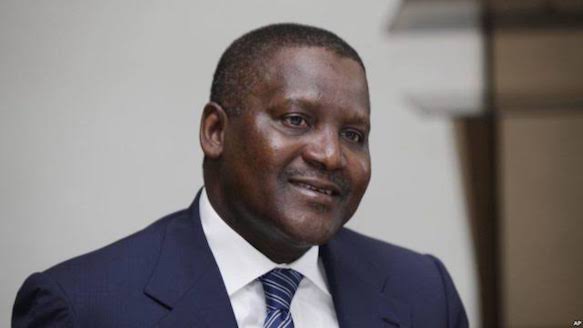
President Bola Tinubu has congratulated Alhaji Aliko Dangote, the President of Dangote Group, on his appointment to the World Bank’s Private Sector Investment Lab, a body tasked with promoting investment and job creation in emerging economies.
In a statement by Special Adviser on Media and Publicity, Bayo Onanauga, the President described the appointment as apt, given Dangote’s rich private sector experience, strategic investments, and many employment opportunities created through his Dangote Group.
The Dangote Group became one of Africa’s leading conglomerates through innovation and continuous investment.
Dangote Group’s business interests span cement, fertiliser, salt, sugar, oil, and gas. However, the $20 billion Dangote Petroleum Refinery and Petrochemicals remains Africa’s most daring project and most significant single private investment.
“President Tinubu urges Dangote to bring to bear on the World Bank appointment his transformative ideas and initiatives to impact the emerging markets across the world fully” the statement said.

The World Bank announced Dangote’s appointment on Wednesday, as part of a broader expansion of its Private Sector Investment Lab. The lab now enters a new phase aimed at scaling up solutions to attract private capital and create jobs in the developing world.
The CEO of Bayer AG, Bill Anderson, the Chair of Bharti Enterprises, Sunil Bharti Mittal, and the President and CEO of Hyatt Hotels Corporation, Mark Hoplamazian, are on the Private Sector Investment Lab with Dangote.
The World Bank said the expanded membership brings together business leaders with proven track records in generating employment in developing economies, supporting the Bank’s focus on job creation as a central pillar of global development.
By Joel Oladele, Abuja
The Nigeria Customs Service (NSC) has generated an impressive N1,751,502,252,298.05 in revenue during the first quarter of 2025.
The Comptroller-General (CG) of the Service, Bashir Adeniyi, disclosed this yesterday, during a press briefing in Abuja.
According to Adeniyi, the achievement not only surpasses the quarterly target but also marks a substantial increase compared to the same period last year, reflecting the effectiveness of recent reforms and the dedication of customs officers across the nation.
“This first quarter of 2025 has seen our officers working tirelessly at borders and ports across the nation.
I’m proud to report we’ve made real progress on multiple fronts—from increasing revenue collections to intercepting dangerous shipments,” Adeniyi stated.He attributed this success to the reforms initiated under President Bola Tinubu’s administration and the guidance of the Honourable Minister of Finance and Coordinating Minister of the Economy, Olawale Edun.
The CG noted that the revenue collection for Q1 2025 exceeded the quarterly benchmark of N1,645,000,000,000.00 by N106.5 billion, achieving 106.47% of the target. This performance represents a remarkable 29.96% increase compared to the N1,347,705,251,658.31 collected in Q1 2024.
Adeniyi highlighted the month-by-month growth, noting that January’s collection of N647,880,245,243.67 surpassed its target by 18.12%, while February and March also showed positive trends.
“I’m pleased to report the Service’s revenue collection for Q1 2025 totaled N1,751,502,252,298.05.
“Against our annual target of N6,580,000,000,000.00, the first quarter’s proportional benchmark stood at N1,645,000,000,000.00. I’m proud to announce we’ve exceeded this target by N106.5 billion, achieving 106.47% of our quarterly projection. This outstanding performance represents a substantial 29.96% increase compared to the same period in 2024, where we collected N1,347,705,251,658.31.
“Our month-by-month analysis reveals even more encouraging details of this growth trajectory,” Adeniyi said.
In addition to revenue collection, Adeniyi said the NCS maintained robust anti-smuggling operations, recording 298 seizures with a total Duty Paid Value (DPV) of ₦7,698,557,347.67.
He stated that rice was the most seized commodity, with 135,474 bags intercepted, followed by petroleum products and narcotics.
“From rice to wildlife, these seizures show our targeted approach,” Adeniyi remarked, noting the NCS’s commitment to combating smuggling and protecting national revenue.
Adeniyi also highlighted key initiatives, including the expansion of the B’Odogwu customs clearance platform and the launch of the Authorized Economic Operators Programme, which aims to streamline processes for compliant businesses. The NCS’s Corporate Social Responsibility Programme, “Customs Cares,” was also launched, focusing on education, health, and environmental sustainability.
Despite these achievements, the CG noted that the NCS faced challenges, including exchange rate volatility and non-compliance issues. Adeniyi acknowledged the need for ongoing adaptation and collaboration with stakeholders to address these challenges effectively.
Looking ahead, the NCS aims to continue its modernization efforts and enhance service delivery, ensuring that it remains a critical institution in Nigeria’s economic and security landscape.
“Results speak louder than plans; faster clearances through B’Odogwu, trusted traders in the AEO program, and measurable food price relief from our exemptions. We’ll keep scaling what works,” he concluded.
 |




11-year-old Girl Found Dead in Suleja Well, Church Guard Arrested
ShareFrom Dan Amasingha, Minna The disappearance of 11-year-old Christabel Albert after she left home for a birthday celebration has ended...

Jonathan Receives Bayelsa East APC Candidates
ShareFrom Mike Tayese, Yenagoa Former President of Nigeria, His Excellency, Dr. Goodluck Ebele Jonathan, has commended the quality, experience and...


2027: Delta APC Inaugurates Support Groups for Tinubu, Oborevwori
ShareFrom Francis Sadhere, Delta The Delta State chapter of the All Progressives Congress (APC) has inaugurated two political support groups...

‘Transformative Agenda to Critical Sectors are My Rescue Mission’ – Dauda
ShareFrom Ifeanyichukwu Nwannah, Gusau. Governor Dauda Lawal of Zamfara State, Dauda Lawal has declared that his administration’s rescue mission is...

Yari Urges Northerners to Honour Power Rotation, Back Tinubu’s Eight-Years Presidency
ShareFrom Rabiu Sanusi Kano Former Zamfara State Governor and Director-General of the All Progressives Congress (APC) Presidential Campaign Council, Senator...

Otu Reinstates 3,000 Sacked LG Workers
ShareFrom Ene Asuquo, Calabar Cross River State Governor, Senator Prince Bassey Edet Otu, has approved the restoration of about 3,000...

First Lady Mobilises Women for Tinubu’s Re-election
ShareNigeria’s First Lady, Sen. Oluremi Tinubu, is set to host more than 20,000 women stakeholders in Abuja today as part...
NAFDAC Seeks International Support to Revive Vaccine Manufacturing in Nigeria
ShareThe National Agency for Food and Drug Administration and Control (NAFDAC) has solicited international partners’ support for establishing vaccine manufacturing...


IOM Empowers IDPs with Skills, Cash in Zamfara
ShareFrom Ifeanyichukwu Nwannah, Gusau Over one hundred residents, persons with disabilities, Internally Displaced Persons (IDPs), and other vulnerable groups in...
Diagnosis at 66: Nigeria’s Healthcare Landscape
ShareBy Racheal Abujah When Nigeria gained independence on Oct. 1, 1960, it held immense promise. Sixty-six years later, healthcare delivery...