
NEWS
Reps Summon CBN, DISCOs, Contractors over Alleged misuse of $321m Loans for Electricity Projects

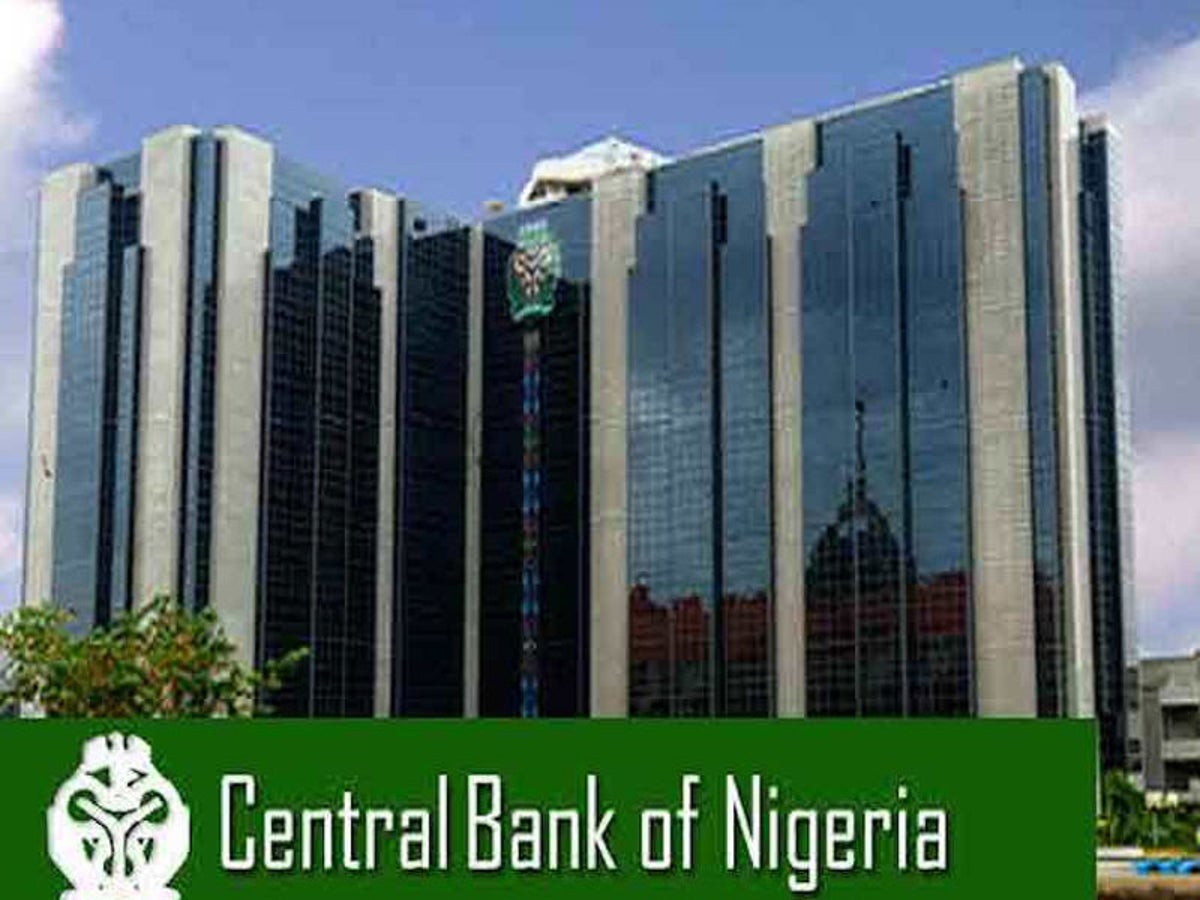
The House of Representatives Public Accounts Committee has summoned the Central Bank of Nigeria (CBN) and 11 Electricity Distribution Companies (DISCOs) in connection with alleged mismanagement of the US$321 million and N18.2 billion loans.
The loans were designated for accelerated transmission and distribution interface, lines, and substation projects.
Rep.
Bamidele Salam, Chairman of the Committee, issued the summons during the appearance of Engr. Sule Abdulaziz, Managing Director, Transmission Company of Nigeria (TCN), before the committee in Abuja on Thursday.These entities were asked to appear before the committee on November 8.
The investigation was prompted by a petition regarding the alleged misuse of funds, which had been disbursed to the DISCOs by the CBN at the request of the TCN.
Salam demanded detailed information regarding the loan disbursements, procurement processes, the involvement of DISCOs in the projects, the current status of the projects, and the loan repayment structure from the beneficiaries.
Salam emphasised the importance of ensuring that public institutions adhere to the law and international best practices while ensuring the judicious utilization of funds.
Appearing before the Committee, Abdulaziz clarified that the funds were transferred directly to the DISCOs by the CBN for the execution of various projects, with the intention of repaying the loans using TCN’s revenue.
However, this repayment arrangement has raised concerns within the committee.
He explained that there was a gap in the electricity sector, leading to complaints from distribution companies regarding the inadequate supply from TCN.
He said, consequently, the need arose to invest in critical projects to enhance the distribution of electricity to Nigerians.
According yo him, the Financial institutions and regulatory bodies, such as CBN and NERC, were involved in the financing and oversight of these projects.
He said the TCN played a beneficiary role, while the DISCOs were responsible for executing the projects.
He added that loan repayments were intended to come from TCN’s revenue, amortized on a monthly basis. (NAN)
By Toyin Falola
Africa has had good leaders throughout its history who have been empire builders, thinkers, traders, kings, diplomats, and freedom fighters, who have established civilisations and made their impact on World history.
Certainly, before the rise of the modern nation-state, Africans already had elaborate political, trading, and intellectual networks, extending from Timbuktu to Great Zimbabwe, from Benin to Axum.
But even if the continent has such a rich history, there is one issue that haunts the discussions about the future of Africa: why has a continent blessed like this not managed to create institutions of prosperity and good governance?The usual answers are certainly not entirely off base.
Colonialism had a significant impact on the politics and economy of Africa. Outside interference, imbalanced world markets, and geopolitical competition have historically prevented the continent from developing.While all that is true, it does not tell the full story. The crucial issue is not just what history has done to Africa, but what Africa has been doing with its history up until now. It is an inescapable issue of leadership.
Leadership is often viewed simply in terms of people and elections. Public discourse fluctuates between berating corrupt politicians and hunting for a “saviour-president,” who will steer the country towards success. This approach is a misconception of the very essence of leadership.
Leadership is not just the art of governing but the process of creating institutions, gaining people’s trust and wielding power for the benefit of society. It defines how governments enhance their societies or serve themselves.
This is why Africa’s problem with its leadership has outlasted all transitions in politics. There have been military governments, there have been democracies with constitutions and political parties, but in many African countries, the nature of the relationship between the state and the citizen has not evolved nearly as much as the language surrounding it.
Governments may have changed, but too often, their styles of governance have remained locked into old cycles of patronage and centralisation. The historical origins of this phenomenon include the legacy of colonial government, which was intended to rule over subjects and not citizens. Its institutions were oriented towards extraction and not participation, obedience and not accountability, and administration and not democracy.
Political independence brought about the transfer of sovereignty, but it did not prove so easy to change the cultures of governing as it was to raise new flags. Postcolonial governments have been bequeathed bureaucracies meant to rule over citizens and not serve them.
Yet history must not serve as an alibi for failure. It informs but does not dictate destiny. Africa’s history since independence illustrates that institutions emerge from political decisions. It is governments, judges, legislatures, media, academics, civil servants, and citizens who give their countries their institutional characteristics.
The continent’s future will depend less on what it inherited and more on what it will create. That is why the leadership crisis facing Africa is also institutional. For decades, many societies have sought the exceptional individual that would save the state.
At each election, the belief emerges anew that some charismatic leader will root out corruption, rejuvenate economies or unify divided states. History suggests little encouragement for that belief. Countries are not made stable by having occasional exceptional leaders but by having institutions that can continue good governance after those exceptional leaders have gone away.
However, power and leadership are different. The first aims at perpetuation, whereas leadership is about taking responsibility. Power requires obedience, while leadership wins the trust of the people. Power centralizes it, while leadership diffuses it via institutions that will operate independently from the founder of such institutions. It is not just a philosophical statement.
This difference affects the independence of courts, the credibility of elections, the professionalism of civil servants, and the belief of people in the fact that government exists for the benefit of the citizens. The African experience provides vivid examples of that.
The legacy of Nelson Mandela, the President of South Africa, is not only his governance but his ability to show the way to exercise political power wisely. Likewise, Seretse Khama managed to build institutions in Botswana that remained even after his presidency.
Both leaders achieved success not because of the amount of power they had but because of their institutions. Personal governments face difficulties in surviving the political transition.
Strong institutions need more than just constitutions; they need intellectual confidence. Any nation that continuously questions the legitimacy of its knowledge cannot be considered an institution. Discussions about African development have, for too long, revolved around vocabulary and perspectives that Africans did not develop.
While some of those frameworks have been beneficial, policies have travelled from continent to continent without sufficient knowledge of history required to implement them appropriately. Africa needs to do the same.
African universities, research organizations and policy communities must take the initiative of becoming generators of knowledge instead of consuming knowledge generated by others. Good governance must begin with the question: “What works here?” This can only happen with a good degree of historical literacy and intellectual freedom.
It is therefore clear why education plays such a prominent role in Africa’s future. If a society teaches its young leaders to revere the history far away from home without knowing anything about its own intellectual tradition, it is undermining its leadership before it even comes into power.
Africans need to study Shakespeare in parallel to Achebe, Weber in parallel to Nyerere, and Jefferson in parallel to Nkrumah, not as some symbolic gesture but because good leadership is impossible without understanding how African reality is explained by its historical tradition while being linked intellectually to the rest of the world.
If intellectual confidence is the base of leadership, then ethics is its criterion. Public discussion often mixes up moral issues with those of governance. The public wants honest leaders, governments fight corruption, political parties pledge for transparency. Corruption persists because ethical governance is not only about personal virtue.
Public office is a public trust. Roads are built for farmers, traders and schoolchildren — not for ministers. National budgets are for the taxpayers, not the government. The constitution is meant to serve the people against any abuse of power.
When this perspective is eroded, politics slowly turns into a means of accumulating private interests at the expense of providing public service. Ability is sacrificed for connections, institutions become subservient to individuals, and citizens resort to lobbying more than justice. The solution requires much more than just regime change. It requires the building up of a republic.
Throughout the African continent, the practice of constitutional democracy is still being developed. Election matters because it enables the citizenry to elect their representatives peacefully. However, elections do not provide a sufficient mechanism for guaranteeing accountable governance. Democracy is in the day-to-day running of institutions such as the judicial branch, the electoral body, the bureaucracy, the parliament, and the media. This is not something that only the affluent nations can afford.
There are arguments that Africa needs less democracy and more discipline, arguing that constitutional restraints impede development and that having all power in the hands of an executive speeds up the process. There is little historical evidence to support this view. It is certainly true that authoritarian regimes can construct roads fast, but roads are not enough to build nations. Roads can be built in just a few years; public trust takes decades to develop.
Development that is dependent on one person does not outlive him or her. African leadership will have to be informed not only by institutions but also by the political culture of Africa. Far too often, the debate on development offered a false dilemma: African traditions versus modern governance. But Africa has always made progress by adapting and never imitating anything.
The value of Ubuntu, the Yoruba idea of Omoluabi, and many other ethical values of African societies should show us that power is legitimate because it serves the community and takes care of it. These traditions should not be romanticized, but they should not be dismissed either.
Indeed, the future of Africa depends more on the development of ordinary governments that operate exceptionally rather than finding exceptional leaders that operate mediocre governance. This continent has been blessed with sufficient talents, innovativeness, and resilience.
Its entrepreneurs are revolutionizing industries, its academics are growing knowledge, and its youth are defining Africa’s role in the world today.
The question is no longer whether Africa can produce competent leaders. History has already made it clear. The question is whether it can build institutions befitting such talent. The art of leadership is not the duty of presidents alone.
It is also the responsibility of universities that nurture independent thought, journalism that checks accountability, courts that respect constitutionalism, schools that instil civic values, businesses that conduct themselves ethically, and citizens that do not give up public affairs to patronage and impunity. Africa’s next act will not be played out by extraordinary personalities alone.
It will be enacted by nations that understand one fundamental truth: that nations are not strong because they have finally found their perfect leaders, but because they have developed the institutions to deal with their imperfections. That is the uncompleted task of leadership in Africa today.
Toyin Falola, a professor of History, University Distinguished Teaching Professor, and Jacob and Frances Sanger Mossiker Chair in the Humanities at The University of Texas at Austin, is the Bobapitan of Ibadanland.
By Matthew Ma
In Nigeria, it is rare for a week to pass without calls for religious leaders to take a definitive stance on the nation’s most pressing issues. Whenever crises unfold—be it the alarming rise in insecurity leading to tragic losses, an economic downturn that impacts the livelihoods of countless citizens, or public policies that spark widespread controversy—many Nigerians grow increasingly frustrated by the perceived silence or inadequate response from religious leaders.
They turn to social media to ask questions such as “Why are they quiet?” “Are they afraid?” or “Why won’t they defend the people?”This frustration often stems from the belief that religious leaders, wielding significant moral authority, can play a vital role in guiding public discourse, fostering unity, and providing comfort during turbulent times.
However, when some of these leaders respond, a contrasting narrative emerges. Their statements are scrutinized, politicized, and frequently misrepresented. This paradox raises a pressing and uncomfortable question: Can Nigerians ever be satisfied?The recent appearance of John Cardinal Onaiyekan on Arise TV has sparked a contentious debate, particularly over his discussion of the meeting between the Catholic Bishops’ Conference of Nigeria and President Bola Ahmed Tinubu.
Rather than engaging in a meaningful dialogue about the economic improvements claimed under this administration, the presidential media aides resorted to disparaging the Cardinal for stating what is undeniably apparent.
A more constructive response would have been to address the Cardinal’s observations with verifiable facts, evidence, and well-reasoned arguments. If the economy is indeed improving, if security concerns are being effectively managed, and if government policies are yielding tangible benefits for ordinary Nigerians, these accomplishments should be substantiated with clear evidence, rather than by undermining the credibility or intentions of a respected religious figure. This reaction prompts a fundamental question: When did the meeting between the Catholic Bishops’ Conference and the President become a secret? Was this a secret cult meeting in the first place?
The meeting was conducted openly and transparently, with all details readily available in public records and widely covered by the media. Such interactions are not unusual; they have occurred even during periods of military rule, underscoring the importance of dialogue in governance.
For instance, during President Ibrahim Babangida’s administration, the Bishops frequently discussed national issues, demonstrating their commitment to the country’s moral and ethical discourse. Likewise, General Sanni Abacha, despite the controversies surrounding his regime, met with the Bishops on multiple occasions, especially in the lead-up to significant events such as Pope John Paul II’s second visit to Nigeria in 1998. We all remember what happened after that visit.
Furthermore, the Bishops have upheld this tradition by engaging with other political leaders, including Presidents Goodluck Jonathan and Muhammadu Buhari, to discuss the nation’s challenges. Their recent meeting with President Bola Ahmed Tinubu fits within this historical context, reinforcing the idea that such engagements are a fundamental aspect of the relationship between the Church and the State in Nigeria.
Anyone familiar with John Cardinal Onaiyekan will readily affirm his integrity, independence, and forthrightness. Over the years, he has openly challenged successive governments on issues such as corruption, insecurity, bad governance, electoral integrity, religious freedom, and social justice.
His critiques have focused not on individuals based on their political affiliations but on the policies and actions that, in his view, undermine the common good. Whether under military rule or civilian administrations, his message has remained steadfast: those entrusted with public office must govern with justice, accountability, and a commitment to respecting the dignity of every Nigerian. For instance, during his tenure as President of the Catholic Bishops’ Conference of Nigeria (CBCN) around Nigeria’s return to democracy, Onaiyekan took a firm stand on political neutrality.
When President Obasanjo sought to amend the constitution to extend his term, Onaiyekan and the Catholic episcopacy unlawfully played a pivotal role in opposing the attempt, calling it a direct assault on democracy.
When the Boko Haram insurgency intensified during the Goodluck Jonathan Administration (2010–2015), Onaiyekan did not shield the administration from criticism, even though he maintained a positive personal rapport with the President.
He consistently condemned systemic corruption that left Nigerian soldiers inadequately equipped to combat terrorism, characterizing the misappropriation of security funds as a profound betrayal of public trust. During the Muhammadu Buhari Administration (2015–2023), while many religious leaders chose to tread lightly, Cardinal Onaiyekan consistently highlighted the government’s failures, particularly regarding insecurity and accountability.
In 2018, during a homily in Kwara State, he publicly declared that Nigeria’s Catholic bishops had completely lost faith in the Buhari administration because of rampant killings and poor governance.
These examples make it clear that Cardinal Onaiyekan has a long history of speaking truth to power. It would be unjust to characterize his recent comments as politically motivated or partisan. His reputation for applying consistent moral standards across all governments remains intact.
His credibility rests on this unwavering consistency. Rather than altering his principles to align with the current administration, he has remained true to the Church’s enduring mission to advocate for the voiceless, defend the vulnerable, and remind those in power that leadership is a sacred trust, not a mere license for authority.
In established democracies like the United States, it is common for governments to engage with faith leaders on matters of national importance. Similarly, religious institutions—including the Catholic bishops of America—often issue public statements urging the US President and other elected officials to uphold justice, protect human dignity, defend the vulnerable, and govern in accordance with the Constitution and the common good.
Such interventions are not always universally welcomed and are sometimes criticized for the positions they take. However, their participation in public debate is generally regarded as a legitimate contribution to democratic discourse rather than an improper intrusion into politics. They are criticized for the substance of their views, not merely for speaking.
However, in contemporary Nigeria, the statements of Catholic bishops on issues that affect the poor, the vulnerable, and the nation at large often elicit mixed reactions. While many Nigerians commend these leaders for their moral courage and willingness to speak truth to power, others swiftly accuse them of bias, political partisanship, or unwarranted interference in governance. The dilemma, however, does not stop there.
When the Bishops choose silence in the face of societal suffering, they may also encounter significant backlash. Critics might interpret their silence as complicity or indifference, suggesting a failure to uphold their ethical responsibility to advocate for justice and compassion. This contradiction raises a profound question that resonates within Nigerian society: What do Nigerians truly expect from their religious leaders?
The mission of the Catholic bishops is not to endorse political parties or seek public office; rather, it is to proclaim moral truth, defend human dignity, promote justice, and give voice to those often overlooked. When the bishops address issues such as insecurity, corruption, economic hardship, or human rights violations, they are not engaging in partisan politics; they are fulfilling their prophetic duty to hold society—and those in positions of authority—to the ethical standards of justice, compassion, and accountability.
Thus, in a thriving democracy, institutions that command public trust have both the right and the obligation to engage in national conversations. To label every uncomfortable truth as political simply because it challenges those in power is to conflate moral leadership with political opposition. A nation that suppresses its moral voices risks losing one of its most vital sources of conscience.
Thus, many who condemn Cardinal Onaiyekan for explaining the bishops’ meeting with the President would likely be the first to accuse the bishops of secrecy if they had chosen not to speak. This contradiction has become all too common in Nigeria’s public discourse. Silence is interpreted as complicity, while openness is met with suspicion.
We often urge respected leaders to speak truth to power, yet when they recount meetings with those in authority, they are accused of revealing too much or of legitimizing the government. Of course, every public statement must be scrutinized. Citizens are entitled to agree or disagree with the Cardinal’s views, question the bishops’ approach, or debate the effectiveness of the meeting’s outcomes. This kind of discourse is healthy in a democracy. What is less constructive is shifting attention from the issues raised to attacking the messenger.
Meeting with the President does not imply agreement with every government policy, just as explaining the content of a meeting does not amount to exposing confidential discussions. Religious leaders can engage constructively with political leaders while maintaining their independence. In fact, such engagement is often essential to effectively advocate for justice, peace, and the common good. Nigeria requires more honest conversations, not fewer.
It needs institutions willing to engage with the government while still having the courage to criticize when necessary. It also needs religious leaders who will evaluate public interventions based on their content rather than on assumptions about hidden motives. Thus, the pertinent question is not why Cardinal Onaiyekan spoke after an officially known meeting, but whether Nigerians are ready to hold their leaders accountable or whether we have reached a stage where silence is celebrated, and transparency is viewed with skepticism.
Democracy flourishes when institutions—including religious communities, civil society, the media, and professional organizations—are free to engage with the government, offer constructive criticism, and advocate for the common good. Speaking truth to power is not an abuse of authority; rather, it is a fundamental exercise of moral responsibility.
The core issue is not whether Cardinal Onaiyekan chose to speak after he met with the President. Rather, the question is whether his remarks were truthful, constructive, and rooted in the public interest. If his observations are true, they should be judged on their merits rather than resorting to personal attacks or questioning a speaker’s right to comment on matters of public concern. In a democracy, ideas must be challenged with reason and evidence, not with prejudice or suspicion.
One cannot help but ask: Do Nigerians truly deserve voices like Cardinal Onaiyekan’s? Judging by the reactions to his recent comments, one might be inclined to answer in the negative. We often demand honesty from our religious leaders, yet too often reject uncomfortable truths when they are voiced. We call on them to denounce injustice, corruption, insecurity, and economic hardship.
However, when they answer that call, we tend to question their motives, accuse them of bias, or dismiss their messages without engaging with their substance. It seems that what many Nigerians seek is not the truth but falsehoods, not constructive criticism but distorted narratives that reinforce their preconceived opinions.
Perhaps the uncomfortable reality is that we are not yet ready for the candid national dialogue that genuine progress requires. For Nigeria to advance, we must learn to appreciate those who speak with integrity, even when their words make us uncomfortable. While we may not always agree with Cardinal Onaiyekan—or any other public figure—we should have the maturity to engage with their arguments rather than resort to personal attacks.
A society that persistently silences or vilifies its most principled voices risks losing its moral compass. Thus, the pressing question is not merely whether Cardinal Onaiyekan should have spoken out, but whether we, as a nation, are prepared to listen. Until we embrace honest dialogue over comforting narratives, prioritize truth over sentiment, and uphold principle over partisanship, we will continue to grapple with the very challenges we profess to want to resolve.
Rev. Ma, S.J., is a Jesuit priest and public policy analyst. He currently writes from Abuja, Nigeria.
By Isaac Asabor
One of the greatest misconceptions among many Nigerian politicians is the belief that every critical opinion is an act of hostility. Too often, constructive criticism is dismissed as political opposition, while opinion writers are branded as enemies of the government.
This mindset is not only dangerous; it is profoundly undemocratic.In every thriving democracy, public opinion is not a weapon aimed at the government. It is a compass designed to keep the government on course. Imagine a Nigeria where citizens suddenly stopped expressing their views. Newspapers would carry no critical editorials.
Columnists would avoid interrogating government policies. Civil society would remain silent. Citizens would simply endure whatever decisions political leaders imposed. Such a country might still conduct elections every four years, but it would no longer be practicing democracy in its true sense. It would merely be managing political power without public participation.Democracy does not begin and end with voting. It survives through continuous dialogue between the governed and those who govern. Opinion articles, editorials and public commentary form one of the strongest bridges connecting the people with their leaders.
Yet, instead of embracing this democratic culture, many Nigerian politicians have become increasingly intolerant of dissent. A newspaper column exposing policy failures is often interpreted as an attempt to embarrass the government. An opinion article questioning the cost of governance is dismissed as opposition propaganda. A journalist highlighting policy inconsistencies is accused of pursuing a hidden agenda. This attitude must change.
Political office is a public trust. Those who seek power must also be willing to accept public scrutiny. Democracy was never designed to provide leaders with applause alone. It also guarantees citizens the right to question, criticize and demand better governance.
For the sake of clarity, opinion articles are not acts of rebellion. They are instruments of accountability. When journalists, academics, lawyers or concerned citizens analyze government policies, they are not merely expressing personal frustrations. They are helping leaders identify policy blind spots, anticipate unintended consequences and correct mistakes before they become national crises. Wise governments understand this.
Indeed, some of the world’s most successful democracies became stronger not because their leaders silenced criticism but because they listened to it. Constructive criticism serves as an early warning system. It alerts governments to public dissatisfaction long before frustration boils over into protests or civil unrest.
Nigeria’s democratic history offers several examples. Public debates have influenced conversations around electoral reforms, constitutional amendments, police reform, subsidy removal, anti-corruption efforts, insecurity, local government autonomy, education, healthcare and states of the roads across the country. Many of these national conversations gained momentum because opinion writers consistently raised uncomfortable but necessary questions.
Not only that, ideas often shape policy long before legislation is enacted. Lawmakers do not legislate in isolation. They constantly observe public sentiment, especially when it is articulated logically and consistently. Therefore, a compelling opinion article can expose gaps in existing laws, draw attention to neglected communities and stimulate reforms that improve governance.
It is against the backdrop of the foregoing view that politicians should welcome, rather than fear, informed public commentary. Unfortunately, some public office holders mistake criticism for disrespect. They surround themselves with praise singers who tell them only what they want to hear. Such an environment is dangerous because it creates an illusion of success even when governance is failing.
History teaches that governments rarely collapse because they were criticized too much. They falter because they stopped listening.
No leader, however experienced or well-intentioned, possesses a monopoly of wisdom. Governance benefits immensely when citizens contribute ideas, challenge assumptions and offer alternative perspectives.
Of course, not every opinion deserves equal respect. Public discourse should be guided by facts, evidence and responsible journalism rather than misinformation, insults or deliberate falsehoods. Freedom of expression carries corresponding responsibilities.
However, politicians must resist the temptation to dismiss every uncomfortable opinion as fake news, opposition politics or character assassination. Such labels weaken democratic institutions and discourage citizens from participating in national development.
The Nigerian Constitution guarantees freedom of expression because the framers understood a timeless truth: societies progress when citizens are free to speak without fear.
A government may possess the legal authority to make decisions, but it cannot command public confidence through intimidation or intolerance. Trust is earned by listening, responding and, when necessary, adjusting policies in line with legitimate public concerns.
The responsibility also extends to citizens and the media. Opinion writing should never become an avenue for personal vendettas, ethnic prejudice or political blackmail. Credible commentary must be factual, balanced and motivated by the public interest. Nevertheless, politicians should remember that criticism is not the opposite of patriotism. More often than not, it is an expression of patriotism.
The citizen who writes an article highlighting insecurity, unemployment, inflation or poor infrastructure is not necessarily attacking the government. More often, such a person is urging those in authority to fulfil the promises upon which they were elected. So, Nigeria needs leaders who can distinguish between hostility and honest feedback.
The greatest danger to any government is not criticism. It is silence. Silence allows bad policies to flourish unchallenged. Silence emboldens incompetence. Silence creates the false impression that everything is working until reality delivers a painful correction.
Our political leaders must therefore stop treating every critical opinion as a declaration of war. They should see thoughtful public commentary for what it truly is: an indispensable partner in democratic governance.
The strongest democracies are not those that silence critics. They are those where leaders have the confidence to listen, the humility to learn and the courage to improve.
For Nigeria to deepen its democracy, politicians must stop seeing public opinion as an attack. They must begin to see it as one of the nation’s most valuable democratic assets.


Africa and the Imperatives of Leadership
ShareBy Toyin Falola Africa has had good leaders throughout its history who have been empire builders, thinkers, traders, kings, diplomats,...
The Cardinal Onaiyekan Debate: Can Nigerians Ever Be Satisfied?
ShareBy Matthew Ma In Nigeria, it is rare for a week to pass without calls for religious leaders to take...
Urging Nigeria’s Political Class to Stop Seeing Public Opinion as an Attack
ShareBy Isaac Asabor One of the greatest misconceptions among many Nigerian politicians is the belief that every critical opinion is...


CBN Resolves 23, 129 Complaints, Orders N19.2b, Refund to Bank Customers
ShareBy Tony Obiechina, Abuja The Central Bank of Nigeria (CBN) had directed refunds of N19.2 billion and $329.3 million to...

FG Launches Africa’s First Renewable Energy College in Kogi
ShareFrom Joseph Amedu, Lokoja President Bola Tinubu on Tuesday declared that Nigeria has taken the lead in Africa’s renewable energy...

Tinubu Approves Salary Increase for 250,000 Armed Forces Personnel
ShareBy David Torough, Abuja President Bola Tinubu has unveiled a major package aimed at strengthening Nigeria’s armed forces through improved...


Project Gazelle 2: Commending Better Terms; Demanding Greater Transparency
ShareBy Uche Uwaleke The decision of the National Economic Council (NEC) to approve the refinancing of the US$3.3 billion Project...

How South African Leaders throughout History Have Openly and Tacitly Promoted Xenophobia
ShareBy Isaac Asabor One cannot examine the evolution of xenophobia in South Africa without looking beyond the obvious perpetrators on...
Youths Laud Borno Skills Programme
ShareYouths in Borno South have commended the Borno State Government’s vocational training and starter packs distribution programme, describing it as...
FG Empowers Jigawa Women, Youth with 100 Bullocks Heifers, Others
ShareBy Raphael Atuu, Abuja The Federal Ministry of Livestock Development, has distributed 100 bullocks, heifers and livestock production ancillaries to...