
NEWS
Rethinking the CBN’s Mandate: Lessons from Malaysia for Nigeria

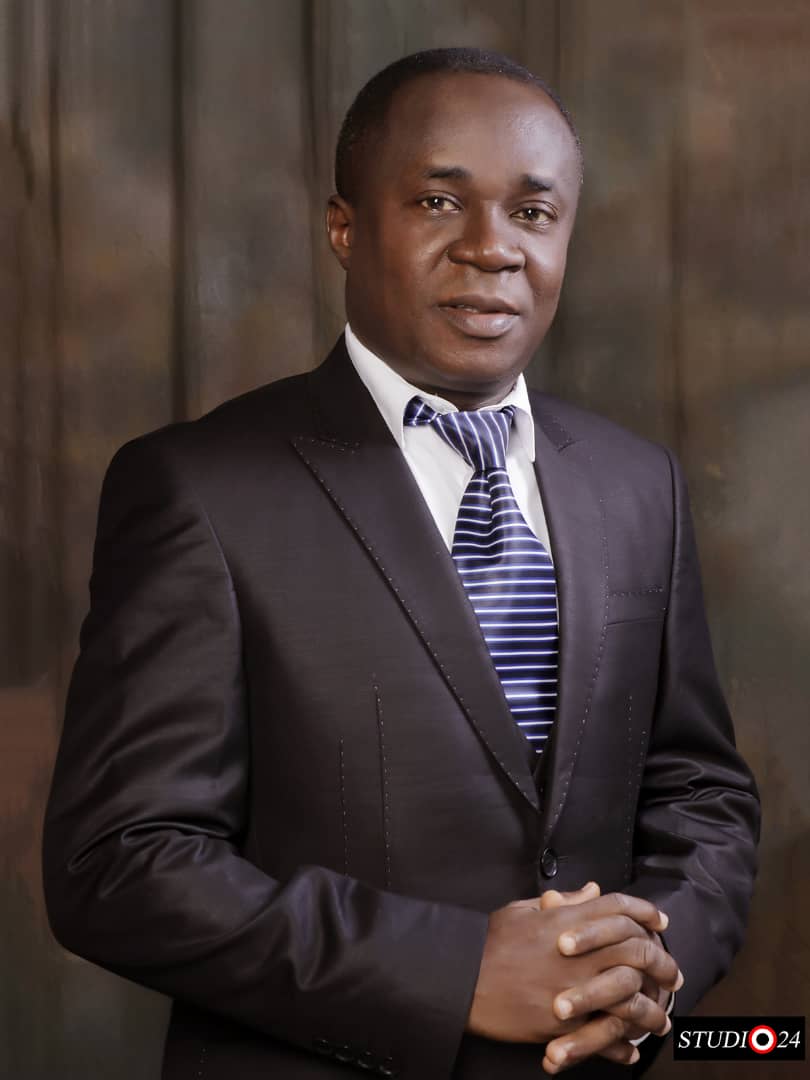
By Uche Uwaleke
During a recent academic study tour of key financial institutions in Malaysia with some of my PhD students from Nasarawa State University, Keffi, I had the opportunity to visit Bank Negara Malaysia (BNM), the Central Bank of Malaysia, where senior officials made presentations on the Bank’s mandate and institutional framework.
What particularly caught my attention was the positioning of sustainable economic growth as the ultimate objective, with monetary stability serving as an important means towards achieving that broader objective.
I was equally struck by the emphasis placed on enhancing the financial well-being of households and businesses as one of the Bank’s strategic thrusts.
These aspects of the Malaysian framework prompted me to reflect on what Nigeria might learn from a central banking model that appears to place monetary stability within a broader developmental conception of economic policy.
The Malaysian experience therefore offers Nigeria an opportunity to revisit a fundamental question about the role of a central bank in a developing economy: should monetary stability be regarded essentially as an end in itself, or as one of the instruments through which the broader objective of sustainable economic growth and improved economic welfare can be achieved? The question is not whether monetary stability matters; it unquestionably does, because stable prices are indispensable to investment, savings, production and household welfare. The more important question is whether a developing economy such as Nigeria should expect its central bank to remain largely focused on monetary stability while leaving the pursuit of sustainable economic growth almost entirely to the fiscal authority.
It has been argued that the real issue for Nigeria is not the formal scope of the Central Bank of Nigeria’s mandate but the quality of coordination between monetary and fiscal authorities.
There is considerable merit in this argument. Monetary policy does not operate in isolation from fiscal policy, and every significant monetary-policy decision has implications for government debt-servicing costs, business financing, household borrowing, investment and productive capacity. Fiscal policy, in turn, affects inflation, liquidity conditions, exchange rates and the effectiveness of monetary policy. It is therefore difficult to envisage a successful economic policy framework in which the monetary and fiscal authorities operate as though they inhabit entirely separate economic universes.
However, while coordination is necessary, I do not believe it is sufficient. The critical question is how such coordination should be institutionalized and sustained beyond the personalities or policy preferences of particular administrations and central-bank managements.
Coordination is essentially a process, whereas a statutory mandate establishes an institutional obligation. If sustainable economic growth is not expressly recognized within the legal framework governing the CBN, there is a risk that successive managements of the Bank will concentrate overwhelmingly on those objectives that are most clearly articulated in the law and regard broader developmental concerns as secondary or discretionary. This is why I believe that an amendment to the CBN Act of 2007 deserves serious consideration.
I submit that the CBN Act should explicitly recognize sustainable economic growth as an overarching objective, while retaining monetary and financial stability as indispensable conditions for achieving it. Such an amendment would not mean transforming the CBN into a development agency, asking it to substitute for the fiscal authority, or giving it a licence to sacrifice price stability whenever growth becomes politically desirable.
Rather, it would establish a statutory framework within which the CBN is expected to consider how its monetary and financial policies can contribute to productive capacity, investment, employment and the financial well-being of households and businesses. There is an important distinction between giving the CBN responsibility for development and giving it a responsibility to contribute to development; it is the latter that I am advocating.
The experience of the United States is instructive in this regard. The Federal Reserve operates under a dual mandate that includes price stability and maximum employment, demonstrating that recognition of broader economic outcomes within a central bank’s statutory framework does not necessarily undermine monetary-policy credibility or central-bank independence.
If a highly developed economy with deep and sophisticated financial markets can accommodate broader economic objectives within its central-bank framework, there is little reason to assume that a developing economy such as Nigeria must necessarily confine its central bank to an exceptionally narrow conception of its responsibilities.
Indeed, given Nigeria’s structural challenges, including inadequate productive capacity, limited access to finance, weak industrialization and high unemployment, the case for a framework that recognizes the developmental implications of monetary and financial policy may be even stronger.
Another argument that deserves serious consideration is Nigeria’s recent experience with development finance under the previous CBN administration.
The Bank became deeply involved in several intervention programmes designed to support agriculture, manufacturing and other sectors of the economy, and some of these interventions understandably generated concerns about the appropriate boundaries between monetary policy, fiscal policy and credit allocation.
Questions were also raised about their scale, implementation and institutional consequences. Those concerns should not be dismissed, but neither should we draw the conclusion that developmental central banking has no legitimate place in a developing economy.
The fact that a policy instrument can be abused does not invalidate the underlying principle. The appropriate lesson is that development-oriented interventions must operate within clear rules, transparency, accountability, institutional limits and proper coordination with fiscal policy.
Nigeria should therefore avoid moving from one extreme to another: from a CBN that attempts to do too much to one that does too little. The challenge is to identify the institutional middle ground in which the central bank remains credible and disciplined in preserving monetary and financial stability while recognizing the structural realities of a developing economy.
Such a central bank would not indiscriminately allocate credit, finance government programmes or substitute for fiscal policy, but neither would it regard the cost and availability of finance to productive enterprises as entirely outside its legitimate concerns.
The Malaysian example also invites reflection on Nigeria’s financial regulatory architecture. It has been suggested that Malaysia and Nigeria both operate broadly fragmented financial regulatory systems, but the two arrangements are not comparable in degree.
Malaysia’s principal financial-sector regulatory architecture is considerably more concentrated, with Bank Negara Malaysia and the Securities Commission playing the central regulatory roles, whereas Nigeria has a considerably more dispersed structure involving institutions such as the CBN, Securities and Exchange Commission, NDIC, NAICOM and PENCOM.
This difference has implications for regulatory coordination, policy coherence and the transmission of financial policy across the economy.
The lesson, however, is not that Nigeria should simply reproduce Malaysia’s institutional structure, but that we should examine carefully what institutional arrangements enable monetary stability, financial stability and developmental objectives to coexist without compromising central-bank credibility.
There is also a compelling argument that Nigeria should not make development dependent upon the discretion of the CBN. Development should not depend on whether a particular governor happens to favour interventionist policies, nor should the central bank become the institution responsible for financing every developmental aspiration of government. I agree with this concern, but I do not see it as an argument against a broader statutory mandate.
On the contrary, it strengthens the case for a clearer institutional framework. The objective should be to create an ecosystem in which the fiscal authority remains primarily responsible for fiscal policy, public investment and broader development strategy, while the monetary authority performs its core functions with credibility and independence and contributes, within clearly defined boundaries, to the broader developmental objective.
The CBN does not need to do everything, but it should be expected to contribute to the right things. This distinction is particularly important when considering access to affordable credit.
The monetary-policy framework and financial-sector regulations established by the CBN have significant implications for whether businesses can obtain financing at costs compatible with productive investment.
If productive enterprises are consistently confronted with prohibitively expensive credit, while monetary and financial conditions systematically favour financial intermediation over productive investment, the consequences extend beyond conventional monetary indicators to investment, employment, production and economic growth.
This does not mean that the CBN should arbitrarily force banks to lend cheaply or undermine the principles of sound banking; it means that the Bank should be encouraged, within the limits of monetary and financial stability, to consider how its policies and regulatory framework can facilitate efficient financial intermediation and improve access to finance for productive sectors.
Some may argue that this approach risks undermining central-bank independence. I would argue the opposite.
Independence and coordination are not mutually exclusive. A central bank can retain operational independence while engaging in structured, transparent and rules-based coordination with the fiscal authority. Indeed, genuine independence may be strengthened when the respective responsibilities of the monetary and fiscal authorities are clearly defined and when coordination takes place within an established institutional framework rather than through informal political pressure.
The purpose of coordination is not for government to dictate monetary policy or for the CBN to dictate fiscal policy, but to ensure that the two arms of economic policy do not systematically work at cross-purposes.
It goes without saying that Nigeria should move beyond the simplistic choice between an interventionist central bank and a narrowly conservative one. What is needed is an enabling central bank: one that remains firmly committed to price and financial stability while recognizing that monetary stability is also a condition for sustainable investment, production, employment and economic transformation.
Such a central bank would work with the fiscal authority without becoming subordinate to it, support productive sectors without becoming a permanent allocator of credit, and facilitate financial inclusion without compromising the soundness of the financial system.
Most importantly, it would operate within a statutory framework that reflects the realities of a developing economy.
The debate, therefore, should not be reduced to whether the CBN should have a narrow or broad mandate. The more important question is what kind of institutional architecture Nigeria requires to achieve both monetary credibility and sustainable economic transformation.
Price stability remains indispensable, but price stability alone does not build factories, create productive jobs, expand businesses, improve household welfare or transform an economy.
Those outcomes require fiscal policy, industrial policy, infrastructure, human capital, financial-sector development and effective institutions, with monetary policy playing an important complementary role.
For this reason, I believe Nigeria should seriously consider amending the CBN Act of 2007 to recognize sustainable economic growth as the ultimate goal, while preserving monetary and financial stability and protecting the operational independence of the Bank.
Properly designed, such an amendment would not be a licence for reckless intervention; rather, it would provide the foundation for a more disciplined form of developmental central banking in which the CBN’s role is clearly defined, its independence protected, and the developmental implications of its monetary and financial policies explicitly acknowledged.
The Malaysian experience does not tell Nigeria to become Malaysia. It tells us something more important: institutional choices matter. Nigeria must therefore design institutions that respond to its own economic realities while learning from countries that have demonstrated the possibility of combining monetary credibility with developmental ambition.
The objective should not be to make the CBN more powerful, but to make Nigeria’s economic-policy architecture more coherent, coordinated and capable of delivering sustainable and inclusive growth. That, in my view, is the more consequential lesson that the Malaysian experience offers Nigeria.
Prof Uche Uwaleke is the Director of the Nasarawa State University Institute of Capital Market Studies and President of the Capital Market Academics of Nigeria.

By David Torough, Abuja
The Catholic Law Students’ Association of Nigeria (CALSAN) is set to honour distinguished Nigerian legal practitioner, public-policy professional and humanitarian advocate Franc Fagah Utoo, Esq, by naming its national moot championship in his honour as part of the Association’s 2026 National Convention.
The Franc Utoo, Esq.
, KofC Moot Championship will bring together duly registered universities under the CALSAN National Body, providing Catholic law students from across Nigeria with an opportunity to demonstrate their advocacy skills, deepen their understanding of legal practice and engage in rigorous academic competition.The decision to name the championship after Franc Fagah Utoo reflects recognition of a life marked by service, leadership, professional excellence, courage and advocacy for justice and human dignity.
A Life Defined by Law, Leadership and Service
Franc Fagah Utoo, Esq., KofC, is a legal practitioner whose professional journey extends well beyond the courtroom. His academic and professional background reflects a blend of international exposure, legal training and multidisciplinary expertise.
He holds an LLB (Honours) from Northumbria University, Newcastle upon Tyne, United Kingdom; a Master of Public Administration in Public and Nonprofit Management from the University of Central Oklahoma; and professional legal training from the Nigerian Law School, Abuja. He is also a Member of the Chartered Institute of Arbitrators, United Kingdom.
His leadership credentials became evident during his time at the Nigerian Law School, where he served as President of the Students’ Representative Council for the 2012/2013 academic year. The role provided an early platform for him to demonstrate his commitment to representation, leadership and service to his professional community.
It is therefore fitting that a national association of law students would celebrate a personality whose journey illustrates how the study and practice of law can extend beyond professional advancement into leadership, public service and the defence of human dignity.
Distinguished Public Service to Benue State
CALSAN’s decision to honour Mr. Utoo is also informed by his record of public service.
Between 2020 and 2023, he served as Principal Special Assistant on Project Evaluation and Implementation to the Government of Benue State, where he was involved in the assessment, monitoring, coordination and implementation of public projects and development initiatives.
During the same period, he served as a Member of the Benue State Economic Advisory Committee, contributing to discussions on economic policy, development strategy, investment priorities and sustainable growth.
These responsibilities placed him at the intersection of law, governance, public administration and development, illustrating the role legal professionals can play in strengthening public institutions and contributing to societal development.
A Voice for Vulnerable and Displaced Communities
Another significant dimension of Mr. Utoo’s public profile is his humanitarian advocacy.
As a Fundraising and Media Relations Associate with Equipping The Persecuted, he has contributed to efforts focused on mobilising humanitarian assistance, raising public awareness and securing international attention for communities affected by persecution and violence in Nigeria.
His advocacy has focused particularly on communities in Nigeria’s Middle Belt affected by violence, displacement, hunger, loss and insecurity. His personal connection to Yelewata in Benue State, and the devastating violence experienced by his community, has given this work a deeply personal dimension.
Rather than allowing tragedy to silence him, Mr. Utoo has used his platform to draw attention to the experiences of survivors, displaced persons and grieving families. Through media appearances, public forums, humanitarian engagements, policy discussions and international advocacy, he has sought to keep the experiences of affected communities within national and international conversations.
Taking the Nigerian Story to the World
Mr. Utoo’s advocacy has also extended to international policy platforms.
He has twice been invited to testify before the United States Congress, where he presented perspectives on violence affecting Christian communities in Nigeria and raised issues relating to religious freedom, humanitarian protection, accountability and justice.
In March 2026, he further took the conversation to CPAC USA in Dallas, Texas, where he spoke about the realities confronting communities in Nigeria’s Middle Belt before an international audience.
For CALSAN, this aspect of his work underscores an important lesson for aspiring lawyers: the law is not merely an academic discipline or professional qualification. It can also serve as an instrument for advocacy, accountability, social justice and the protection of vulnerable people.
A Defender of the Tiv Nation
Mr. Utoo’s commitment to his roots and his people has also earned him recognition.
On 12 December 2025, during Tiv Day 2025 in Gboko, Benue State, Mzough U Tiv Worldwide, the umbrella body of the Tiv people across the world, honoured him with the “Award of Excellence in the Defense of the Tiv Nation.”
The recognition reflects his advocacy concerning the dignity, security, identity and collective interests of the Tiv people.
As a proud son of Yelewata, his advocacy is informed not only by professional knowledge but also by a close connection to the experiences of his community. His journey demonstrates how professional excellence can coexist with cultural identity, community service and a commitment to human development.
Why CALSAN Chose to Honour Him
The Franc Utoo Moot Championship is therefore more than a legal competition.
It represents a celebration of values that CALSAN seeks to cultivate among Catholic law students: excellence, leadership, service, courage, advocacy, compassion and commitment to justice.
By naming the competition after Franc Fagah Utoo, CALSAN is recognising a legal professional whose career demonstrates that the responsibility of a lawyer does not end with obtaining a degree or being called to the Bar.
It also encompasses the courage to speak for those whose voices may otherwise go unheard, the responsibility to contribute to public institutions, and the willingness to deploy professional knowledge in the service of humanity.
His journey—from the law classroom to public administration, from governance to humanitarian advocacy, and from local community struggles to international policy platforms—offers an example of the many ways in which young lawyers can contribute to society.
A National Platform for Young Advocates
The Franc Utoo, Esq., KofC Moot Championship will provide participating Catholic law students with an opportunity to translate classroom knowledge into practical advocacy, sharpen their legal research and courtroom skills, and engage their peers in rigorous intellectual competition.
The championship will combine academic excellence with honour and recognition, bringing together the next generation of Nigerian lawyers to celebrate the contributions of a legal professional whose work has spanned law, public service, humanitarian advocacy and community leadership.
Celebrating a Voice, a Lawyer and a Servant
Franc Fagah Utoo, Esq., KofC, represents a convergence of legal practice, public service, humanitarian advocacy and community leadership. His story is one of professional accomplishment, personal resilience and a sustained commitment to people and community.
For CALSAN, honouring him is not only an opportunity to celebrate his accomplishments but also a means of encouraging its members to appreciate the broader responsibilities that accompany the legal profession.
The Association will present the Franc Utoo, Esq., KofC Moot Championship as part of its 12–17 October 2026 National Convention in Makurdi, Benue State—a fitting tribute to a man whose life and work continue to demonstrate the value of applying knowledge in the service of justice, humanity and the common good.
Franc Fagah Utoo, Esq., KofC: lawyer, public servant, humanitarian advocate, global voice and defender of the vulnerable.
CALSAN celebrates his service. The next generation of advocates takes the stage in his honour.
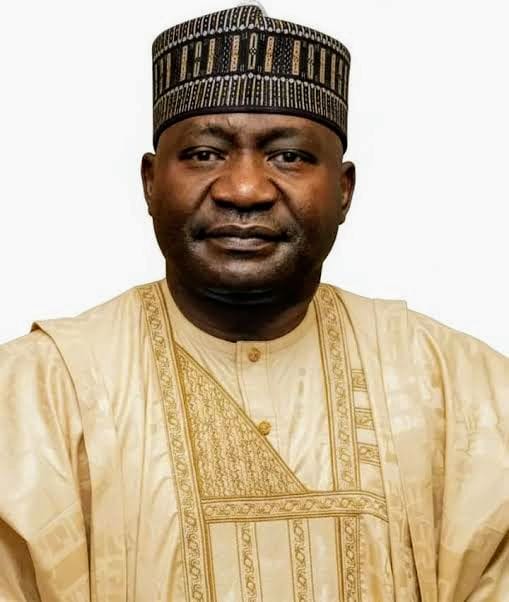
By Mohammed Adamu Namji
Before now, we all knew about the heightened security tension in Nigeria, particularly in Benue, the Kaduna-Abuja highway, and other corridors within Northern Nigeria. The avalanche of commentaries that followed the remarks of General Christopher Gwabin Musa (Rtd), OFR, the Honourable Minister of Defence of the Federal Republic of Nigeria, has left me thoroughly demoralized and astonished.
What should have ignited a sober, strategic national conversation has degenerated into a carnival of noise, mischief and deliberate distortion.One question continues to echo in my mind: how many of those now mounting the high horse of public commentary truly understand the intricate architecture of insecurity in the entire Northern States, Abuja inclusive, in the North-West, and across Nigeria? How many have paused to appreciate the depth of the quagmire this Minister inherited and the giant strides recorded so far? For some, their interventions amount to sheer tomfoolery — hollow, ignorant and as porous as a basket that can hold no water.
For others, it is nothing more than a volcanic eruption of pent-up anger, a convenient opportunity to confuse emotion with logic, politics with patriotism, and falsehood with truth. Truth must be told, General Christopher Gwabin Musa (Rtd) has unarguably done so much for this nation’s security.I am frankly amazed that commentators who cannot even articulate the constitutional responsibilities of a Minister of Defence in the 21st century would presume to lecture one of the finest military minds this nation has ever produced. The burden General Musa shoulders — to coordinate the Armed Forces, harmonise disparate intelligence, and restore peace in a nation in security melancholy — is better imagined than described. It is a task that demands steel, not sentimentality.
This is the tragic paradox of Nigeria. It is agonizingly difficult to fight for Nigerians because the very people you are fighting for often become your fiercest adversaries. We clamour for an iron fist to confront insecurity, yet the moment a leader speaks the unvarnished truth without romanticising it, we crucify him. Our security crisis is not a love poem to be soothed with lyrical verses. It is a war, and wars demand clarity, courage and uncomfortable truths.
Who is this man they so casually vilify?
General Christopher Gwabin Musa, OFR (Rtd), born on 25th December 1967 in Sokoto State and a proud son of Zangon Kataf Local Government Area of Kaduna State, is unarguably one of the most distinguished officers in the annals of our military history. He rose through the ranks on merit, intellect and valour to serve as Chief of Defence Staff, where he distinguished himself even in the face of a near-helpless security situation, before his appointment in December 2025 as Honourable Minister of Defence, succeeding H.E. Mohammed Badaru Abubakar, former Governor of Jigawa State.
Under his stewardship, the Nigerian military pay has risen twice. The expansions of the newly established Brigades to tackle insecurity in Nigeria is a testimony of purposeful leadership.
The Honourable Minister of Defence, General CG Musa Rtd is focused on ending insecurity and deserve the support of all and sundry not discouragement as president Bola Ahmed Tinubu GCFR is pleased with his performance.
Since assuming office, his scorecard has been so luminous that it has unsettled many who are envious of his leadership acumen and capacity to deliver. Unlike many who hide behind propaganda, General Musa, in a frank self-assessment in May 2026 as reported by Arise News, rated Nigeria’s security performance under the Tinubu administration at 65 to 70 percent. With rare candour, he declared that terrorism has significantly declined, while honestly acknowledging that kidnapping and banditry remain pressing challenges. That is not failure. That is honesty. That is the kind of leadership Nigeria needs, not a false narrative.
His achievements are not mere rhetoric. They are visible, verifiable and transformative. At the heart of his tenure is the strategic modernisation of Nigeria’s defence architecture — a reform anchored on professionalism, foresight and long-term planning. He has dismantled the age-long inter-service rivalry that once weakened our operations and has entrenched genuine joint operational synergy among the Army, Navy and Air Force, so that today our forces fight as one united front, sharing intelligence and executing missions in harmony.
Furthermore, General Musa understands the timeless military maxim that no army fights better than its welfare is catered for. He has therefore placed the welfare and morale of officers, soldiers and ratings at the very epicentre of his reforms, knowing that a motivated force is an effective force. This focus on human capital has restored confidence and boosted operational effectiveness across theatres of operation. In addition, he has fundamentally changed our doctrine of warfare, moving it from crude brute force to precision, intelligence-driven and technology-enabled operations, where intelligence does the tracking, technology does the finding, and strategy wins the war.
Perhaps most remarkable is his humane doctrine of warfare. He has issued a clear and unambiguous directive to all Service Chiefs to halt the loss of civilian lives and to make human rights compliance non-negotiable in all military operations. In a nation where collateral damage had become almost normalised, this directive has redefined professionalism. To institutionalise accountability, he has also introduced and implemented the Ethics and Integrity Compliance Scorecard within the Ministry of Defence, entrenching transparency and zero tolerance for corruption.
The enormity of his responsibilities cannot be comprehended by social media pedestrians who parade as security analysts. The Honourable Minister is doing fantastically well, and his giant strides have unsettled his detractors.
Why then must we, as Nigerians, habitually pull down those who are performing? Why must we distract and discourage excellence?
The way forward is clear. Nigeria’s problem is not the quantity of medicine we pour on insecurity, but the appropriateness of the prescription. We must stop heating up the polity and allow the Minister to concentrate on the monumental duties of his office. The right diagnosis must precede the right medication. We cannot pound boiled yam the way we pound dried yam. Boiled yam binds into a smooth, cohesive mass. Dried yam crumbles into powder. Apply the wrong method and you get a mess.
Wrong diagnosis and wrong medication are express tickets to the theatre of death. Those beating the drums of war should, with immediate alacrity, repudiate that path. Their rhetoric is contagious and toxic.
Permit me to end with a metaphor. When you have an almost empty pot of soup and you think the way to feed a hungry household is to pour a bucket of water into it, you do not produce more soup. You produce coloured water and condemn the household to perpetual hunger and malnutrition. That is precisely what we are doing to our national security. We are diluting truth with sentiment, substituting noise for strategy, and attacking the very hands trying to fix the pot.
General Christopher Gwabin Musa deserves our support, not our scorn. He deserves applause, not attack. Until we cure ourselves of this chronic Pull-Him-Down syndrome, we will continue to punish those who dare to tell us the truth, and in doing so, we punish ourselves.
Mohammed D. Adanu Namiji writes from Kabusa, FCT, Abuja
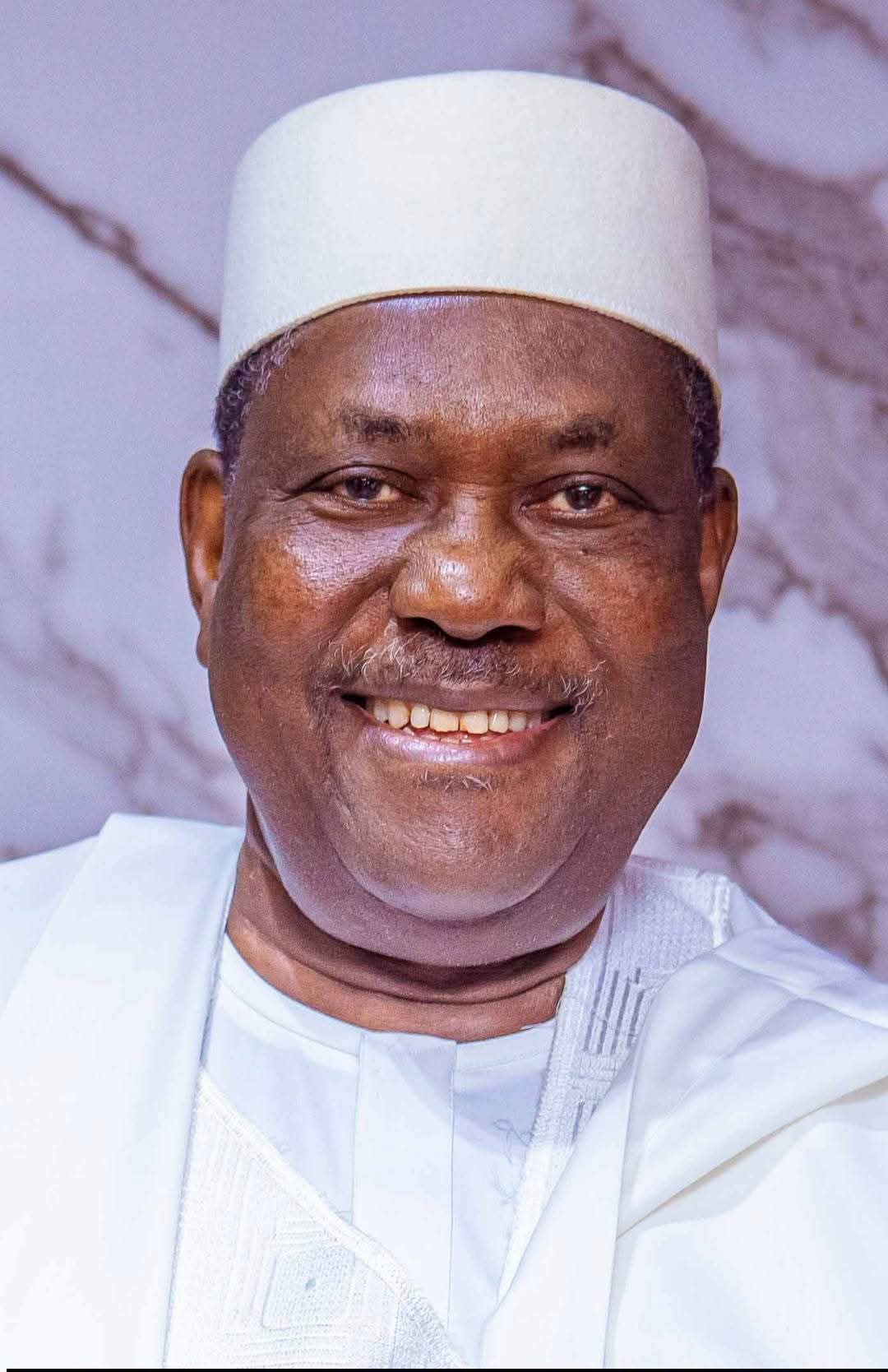
By Dan-Morgan Ihomun
Nigeria’s democracy was not preserved by accident. At critical moments in the nation’s political history, individuals were required to make difficult choices, withstand pressure and defend the constitutional order.
The controversy surrounding former President Olusegun Obasanjo’s Third-Term bid was one of those defining moments. Sen. Dr George Akume, CON, then Governor of Benue State, was among the political figures associated with opposition to the proposed constitutional amendment that would have enabled Obasanjo to seek a third consecutive term.The issue carried considerable political implications.
Recent comments by former House of Representatives Minority Leader, Farouk Aliyu, have again drawn attention to the role played by Akume and other political figures during that period. Speaking recently, Aliyu said that the Third-Term agenda was real and credited former military Head of State Muhammadu Buhari, former Vice-President , George Akume, among others, with playing prominent roles in frustrating the proposal.Aliyu also made claims about financial inducements allegedly offered to lawmakers in an effort to secure support for the Third-Term proposal. He said he personally rejected an alleged ₦250 million offer, while also claiming that other lawmakers were offered substantial sums. These remain Aliyu’s recollections of events surrounding the 2006 constitutional controversy and should be understood as such.
The proposed constitutional amendment was ultimately rejected by the National Assembly in May 2006. That outcome became an important moment in Nigeria’s democratic development because the constitutional limit on presidential tenure remained intact. The episode demonstrated the importance of legislative institutions and the role that individual political actors can play when major constitutional questions arise.
Akume’s political journey consequently offers an opportunity to reflect on the enduring importance of constitutionalism, institutional responsibility and public service. Political careers are often measured by offices held, but history also records the choices made when institutions face difficult tests.
From his years as Governor of Benue State to his service in the Senate, ministerial office and now the position of Secretary to the Government of the Federation, Sen Dr George Akume has occupied several significant positions in Nigeria’s political history. His role during the 2006 Third-Term controversy, as recalled by Farouk Aliyu and other accounts of that period, remains part of that history. His present responsibility at the centre of government represents another chapter in a long public-service journey.
Dan-Morgan Ihomun
Writes from Makurdi.




CALSAN Names National Moot Championship After Franc Fagah Utoo
ShareBy David Torough, Abuja The Catholic Law Students’ Association of Nigeria (CALSAN) is set to honour distinguished Nigerian legal practitioner,...


Gen Musa’s Giant Strides Since Assuming Office As Defence Minister
ShareBy Mohammed Adamu Namji Before now, we all knew about the heightened security tension in Nigeria, particularly in Benue, the...


George Akume: A Patriot Who Stood for Democracy
ShareBy Dan-Morgan Ihomun Nigeria’s democracy was not preserved by accident. At critical moments in the nation’s political history, individuals were...


COAS Strengthens Operational Readiness, Welfare at Army Women Command
ShareBy David Torough, Abuja The Chief of Army Staff (COAS), Lt.-Gen. Waidi Shaibu, has reiterated the Nigerian Army’s commitment to...


NPERA, NPA Begin Talks on Transfer of Inland Dry Port Functions
ShareBy David Torough, Abuja The Nigerian Ports Economic Regulatory Agency (NPERA) and the Nigerian Ports Authority (NPA) have commenced discussions...

JAMB Eases Restriction on SIM Swap, Email Change
ShareThe Joint Admissions and Matriculation Board (JAMB) has reviewed its policy on swapping candidates’ registered GSM numbers and changing registered...
DAILY ASSET Loses Deputy Editor-in-Chief, Danusa Ocholi
ShareBy David Torough, Abuja The Management of Asset Newspapers Limited, Publishers of DAILY ASSET, has announced the passage of the...


OPay at 8: Still Okay, Still Moving Nigeria Forward
ShareEight years after commencing operations in Nigeria, OPay continues to build, innovate and serve, using technology to make financial services...

Kenya, Dangote Advance Plans for $17bn Lamu Refinery
ShareBy David Torough, Abuja Kenya is set to begin construction of the proposed East Africa Refinery in Lamu, following renewed...
FG Threatens Lagos-Calabar Highway Shutdown over Safety Breaches
ShareBy Raphaeh Atuu, Abaja The Federal Government has issued a two-week ultimatum for improved safety and security conditions on the...