
NEWS
OPay at 8: Still Okay, Still Moving Nigeria Forward


Eight years after commencing operations in Nigeria, OPay continues to build, innovate and serve, using technology to make financial services simpler, more accessible, and more inclusive for Nigerians.
For some Nigerians, OPay is an app on their phone.
For others, it is the money that arrived when they needed it, the electricity bill they paid just in time, the data they bought for school or work, or the payment that helped a business stay open for another day. For eight years, OPay has been part of these everyday moments that matter.Since commencing operations in Nigeria in 2018, OPay has remained focused on one clear mission: using technology to make financial services more inclusive.
Eight years later, that commitment remains as strong as ever.It started with one transaction
Mrs Saliu Oluwabukola’s OPay journey began in 2019. She had seen OPay on social media and decided to download the app. Curious about how it worked, she made her first transfer. “It entered,” she recalls.
She then transferred the money from her OPay account to her commercial bank account and was impressed by how quickly the transaction was completed. That first experience led to many more. From buying airtime and data to paying electricity bills, OPay gradually became part of her everyday life.
She remembers a time when electricity officials would arrive to disconnect service at her property for an unpaid bill. With OPay, she could quickly pay her bill, send the receipt and resolve the issue. What started as a simple transfer became something much bigger: convenience, confidence and trust.
“I trust OPay now with any amount,” she says. That is the kind of relationship OPay has built over the years: one transaction and one experience at a time.
From getting there to getting things done
For Dahiru Haruna from Ojo, OPay first became familiar to him around 2020, when he was serving as a corps member in Ondo State. He had heard about ORide and decided to try it when he travelled back to Lagos.
After completing his ride, the payment was deducted through OPay. His reaction captured something bigger than the transaction itself.
“Wow, we are progressing. Nigeria is moving with OPay.”
That moment reflects the changing face of financial services in Nigeria, from cash-dependent transactions to faster, simpler digital experiences that fit into everyday people’s lives. Over the years, OPay has continued to expand beyond payments, providing Nigerians with access to transfers, airtime and data, bill payments, cards, savings and other digital financial services.
Being there when it matters
For Latifat Ajoke Muftau, OPay became more than a financial service at a moment when she needed help. One day, she tried to withdraw money from an ATM. She was debited but did not receive the cash. It was the only money she had.
Stranded and worried, a neighbour introduced her to OPay. She downloaded the app, registered with her phone number and was able to receive the money almost immediately after opening her account.
“Money just entered. I was like, ah. This is easy.” That experience changed how she managed her money.
What she initially used for data, airtime and transfers has grown into a wider financial relationship. Today, she uses OPay for subscriptions and other everyday needs. Her experience is a reminder of what financial inclusion can mean in real life: having another way to access and manage money when you need it most.
Watch the full experience on YouTube from early OPay customers – https://youtu.be/2Xd9GOCApLk
Eight years of building with Nigeria
These stories are part of a much bigger journey. OPay’s Nigerian journey began with the acquisition of a Central Bank of Nigeria licensed Mobile Money Operator, Paycom, providing a foundation for its financial services operations in the country. Since then, OPay has continued to expand its capabilities and today also holds a National MFB licence.
Over the past eight years, OPay has continued to evolve with Nigerians’ needs, expanding from digital payments and transfers to merchant services, cards, savings, security solutions and other financial services. The company has continued to invest in technology, customer support and security as more Nigerians embrace digital finance.
Beyond transactions, OPay is investing in people and communities. Its ₦1.2 billion, 10-year scholarship commitment is supporting young Nigerians with access to education. Its wider social impact programmes have also focused on youth development, women’s empowerment, skills development and community support.
Still here, still building
Eight years is a significant milestone. It represents eight years of changing customer needs, evolving technology, new opportunities and new challenges. Through it all, OPay has continued to learn, improve and build. The journey from a payment app to a broader digital financial services platform reflects the changing needs of Nigerians and the growing role of technology in everyday life. But one thing has remained constant: the commitment to Nigeria.
Today, OPay continues to serve customers, support businesses, enable digital payments and make financial services more accessible to people across the country. And the reason is simple, because behind every transaction is a person – a student buying data, a parent paying a bill, a trader receiving payment, a business owner serving a customer, a Nigerian simply trying to make life a little easier.
For eight years, OPay has been part of those moments, and many more are to come. Eight years on, OPay is still Okay.
Attachments area
By David Torough, Abuja
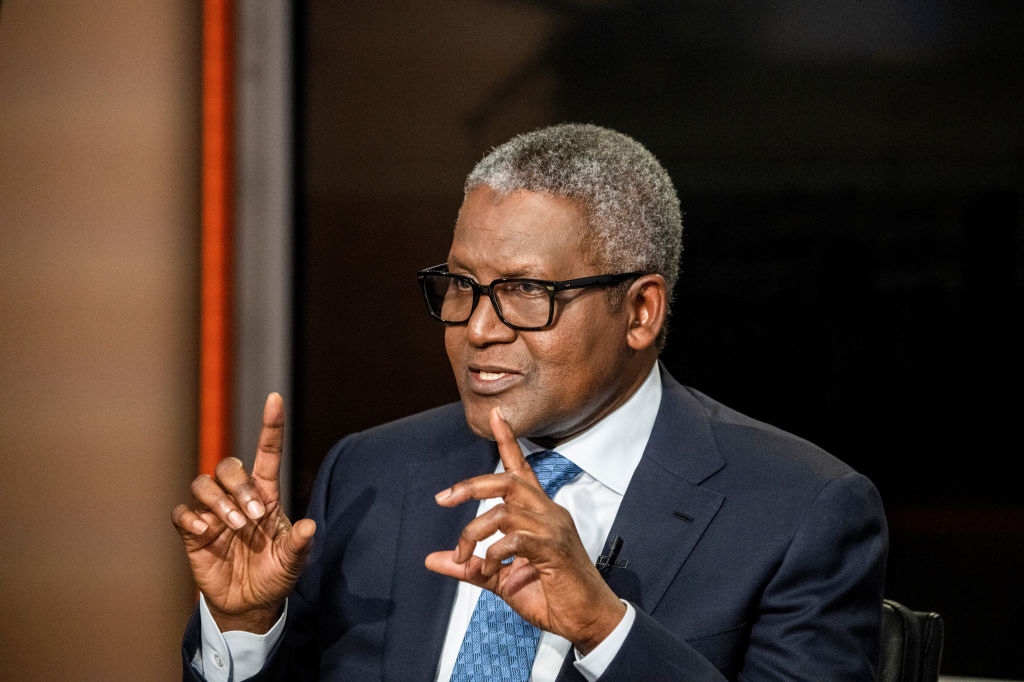
Kenya is set to begin construction of the proposed East Africa Refinery in Lamu, following renewed discussions between President William Ruto, Nigerian industrialist Aliko Dangote and Africa Finance Corporation (AFC) Chief Executive Officer Samaila Zubairu.
Ruto announced the development on Monday after meeting Dangote and Zubairu on the sidelines of the 81st United Nations General Assembly in New York, United States.
The meeting focused on financing arrangements and final preparations for the commencement of the multibillion-shilling refinery project.
According to Ruto, the refinery will play a key role in strengthening East Africa’s energy security while creating jobs, promoting local value addition and supporting industrial development across the region.
“We are ready to break ground on the East Africa refinery in Lamu, a transformative project that will enhance the region’s energy security, deepen local value addition, create jobs and advance our industrialisation agenda,” Ruto said.
He added that the project would open up new economic opportunities, strengthen regional supply chains and help establish East Africa as an energy and industrial hub.
Ruto said his administration was committed to moving the project beyond the planning stage and ensuring that it delivers economic benefits to communities across the region.
“We are focused on turning this landmark project into reality and delivering tangible benefits for the people of the region,” he said.
The proposed refinery is estimated to cost about Sh2.2 trillion ($17 billion) and is expected to have a crude processing capacity of 700,000 barrels per day.
Once completed, the Lamu refinery is expected to supply markets across East and Central Africa and form part of Kenya’s broader strategy to develop Lamu as an energy, industrial and logistics hub.
By Raphaeh Atuu, Abaja
The Federal Government has issued a two-week ultimatum for improved safety and security conditions on the Lagos section of the Lagos-Calabar Coastal Highway, warning that the route could be shut to traffic if motorists and other road users fail to comply with existing regulations.
The Federal Controller of Works in Lagos State, Olufemi Dare, gave the warning on Monday during an inspection tour of the highway, saying the directive followed concerns raised by the Minister of Works, David Umahi, over persistent safety violations, vandalism and other illegal activities along the route.
Dare said the government would have no option but to close the road if there was no significant improvement within two weeks.
“Within two weeks, if there’s no improvement on all these issues, then we have no option than to come back and shutdown this road,” he said.
The controller said the Lekki-Epe Expressway remained available as an alternative route, stressing that the coastal highway was still under construction and should ordinarily not have been opened to traffic before the completion of its bridges.
The Lagos portion of the project consists of two sections covering approximately 103 kilometres. Section 1 stretches about 47km, while Section 2 covers roughly 56km. The two sections have 20 major bridges, with 10 in each section, several of which are still under construction.
Dare expressed concern over motorists exceeding the prescribed speed limit, saying some drivers travel at speeds of up to 120 kilometres per hour despite ongoing construction activities.
He reiterated that the speed limit on the highway was 30 kilometres per hour.
“People who come to coastal road and get to a speed of 120 kilometres per hour on the coastal road, and where constructions are going on, bridges, construction are going on,” he said.
“We have said your speed on the coastal road must not be more than 30 kilometres per hour.”
According to Dare, lives were being lost on the highway “almost every other day”, a situation he said could no longer be allowed to continue.
He also warned operators of articulated vehicles against using the highway as a parking area, saying some trucks and trailers had been left along the route by drivers.
To strengthen security, the Federal Government has reached an agreement with the Lagos State Police Command for increased police deployment along the highway.
Dare said the decision followed meetings between Umahi and the Lagos State Commissioner of Police, Fatai Tijani.
“Beginning from this morning, we’ve started to see the improvement in deployment of police. And we are going to have more,” he said.
The controller also warned motorists against making illegal U-turns, saying offenders would be arrested and prosecuted.
He said motorcycles, tricycles, hawking and animal grazing had also been prohibited on the highway.
“We don’t want Okada motorcycles, tricycles. We don’t want them on the coastal road,” he said.
Authorities, he added, would also move against shanties and other illegal structures along the route.
Vandals Target Safety Infrastructure
Dare identified vandalism as another major threat to safety on the highway, revealing that sections of protective fencing and other safety installations were being removed at night.
He said about five kilometres of ClearVu fencing had been removed, while approximately 18 kilometres of concrete covers had been vandalised and taken away.
“They come in the night, they remove the ClearVu fence that was used to barricade the communities from the coastal highway,” he said.
The government is considering replacing steel ClearVu fencing with concrete barriers in vulnerable locations, which Dare said would be more difficult for vandals to remove.
“We have to change the strategy,” he said. “In areas where we have block work today, we do not have any problem with them.”
The Federal Government is also working towards deploying CCTV cameras to strengthen surveillance along the highway.
40 Coastal Guards for Section 1
Dare disclosed that the government had approved the recruitment of 40 coastal guards for the first section of the highway, with four personnel expected to be selected from each community along the route.
The guards will work with the police to provide community-level surveillance, while additional personnel are expected to be recruited for Section 2.
He said some previously engaged coastal guards had been attacked by suspected vandals, making stronger police protection necessary.
The authorities, he added, plan to reorganise and train the coastal guards under the direct supervision of the Lagos State Police Command.
By David Torough, Abuja
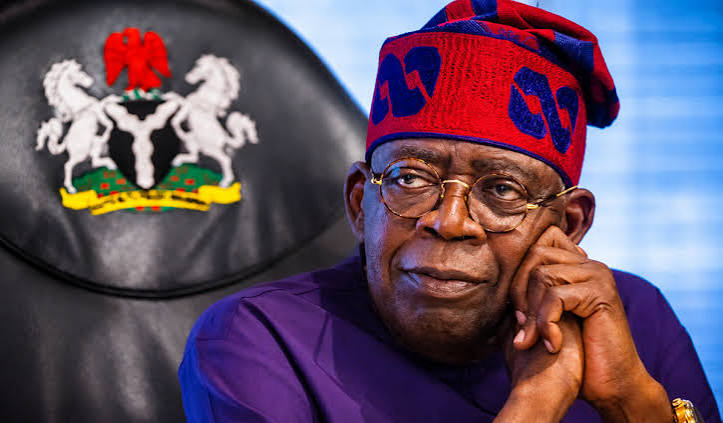
President Bola Tinubu has extended his working vacation in Europe by a few days and is expected to return to Nigeria at the weekend, the Presidency said on Monday, as questions mount over the constitutional implications of the prolonged absence of both the President and Vice-President Kashim Shettima from the country.
Presidential spokesman, Bayo Onanuga, said in a statement that Tinubu departed Nigeria on August 30 for London and later travelled to Paris, France, where he met French President Emmanuel Macron and businessman Vincent Bolloré, whose business interests include Canal+, MultiChoice and Universal Music Group.
According to the Presidency, Tinubu has remained in contact with officials at home and continued to direct the affairs of government while away.
It cited his order for an independent investigation into the deaths of 37 illegal miners in Minna following their detention by the Nigeria Security and Civil Defence Corps as one example of the President’s continued involvement in national affairs.
Tinubu’s absence, however, has generated renewed debate after Shettima also travelled out of Nigeria on September 20 to represent the President at the 81st United Nations General Assembly in New York.
The Presidency said Secretary to the Government of the Federation, George Akume, who has represented the President at official functions, would continue to do so while the President and Vice-President are abroad.
Special Adviser to the President on Policy Communication, Daniel Bwala, also argued that Tinubu’s constitutional powers are not restricted by geography.
In a post on X, Bwala said the President could direct, delegate and administer the affairs of government from anywhere in the world, maintaining that the President remained in charge despite his physical absence from Nigeria.
The explanation has drawn criticism from opposition figures, who have raised questions about the application of Section 145 of the 1999 Constitution.
Former Vice-President Atiku Abubakar asked whether Tinubu had transmitted the written declaration contemplated under the provision before proceeding on vacation.
Section 145 provides that when the President proceeds on vacation or is otherwise unable to discharge the functions of his office, he is to transmit a written declaration to the President of the Senate and the Speaker of the House of Representatives stating that he is proceeding on vacation or is otherwise unable to discharge his functions.
The African Democratic Congress (ADC) also questioned the constitutional implications of the simultaneous absence of Tinubu and Shettima.
The party’s National Publicity Secretary, Bolaji Abdullahi, said on Channels Television’s Politics Today that the situation raised questions about who was constitutionally exercising presidential authority while both principal occupants of the executive offices were outside the country.
Abdullahi particularly questioned the role of the SGF, arguing that Akume is a presidential appointee and does not occupy a position in the constitutional line of succession to the presidency.
He asked who would exercise the powers of Commander-in-Chief in an emergency requiring the immediate direction of the armed forces, and called on the National Assembly to examine the constitutional issues arising from the situation.
The ADC spokesman also questioned whether the Constitution contemplated a prolonged “working vacation” during which a President could remain abroad while continuing to exercise presidential powers remotely.
He said the party was examining possible legal options, including the constitutional implications of the President’s absence.
The Presidency, however, has rejected suggestions that Tinubu’s absence from the country means he is not directing the affairs of government. It has also dismissed claims that his non-attendance at the UN General Assembly reflects an abdication of responsibility, noting that Shettima is representing Nigeria and is expected to deliver the country’s national statement.
Meanwhile, on the political front, the Director-General of the Presidential Campaign Council, Senator Abubakar Yari, has been leading consultations with prominent traditional rulers alongside other party leaders.
With both Tinubu and Shettima currently outside Nigeria, attention is now focused on the President’s expected return at the weekend and the continuing debate over how presidential authority is exercised during extended periods of absence from the country.




OPay at 8: Still Okay, Still Moving Nigeria Forward
ShareEight years after commencing operations in Nigeria, OPay continues to build, innovate and serve, using technology to make financial services...

Kenya, Dangote Advance Plans for $17bn Lamu Refinery
ShareBy David Torough, Abuja Kenya is set to begin construction of the proposed East Africa Refinery in Lamu, following renewed...
FG Threatens Lagos-Calabar Highway Shutdown over Safety Breaches
ShareBy Raphaeh Atuu, Abaja The Federal Government has issued a two-week ultimatum for improved safety and security conditions on the...

Tinubu Extends Vacation as Absence Triggers Constitutional Questions
ShareBy David Torough, Abuja President Bola Tinubu has extended his working vacation in Europe by a few days and is...

Bishop Yakela Calls for Renewed Commitment to God at Makurdi Enthronement
ShareBy David Torough, Abuja The Anglican Bishop of Makurdi Diocese, Rt. Rev. Dr. Godwin Tersoo Yakela, has called on Christians...


Finance Ministry, CBN Sign MoU to Strengthen Fiscal, Monetary Policy Coordination
ShareBy Tony Obiechina, Abuja The Federal Ministry of Finance and the Central Bank of Nigeria (CBN) have formalised a new...

Fuel Hike: FCT Motorists, Commuters Groan as Fares Rise Again
ShareMany motorists, commuters and road transport workers in the Federal Capital Territory (FCT) have expressed concern as petrol prices rise...

SharePost Recapitulation: NAICOM Holds First Quarterly Staff Meeting By Tony Obiechina, Abuja The Commissioner for Insurance, Olusegun Ayo Omosehin, at...
Livestock Ministry Trains 200 Sheep, Goat Farmers in Kano
ShareBy Raphael Atuu, Abuja The Federal Ministry of Livestock Development has trained 200 sheep and goat farmers in Kano State...

Trump Escalates Media Fight after Week of Setbacks
SharePresident Donald Trump has infused his ongoing feud with the White House press with a new level of acrimony. Journalists...