
BUSINESS
Finance Ministry, CBN Sign MoU to Strengthen Fiscal, Monetary Policy Coordination


By Tony Obiechina, Abuja
The Federal Ministry of Finance and the Central Bank of Nigeria (CBN) have formalised a new framework for closer fiscal and monetary policy coordination, in an effort to strengthen economic stability, improve policy consistency and address inflation.
The Minister of Finance and Coordinating Minister of the Economy, Taiwo Oyedele, said the MoU would institutionalise coordination through stronger information sharing, aligned macroeconomic assumptions, consistent forecasts and clearer mechanisms for resolving areas where fiscal and monetary policies could work at cross purposes.
Speaking at the signing ceremony in Abuja, Oyedele said the framework was designed to move coordination beyond personalities and make it a permanent feature of Nigeria’s economic management.
He stressed that while the Ministry and the CBN have distinct mandates and must retain their institutional independence, their policies ultimately affect the same economy and therefore require closer coordination.
He explained that government borrowing has implications for liquidity, interest rates and financing costs, while monetary policy affects government finances.
Exchange rates, tariffs, government spending and agricultural policies also have direct consequences for prices, revenue and economic activity.
Oyedele identified bringing inflation sustainably into single digits as a major focus of the framework, stressing that this could not be achieved through monetary policy alone. He said the Ministry would contribute through disciplined spending, sound cash and liquidity management and more efficient government financing, while fiscal interventions would address structural drivers of inflation, particularly food, energy, imported costs and logistics.
On food inflation, the Minister said the Ministry would work with relevant institutions and state governments to strengthen grain reserves, improve agricultural yields and irrigation, build climate resilience and address farm-to-market infrastructure gaps.
He also ruled out a return to fuel subsidy, saying it would put further pressure on public finances and the naira, while improved foreign exchange stability and tax exemptions on fuel had contributed to moderating prices.
Oyedele said better economic data would also be critical to effective policy coordination, noting that the Ministry was working with the National Bureau of Statistics to expand the quality and range of data available for policy decisions.
Under the new framework, the Ministry and the CBN will also strengthen information sharing on cash positions, financing plans, credit growth and foreign exchange flows. “Better coordination starts with a common evidence base,” he said.
The Minister said recent economic developments showed strengthening confidence in the Nigerian economy, citing a balance of payments surplus of more than $5 billion in 2025 and external reserves of over $54 billion.
He listed increased non-oil exports, declining refined-product imports as domestic refining capacity expands, Nigeria’s return to Frontier Market status and its inclusion in JPMorgan’s new frontier local-currency government bond index.
He, however, stressed that the government’s focus extended beyond short-term portfolio inflows to attracting patient capital that would translate into factories, infrastructure, technology and jobs.
“This required policy consistency and certainty and a regulatory environment that does not impose unnecessary burdens on businesses, while the coordination framework would also take account of the economic consequences of insecurity and illicit financial flows.
Oyedele explained that the Federal Ministry of Finance would continue to drive fiscal discipline, improved liquidity management, stronger transparency and data systems, more efficient financing and reforms aimed at increasing production and easing structural inflation.
“Nigeria has one economy. Fiscal policy cannot succeed without price stability; monetary policy cannot deliver price stability if fiscal policy pulls in the opposite direction,” he said.
The CBN Governor, Olayemi Cardoso, described the signing as a significant step in strengthening Nigeria’s macroeconomic management and economic stability, noting that fiscal and monetary policies are complementary instruments whose combined impact is stronger when they work in harmony.
Cardoso said the MoU did not create a new relationship between the two institutions, which have collaborated for decades on inflation management, debt sustainability, budget financing, exchange rate stability and responses to economic shocks.
Rather, he said, it formalises that longstanding collaboration through structured processes for regular consultation, information exchange and policy coordination.
He said the framework would strengthen cooperation in areas including government cash management, debt issuance planning, liquidity forecasting, macroeconomic analysis and periodic policy consultations.
The CBN Governor added that the timing was particularly important as the CBN advances its transition towards an inflation-targeting framework, whose effectiveness also depends on a supportive fiscal environment.
Cardoso commended Oyedele and the technical teams from both institutions for their roles in bringing the initiative to fruition, reaffirming the CBN’s commitment to sound monetary policy, macroeconomic stability and financial system resilience. He said the strengthened partnership would help build a more stable and resilient economy capable of creating greater opportunities for Nigerians.

By Tambaya Julius, Abuja
United Bank for Africa (UBA) Plc has secured a favourable judgment in its N156 billion debt recovery case against Stallion Group, with the Federal High Court in Lagos ruling in the bank’s favour on all issues and granting the reliefs it sought.
The judgment, delivered on Friday by Justice Daniel Osiagor at the court’s Ikoyi division, upheld the appointment of a Receiver/Manager, the validity of the mortgage security and the liability of the guarantors.
The court also affirmed the receiver’s authority to take possession of the mortgaged property and seek protective orders to safeguard the bank’s interests in recovering the outstanding debt.
In its findings, the court noted that the defendants did not dispute owing UBA but challenged the amount claimed. It held that the reconciliation of accounts between the parties did not extinguish the debt or invalidate the bank’s recovery rights.
The court also dismissed objections raised by the 12th defendant, who failed to establish any ownership or other proprietary interest in the mortgaged property. It consequently ruled that the defendant’s consent was not required for the creation of the mortgage.
In another key part of the judgment, the court restrained the defendants from diverting receivables due to them from government agencies, a measure aimed at protecting the bank’s recovery interests.
The court’s decision on the guarantors’ liability also reinforces UBA’s legal position in pursuing repayment of the outstanding obligations.
The ruling highlights the enforceability of valid mortgage arrangements and the authority of duly appointed receivers to take lawful steps to protect creditors’ interests.
It also reinforces the principle that a disagreement over the amount owed does not, on its own, extinguish an established debt or prevent a creditor from pursuing lawful recovery measures.
The judgment marks a significant development in UBA’s efforts to recover its exposure to Stallion Group and safeguard the interests of the bank and its stakeholders.
Marketers Reject FG’s Plan to Cap Petrol Price
Petroleum marketers have rejected government-imposed N1,350 price caps on petrol, insisting that market forces, competition and improved distribution efficiency should determine prices in Nigeria’s deregulated downstream sector.
The Major Energies Marketers Association of Nigeria said arbitrary price caps would not address the underlying challenges in the petroleum market, advocating transparent pricing mechanisms and measures to tackle supply bottlenecks and reduce operating costs.
According to a summary of MEMAN’s third-quarter press engagement held virtually on Thursday in partnership with S&P Global Energy, the association maintained that “government arbitrary price caps are not the solution to petroleum market challenges”.
It added, “Rather than distorting market prices, the focus should be on transparent, market-driven pricing, efficient distribution and measures that address supply bottlenecks and reduce operating costs.”
The position comes a week after the Minister of Finance and Coordinating Minister of the Economy, Taiwo Oyedele, announced that the Federal Government was negotiating a N1,350-per-litre ceiling on petrol’s ex-gantry or landing cost, under which refiners and importers would initially absorb costs above the ceiling and recover the shortfall later when market conditions improved.
Oyedele said the proposed arrangement, which would be reviewed monthly, was designed to moderate price fluctuations rather than reintroduce the petrol subsidy removed in May 2023.
The government’s proposal followed rising petrol prices linked to international oil market disruptions and renewed pressure on households and businesses. It also announced a 30-day petrol discount at Nigerian National Petroleum Company Limited filling stations, with priority for public transport operators, as part of measures to cushion the impact of higher fuel costs.
MEMAN also called for clearer bulk supply arrangements covering product access, pricing, delivery schedules and contractual obligations, as well as improved inventory visibility, storage capacity, transport coordination and contingency planning.
The association said a well-structured market should enable competition, improve supply security and support better outcomes for consumers without relying on government-imposed price controls or broad-based fuel subsidies.
On regulation, MEMAN commended the Nigerian Midstream and Downstream Petroleum Regulatory Authority for its progress in promoting product quality, digitalising licensing, publishing useful market data and advancing measures to foster fair competition.
It further advocated non-discriminatory access to petroleum products and efficient regulatory processes, stressing the need to uphold quality standards, ensure accurate measurement and deliver the quantities customers pay for.
The engagement also examined developments in global and West African refined petroleum markets, including the need for credible regional pricing benchmarks.
S&P Global Energy highlighted how geopolitical tensions, refining disruptions and changing global supply dynamics had contributed to price volatility, particularly in middle distillates such as diesel and aviation fuel.
The presentations identified the Free on Board West Africa and STS Lomé assessments as reference points for domestically supplied and imported refined products, respectively. Greater transparency, reliable market data and wider industry adoption were described as necessary to establish a credible West African reference market.
MEMAN maintained that a sustainable petroleum market required predictable pricing arrangements, efficient supply chains and fair competition, rather than government-imposed price controls.
It added that a properly structured market should promote competition, strengthen supply security and deliver better outcomes for consumers without relying on government-imposed price controls or broad-based fuel subsidies.
The debate over the N1,350-per-litre ceiling has highlighted the tension between efforts to protect consumers from rising fuel costs and the need to maintain a commercially viable petroleum supply chain.
While a price ceiling is intended to limit how much suppliers can charge at a specified point in the distribution chain, its effect depends on the level at which it is imposed, prevailing supply costs and whether market participants can recover their operating expenses.
MEMAN’s position suggests that controlling prices without addressing the underlying costs of sourcing, transporting, storing and distributing petroleum products could leave structural market problems unresolved.
The association instead called for clearer bulk supply arrangements, predictable pricing mechanisms and improved coordination between domestic refiners and importers.
The group also said Nigeria should prioritise output from domestic refineries while allowing imports to bridge supply gaps and address disruptions.
By Tambaya Julius, Abuja
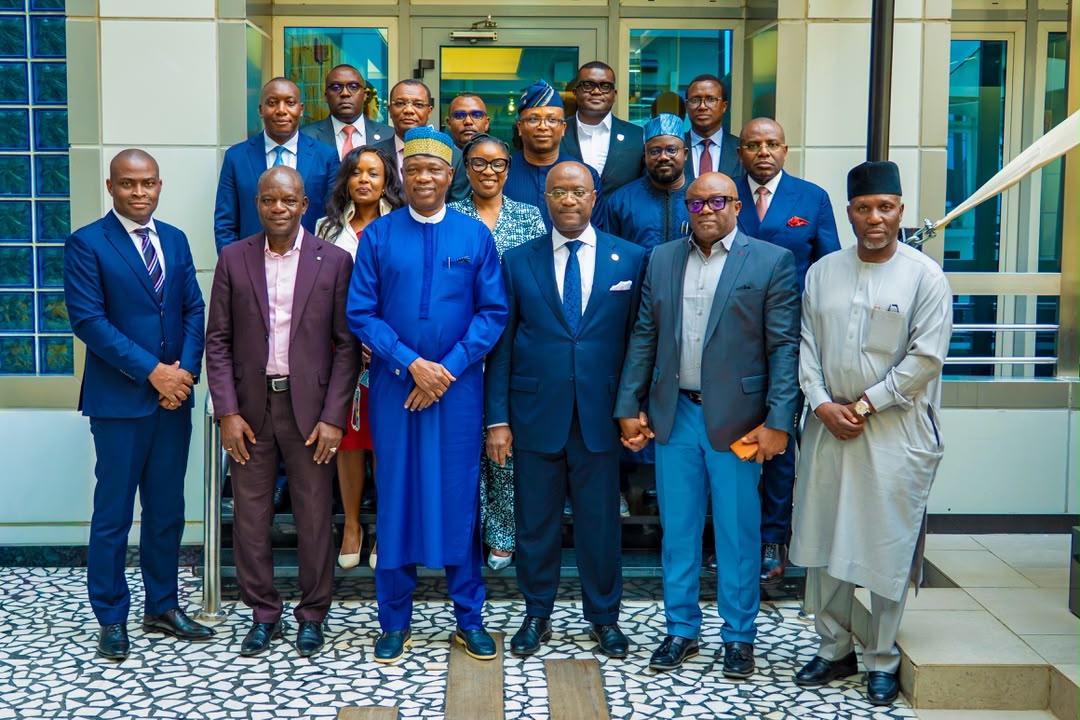
The Nigeria Customs Service (NCS) and the Customs administrations of Benin and Cameroon are working with the African Export-Import Bank (Afreximbank) to modernise key border corridors and improve cross-border trade across the region.
The initiative is expected to strengthen customs operations, ease the movement of goods and support the African Continental Free Trade Area (AfCFTA).
In a statement issued in Abuja yesterday, NCS spokesperson, Abdullahi Maiwada, said the latest discussions were held at Afreximbank’s headquarters in Cairo, Egypt, on October 12.
He said the meeting followed a joint benchmarking visit to Beitbridge Border Post in Zimbabwe and technical assessments of the Mfum–Ekok and Sèmè–Kraké border corridors linking Nigeria with Cameroon and Benin.
The engagement, led by Comptroller-General of Customs Bashir Adeniyi, brought together representatives of the three Customs administrations, Afreximbank and technical partners to review the findings and identify priority areas for improvement.
According to Maiwada, the discussions focused on digital infrastructure, harmonised customs procedures, secure information exchange and capacity building to support a more coordinated approach to border management.
Participants also considered Afreximbank’s possible involvement in the next Customs Partnership for African Cooperation in Trade (C-PACT) and efforts to establish regional and continental transit-guarantee arrangements.
A key issue was the proposed Customs Declarations Exchange System (CDES), which is designed to facilitate secure information sharing among Nigeria’s B’Odogwu platform, Benin’s Customs Webb and Cameroon’s Customs Information System (CAMCIS).
Maiwada explained that the system would allow export information from one country to support the advance preparation of import-manifest information in the receiving country.
However, the receiving Customs administration would retain responsibility for validating the information, applying its national requirements, conducting risk assessments and authorising cargo clearance.
He said that while the system had undergone development and technical testing, further configuration, system integration, security checks and pilot acceptance were needed before deployment.
The assessments also revealed infrastructure and operational challenges at the two border corridors.
At Mfum–Ekok, the identified gaps included unreliable electricity, poor connectivity, inadequate information technology equipment, cybersecurity concerns, limited technical support, incomplete scanner commissioning and challenges with coordinated single-stop border processing.
At Sèmè–Kraké, the challenges included incomplete joint procedures, limited live data exchange, non-functional cargo scanners and weighing facilities, unreliable power supply, traffic congestion and inconsistent operating hours.
The assessment also found that responsibilities for maintaining shared infrastructure at the Nigeria–Benin border remained unresolved.
Maiwada said the findings highlighted the need to fix immediate operational problems while developing a properly assessed and cost long-term modernisation plan.
To advance the programme, Afreximbank proposed a two-stage process beginning with independent engineering assessments and investment-cost studies at both border posts.
This would be followed by the preparation of separate bankable project proposals for the Nigeria–Benin and Nigeria–Cameroon corridors.
The proposed process would include transaction advisory services, legal due diligence, financial modelling and the identification of suitable financing and implementation arrangements.
Afreximbank also indicated that its Project Preparation Facility could support the process, while technical partners, TMP and Bergmans Security Consultants and Supplies Limited, expressed willingness in principle to consider financing the preparatory work themselves.
Maiwada stressed that no final project cost, lending commitment, borrower designation, financing arrangement or implementation contract had been agreed upon.
He said participants nevertheless agreed on the need for direct inspections of the sites, the appointment of designated technical focal points and a clear implementation roadmap covering one, three and six months, supported by a dated action plan.
The NCS reaffirmed its commitment to working with the Customs administrations of Benin and Cameroon, Afreximbank and other partners to strengthen regional cooperation, modernise border operations and facilitate legitimate trade.
Maiwada said further engagements would focus on completing the necessary assessments, clarifying project-preparation arrangements and developing sustainable solutions for the two corridors.
He added that the initiative was expected to improve cargo visibility, streamline cross-border procedures and strengthen coordinated border management, paving the way for more efficient trade and deeper economic integration across Africa.

The Court on Friday ruled in the Bank’s favour on all issues and granted all its prayers.
United Bank for Africa (UBA) Plc has secured a significant legal victory in its debt recovery proceedings against Stallion Group, following a court judgment which upheld the Bank’s position on all issues submitted for determination.
In a sweeping decision, delivered by by Justice Daniel Osiagor of the Federal High Court sitting in Ikoyi, Lagos on Friday, the Court granted all the reliefs sought by UBA, affirming the validity of the appointment of a Receiver/Manager, the enforceability of the mortgage security and the liability of the guarantors.
The Court observed that the Defendants did not dispute the existence of their indebtedness to the Bank but challenged the amount claimed. It further held that the reconciliation of accounts between the parties did not extinguish or negate the underlying indebtedness.
In a major affirmation of UBA’s enforcement rights, the Court upheld the appointment of the Receiver/Manager and confirmed his entitlement to take possession of the mortgaged property and seek appropriate protective orders.
The Court also dismissed objections raised by the 12th Defendant, holding that it had failed to establish any proprietary rights over the mortgaged property. Consequently, its consent was not required for the creation of the mortgage, and its objections were rejected.
Significantly, the Court restrained the Defendants from diverting receivables due to them from government agencies, thereby reinforcing the Bank’s ability to protect its recovery interests.
The judgment also affirmed the liability of the guarantors, strengthening UBA’s legal position in pursuing recovery of the outstanding obligations.
The decision represents a comprehensive victory for UBA, with the Court resolving all issues in the Bank’s favour and granting all the reliefs sought.
The ruling is particularly significant for the enforcement of creditors’ rights in Nigeria, underscoring the legal validity of properly constituted security arrangements and the authority of duly appointed receivers to enforce creditors’ interests.
It also reinforces the principle that disputes over the precise amount of an outstanding debt do not, by themselves, invalidate the underlying indebtedness or prevent creditors from exercising their lawful recovery rights.
The judgment marks a major milestone in UBA’s efforts to recover its exposure to Stallion Group and safeguard the interests of the Bank and its stakeholders.


Adeniyi, JAMB Registrar Seek Operational Synergy
ShareBy Tambaya Julius, Abuja The Nigeria Customs Service (NCS) and the Joint Admissions and Matriculation Board (JAMB) are considering areas...


NLC Suspends FCT Indefinite Strike
ShareThe Nigeria Labour Congress (NLC), Federal Capital Territory (FCT) Council, has suspended its indefinite strike and directed all affected workers,...


APC Dismisses Alleged Plot to Assassinate Atiku
ShareThe All Progressives Congress (APC) Presidential Campaign Council (PCC) has dismissed allegations that the Federal Government is plotting to assassinate...


2027: We’ll Deliver Rivers, FCT for Tinubu – Wike
ShareBy Laide Akinboade, Abuja The Minister of the Federal Capital Territory (FCT), Nyesom Wike, has declared that the All Progressives...

Tinubu’s Three Bills and the Burden of Government
ShareBy Tom Chiahemen A government that asks its citizens to endure the pain of economic reform must demonstrate a corresponding...
DMO Raises N2.02trn As FGN Bond Yields Rise To 17.29 Per Cent
ShareBy Tony Obiechina, Abuja Yields on Federal Government of Nigeria (FGN) bonds increased by as much as 50 basis points...


Anxiety Grips FCT Residents As FG Confirms Ebola Disease Case
ShareBy Laide Akinboade, Abuja The Federal Government (FG), on yesterday confirmed one case of Ebola disease in the Federal Capital...

Again, Tinubu Rules Out Return to Petrol Subsidy Regime
ShareBy Tambaya Julius, Abuja President Bola Ahmed Tinubu has ruled out a return to petrol subsidy, insisting that his administration...


Former Delta Governor Uduaghan Dies at 70
ShareFrom Francis Sadhere, Delta Former Governor of Delta State, Dr. Emmanuel Eweta Uduaghan, has died. Uduaghan, who governed the state...


Customs Opens Review for Disqualified Recruits, Flags 397 Applicants
ShareBy Tambaya Julius, Abuja The Nigeria Customs Service (NCS) has opened a review process for applicants disqualified during its recent...