
Foreign News
Russia-Africa Summit to Improve Security, Economic Ties Between Russia, Africa – Convener

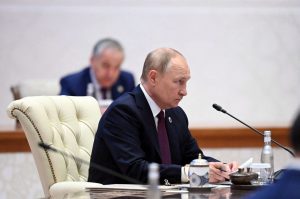
The Convener of the Second Russia–Africa Economic and Humanitarian Summit said the it will bolster ties between Russia and Africa in security, sustainable economic and humanitarian development.
Anton Kobyakov, an Advisor to the President of the Russian Federation and Executive Secretary of the Organising Committee for the Russia–Africa events, made this known on Wednesday.
Kobyakov, in its programme schedules said the summit would create the basis for the establishment of powerful, prosperous and safe regions in new realities.
The News Agency of Nigeria (NAN) reports that the forum will take place in St.
Petersburg, Russia at the Expo Forum Convention and Exhibition Centre from July 27 to July 28, 2023.He said that the summit would strengthen Russian-African cooperation and outline the trajectory of Russia’s relations with African countries in the long-term.
“The summit programme includes more than 30 panel sessions and thematic events on the most important issues involving cooperation between Russia and African states.
“African countries will obviously play an increasingly important role in the emerging architecture of a multipolar world.
“The summit’s business programme consists of four major thematic pillars that encompass all areas of cooperation between Russia and Africa.
“They are; `The New Global Economy’; ‘Integrated Security and Sovereign Development’; ‘Cooperation in Science and Technology’ and ‘The Humanitarian and Social Sphere: Working Together for a New Quality of Life’,’’ he said.
According to him, the programme of the pillar ‘The New Global Economy,’ will focus on the kind of prospects Russian businessmen have for doing business in Africa.
He said the experts would discuss topics on expanding business cooperation between Russia and African countries, their export potential amidst the new challenges, as well as cooperation in agriculture, energy, and logistics.
Kobyakov said the main theme of the ‘Integrated Security and Sovereign Development’ pillar would dwell on international security, political stability, food security and joint efforts to combat epidemics and emergencies.
“The key question that experts plan to answer as part of this pillar is: “How can Russia’s experience in ensuring security be beneficial to African countries?”
“During the panel discussions of the ‘Cooperation in Science and Technology’ pillar, experts will discuss collaboration between Russia and Africa in advanced technologies.
“The key themes of the pillar are how industrial cooperation leads to technological sovereignty and advanced technologies for Africa’s sustainable development.
“Separate sessions will be devoted to nuclear, digital, and healthcare technologies. During the discussions, speakers will talk about how high-tech solutions could unleash Africa’s potential and have a positive socioeconomic impact on numerous areas of society,” he said.
Kobyakov explained that these topics would be addressed as part of the pillar ‘The Humanitarian and Social Sphere: Working Together for a New Quality of Life’.
He said events on the sidelines of the Russia–Africa Economic and Humanitarian Forum would include the Media Forum, the Congress of University Rectors and a roundtable. (NAN)

Poland plans to ban mobile phones in all primary schools from next academic year under draft legislation approved by the government on Tuesday.
The proposal, which will now be submitted to parliament, would take effect on September 1, 2026.
In Poland, primary school education runs through the eighth grade.
The planned law would prohibit the use of mobile phones and other devices capable of recording audio or video during lessons and breaks.
The ban would apply to both public and private schools, the Education Ministry said.
Exceptions would be permitted when the use of a phone is required for teaching purposes, educational support, or for health and safety reasons.
Education Minister Barbara Nowacka said the measure is a response to calls from teachers for stricter rules on smartphone use in schools.
She said that more than half of Poland’s schools have already introduced similar restrictions on a voluntary basis.
The government also approved a package of measures aimed at strengthening child protection online, which must likewise be approved by parliament.
The proposals include tighter restrictions on minors’ access to websites containing pornography and measures designed to speed up the removal of illegal online material.
Under the plans, operators of adult-content websites would be required to verify users’ ages anonymously, without collecting browser data or personal information.

Authorities in the Democratic Republic of Congo (DRC) have reopened the main airport in Ituri Province, the epicentre of the country’s ongoing Ebola outbreak, after a 10-day suspension of commercial flight operations.
The airport in Bunia, the capital of Ituri, resumed operations on Tuesday following the implementation of health and safety measures aimed at containing the spread of the disease.
The DRC is currently battling a major outbreak of Ebola, a highly contagious haemorrhagic fever that is suspected to have claimed at least 246 lives in the country and neighbouring Uganda, according to the Africa Centres for Disease Control and Prevention.
On May 23, authorities halted all commercial flights to and from Bunia Airport in eastern DRC, a region already affected by armed conflict. During the closure, only humanitarian and medical flights were permitted to operate.
Health Minister Samuel Roger Kamba said the temporary shutdown was necessary to allow authorities to introduce measures designed to safeguard travellers and limit the risk of transmission.
Announcing the reopening on Tuesday, the transport ministry said an assessment of the outbreak response and monitoring systems had been conducted.
“Conditions are now in place for a gradual and safe resumption of flights.”
The government said the reopening would be carried out progressively while health authorities continue efforts to contain the outbreak.
Health authorities in the Democratic Republic of Congo are celebrating after five patients, who had Ebola and now recovered, were allowed to leave the hospital.
The current outbreak is suspected to have killed almost 250 people.
But those infected can get better and officials stress that people should seek medical help if they believe they have contracted the virus.On Sunday, there was a ceremony for a group of four nurses who were discharged from a hospital in Bunia, the provincial capital of Ituri, the epicentre of the outbreak.
“We were really demoralised because we knew that at some point… we were going to die. That was it… I’m telling you, if you have never been isolated, you will not know that it’s not easy,” Nurse Etienne Ezo told the Reuters news agency as he reflected on his experience.
The first survivor, a laboratory worker, to have recovered left hospital last week.
Health workers are on the frontline in the battle against the spread of the virus and are often the most at risk.
“This encouraging milestone bears witness to the effectiveness of field interventions: early detection, medical care, contact tracing and community engagement,” DR Congo’s Institute of Public Health wrote on social media.
Its director, Dr. Mwamba Kazadi, described the recoveries as a victory worth celebrating, adding that early detection and strong care make a difference.
Tedros has called on communities to work with medical staff after some residents attacked health centres over strict burial rules. The bodies of those suspected of having died of Ebola are not allowed to be handled by grieving relatives, regulations which clash with local traditions.
In a joint statement with the Congolese government on Sunday, he said local communities are “at the heart of the solution” and that “success” in their response depends on their trust and engagement.
“Persistent challenges include early detection and isolation of cases, contact tracing, safe and dignified burials, robust infection prevention and control in health facilities, and strong community awareness.
“The Government and WHO call on all communities to continue adopting protective behaviours, including regular hand hygiene, early care seeking in health facilities, and sharing accurate information.”
There are now more than 1,000 suspected Ebola cases in the DR Congo, and at least 246 deaths. Neighbouring Uganda has reported nine confirmed cases and one death.
But in some affected areas, there is a sense of normality. In Bunia, schools and markets are open as people continue to go about their daily activities.
The current outbreak – the 17th in DR Cngo’s history – is caused by the Bundibugyo species of Ebola, which has no approved vaccines, though some are being worked on now.
While cases are concentrated in DR Congo’s Ituri, North and South Kivu provinces, and some in Uganda’s capital Kampala, people have also been tested outside of Africa.
Health officials in Brazil said on Saturday that they were investigating two suspected Ebola cases in São Paulo state.
Meanwhile, protests have erupted in the Kenyan town of Nanyuki over US plans to construct an Ebola quarantine facility for American citizens at an air base.
Residents marching through the streets say the facility may expose local people to infection and an outbreak of the virus. There have been no recorded cases of Ebola in the country.




APC Is Losing Stakeholders Because Internal Democracy Has Been Compromised — Otaru Douglas
ShareFormer Nasarawa All Progressives Congress (APC) Publicity Secretary and Chairman, Conference of APC State Publicity Secretaries (CAPs), Chief Otaru Douglas,...
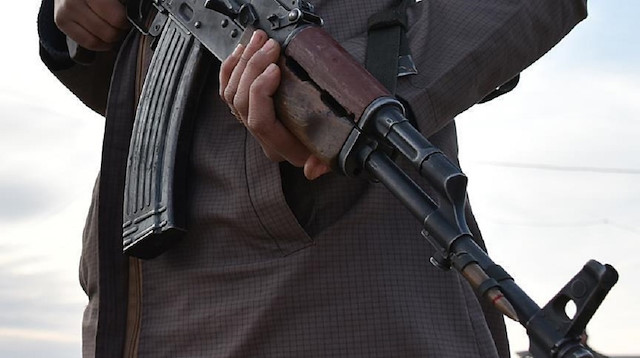
Gunmen Kill Civil Defence Officer, Abduct Daughter in Fresh Attack in Kogi
ShareFrom Joseph Amedu, Lokoja Odo-Ere, the headquarters of Yagba West Local Government Area of Kogi State, came under attack from armed bandits, resulting in...
Sea Drone Rescues US Army Helicopter Crew near Strait of Hormuz
ShareTwo crew members of a US army helicopter that crashed near the Strait of Hormuz on Monday were rescued by an American sea drone, US officials have said. It was the first such operation carried out...
Benue Assembly Extends Suspension of Former Speaker, Majority Leader by Three Months
ShareFrom Attah Ede, Makurdi The Benue State House of Assembly has extended the suspension of former Speaker, Aondona Dajoh, and former Majority Leader, Saater Tiseer, by...
C’River Recovers N1bn from Cocoa Estate Clean-up
ShareFrom Ene Asuquo, Calabar The Cross River State Government said it has recovered about N1 billion in revenue from the Etung Cocoa Estates and...


IMF Warns Nigeria against N7trn Loan Deal with First Abu Dhabi Bank
ShareBy Tony Obiechina, Abuja The International Monetary Fund (IMF) has warned Nigeria that its planned $5bn (approximately N7tn) financing deal...

Insecurity: Reps Give Marching Orders to Service Chiefs
ShareBy Ubong Ukpong, Abuja The House of Representatives yesterday raised fresh concerns over Nigeria’s worsening security situation, warning that the...


Democracy Day: Tinubu Seeks Patience as Reforms, Security Pains Persist
ShareBy David Torough, Abuja President Bola Tinubu has assured Nigerians that his administration is steadily addressing the country’s economic and...

Julius Berger Records Strong Growth Ahead 56th AGM
ShareBy Mike Odiakose, Abuja Construction giant, Julius Berger Nigeria PLC, has reported strong financial performance for the 2025 financial year,...

COAS Urges Media to Lead Fight Against Fake News, Dominate Information Space
ShareBy David Torough, Abuja The Chief of Army Staff (COAS), Lieutenant General Waidi Shaibu, has called on media professionals to...