
Foreign News
Russia Hits Southern Ukraine City, Killing Grain Exporter – Governor


Heavy Russian strikes hit the southern Ukrainian port city of Mykolaiv overnight and early on Sunday, killing the owner of one of the country’s largest grain producing and exporting companies, the local governor said.
Oleksiy Vadatursky, founder and owner of agriculture company Nibulon and his wife, were killed in their home, Mykolaiv Governor Vitaliy Kim said on Telegram.
Headquartered in Mykolaiv, a strategically important city that borders the mostly Russia-occupied Kherson region, Nibulon specialises in the production and export of wheat, barley and corn, and it has its own fleet and shipyard.
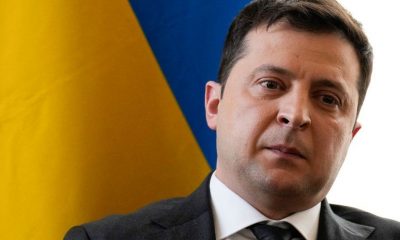
President Volodymyr Zelenskiy described Vadatursky’s death as “a great loss for all of Ukraine”, saying the businessman had been in the process of building a modern grain market involving a network of transhipment terminals and elevators.
Three people were also wounded in the attacks on Mikolaiv, the city’s Mayor Oleksandr Senkevych told Ukrainian television, adding 12 missiles had hit homes and educational facilities.
He earlier described the strikes as “probably the most powerful” on the city of the entire five-month-old war.
Up to 50 Grad rockets hit residential areas in the southern city of Nikopol on Sunday morning, Dnipropetrovsk governor Valentyn Reznichenko wrote on Telegram. One person was wounded.
Ukrainian forces hit Russia’s Black Sea Fleet headquarters in Russian-held Sevastopol early on Sunday, the Crimean port city’s governor Mikhail Razvozhayev told Russian media.
Five staff members were wounded in the attack when what was presumed to be a drone flew into the courtyard at the headquarters, he said.
Reuters could not independently verify the battlefield reports.
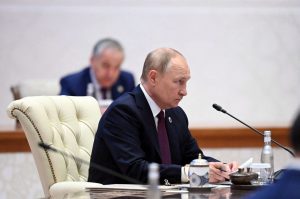
The Sevastopol attack coincided with Russia’s Navy Day, which President Vladimir Putin marked by announcing that the navy would receive what he called “formidable” hypersonic Zircon cruise missiles in coming months.
Those missiles can travel at nine times the speed of sound.
He did not mention the conflict in Ukraine during a speech after signing a new naval doctrine which cast the U.S. as Russia’s main rival and set out Russia’s global maritime ambitions for crucial areas such as the Arctic and in the Black Sea.
Putin sent tens of thousands of troops over the border on Feb. 24, setting off a conflict that has killed thousands, uprooted millions and deeply strained relations between Russia and the West.
The biggest conflict in Europe since World War II has also stoked an energy and food crisis that is shaking the global economy.
Both Ukraine and Russia are leading suppliers of grain.
Zelenskiy said on Sunday the country may harvest only half its usual amount this year due to the invasion.
“Ukrainian harvest this year is under the threat to be twice less,” suggesting half as much as usual, Zelenskiy wrote in English on Twitter.
“Our main goal — to prevent global food crisis caused by Russian invasion.
“Still grains find a way to be delivered alternatively,” he added.
Ukraine has struggled to get its product to buyers via its Black Sea ports because of the war.
But an agreement signed under the stewardship of the United Nations and Turkey on July 22 provides for safe passage for ships carrying grain out of three southern Ukrainian ports.
There is a high possibility that the first grain-exporting ship will leave Ukraine’s ports on Monday, a spokesperson for Turkish President Tayyip Erdogan said on Sunday.
Zelenskiy late on Saturday that said hundreds of thousands of people were still exposed to fierce fighting in the Donbas region, which contains Donetsk and Luhansk provinces and which Russia seeks to control completely.
Swathes of the Donbas were held before the invasion by Russian-backed separatists.
“Many refuse to leave but it still needs to be done,” Zelenskiy said.
“The more people leave the Donetsk region now, the fewer people the Russian army will have time to kill,” he added.
Russia said on Sunday it had invited UN and Red Cross experts to probe the deaths of dozens of Ukrainian prisoners held by Moscow-backed separatists.
Ukraine and Russia have traded accusations over a missile strike or explosion early on Friday that appeared to have killed dozens of Ukrainian prisoners of war in the front-line town of Olenivka in eastern Donetsk.
The International Committee of the Red Cross (ICRC) on Sunday condemned the attack and said it had not yet received permission to visit the site, while adding it was not its mandate to publicly investigate alleged war crimes.
“Families must receive urgent news of and answers on what happened to their loved ones,” it said in a statement.
“The parties must do everything in their power, including through impartial investigations, to help determine the facts behind the attack and bring clarity to this issue,” he added. (NAN)






President Donald Trump has expanded a US travel ban, barring nationals of five additional countries and people travelling on Palestinian Authority-issued documents from entering the US.
The White House said the restrictions were intended “to protect the security of the United States” and will come into force on 1 January.
Full-entry restrictions will be imposed on people from Burkina Faso, Mali, Niger, South Sudan and Syria as well as Palestinian Authority passport holders.
The administration also moved Laos and Sierra Leone, which were previously subject to partial restrictions, to the full ban list and put partial restrictions on 15 other countries, including Nigeria, Tanzania and Zimbabwe.
Trump, who has tightened immigration controls since returning to the White House in January, said the expanded travel ban was necessary because of what his administration described as failures in screening and vetting systems overseas.
Officials cited high visa overstay rates, unreliable civil records, corruption, terrorist activity and a lack of cooperation in accepting deported nationals.
The announcement followed the arrest of an Afghan national suspected of shooting two National Guard troops over the Thanksgiving weekend, an incident the White House pointed to in highlighting its security concerns.
This is the third time Trump has imposed a travel ban.
During his first term, he introduced a similar order in 2017, which sparked protests and legal challenges at home and abroad. The policy was later upheld by the US Supreme Court.
The White House said the restrictions would remain in place until affected countries show “credible improvements” in identity management, information-sharing and cooperation with US immigration authorities.
A number of exceptions apply and the ban will not affect lawful permanent residents, many existing visa holders, diplomats, or athletes travelling for major sporting events. Officials said case-by-case waivers would also be available where travel is deemed to be in the national interest.
Countries with full restrictions:
Afghanistan, Burkina Faso, Burma, Chad, Equatorial Guinea, Eritrea, Haiti, Iran, Laos, Libya, Mali, Niger, Republic of the Congo, Sierra Leone, Somalia, South Sudan, Sudan, Syria, Yemen
Individuals travelling on Palestinian Authority issued or endorsed travel documents are also subject to a full suspension of entry
Partial restrictions:
Angola, Antigua and Barbuda, Benin, Burundi, Côte d’Ivoire, Cuba, Dominica, Gabon, Gambia, Malawi, Mauritania, Nigeria, Senegal, Tanzania, Togo, Tonga, Venezuela, Zambia, Zimbabwe
Special case:
Turkmenistan (restrictions remain for immigrants but have been lifted for non-immigrant visas).

Thousands of drivers could have speeding fines cancelled after a fault saw some cameras falsely triggered on English A roads and motorways.
National Highways said it had found 2,650 wrongful speed camera activations since 2021 due to a delay between cameras and variable speed signs.
Affected drivers will be contacted by police and be reimbursed for any fines while points will be removed from their licences where needed.
Not all camera activations are enforced, so not all of the wrongful activations will have resulted in fines.
National Highways apologised for the error and chief executive Nick Harris said a fix for the issue has been identified.
“Safety is our number one priority.
All drivers should continue observing the posted speed limits as normal. Anyone who has been impacted will be contacted by the relevant police force,” he said.National Highways, which runs England’s motorways, blamed an “anomaly” in how variable speed cameras were interacting with signs on some A roads and motorways.
It meant a delay of around 10 seconds between cameras and relevant variable speed signs, meaning some drivers were incorrectly identified as speeding after the limit had changed.
The body said the 2,650 incidents since 2021 represent fewer than two each day, compared with more than 6 million activations of speed cameras on the affected roads over the same period.
It said the anomaly has impacted 10% of England’s motorways and major A roads.
The fault affects all of the variable speed cameras on smart motorways, and two on the A14 which links the north and the West Midlands to East Anglia.
It is working with police to check activations and promised nobody will now be wrongly prosecuted.
Meanwhile, police forces have stopped issuing fines from variable cameras until they have confidence in their accuracy.
A Department for Transport spokesperson said: “We apologise to anyone who has been affected. Safety was never compromised, and we are working with policing to ensure nobody is incorrectly prosecuted in future.
“Enforcement is still in place, and the public can remain confident that only motorists who break the rules will be penalised.”

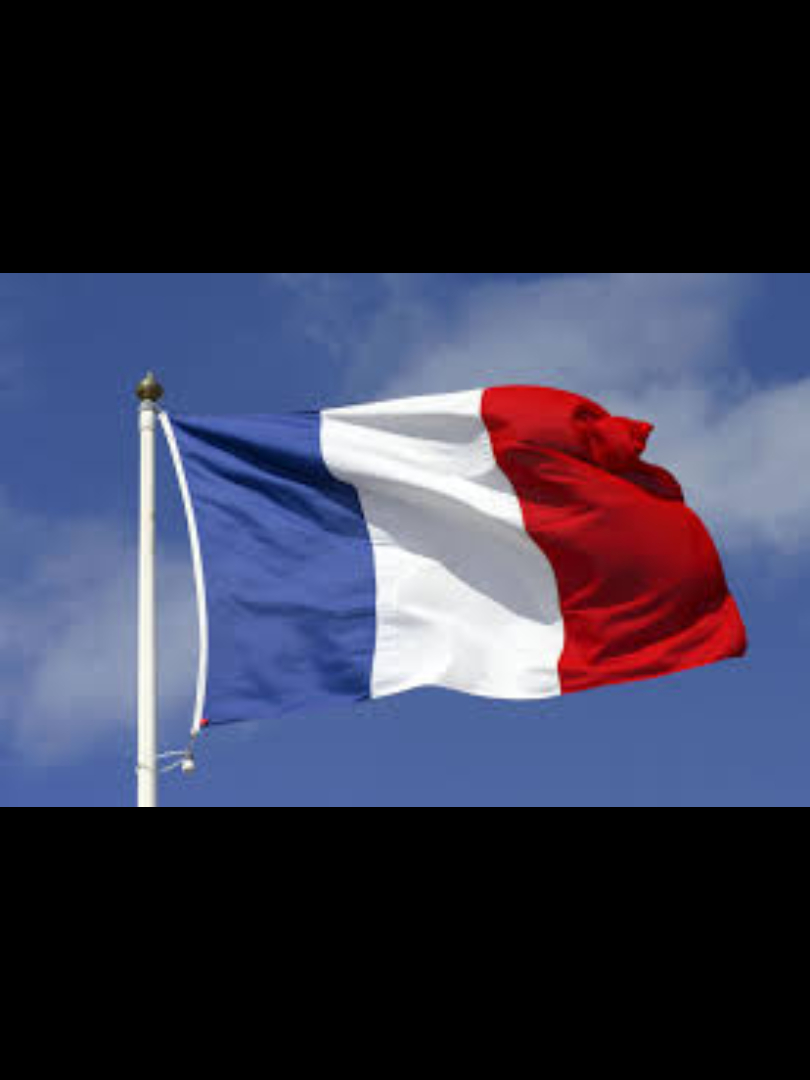
A French court has sentenced a former rebel leader and politician from the Democratic Republic of Congo to 30 years in jail after finding him guilty of complicity in crimes against humanity more than two decades ago.
Roger Lumbala headed a rebel movement backed by neighbouring Uganda accused of committing atrocities during a period known as the Second Congo War.
The judge said the 67-year-old was found guilty of ordering or aiding and abetting torture and inhumane crimes, summary executions, rape constituting torture, sexual slavery, forced labour and theft.
Lumbala, who was living in France when he was arrested nearly five years ago, has refused to accept the legitimacy of the court in Paris.
He did not attend the trial, which began last month, though he was in the dock to hear the verdict on Monday.
Lumbala also served as a minister in DR Congo’s transitional government from 2003 to 2005 and later as a member of parliament.
Several years later the Congolese government issued an arrest warrant for him over his alleged support for the M23, a rebel group currently active in the eastern DR Congo, prompting him to flee to France.
The Second Congo War, which raged from 1998-2003, involved nine countries, numerous rebel groups and led to the estimated deaths of between two and five million people.
At the time Lumbala led the Rally of Congolese Democrats and Nationalists (RCD-N), which allegedly carried out atrocities during a campaign between 2002 and 2003 called “Erase the Slate”.
The operation targeted members of the Nande and Bambuti ethnic groups in the north-eastern provinces of Ituri and North Kivu who were accused of supporting a rival militia.
A UN team that investigated in its aftermath said it was characterised by “premeditated operations using looting, rape and summary execution as tools of warfare”.
Lumbala’s case was prosecuted under the principle of “universal jurisdiction”, which allows French courts to seek justice related to crimes against humanity committed abroad.
Five non-governmental organisations, including Trial International and the Clooney Foundation for Justice, pooled their expertise to participate in the trial, helping support survivors to testify and requesting expert analyses.
Trial International, a Geneva-based justice campaign group, said 65 survivors, witnesses and experts testified before the court about the Erase the Slate operation.
After the verdict, it issued a statement from two of the survivors – David Karamay Kasereka and Pisco Sirikivuya Paluku.
“We were scared but came all the way here because the truth matters. For years, no one heard us,” they said
“We would have preferred to face Roger Lumbala, to look him in the eyes. But this verdict marks a first step toward reclaiming pieces of ourselves that were taken from us.”
During the trial Mr Kasereka, 41, described how his father and neighbours were tortured and killed by Lumbala’s men.
Paluku, who is a now 50-year-old nurse, told of how the rebels robbed and injured him, killed his uncle and raped his friend’s wife.
“We hope that this will serve as a lesson to those who continue to bring grief to the people of Congo, and particularly to Ituri,” he told the Reuters news agency.
Lumbala’s legal team, which has 10 days to file an appeal, called the sentence excessive. Prosecutors had sought a life sentence.
Eastern DR Congo, which is rich in minerals, has been wracked by conflict for more than 30 years, since the 1994 Rwandan genocide. Several peace deals going back to the 1990s have collapsed.
Over the years a number of other militia leaders, including Thomas Lubanga, Germain Katanga and Bosco Ntaganda, have been put on trial and convicted by the International Criminal Court (ICC) for abuses committed in the east of DR Congo.
Human rights groups welcomed Monday’s verdict as a milestone for further accountability in the long-running conflict there.
“This verdict is historic. For the first time, a national court has dared to confront the atrocities of the Second Congo War and show that justice can break through even after decades of impunity,” Trial International’s Daniele Perissi said in a statement.

Nigeria Clinches Bronze in Judo at 4th African Youth Games
ShareTeam Nigeria clinched a bronze medal in judo at the ongoing 4th African Youth Games after winning the 63kg category bout against Zimbabwe. The...

NCDMB Set to Attain 100 Per Cent Local Content in Africa
ShareBy Eddy Ochigbo, Abuja The Nigerian Content Development Management Board (NCDMB) has reaffirmed its determination to increase the current from...


Trump Expands US Travel Ban to Five More Countries
SharePresident Donald Trump has expanded a US travel ban, barring nationals of five additional countries and people travelling on Palestinian Authority-issued documents from entering the US. The White...


Farouk Ahmed, Gbenga Komolafe Resign after Dangote Petition
ShareBy Eze Okechukwu, Abuja President Bola Tinubu has nominated new chief executives for Nigeria’s two foremost petroleum regulatory agencies following the resignation...

NLC Stages Nationwide Strike over Insecurity
ShareLabour Takes Nationwide Protest to Streets over Insecurity The Nigeria Labour Congress (NLC) yesterday led a nationwide protest across major...
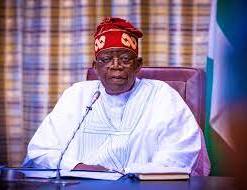

Presidency Transmits N43.5trn 2026 Appropriation Bill to Reps
SharePresident Bola Tinubu yesterday, transmitted the appropriation (Repeal and Re-enactment Bill 2024/2025 bill to the House of Representatives for consideration and expected approval...

SMEDAN Unveils MSMEs New Policy in 2026, Targets Funding Expansion
ShareThe Small and Medium Enterprises Development Agency of Nigeria (SMEDAN) said it will deepen business formalisation, expand access to affordable financing and unveil a new national MSMEs policy in 2026....


NCDMB set to Attain 100% Local Content in Africa
ShareBy Eddy Ochigbo The Nigerian Content Development Management Board (NCDMB) has reaffirmed its determination to increase the current from 56%...
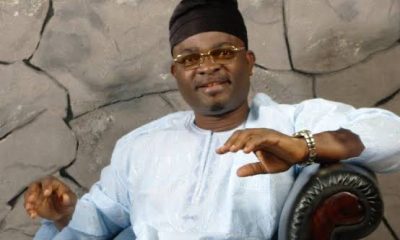

The Man Rotimi Makinde: A True Progressive by All Standards
ShareBy Kolapo Ogundare It is impressive to note that many well-meaning Nigerians are now coming out, recounting several good deeds...
FG, NBS Launch Nationwide MICS7 Survey
ShareFrom Francis Sadhere, Delta The Federal Government of Nigeria, through the National Bureau of Statistics (NBS), has officially launched the...