
EDITORIAL
Sack of Zamfara Traditional Rulers Over Crime

The security situation in Zamfara State has deteriorated like an object on a free fall from a height, with armed bandits and cattle rustlers reigning supreme, a situation that forced many locals to relocate to neighbouring states.
Traditional rulers in the state were accused of being complicit in the insecurity in the area as they served as informants to the bandits.
I n fact, sometime in April, the immediate past defence minister, Mansur Dan-Ali, pointedly said some traditional rulers in Zamfara and the North-West region aided bandits to perpetuate criminal activities in the area. Even though this allegation was denied by the Zamfara State Council of Chiefs, the minister insisted that intelligence reports available to the Federal Government from the region showed that the banditry in the area was aided by some traditional rulers in the state. It was therefore, no surprise when troops of the Nigerian Army attached to Operation Harbin Kunama 3 arrested the traditional heads of Doka and Mutu villages in Gusau Local Government Area of the state for serving as informants to bandits, two weeks after the allegation by the then minister. This was not all. In July, when the state governor, Alhaji Bello Matawalle paid a condolence visit to the families of 32 persons killed by the bandits, residents called for the removal of the Emir of Maru, Alhaji Abubakar Cika Ibrahim and the district head of Kanoma, Alhaji Ahmed Kanoma on the same allegations of aiding banditry in the area. The residents had earlier rough-handled the two traditional rulers. Consequently, the two traditional rulers were suspended while a committee was put in place and charged with the responsibility of ascertaining their complicity or otherwise in the allegations. Following a report of that committee, the two traditional rulers were last week removed from office. This courageous move by Governor Matawalle is commendable as we have previously said on this page that until traditional rulers get involved in the security of their domains are held to account for crimes committed in those jurisdictions, we may never get it right with our security. We have particularly cited the organised traditional chieftaincy hierarchy in the northern part of the country where they have leaders at every level, who know practically every one in their jurisdictions. We therefore, call on the Zamfara State government and security agencies to take this a step further by prosecuting the former traditional rulers to serve as a deterrent to others, while urging other state governments to emulate the Zamfara example.We also commend other efforts by the Zamfara government to bring about a lasting solution to crime in the area, one of which is a recent peace meeting held with some identified bandits in the area, in Birnin Magaji Local Government Area of the state, at the end of which they promised to lay down their arms. Present at the meeting were the state commissioner of police, Usman Nagogo, leaders of Miyetti Allah Cattle Breeders Association of Nigeria; a local vigilance group, Yansakai; Fulani Civilian Joint Task Force and the Special Adviser to the Governor on Security Matters, Abubakar Dauran. The meeting is already yielding positive results as, according to the police boss, 40 kidnapped people have regained their freedom, just as farmers and traders can now go about their businesses freely, without fear of attacks.
The governor has also announced amnesty for all bandits who will surrender their illegal weapons to the government.This carrot and stick approach, though commendable, for the gains it may bring, needs to be approached cautiously, lest the government is seen to be surrendering to the whims of criminal elements. The government needs to learn from the mistakes of other states where such amnesty declarations rather than stem criminality in those areas, emboldened the criminals to continue to terrorise the people and embolden others to venture into such crimes as a way of getting the attention of the government.
Law enforcement agencies need to be alive to their responsibilities by enforcing the law when criminals are apprehended, this will deter others from going into such crimes while local security, led by traditional rulers can also be deployed as a way of checking crime rate.





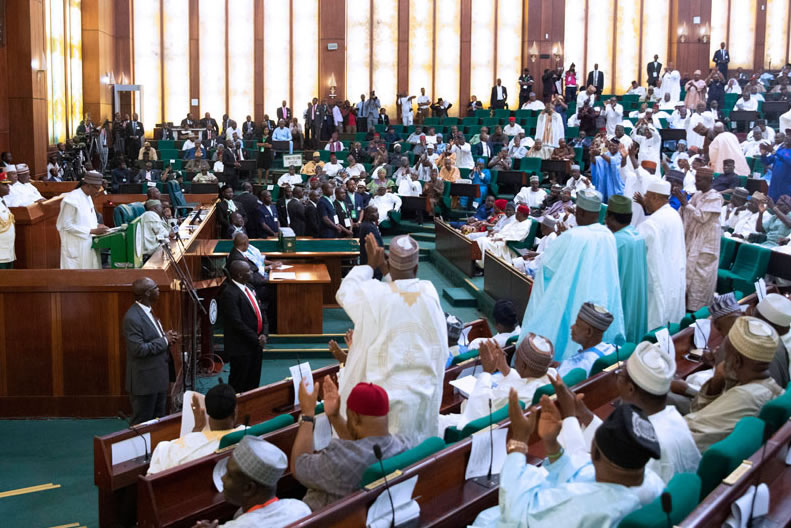
The recent controversy surrounding the voice vote in the House of Representatives highlights the need for the National Assembly to adopt an electronic voting system. The incident, which generated unnecessary tension and mistrust, could have been avoided if a more transparent and reliable method was deployed.
The two chambers of the National Assembly – the Senate and House of Representatives, are governed by specific rules.
In the Senate, Order 72 of the Senate Standing Rules outline three modes of voting; Voice Vote, Signing of Register in a division, or using an Electronic Voting device. The lower chamber too has provisions for voting after exhaustive debate on a motion. The chambers are both fitted with electronic voting devices with myriad benefits, which includes; transparency as votes are recorded, and verifiable, leaving no room for disputes.Also, the use of the electronic voting system erases human error and ensures accuracy. Again, it fosters faster voting processes and instant results. Above all, there will be accountability as lawmakers’ votes shall be on record for their constituents and the entire world to know their stance, thus promoting accountability.
In spite of enumerated advantages of using the electronic scoreboard, installed with millions of Naira of taxpayers money for resolution of heated debates, principal officers of the bi-camera Assembly, have totally abandoned the digital platform alternative for resolving thorny and critical issues confronting the country. Instead, they have continued to deploy crooked uncivilized voice votes that often create confusion. This is exactly what the Speaker of the House of Representatives, Tajudeen Abbas, did on February 17, 2026, during the heated debate raging across the country on real-time transmission of election results. The action of the Speaker led to a very rowdy session in the green chamber, prompting some members to stage a walk-out in protest over the controversial bill for the Electoral Amendment Act.
It started after a motion for the House to reverse its decision on the Electoral Act bill, passed on December 23, 2025. After a rigorous debate, the Speaker then put the motion to a voice vote. While the “nays” were louder than the “ayes”, he controversially ruled that the ayes had it, a development which triggered protests. The action of the Speaker amounts to total disrespect and disregard for millions of Nigerians, within and outside who were watching the event live on television.
There have been past instances where the none use of electronic scoreboard generated tension. For instance, during the debate for the declaration of State of Emergency proclaimed by President Bola Ahmed Tinubu, in Rivers State, controversy erupted when the Speaker’s decision on the voice vote was hotly disputed, highlighting concerns about manipulation and lack of transparency. These incidents underscore the need for transparent voting methods, like electronic voting, to ensure accountability and credibility in Nigeria’s legislative process.
Given that the National Assembly has acquired and installed an electronic voting and results transmission device, it raises concern why it is not being utilized to boost public trust, transparency, and accountability.
The action of the Speaker, who glaringly turned down popular voices in favour of real time transmission of electronic votes in the Green Chamber, signals the unwillingness of the few who cling tightly unto power and would not allow popular voices in line with democratic tenants.
Such a unilateral decision from the Speaker might further embolden those peaceful protesters (some of whom have been camping at the entrance gate of the National Assembly) and indeed across the country to continue to escalate their agitation. Already, a coalition of Civil Society Organisations (CSOs) are insisting on Real-Time Transmission 0f Election Results or nothing. The CSOs have teamed up with other pro-democracy activists in Abuja, to keep their agitation live. They are demanding mandatory electronic transmission, which they believe is essential to strengthening electoral integrity and reducing malpractices.
DAILY ASSET is hereby urging the National Assembly to embrace technology and adopt total electronic voting for transparency and accountability.
The parliament is the bastion of democracy. It is the only arm that stands out to defend the masses. Therefore, members of the National Assembly who constantly gauge the mood of their constituents and vote in line with aspirations of their constituencies should not be blacked out through a nebulous voice vote. Their stance on topical issues confronting the country should not be buried. It is the fundamental right of every Nigerian to track the views of elected representatives in order to hold them to account.
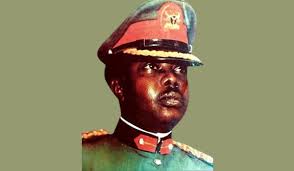
General Murtala Ramat Muhammed needs no introduction to Nigerians of the post-Nigerian civil war era. He rose to the rank of Brigadier-General in 1971 and served as Federal Commissioner for Communications before becoming head of state.
His brief rule witnessed unprecedented reforms – often implemented “with immediate effect”.
Although the massive purge in the civil service initiated by him to curb inefficiency and corruption in the system did not go down well with his critics who believe that the reform was in bad faith and counter-counterproductive, some pundits disagree with that notion. They argue that the measure was a step in the right direction.The critics behind the conspiracy theory that Murtala’s reforms destroyed the nation’s civil service, may have a point because the civil service is still fraught with the challenges of corruption and inefficiency in spite of the reforms.
However, those in support of Murtala’s historic civil service reforms are of the view that they were necessary to sanitize the system. Thus, the debate for and against has refused to go away fifty years after Murtala’s demise.On July 29, 1975, he was named Head of State and Commander in Chief of the Armed Forces following a bloodless military coup. Interestingly, his short reign had a major impact on subsequent developments in the country. On assumption of office, he reformed the civil service and other major institutions.
He put an end to General Yakubu Gowon’s 9-year rule and served between July 1975 and February 1976. Known for his rapid, decisive reforms, including a major civil service purge and the creation of seven new states, Murtala was more or less in a hurry to bring about ground-breaking changes during his short lived military rule.
He wasted no time conceiving the idea of moving the nation’s capital from Lagos to Abuja. However, his 200-day stay on the saddle was cut short by the Lieutenant Colonel Bukar Suka Dimka-led abortive coup on Friday February 13, 1976, exactly 50 years ago today.
Born on November 8, 1938, in the Kurawa Quarters of Kano City, General Murtala Mohammed attended Barewa College, Zaria before enlisting and training at the Regular Officers Training School, Ghana. Thereafter, he attended Sandhurst Royal Military Academy, England; and Catterick School of Signals also in England. He was commissioned a second lieutenant in 1961. Thereafter, he served in the United Nations Peacekeeping Force in the Congo.
Another remarkable landmark of the late no-nonsense general as earlier stated was his restructuring of Nigeria’s state system and eventual creation of seven states on February 3, 1976, ten days to his unfortunate assassination. He created the additional seven states from the existing 12. The seven new states he created were: Bauchi, Benue, Borno, Imo, Niger, Ogun, and Ondo.
General Mohammed served in the Nigerian contingent to the United Nations’ Peace Keeping Force to Congo and on his return, he was posted to the Signals Corp of the Nigerian Army where he had earlier served.
He was a frontline commander in the Nigerian Army in charge of the Second Infantry Division that played a pivotal role in the Mid-Western region during the civil war – 1967 to 1970. After the civil war, he returned as head of the Signals Corp, and later served as Commissioner of Communications during the military government of General Yakubu Gowon.
His government outlined a political program that included the creation of seven more states, the drafting of a new constitution, and the organization of state and national elections as a prelude to the return to civilian rule on October 1, 1979. A committee for a new federal capital was appointed and the findings culminated in the change of the federal capital from Lagos to Abuja. His government also ran a dynamic foreign policy which took a bold stand against apartheid in South Africa and colonial rule in Africa, aligning Nigeria with liberation movements across the continent.
The late general remains one of Nigeria’s most celebrated leaders; remembered for his dynamism, patriotism and sweeping reforms during his short but impactful tenure as Head of State. Though he governed for only 200 days, his leadership redefined the national spirit and left an indelible mark on the country’s history.
Muhammed’s overthrow of General Gowon, who was away in Uganda attending an OAU summit on July 29, 1975, came like a bolt from the blues.
He came to power and hit the ground running as if he was aware that he had limited time on the saddle. At the time, many Nigerians felt Gowon’s administration had become stagnant and lacked the drive to implement reforms.
His arrival ushered in a wave of changes and optimism. He maintained that his plan to move the seat of power from Lagos to Abuja was due congestion and strategic concerns in Lagos. Although he conceived it, he was cut down in his prime and never witnessed what he had set out to achieve. He implemented measures to cut waste, improve government accountability, and instill a new sense of urgency in governance. His straightforward style and refusal to tolerate corruption earned him a reputation as a no-nonsense leader.
On the morning of February 13, 1976, General Murtala Muhammed was assassinated in Lagos in an attempted coup, led by Lt. Col. Buka Suka Dimka. His death threw the nation into shock and widespread mourning because he rapidly became a symbol of hope and reform in post-civil war Nigeria.
He was succeeded by his deputy, General Olusegun Obasanjo, who continued many of his policies and oversaw the transition to civilian rule in 1979. Despite his brief time in office, Murtala Muhammed is remembered as a leader who acted with urgency, patriotism and vision. His era is often described as a turning point when Nigerians felt a renewed sense of national purpose.
In a bid to immortalise him, the Murtala Muhammed International Airport Lagos and several structures across the country were named in his honour. Also, his portrait is superimposed on the country’s twenty naira note. He was married to Ajoke Muhammed, and they had six children. His contributions to national development and his stance that “Africa as a continent had come of age” and should cease to be subservient to Europe and America were remarkable.
Additionally, the late general’s strong advocacy for African independence, notably opposing colonial influence in Angola and insisting that because Africa had come of age, it can survive on his own. Such are some of his greatest legacies that would remain indelible across the African continent.
As DAILY ASSET reflects on enduring legacies of General Murtala Muhammed, we urge the present crop of politicians to take a cue from the dream of our founding fathers to be patriotic by offering selfless service at all levels of governance. They should make public service less attractive through the implementation of genuine developmental reforms instead of looting the public treasury for self-aggrandizement. The absence of good governance has continued to push millions of Nigerians into multi-dimensional poverty. This is unacceptable.
All Nigerians deserve to be given a sense of belonging. The task ahead should not only engender patriotic feelings and passion among the citizenry, it should also fuel, sustain and consolidate the much needed national unity. By and large, fifty years after his untimely death, the late head of state is still being remembered for his service to the nation and not about primitive accumulation of wealth. It is important for present and future generations to understand the sacrifices made by our past leaders in nation building.

Achievers are people willing to go the extra mile to make things happen. They do this both for the sake of humanity and self fulfilment. They find meaning in making things happen in an extraordinary way. That is what it means to be an achiever who deserves to be recognised.
The world is replete with one consensus-reward for honesty, accountability, transparency and good work.
Therefore, rewarding an achiever or a highly resourceful person with encouraging words is to spur him or her to put in more effort to accomplish more tasks for the overall benefit of society. As for those in public service, they go an extra length to contribute to the much needed societal development. Acknowledging and rewarding contributions of an achiever promotes enterprise and industry.The world’s oldest Excellence Awards, The Nobel Prize: motivated by Alfred Nobel in 1901, was born out of the desire to recognize and reward outstanding contributions in various fields to encourage achievements that benefit humanity, focusing on Physics, Chemistry, Medicine, Literature, and Peace.
Some of the world’s most outstanding and oldest excellence awards are; Academy Awards (Oscars) initiated in 1929 to reward excellence in entertainment and film industry. Others include: the Fields Medal in 1936, the highest honour in mathematics and Turing Award in 1966, which recognizes groundbreaking contributions in computer science. There is also Order of the British Empire initiated in 1917 recognizing public service, arts, science, and charitable contributions.
A few of the above awards, recognized globally for their prestige and historical significance are being sustained for their impact in shaping, inspiring, motivating and bringing out the very best in individuals’ field of endeavour.
This is what DAILY ASSET annual awards was set out to emulate; to fuel and inflame passion, zeal and innovation in men and women, young and old. The awards are motivated by the prospect of accomplishing something important and making a difference, both in their own and other people’s lives.
Achievers innovate, stimulate and energise teamwork. They push frontiers of development.
High-achievers remain enthusiastic. He or she does the best in profering solutions, even when everyone else sees things through the prism of impossibility. Simply put, achievers think out of the box.
People gather every other day for myriad reasons. But when an organisation (DAILY ASSET) with a constitutional responsibility, under Section 22 of the Nigerian Constitution, to
mirror society and hold public officers accountable for their stewardship, pulls together eminent personalities from diverse backgrounds for the sole purpose of honouring those that have excelled in their chosen fields, then society is being shaped for the better.
As a result, the gathering to celebrate outstanding individuals and corporate entities who have demonstrated exceptional dedication, innovation and impact in their fields is the contribution of DAILY ASSET to setting high standards. It is also to appreciate excellence. In a world with multiple blocks of failure and few for success, some individuals and corporate entities who rise above board calls for our collective applause.
By recognizing these achievers, we acknowledge the power of hard work, passion, and perseverance. Their successes will motivate others to strive for greatness, creating a ripple effect of excellence that can transform industries and communities for the overall advantage of the country.
To our honorees, your work shines brightly. We are proud to recognize your excellence. Your commitment to your craft is a testament to what is possible when talent meets opportunity. You are role models, showing us what is achievable with dedication and determination.
As we honour our awardees, we also acknowledge the impact of their ingenuity, which no doubt will continue to inspire present and future generations.



FG Opens Sexual Assault Referral Centre in Abia
ShareThe Federal Government has inaugurated an additional Sexual Assault Referral Centre (SARC) in Abia to strengthen Nigeria’s protection framework for...


Report Every Vaccine Reactions to Clinic, Pediatrician Urges Parents
ShareA Consultant Pediatrician, Dr. Folusho Balogun has stressed the need for parents to always report any vaccine reactions experienced by...


UNICEF Records 14m Nigeria Birth Registrations in Two Years
ShareThe United Nations Children’s Fund (UNICEF) said 14 million Nigerian children have had their births officially registered in the past...
Lassa Fever: NCDC Deploys Dialysis Machines across States to Manage Severe Cases
ShareThe Nigeria Centre for Disease Control and Prevention (NCDC) said it has deployed dialysis machines to five states to support...

LUTH Receives FG’s Free Drugs for Indigent Patients
ShareThe Lagos University Teaching Hospital (LUTH), Idi-Araba, on Friday disclosed that the Federal Government has provided free drugs for the...
Adamawa Traditional Rulers Move to Curb Open Defecation
ShareTraditional leaders in Ganye Local Government Area of Adamawa have pledged to sanction residents engaging in open defecation to improve...


Japan Boosts Lagos Cholera Response with $1.7m Medical Supplies
ShareLagos’ cholera response got a major boost as the Japanese Government handed over a new shipment of emergency medical supplies...

Ronaldo Scores 500 Career Goals since Turning 30
ShareAl Nassr FC forward Cristiano Ronaldo has reached a remarkable milestone, scoring 500 goals after turning 30, further cementing his...


Lookman Equals Luis Suarez’s Atletico Madrid Feat in 4-2 Win against Espanyol
ShareAdemola Lookman equaled the feat of Uruguay legend Luis Suarez at Atletico Madrid, after the Super Eagles star scored in...


England Bowlers Secure Crucial Win over Sri Lanka
ShareA superb bowling performance breathed life into England’s T20 World Cup campaign as Harry Brook’s side beat co-hosts Sri Lanka...