
Health
Report Every Vaccine Reactions to Clinic, Pediatrician Urges Parents


A Consultant Pediatrician, Dr. Folusho Balogun has stressed the need for parents to always report any vaccine reactions experienced by their children, to the immunisation clinic.
Balogun, Consultant Paediatrician, Institute of Child Health, University College Hospital (UCH), Ibadan, made the remark on Friday in an interview in Ibadan.
Balogun, also the Oyo State Team Lead of the International Paediatrics Association and Paediatric Association of Nigeria Immunisation champions, said the reports should be used to improve vaccination programmes.
Balogun was speaking on how to manage vaccines reactions in children.
She urged clinics to encourage clients’ report of Adverse Events Following Immunisation (AEFI), do proper documentation and forward the records to the right quarters.
The paediatrician emphasised that the data should be stored and processed appropriately to inform policy and practice.
She added that the AEFI investigation committee should be visible to the public and active at local government, state and national levels.
According to her, it’s the Pentavalent vaccine(the pertussis component) taken at 6,10 and 14 weeks that infants react to most.
“It causes fever and irritability which usually subside within 12 to 24 hours; parents are advised to give the infants paracetamol to control the reactions”.
Balogun cautioned that babies of HIV positive mothers needed to be assessed by health workers to determine their fitness to take some vaccines such as BCG.
She said the HIV exposed infant should be evaluated before the commencement of Immunisation.
“Common vaccine reactions are pain at the injection site, swelling which sometimes forms pus, redness especially in light skinned children and sometimes convulsion.
“Parents are usually informed about the likely side effects before vaccine administration and they are told what to do.
“For fever and pain, paracetamol is given, for swellings, cold compress like ice pack is used.
“For convulsion, the child should be laid on the left side till it subsides because most cases last for a few minutes; then the child should be brought back to the clinic for evaluation,” she said.
Balogun stresses that younger children, especially infants, were more likely to react to vaccines than older ones.
She added that the older the child, the less likely the chance of a reaction.

By Obi Light Ogbonnia
“Can an SS father and an AA mother give birth to a child with sickle cell disease?”
That was the question a curious student asked during one of our recent school awareness campaigns.
It is the kind of question every Nigerian should know the answer to because it lies at the heart of preventing sickle cell disease.The answer is simple: No.
Science teaches us that an individual with genotype SS carries two sickle haemoglobin genes and can only pass the S gene to each child.
Likewise, an individual with genotype AA carries two normal haemoglobin genes and can only pass the A gene. Every child from such a union will inherit the AS genotype, making them carriers of the sickle cell trait but not sufferers of sickle cell disease.If this scientific principle is so clear, why do we occasionally hear heartbreaking stories of couples who insist they were told they were SS and AA, yet they gave birth to a child with SS?
In most cases, the explanation is not a failure of genetics but a failure of our healthcare system. Wrong genotype results remain a silent public health crisis. Poor laboratory practices, expired or counterfeit reagents, poorly calibrated equipment, sample mix-ups, inadequate quality control, and, in some instances, corruption and the falsification of laboratory reports have combined to create a dangerous environment where life-changing decisions are made using unreliable medical information.
The consequences are profound. Young people proceed into marriage believing they are genetically compatible, only to discover years later that both are carriers of the sickle cell gene. Families are thrown into emotional distress. Trust is broken. Parents struggle with the lifelong financial and psychological burden of caring for children living with sickle cell disease. What should have been prevented becomes another painful statistic.
To be clear, medicine recognizes a few exceptionally rare situations, such as unusual haemoglobin variants or the need for advanced molecular testing, where routine tests may require confirmation.
However, these rare exceptions do not alter the established law of inheritance: SS × AA produces AS offspring.
Nigeria accounts for one of the largest numbers of babies born with sickle cell disease every year. We cannot win this battle if the very tests designed to prevent the disease cannot be trusted. Every inaccurate genotype result represents a potential family tragedy waiting to unfold.
The Federal Ministry of Health, regulatory agencies, and professional bodies must intensify oversight of diagnostic laboratories, eliminate counterfeit laboratory reagents, enforce external quality assurance programmes, and sanction facilities and individuals found guilty of malpractice. Laboratory diagnosis must become a matter of public trust, not public doubt.
Equally, Nigerians should avoid relying on a single genotype test, especially when the result will influence marriage or childbearing decisions. Confirmatory testing in accredited laboratories should become the standard practice.
The fight against sickle cell disease does not begin in the hospital ward; it begins in the laboratory. When corruption enters the laboratory, science is compromised, prevention fails, and innocent children bear the consequences. Protecting the integrity of genotype testing is not merely a professional obligation, it is a moral responsibility and a national priority.
If we truly desire a Nigeria with fewer children born with sickle cell disease, then we must first ensure that every genotype result tells the truth.
About the Author
Obi Light Ogbonnia is the Founder and President of the Obi Ogbonnia Sickle Cell Foundation (OOSCF), a sickle cell survivor, public health advocate, and international speaker. He has dedicated his life to promoting genotype awareness, patient support, policy advocacy, and equitable access to quality healthcare. Through education and community engagement, he continues to champion efforts aimed at reducing the burden of sickle cell disease in Nigeria and across Africa. His guiding message remains: “It’s Sickle Cell, Not Sickle Life.”
From Attah Ede, Makurdi
Fresh Lassa Fever outbreak has claimed the life of a senior medical doctor working with APIN Foundation in Konshisha local government area of Benue State.
The State Commissioner for Health and Human Service, Dr.
Paul Ejeh-Ogwuche, who confirmed the new case to journalists in Makurdi on Monday, disclosed that the ministry has embarked on case and contact tracings.Ogwuche stated that the victim succumbed to the disease after struggling within himself for over two weeks, saying the State is on the verge of declaring the outbreak over before the new case was recorded a few days ago.
According to him, emergency response measures have been activated to contain the spread of the viral disease and protect residents.
He maintained that with this fresh outbreak, the ministry has heightened its campaign again and reactivated its awareness campaign by going back to the communities even though they have been doing this all these while.
“There is a fresh case of Lassa Fever in the State. Only one doctor had died. The victim was buried on last Saturday being 20th June, 2026. He worked with APIN Foundation in the Konshisha local government area of the State, but hailed from the Kwande local government axis.
“So far, there is no other person on admission at any hospital in the State. In fact, we wanted to declare the outbreak over before this case came up. The doctor took ill and was managing himself at home and in a private hospital.
“For over two weeks he was struggling and when there was no improvement, then another of his friends told him that his situation is suggestive of Lassa Fever and they carried out something like a casual test on him which turned positive.
“So, when we even wanted to put him on admission at the Benue State University Teaching Hospital, he said no, that we should give him drugs to take at home and injection. But we said no, it wouldn’t work like that. He was eventually taken to the teaching hospital for a test”, he said.
According to the commissioner, a baseline investigation was conducted on the victim where it was discovered that his kidney is getting affected.
“We have to refer him to Jos. So, he actually died in Jos and the corpse was brought from JUTH and buried on Saturday”.
Speaking on other measures being taken to forestall further outbreak, Dr. Ogwuche intimated that the responses to all those emergencies are similar, adding that with the recent outbreak of Ebola, NCDC has been giving them updates and also putting them on alert.
“So also we have been doing that. We checked all our facilities, heightened our surveillance and for this particular case, we have embarked on case and contact tracings too, spreading the message. We have ongoing engagement with the media for jiggles. We are thinking of bringing people to churches and mosques to train and even traditional rulers too because they are in the communities.
“Like I told you earlier, we are about to declare the outbreak over after the 42 incubation period before this case broke out. This is the only case for now. And so, we are still going to wait for another 42 days of incubation before we can think of declaring it over again. But off course, we are looking at it becoming endemic now even though it has season. We need to keep on educating people”, Ogwuche added.
Meanwhile, another medical doctor identified as Dr. Tyoor Cedric Kondom who graduated recently and is waiting for his induction into the profession in the next ten days, has died of bone marrow failure in the State.
The Benue Medical and Dental Students’ Association (BEMSA-National) announced his death in a tribute, describing him as a dedicated and hardworking graduate whose life was cut short at a crucial moment in his career.
“With deep sadness and a profound sense of loss, we join family, friends, and colleagues in mourning the passing of our beloved brother and colleague, Dr. Kondom Cedric, who passed away on Thursday, 18th June 2026,” the association stated.
According to the tribute, Cedric had successfully completed the rigorous demands of medical school and was only days away from being formally inducted as a medical doctor when he died.
The association described him as an exceptional young professional whose time in medical school was marked by determination, resilience, and commitment to the practice of medicine
As Nigeria celebrates Father’s Day 2026, many fathers are battling silent, severe mental health crisis driven by crushing economic hardships and deep societal pressures.
They also decried the systemic gender bias and lack of support structures for men in Nigeria and Africa, urging immediate nationwide commitment to promoting mental health advocacy and institutional recognition for men.
Fathers also spoke on Sunday in Lagos, highlighting their expectations for stronger family bonds and a more inclusive society.
The 2026 Father’s Day is being celebrated on Sunday, June 21: it is an annual observance marked on the third Sunday of June.
Underscoring the psychological weight modern men carried, a Men’s Mental Health advocate, Halima Layeni, emphasised that a severe mental health crisis, driven by relentless societal pressures and economic challenges, was quietly ravaging Nigerian fathers.
Layeni, the Founder and Executive Director of the Life Abuse Foundation (LAAF), presented a grim overview of key issues confronting men across the country, including underemployment, financial inadequacy, and alarming rates of unreported domestic violence against men.
To cushion this crisis, Layeni advocated for the urgent establishment of a Federal Ministry of Men Affairs to ensure men received the structural protection and psychological support necessary for their well-being.
“The establishment of the Ministry of Men Affairs is of immense importance.
“The ministry will provide focused attention on men’s unique issues, improve health outcomes through targeted campaigns, and create economic opportunities that enhance stability and reduce poverty among men,” she said.
Corroborating the advocate’s position, a civil servant, Ferdinand Okoji, noted that the pressure to fulfill traditional roles as primary providers without receiving corresponding domestic appreciation induced severe psychological stress in men.
“Fathers toil day and night to ensure they put food on the table, take care of the family, provide, and make sure that everybody is happy.
“However, most women take it for granted.
“This comes with a lot of stress on men trying to meet up with daily obligations,” Okoji stated.
He added that instead of finding their homes to be peaceful sanctuaries to unwind from economic anxieties, many men faced hostile and cold environments.
“When these men come back home, instead of their wives to calm the stress level the men have gone through, they put more fire.
“It is unfortunate, and the challenge continues as the economic situation of the country continues to batter men,” he said.
Also contributing, a 60-year-old father, Papa Ejima, decried how macro-economic hardships like inflation, unemployment, terrorism, and kidnapping directly impacted paternal mental well-being, especially when children project societal failures onto their fathers.
Papa Ejima lamented that the current hardship had triggered a massive youth migration (Japa) wave, leaving aging parents, especially fathers, isolated and anxious about their future care.
According to him, the mothers would usually join their children especially when it was time for “omugwo’’.
“I have a daughter that graduated from the university two years ago and she has not been employed.
“Each day, my daughter puts the blame on me because of the hardship in the land, demanding that she wants to migrate to another country to secure a job.
“So, the challenge now is, who will take care of me at old age if all of them decide to travel out of the country or out of my base in search of greener pastures?” he asked.



NEPC Seeks Funding for ECOWAS Trade Promotion Network
ShareThe Chief Executive Officer of the Nigerian Export Promotion Council (NEPC), Nonye Ayeni, has urged members of the ECOWAS Trade...
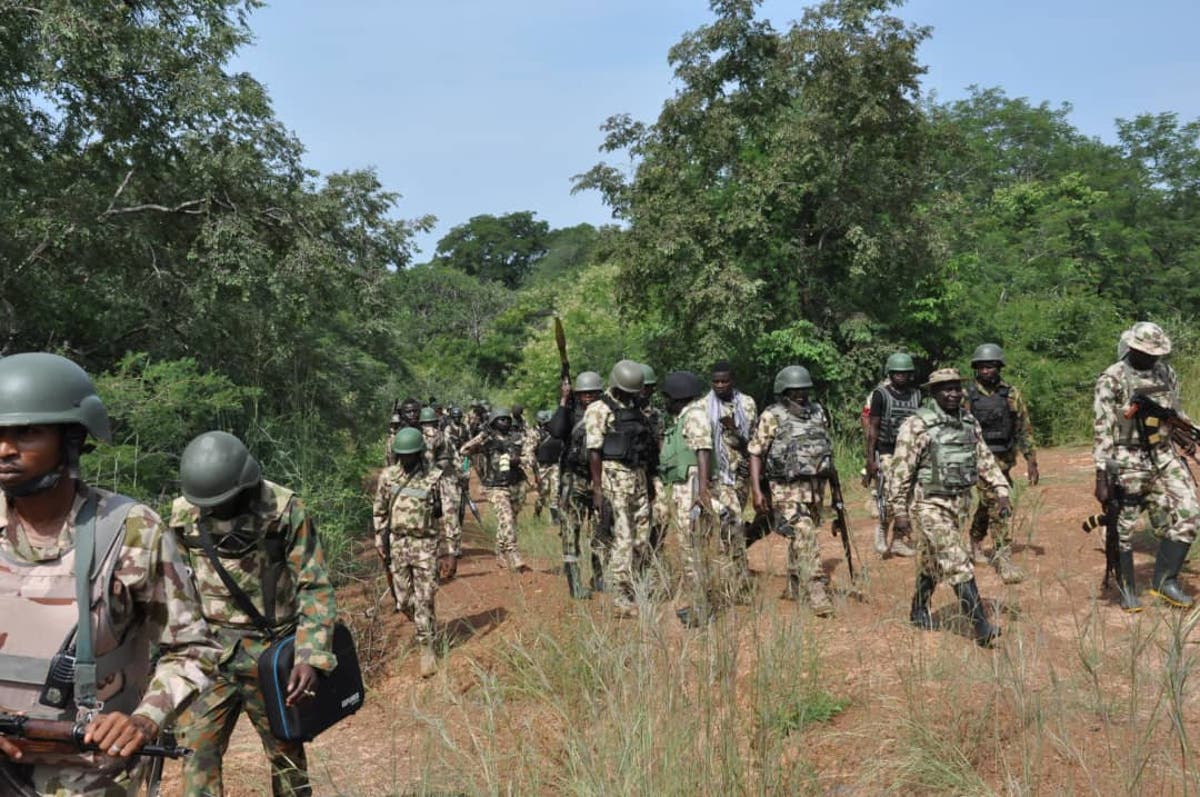
Troops Apprehend Terrorist Informants, Logistics Suppliers in Borno
ShareTroops of Operation HADIN KAI (OPHK) have apprehended suspected terrorist informants and logistics suppliers, received the surrender of an ISWAP...


Troops Rescue 13 Kidnapped Victims, Foil Terrorist Operations in Zamfara Communities
ShareFrom Ifeanyichukwu Nwannah, Gusau Troops of Joint Task Force, North West Operation Fansan Yamma (JTF NW OPFY) have rescued 13...


Wizkid Headline US Summer Festivals
ShareNigerian music superstar, Ayodeji Balogun, popularly known as Wizkid, is set to perform at the BlastFest and the Trillville summer...


Singer Asake Announces ‘In God We Trust’ World Tour
ShareAfrobeats sensation, Ahmed Ololade, aka Asake, is set to embark on a world tour ‘In God We Trust’, a global...


Food Insecurity: Governance, Incompetence and Compromise
ShareBy Akpoturu Best Of all the vulnerabilities that can compromise a sovereign state, the inability to feed its own populace...


Wole Soyinka at 92: Nigeria’s Literary Titan, Africa’s Conscience and Global Intellectual Powerhouse
ShareBy Ehi Braimah There are writers, there are intellectuals, and there are moral giants whose influence transcends literature to shape...


BBNaija: Winner of Season 11 to Get Record N160m Grand Prize
ShareMultiChoice Nigeria has announced that season 11 of the Big Brother Naija (BBNaija) reality TV show will premiere on July...


Diaspora Remittances Hit $1bn Monthly – CBN
Share By Tony Obiechina, Abuja Central Bank of Nigeria (CBN) Governor, Olayemi Cardoso, said diaspora remittances are projected to rise...


Tinubu Launches $3.05bn Social Investment Programmes
ShareBy Tony Obiechina, Abuja President Bola Tinubu yesterday, unveiled a $3.05 billion package of World Bank-supported programmes designed to accelerate...