
view point
Food Insecurity: Governance, Incompetence and Compromise


By Akpoturu Best
Of all the vulnerabilities that can compromise a sovereign state, the inability to feed its own populace is perhaps the most dangerous and destabilizing. Food is not merely a commodity; it is the fundamental infrastructure of human existence.
When a nation faces chronic hunger, it is not simply experiencing an agricultural deficit; it is witnessing a profound breakdown of its social fabric.
In contemporary governance, particularly across developing nations like Nigeria, the narrative surrounding food shortages is often conveniently blamed on external factors: climate change, global supply chain disruptions, or unpredictable weather patterns.While these ecological and global factors are real, they frequently serve as a convenient smokescreen. The stark reality is that modern food insecurity is rarely just an act of nature. More often, it is the predictable, systemic consequence of governance incompetence and deep institutional compromise.
To understand how food insecurity transforms from an agricultural challenge into a national crisis, one must first examine the anatomy of governance incompetence. True governance requires anticipation, strategic planning, and the building of institutional resilience.
Incompetence, however, manifests as an inability to move past reactive emergency management. For decades, agricultural policies in developing states have been defined by short-sighted political cycles rather than long-term sustainability.
Comprehensive programs aimed at rural development, mechanized farming, and storage technology are frequently abandoned halfway whenever power changes hands. The basic infrastructure required to sustain an agrarian economy, such as reliable rural feeder roads, accessible post-harvest storage facilities, and functional irrigation networks, remains broken or largely non-existent.
When a state fails to build the infrastructure needed to transport food from rural agrarian belts to urban markets efficiently, it actively creates artificial scarcity, allowing tonnes of produce to rot in the fields while city centers starve.
This mechanical failure of governance is further worsened by systemic compromise. Policy compromise occurs when the public institutions tasked with ensuring food security are hijacked by private, rent-seeking interests.
In many instances, government interventions, fertilizer subsidies, and agricultural loan schemes designed to empower smallholder farmers are systematically intercepted by political middlemen and ‘paper farmers.’
These well-connected individuals exploit state resources for personal profit while the actual producers are left without capital or inputs. The distribution of high-yield seeds and modern machinery often follows patterns of political patronage rather than agricultural potential.
When access to critical farming inputs depends on political loyalty rather than agronomic need, the productivity of the entire agricultural sector is deeply undermined, leaving the national food supply structurally weak.
Beyond the misappropriation of resources, institutional compromise directly shapes the trade policies that govern food markets. In an attempt to protect domestic markets or benefit favored business monopolies, governments often implement abrupt import bans or complex tariff structures without first building the domestic capacity to meet the resulting demand.
These policy choices, frequently driven by backdoor lobbying rather than sound economic data, create massive distortions in the marketplace.
Smuggling cartels step into the gaps, inflating prices and forcing everyday citizens to spend a disproportionate percentage of their household income on basic food. When regulatory agencies compromise enforcement standards in exchange for bribes, the market becomes flooded with counterfeit inputs, such as fake fertilizers and sub-standard pesticides, which destroy crop yields and ruin the soil, effectively sabotaging future harvests for short-term illicit gains.
Furthermore, the crisis of food insecurity is deeply connected to the state’s broader failure to maintain basic national security. Agriculture cannot thrive in an environment of fear and displacement. When armed bandits, insurgent groups, and criminal syndicates can freely terrorize rural agrarian communities, chase farmers from their lands, and demand illegal taxes before harvest, the agricultural ecosystem collapses.
The state’s inability or refusal to secure rural farmlands represents the ultimate compromise of its primary duty. When rural communities realize that the state cannot protect their lives or livelihoods, they abandon their fields for the relative safety of urban slums or internally displaced persons (IDP) camps. This massive displacement turns productive producers into dependent consumers, putting an unsustainable burden on an already fragile food distribution network.
The economic consequences of this combined incompetence and compromise are devastatingly clear. Food inflation acts as a hidden tax that hits the most vulnerable populations hardest. As the cost of staples rises out of reach, dietary diversity drops, leading to widespread malnutrition and stunting among children.
A malnourished population is a structurally weakened workforce, which reduces long-term economic productivity and locks families into multi-generational cycles of poverty. When the basic act of buying a loaf of bread or a bag of grain becomes a source of daily financial trauma, the political legitimacy of the state erodes.
History shows that when people are pushed to the brink of starvation, the fear of state authority disappears, opening the door to civil unrest, protests, and systemic political instability.
Reversing this dangerous trend requires moving past superficial interventions like temporary food palliatives and emergency handouts, which only treat the symptoms while ignoring the disease. True food security demands a zero-tolerance approach to institutional compromise.
Agricultural intervention programs must be completely insulated from political patronage, utilizing transparent, digitally verifiable distribution channels that deliver resources directly to verified, active farmers.
Additionally, the state must treat the protection of rural agrarian spaces as a critical national security priority, deploying specialized security units to restore safety to farming communities and rebuild broken trade corridors.
Ultimately, food security is the truest metric of functional governance. A nation that cannot feed its people has compromised its sovereignty, leaving itself vulnerable to internal chaos and external manipulation.
The current food crisis is a loud wake-up call, exposing the heavy cost of political negligence and systemic corruption.
If the ruling class continues to prioritize short-term political advantages over structural agricultural reforms, they will soon discover that the hunger they failed to address will become the very force that dismantles their architectures of power.
True national security begins on the farm, and true governance is measured by the abundance on the citizen’s plate.

By Crispin Oduobuk
There are moments when an entire nation seems to breathe again.
The announcement on Friday, 10 July that all 39 pupils and seven teachers abducted from schools in Oriire Local Government Area of Oyo State had finally regained their freedom was one such moment.
After 56 days of fear, uncertainty, and prayers, the children were coming home. Families that had lived between hope and despair could embrace their loved ones once more.It was an operation worthy of commendation. Acting on painstaking intelligence, personnel of the Nigerian Army, the Nigeria Police Force, and the Department of State Services tracked the abductors, rescued the victims, neutralised at least nine kidnappers, and arrested eight others.
For many Nigerians, that is where the story ends. It should not.
The rescue deserves to be remembered not only because 46 innocent Nigerians returned alive, but because it offers perhaps the clearest demonstration yet of the security philosophy that National Security Adviser, Nuhu Ribadu, has been working to institutionalise since assuming office.
Security, after all, is rarely won in the final assault. More often, it is won in the days, weeks, and months before that moment. Through information patiently gathered. Agencies persuaded to work as one. Rival bureaucracies aligned around a common objective. Difficult decisions taken without the benefit of public applause.
The Oyo operation was an illustration of that principle.
When the abduction occurred, public anxiety was understandable. Parents wanted immediate action. Citizens demanded swift results. Yet the circumstances confronting security agencies were exceptionally delicate.
As recently revealed by the Minister of Defence, General Christopher Musa (Rtd), the kidnappers had threatened to execute every child if security personnel attempted a direct assault on their hideout. They demanded the release of some of their commanders already in military custody.
To leave nobody in doubt of their total lack of conscience, the kidnappers had already demonstrated their brutality by the gruesome murder of teacher, Michael Oyedokun, whose killing they recorded and circulated as psychological warfare. The unfortunate killing of Oyedokun, may his soul rest in peace, highlighted how dangerous the situation was.
In such circumstances, speed alone is not strategy. A dramatic raid might have produced headlines. It could also have produced dozens of small coffins.
Instead, the government chose the harder path. Within days of the abduction, the NSA led a high-level federal delegation to Ogbomoso, alongside the Chief of Staff to the President, the Inspector General of Police, and the Minister of Defence. The commitment was clear. Every available instrument of the Nigerian state would be deployed through a carefully coordinated combination of kinetic and non-kinetic measures until every hostage returned safely.
That commitment required more than courage. It required discipline.
Behind every successful rescue lies an invisible ecosystem of institutions. Intelligence must be collected, analysed, and shared. Operational units must trust one another. Political authorities must resist the temptation to prioritise dramatic gestures over calculated outcomes. Decisions must be coordinated across multiple chains of command, often under intense public pressure.
This is precisely the institutional culture the National Security Adviser has attempted to strengthen.
The Intelligence Fusion Centre reflects an understanding that modern threats cannot be defeated by agencies working in isolation. Border management reforms recognise that insecurity rarely respects administrative boundaries. Greater collaboration among defence, intelligence, and law enforcement institutions acknowledges a reality that many nations have already learned. Criminals cooperate far better than governments unless governments deliberately redesign themselves to do the same.
The Oyo rescue demonstrates what becomes possible when those institutional walls begin to disappear.
Critics will understandably ask why it took 56 days. The question is legitimate. The answer, however, lies in what Nigerians witnessed on Friday. 46 hostages returned alive. Measured against that outcome, patience was not indecision. It was strategy.
This distinction matters because Nigeria’s security environment has changed fundamentally. The country no longer confronts conventional threats alone. Terrorism, kidnapping, organised crime, cyber networks, illicit financial flows, and cross-border criminal enterprises operate as interconnected ecosystems.
Responding to such threats requires more than military strength. It demands intelligence, technology, financial tracking, community engagement, and sustained coordination among institutions that historically worked in parallel rather than together.
That is why the role of the National Security Adviser is often misunderstood. The office was never designed to command soldiers in the field. Its comparative advantage lies elsewhere. It exists to ensure that intelligence informs operations, that agencies pursue common objectives rather than competing mandates, and that the machinery of national security functions as a single system instead of disconnected parts.
The Oyo operation demonstrates the value of that model.
The Army provided operational capability. The Police contributed investigative capacity. The Department of State Services supplied actionable intelligence. The Oyo State Government worked closely with federal authorities. The Office of the National Security Adviser sustained strategic coordination across the entire process.
No single institution could have produced that outcome alone.
There is a broader lesson here. Nations are not secured merely by brave individuals. They are secured by institutions that enable brave individuals to succeed.
History remembers dramatic rescues. It often overlooks the patient work that makes those rescues possible. Files examined. Intelligence verified. Meetings held. Information shared. Rivalries set aside. Strategies refined. Decisions revisited. Trust painstakingly built between organisations that must act together when lives hang in the balance.
That work seldom attracts headlines. Yet it is precisely that work that rescued 46 Nigerians in Oyo State.
President Bola Tinubu’s approval of additional forest guards and specialised rescue capabilities points towards the same philosophy. Security cannot depend on reactive deployments alone. It must become preventive, intelligence-led, and rooted in stronger institutions capable of anticipating threats before they mature into tragedy.
Nigeria still has a long distance to travel. Kidnapping remains a grave national challenge. Criminal networks continue to evolve. Citizens are entitled to expect faster responses and safer communities.
But progress should also be recognised where it occurs.
The rescue of the Oyo schoolchildren and teachers was not simply the successful conclusion of a hostage crisis. It was evidence that institutional coordination, when sustained with discipline and purpose, can produce outcomes that once seemed beyond reach.
Those children are back because several arms of the Nigerian state chose cooperation over competition, intelligence over impulse, and strategy over spectacle.
In the years ahead, Nigeria’s greatest security victories may not be defined by the loudest battles. They will be defined by whether the institutions charged with protecting the nation continue learning to think, plan, and act as one.
That is the enduring lesson from Oyo. And if sustained, it may prove to be one of the most consequential developments in Nigeria’s evolving security story.
Crispin Oduobuk is a former acting editor of Weekly Trust. He writes from Abuja.
By Dakuku Peterside
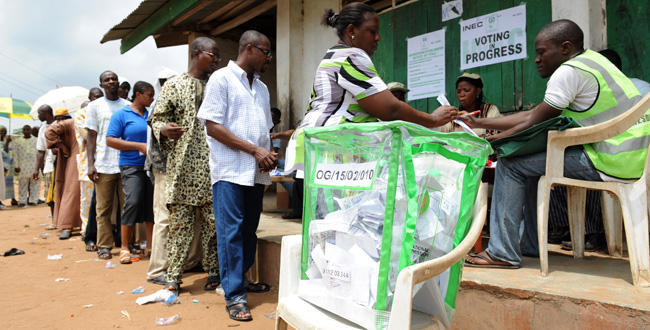
By the time Nigerians file into polling units in 2027, the most consequential battle for the nation’s democracy may already have been fought — and perhaps won or lost. Elections are merely democracy’s public ceremony, the visible culmination of political choices shaped long before the first ballot is cast.
The real test of democratic health lies elsewhere: in the independence of institutions, the conduct of political actors, the resilience of the rule of law, the protection of dissent, and the willingness of those entrusted with power to submit themselves to the same constitutional restraints they expect others to obey.
It is in these quiet, often-overlooked arenas — not on Election Day — that democracies either flourish or gradually unravel. This distinction is essential in the months ahead. Nigeria has every reason to take pride in sustaining uninterrupted civilian rule since 1999.
In a continent where constitutional disruptions and democratic reversals have become increasingly common, the country’s record of regular elections represents an achievement worthy of recognition. Governments have changed through the ballot box, opposition parties have occasionally defeated incumbents, and democratic institutions have matured with each electoral cycle. Yet, democratic longevity should never be mistaken for democratic consolidation.
Conducting elections repeatedly does not, by itself, guarantee the deepening of democracy. A nation may become increasingly proficient at organising elections, while simultaneously becoming less committed to the democratic principles that give those elections meaning.
Democracy is not measured simply by the regularity of voting; it is measured by the openness of political competition, the impartiality of institutions, the protection of fundamental freedoms, and the confidence of citizens that every political actor competes under the same constitutional rules. That distinction matters profoundly as Nigeria begins its long march towards another defining election, in which the health of democracy will be tested beyond the ballot box.
Across the political landscape, internal crises have become almost routine. Leadership disputes, factional struggles, and prolonged litigation have weakened several opposition parties, while internal disagreements have hardly been absent within the ruling party itself. Such tensions are not unique to Nigeria; political parties everywhere experience internal contestation.
What should concern every democrat, however, is the growing public perception that institutions established to arbitrate political disputes are increasingly viewed through partisan lenses. Whether that perception is entirely justified is, in many respects, secondary. Public confidence matters, even when the facts remain contested.
Democracy depends as much on public confidence as it does on constitutional procedure. Institutions derive legitimacy, not only from the powers vested in them by law but also from the trust citizens place in their neutrality.
When confidence in institutional independence erodes, democratic stability becomes increasingly fragile, even where formal constitutional processes remain intact. Trust, once diminished, is far more difficult to restore than to preserve.
History repeatedly teaches the same sobering lesson: democracies rarely collapse in dramatic fashion. They seldom disappear overnight through military intervention or constitutional abolition. More often, they weaken gradually through the slow erosion of institutional checks, the shrinking of the political space, the selective application of laws, the normalisation of unequal political competition, and the quiet acceptance of practices that would once have been considered unacceptable. That is why vigilance before elections is infinitely more valuable than regret after them, especially when warning signs appear gradually.
Equally troubling is the deterioration of political discourse itself. Increasingly, public debate rewards outrage over reason, suspicion over dialogue, and personal attacks over policy alternatives. Social media has amplified misinformation, deepened political polarisation, and accelerated the spread of narratives designed more to inflame emotions than illuminate facts.
Political opponents are too often portrayed not as legitimate competitors but as existential enemies whose very participation in national life is treated with hostility. Such a political culture impoverishes democracy, because pluralism is not democracy’s greatest weakness; it is its defining strength.
The freedom to disagree peacefully, to challenge authority, and to present alternative visions of national development is not a threat to constitutional order. It is the mechanism through which democracy renews itself. Nations do not become weaker because citizens disagree.
They become weaker when disagreement itself becomes unacceptable. The months ahead, therefore, demand a renewed commitment to democratic restraint, beginning with the use of public power.
Public resources must never become instruments of partisan advantage. The constitutional separation between the state and the governing party is one of democracy’s most important guardrails. In mature democracies such as the United Kingdom, the long-established “purdah” convention restricts governments from using official resources to secure electoral advantage during sensitive pre-election periods. The principle is straightforward: governments govern on behalf of all citizens, while political parties campaign on their own behalf.
Preserving that distinction protects both public trust and electoral legitimacy. Every naira appropriated through the national treasury belongs to the Nigerian people, not to any political party. Government property, public institutions, official communication platforms, and state infrastructure exist to serve the Republic, rather than those who temporarily administer it.
Power invariably tempts those who hold it to mistake temporary authority for permanent entitlement. Yet the greatness of democratic leadership lies not in the unfettered exercise of power but in the discipline to restrain it.
History remembers leaders not simply for the authority they wielded but for the constitutional limits they respected while wielding it. The responsibility for protecting democracy, however, does not rest exclusively with those in government; it also falls on the opposition, the media, civil society, and citizens.
Opposition parties cannot demand stronger democratic institutions while neglecting democracy within their own ranks. Persistent factionalism, opaque candidate selection, leadership instability, and organisational indiscipline undermine public confidence just as surely as institutional overreach.
Political parties serve as the training grounds of democratic leadership. When internal democracy collapses, national democracy is inevitably weakened.
Nor can the media and civil society abdicate their responsibilities. Journalism fulfils its highest calling when it subjects power to rigorous scrutiny, while remaining faithful to the facts, rather than to political preferences.
Civil society, likewise, must defend constitutional principles consistently, resisting the temptation to become selectively outraged, depending on which political interests are affected. Principles acquire moral authority only when they are applied impartially.
Ultimately, however, the destiny of Nigerian democracy rests with its citizens, whose choices shape every democratic outcome. The 2023 Nigerian general election itself underscored this responsibility. Beyond debates over technology, logistics and institutional performance, it revealed a politically engaged electorate that increasingly demanded transparency, accountability, and credible electoral processes.
That civic awakening remains one of the country’s greatest democratic assets. Institutions matter enormously, but informed and vigilant citizens remain democracy’s ultimate custodians. No electoral commission can compensate for an electorate that normalises vote-buying.
No constitutional amendment can eliminate ethnic or religious prejudice from political decision-making. No judicial pronouncement can replace civic responsibility.
Democracy reflects the political culture of its people. Citizens who reward competence, integrity and ideas strengthen democratic institutions. Those who elevate ethnicity, patronage, misinformation, or immediate material inducement above national interest weaken the very system upon which their own freedoms ultimately depend.
As 2027 approaches, Nigeria should resist the temptation to reduce political debate to a simple calculation of who will emerge victorious. The larger question is what kind of democracy will remain.
Every administration eventually leaves office. Every governing party eventually confronts the possibility of opposition. Every election eventually becomes history.
What endures are institutions, constitutional conventions and the democratic norms that outlive individual leaders and political movements. Those enduring foundations deserve greater protection than the temporary ambitions of any political generation.
Nigeria has repeatedly demonstrated extraordinary resilience, but this should never become an excuse for complacency. It has survived military dictatorship, constitutional crises, economic upheaval, and periods of profound national uncertainty.
Those experiences testify to the remarkable endurance of the Nigerian state. Democracy survives not because it is indestructible, but because every generation consciously chooses to defend it.
That choice confronts Nigeria once again. The months before the 2027 elections will reveal far more about the nation’s democratic maturity than election day itself, showing whether political actors value constitutional restraint above partisan expediency; whether institutions remain faithful to the Republic rather than to political interests; whether leadership is exercised with humility rather than entitlement; and whether citizens recognise that democracy is sustained not by perpetual victory but by the certainty that power can change hands peacefully, fairly and legitimately. Nigeria must pass this test.
The battle before the 2027 ballots is therefore not fundamentally between political parties, personalities or regions. It is a contest between principle and expediency, between institutional integrity and institutional capture, between democratic restraint and excess. Nigeria must choose which side of that contest it will stand on.
The election will last only a day. The character of Nigeria’s democracy will endure long after the final votes have been counted, and that enduring character will reveal whether the months before the election strengthened principle, restraint and public confidence.
What remains is whether Nigerians will defend it now, before the ballots are cast. History will remember not simply who won in 2027 but whether the nation preserved the democratic values that made victory worth having in the first place.
Dakuku Peterside is a renowned author of two bestselling books, Leading in a Storm and Beneath the Surface.
By Tochukwu Jimo Obi
The debate over the creation of state police in Nigeria has continued to generate intense public discussion.
While many Nigerians believe that decentralising policing will improve security and enable quicker responses to local crimes, others remain worried that state police could become instruments of political oppression in the hands of state governors.
These concerns are genuine and should not be dismissed. However, rather than abandoning the idea of state police altogether, Nigeria should focus on building strong constitutional and legal safeguards that prevent abuse while allowing the country to enjoy the benefits of community based policing.
The greatest fear expressed by critics is that governors could deploy state police to harass political opponents, intimidate critics, manipulate elections, or suppress lawful dissent. Nigeria’s political history provides enough reasons for such apprehension. Yet, it is equally true that institutions, not individuals, determine whether power is abused. A carefully designed legal framework can ensure that no governor exercises unchecked authority over a state police force.
A critical safeguard would be the establishment of an Independent State Police Service Commission in every state. Such a commission must be constitutionally protected from political interference and should comprise representatives of the judiciary, the Nigerian Bar Association, civil society organisations, traditional institutions, and experienced security professionals.
Most importantly, the commission, rather than the governor, should be solely responsible for appointing the State Police Commissioner, recruiting officers, overseeing promotions, enforcing discipline, and dismissing personnel. This arrangement would significantly reduce the possibility of governors filling the police with political loyalists.
The Independent State Police Service Commission should also possess strong oversight and disciplinary powers. It must be empowered to investigate complaints against officers, sanction misconduct, and where a state police force is being used unlawfully, recommend federal intervention. Such powers would create institutional checks capable of addressing abuse before it threatens democratic governance or public confidence in law enforcement.
Equally important is the need to clearly define the governor’s role in state policing. Governors, as Chief Security Officers of their states, may legitimately set broad security priorities and policy directions.
However, they should have no authority to issue operational instructions in individual investigations, arrests, or prosecutions. Day to day policing decisions must remain strictly within the professional discretion of the Police Commissioner and senior officers, thereby insulating law enforcement from partisan political pressure.
The State House of Assembly must equally serve as a strong democratic watchdog. It should possess robust oversight powers to investigate allegations of abuse, summon police leadership for questioning, and scrutinise police budgets and expenditure.
Furthermore, the appointment of a State Police Commissioner should require legislative confirmation, while removal from office should only be possible through the recommendation of at least two thirds of the members of the State House of Assembly, with the concurrence of the Independent State Police Service Commission. Such multiple layers of approval would make arbitrary dismissal virtually impossible.
Beyond state institutions, there should be federal constitutional oversight to preserve uniform national standards. Whether through an expanded Nigeria Police Council or a newly established National State Police Oversight Commission, the Federal Government should retain responsibility for setting nationwide policing standards, monitoring compliance with constitutional principles, and intervening where fundamental rights are persistently violated. This would ensure that every state police force operates within the same democratic and professional framework across the federation.
Strong legal protections against political misuse must also be expressly written into the Constitution and any enabling legislation establishing state police. The law should clearly prohibit the deployment of state police for political purposes or against political opponents of governors.
In addition, every state should establish an independent Police Complaints Authority where citizens can report misconduct without fear of intimidation. Fast track courts should promptly hear cases involving alleged abuse of state police, particularly during election periods, while the Complaints Authority should publish regular reports detailing complaints received, investigations conducted, and disciplinary actions taken to strengthen transparency and public confidence.
Ultimately, the success or failure of state police will depend less on the concept itself than on the strength of the institutions that regulate it. If properly designed, these safeguards would strike the right balance between giving states greater control over local security and preventing governors from converting the police into political weapons.
The overriding democratic principle must remain that no single political office holder should exercise unchecked control over law enforcement. Instead, authority should be shared among independent commissions, the legislature, the judiciary, federal oversight institutions, and the public, thereby preserving professionalism, protecting citizens’ rights, and strengthening Nigeria’s democracy.
Tochukwu Jimo Obi, Obosi Anambra state.



Food Insecurity: Governance, Incompetence and Compromise
ShareBy Akpoturu Best Of all the vulnerabilities that can compromise a sovereign state, the inability to feed its own populace...

Wole Soyinka at 92: Nigeria’s Literary Titan, Africa’s Conscience and Global Intellectual Powerhouse
ShareBy Ehi Braimah There are writers, there are intellectuals, and there are moral giants whose influence transcends literature to shape...


BBNaija: Winner of Season 11 to Get Record N160m Grand Prize
ShareMultiChoice Nigeria has announced that season 11 of the Big Brother Naija (BBNaija) reality TV show will premiere on July...


Diaspora Remittances Hit $1bn Monthly – CBN
Share By Tony Obiechina, Abuja Central Bank of Nigeria (CBN) Governor, Olayemi Cardoso, said diaspora remittances are projected to rise...


Tinubu Launches $3.05bn Social Investment Programmes
ShareBy Tony Obiechina, Abuja President Bola Tinubu yesterday, unveiled a $3.05 billion package of World Bank-supported programmes designed to accelerate...

Appeal Court Reinstates INEC 2027 Election Timetable
ShareBy David Torough, Abuja The Court of Appeal in Abuja has restored the Independent National Electoral Commission’s (INEC) revised timetable...


CAN Mourns the Passing of Rev. Dr. William Uzochukwu Okoye
ShareBy Laide Akinboade Abuja The Christian Association of Nigeria (CAN) mourn the passing of Rev. Dr. William Uzochukwu Okoye, Founder...


APC Stakeholders Condemn Killings In Benue, Urge Govt’s Action
ShareBy Elijah Oguche, Abuja Stakeholders of the All Progressives Congress (APC) in Benue State have condemned the worsening State of...


Alleged Forgery: Civil Society Group Urges PDP NWC to Drop Nnaji, Pick Nnamani
ShareBy David Torough, Abuja The Defence for Democracy, has reiterated earlier call on the leadership of the People’s Democratic Party...
Nigerian Army at 163: Legacy of Sacrifice, Service and Transformation
ShareBy Sumaila Ogbaje When officers, soldiers and defence stakeholders gathered in Port Harcourt for the Nigerian Army Day Celebration (NADCEL)...