
EDITORIAL
Sack of Zamfara Traditional Rulers Over Crime


The security situation in Zamfara State has deteriorated like an object on a free fall from a height, with armed bandits and cattle rustlers reigning supreme, a situation that forced many locals to relocate to neighbouring states.
Traditional rulers in the state were accused of being complicit in the insecurity in the area as they served as informants to the bandits.
I n fact, sometime in April, the immediate past defence minister, Mansur Dan-Ali, pointedly said some traditional rulers in Zamfara and the North-West region aided bandits to perpetuate criminal activities in the area. Even though this allegation was denied by the Zamfara State Council of Chiefs, the minister insisted that intelligence reports available to the Federal Government from the region showed that the banditry in the area was aided by some traditional rulers in the state. It was therefore, no surprise when troops of the Nigerian Army attached to Operation Harbin Kunama 3 arrested the traditional heads of Doka and Mutu villages in Gusau Local Government Area of the state for serving as informants to bandits, two weeks after the allegation by the then minister. This was not all. In July, when the state governor, Alhaji Bello Matawalle paid a condolence visit to the families of 32 persons killed by the bandits, residents called for the removal of the Emir of Maru, Alhaji Abubakar Cika Ibrahim and the district head of Kanoma, Alhaji Ahmed Kanoma on the same allegations of aiding banditry in the area. The residents had earlier rough-handled the two traditional rulers. Consequently, the two traditional rulers were suspended while a committee was put in place and charged with the responsibility of ascertaining their complicity or otherwise in the allegations. Following a report of that committee, the two traditional rulers were last week removed from office. This courageous move by Governor Matawalle is commendable as we have previously said on this page that until traditional rulers get involved in the security of their domains are held to account for crimes committed in those jurisdictions, we may never get it right with our security. We have particularly cited the organised traditional chieftaincy hierarchy in the northern part of the country where they have leaders at every level, who know practically every one in their jurisdictions. We therefore, call on the Zamfara State government and security agencies to take this a step further by prosecuting the former traditional rulers to serve as a deterrent to others, while urging other state governments to emulate the Zamfara example.We also commend other efforts by the Zamfara government to bring about a lasting solution to crime in the area, one of which is a recent peace meeting held with some identified bandits in the area, in Birnin Magaji Local Government Area of the state, at the end of which they promised to lay down their arms. Present at the meeting were the state commissioner of police, Usman Nagogo, leaders of Miyetti Allah Cattle Breeders Association of Nigeria; a local vigilance group, Yansakai; Fulani Civilian Joint Task Force and the Special Adviser to the Governor on Security Matters, Abubakar Dauran. The meeting is already yielding positive results as, according to the police boss, 40 kidnapped people have regained their freedom, just as farmers and traders can now go about their businesses freely, without fear of attacks.
The governor has also announced amnesty for all bandits who will surrender their illegal weapons to the government.This carrot and stick approach, though commendable, for the gains it may bring, needs to be approached cautiously, lest the government is seen to be surrendering to the whims of criminal elements. The government needs to learn from the mistakes of other states where such amnesty declarations rather than stem criminality in those areas, emboldened the criminals to continue to terrorise the people and embolden others to venture into such crimes as a way of getting the attention of the government.
Law enforcement agencies need to be alive to their responsibilities by enforcing the law when criminals are apprehended, this will deter others from going into such crimes while local security, led by traditional rulers can also be deployed as a way of checking crime rate.





The people of Kano State have for ages defined themselves with public morality and decency. To uphold and project these moral fabrics, the State Government established the Hisbah Board; enshrined Sharia-compliant codes, and positioned itself as a guardian of cultural and religious values in Northern Nigeria.
That reputation is now being dragged through the mud by a political campaign so debased that it insults the very women it claims to empower.A viral social media post has shown what purports to be branded underwear distributed to women by state actors under the guise of an “empowerment programme.” But truly, this is not about women empowerment.
It is a moral and political abomination. And if false, the fact that it is believable enough to trend reveals how far the state’s political culture has sunk.True empowerment should lift women out of poverty through skills, capital, education, and access to markets. It should build businesses, pay school fees, and provide healthcare. Reducing “women empowerment” to the distribution of underwear emblazoned with political slogans is not only demeaning, it is a betrayal of every mother, wife, sister daughter, market woman, farmer and student the government claims to serve. It treats adult citizens as objects of ridicule rather than partners in development. The dignity of not just Kano women but all women in Nigeria is not a campaign poster. Their needs are not lingerie.
Kano cannot claim to police public morality through Hisbah raids on dress codes, alcohol and public conduct, while its political class engages in stunts that violate the very standards it imposes on the citizens of the state. Hisbah was created to uphold Islamic values of modesty, privacy, and decency. A government that purportedly brands and shares underwear for political gain makes a mockery of those values. It tells the world that morality in Kano is a tool to control the weak, not a principle that binds the powerful. That double standard corrodes the moral authority of the state and breeds cynicism among the youth.
This episode exposes the rot in campaign culture: the shift from policy to spectacle, from substance to stunts. When politicians cannot articulate a plan for jobs, security, or education, they resort to cheap tokenism. When they cannot defend their record, they distract with scandal. Distributing intimate items with party insignia is not grassroots outreach. It is political grooming disguised as charity. It sexualizes poverty and monetizes shame. No society that respects itself should tolerate this sordid campaign.
Kano is the commercial nerve centre of the North, home to scholars, traders, and industrialists. Its women run major markets, lead cooperatives, and educate the next generation. They deserve policies that expand credit for small businesses, protect girls’ education, and improve maternal health. They do not deserve to be campaign props. The state’s moral identity is not preserved by Hisbah patrols alone. It is preserved when leaders act with the same modesty and restraint they demand from citizens.
DAILY ASSET’s position on this setback is that if the state government sanctioned this distribution, it must apologize, bring those responsible to book and redirect funds to genuine empowerment schemes. The entire saga must be investigated to expose the culprits, and prosecute those using the state’s name to score cheap political points. Silence in this disturbing development amounts to complicity.
Kano cannot preach morality in the morning and practice indecency by noon. The Hisbah Board, religious leaders, women’s groups, and every citizen who believes in the state’s values must denounce this act unequivocally. Politics without ethics is just manipulation. And a state that loses its moral compass will soon lose everything else.
We equally urged organisations like the International Federation of Women Lawyers (FIDA), Federation of Muslim Women’s Association of Nigeria (FOMWAN), Kano League of Senior Lawyers, et al, to rise up and challenge this retrogressive and negative campaign targeted at women. They should swiftly investigate and unearth those behind such an act and initiate a court action to bring them to book.
Public interest litigation must be initiated by the Kano League of Senior Lawyers to enforce Section 34 of the Constitution of Nigeria (as amended) and seek declaratory judgment that such “empowerment” violates constitutional dignity.
The moral grounds on which Kano stands should not be eroded by a few miscreants by negative political campaigns.

On Wednesday, February 28, 2026, the Department of Security Service (DSS) released Walida Abdulhadi, an indigene of Hadija in Jigawa state reportedly involved in a controversial relationship with an operative of the agency with whom she has a baby, to the Jigawa State Government.
She was handed over to Governor Umar Namadi and several top officials of the state government in Abuja, along with her baby. The release followed intense public debate over the relationship between the young woman and the DSS operative, Ifeanyi Onyewuenyi. All along, the debate had centred on the circumstances surrounding her alleged disappearance in 2023.The governor was accompanied to the SSS headquarters in Abuja by the Speaker of the State House of Assembly, Haruna Aliyu; the Attorney General and Commissioner of Justice, Bello Fanini; the Commissioner of Women Affairs, Hadiza Abdulwahab; and her counterpart in the Ministry of Environment, Nura Ibrahim, among others.
The Director General of the DSS, Adeola Ajayi, alongside principal officers of the Service, handed over Walida to Governor Namadi. The Nigerian Supreme Council of Islamic Affairs (NSCIA) was represented by the Deputy National Legal Adviser, Haroun Muhammad, and a member of the Expanded General Purpose Committee, Najib Jimoh.
The birth of a baby to the DSS operative and Walida’s alleged conversion to Christianity has dominated public discourse reminiscent of Ese Oruru saga who was kidnapped at the age 13 from her mother’s food shop in Yenagoa, Bayelsa, to Kano, where she was forcefully converted to Islam and married off to a commercial tricycle driver in 2015. After a prolonged legal tussle Oruru regained freedom and went to school. Interestingly, she has since graduated from the University of Ilorin with a Second Class Upper Division in Education Technology.
And today we are witnessing something similar to the case of Oruru, leading to the intervention of Jigawa state governor and other stakeholders all of whom are insisting on an independent investigation of the matter for a quick judicial process to determine who and what went wrong. That is the way to go because doing otherwise could be detrimental to religious harmony between Muslims and Christians in the country.
Furthermore, releasing Walida to her home state of Jigawa was a right step in the right direction, more so as the state government has assured of her safety and full recovery from whatever trauma she might have passed through.
Again, the move to keep her under the custody of the state government, pending the resolution of all the contentious issues surrounding the controversial relationship is commendable because it would give enough room for the controversy to be tabled before a law court for a snappy adjudication; so that peace can prevail in due course.
Aside individuals, other bodies that have publicly expressed divergent views on the Walida case include; National Supreme Council for Islamic Affairs (NCIA), Federation of Women Lawyers (FiDA), Muslim Rights Concern (MURIC), Federation of Muslim Women’s Associations in Nigeria (FOMWAN), Muslim Students’ Organisation of Nigeria (MSO), Women in Da’awa, International Human Rights Commission Relief Fund Trust (IHRC-RFT), Arewa Youth Assembly (AYA), Women Voices and Accountability, and Gamji Lawchain. This is a clear demonstration of the intensity the Walida case has generated with palpable tension built up through the prism of divergent views.
DAILY ASSET believes that the controversy over Walida’s age, the circumstances surrounding her alleged abduction, and other contending issues would best be resolved by a competent court of law.
Considering the painfully slow process of Nigeria’s justice system and situating the plural society already struggling with mistrust and sectarian tension, there is a need for absolute urgency in resolving the matter. To this end, the judiciary should quickly swing into action. Mindful of time, it must set aside all forms of technicalities and delve headlong into the substance of the matter. This is the sure way to diffuse tension and permanently resolve the impasse, rather than subjecting the sensitive issue to linger on.
By and large, it is important for all aggrieved individuals, stakeholders, family members and other interested parties in the case to exercise restraint and wait for the final verdict of the court, as was the case during the Ese Oruru saga over a decade ago.
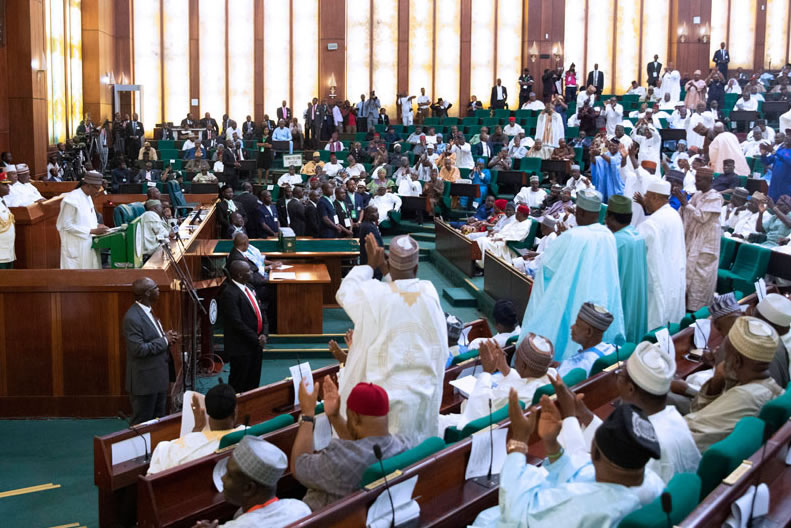
The recent controversy surrounding the voice vote in the House of Representatives highlights the need for the National Assembly to adopt an electronic voting system. The incident, which generated unnecessary tension and mistrust, could have been avoided if a more transparent and reliable method was deployed.
The two chambers of the National Assembly – the Senate and House of Representatives, are governed by specific rules.
In the Senate, Order 72 of the Senate Standing Rules outline three modes of voting; Voice Vote, Signing of Register in a division, or using an Electronic Voting device. The lower chamber too has provisions for voting after exhaustive debate on a motion. The chambers are both fitted with electronic voting devices with myriad benefits, which includes; transparency as votes are recorded, and verifiable, leaving no room for disputes.Also, the use of the electronic voting system erases human error and ensures accuracy. Again, it fosters faster voting processes and instant results. Above all, there will be accountability as lawmakers’ votes shall be on record for their constituents and the entire world to know their stance, thus promoting accountability.
In spite of enumerated advantages of using the electronic scoreboard, installed with millions of Naira of taxpayers money for resolution of heated debates, principal officers of the bi-camera Assembly, have totally abandoned the digital platform alternative for resolving thorny and critical issues confronting the country. Instead, they have continued to deploy crooked uncivilized voice votes that often create confusion. This is exactly what the Speaker of the House of Representatives, Tajudeen Abbas, did on February 17, 2026, during the heated debate raging across the country on real-time transmission of election results. The action of the Speaker led to a very rowdy session in the green chamber, prompting some members to stage a walk-out in protest over the controversial bill for the Electoral Amendment Act.
It started after a motion for the House to reverse its decision on the Electoral Act bill, passed on December 23, 2025. After a rigorous debate, the Speaker then put the motion to a voice vote. While the “nays” were louder than the “ayes”, he controversially ruled that the ayes had it, a development which triggered protests. The action of the Speaker amounts to total disrespect and disregard for millions of Nigerians, within and outside who were watching the event live on television.
There have been past instances where the none use of electronic scoreboard generated tension. For instance, during the debate for the declaration of State of Emergency proclaimed by President Bola Ahmed Tinubu, in Rivers State, controversy erupted when the Speaker’s decision on the voice vote was hotly disputed, highlighting concerns about manipulation and lack of transparency. These incidents underscore the need for transparent voting methods, like electronic voting, to ensure accountability and credibility in Nigeria’s legislative process.
Given that the National Assembly has acquired and installed an electronic voting and results transmission device, it raises concern why it is not being utilized to boost public trust, transparency, and accountability.
The action of the Speaker, who glaringly turned down popular voices in favour of real time transmission of electronic votes in the Green Chamber, signals the unwillingness of the few who cling tightly unto power and would not allow popular voices in line with democratic tenants.
Such a unilateral decision from the Speaker might further embolden those peaceful protesters (some of whom have been camping at the entrance gate of the National Assembly) and indeed across the country to continue to escalate their agitation. Already, a coalition of Civil Society Organisations (CSOs) are insisting on Real-Time Transmission 0f Election Results or nothing. The CSOs have teamed up with other pro-democracy activists in Abuja, to keep their agitation live. They are demanding mandatory electronic transmission, which they believe is essential to strengthening electoral integrity and reducing malpractices.
DAILY ASSET is hereby urging the National Assembly to embrace technology and adopt total electronic voting for transparency and accountability.
The parliament is the bastion of democracy. It is the only arm that stands out to defend the masses. Therefore, members of the National Assembly who constantly gauge the mood of their constituents and vote in line with aspirations of their constituencies should not be blacked out through a nebulous voice vote. Their stance on topical issues confronting the country should not be buried. It is the fundamental right of every Nigerian to track the views of elected representatives in order to hold them to account.


Nigerian Army at 163: Legacy of Sacrifice, Service and Transformation
ShareBy Sumaila Ogbaje When officers, soldiers and defence stakeholders gathered in Port Harcourt for the Nigerian Army Day Celebration (NADCEL)...


What the Oyo Situation Teaches about Nigeria’s Emerging Security Doctrine
ShareBy Crispin Oduobuk There are moments when an entire nation seems to breathe again. The announcement on Friday, 10 July...


Fintiri Swears in Newly Elected Council Chairmen
ShareAdamawa State Gov, Ahmadu Fintiri, on Wednesday, swore in 21 newly elected council chairmen to administer the local governments in...

NECO Targets Full CBT Transition as Hitch-free Exam Boosts Confidence
ShareThe Minister of State for Education, Prof. Suwaiba Ahmad has expressed satisfaction with the conduct of the National Examinations Council...


Adeleke’s Call for Visa Ban on APC Stalwarts Sign of Political Jitters, Says Oyebamiji
ShareFrom Ayinde Akintade, Osogbo The governorship candidate of the All Progressives Congress (APC) in the forthcoming gubernatorial election in Osun...


Midnight Social Media Curfew Proposed for UK Teens Aged 16, 17
ShareOlder teenagers in the UK will face an overnight social media curfew, the government has announced – though they will...


UN Forum Participants Discuss Role of Private Sector in Achieving SDGs
ShareThe 2026 UN Global Business Forum on the Sustainable Development Goals (SDGs) has concluded, with participants calling for a greater...


Aliko Dangote: Africa’s Industrialist-in-chief
ShareBy Wale Osofisan Aliko Dangote’s rise from a trader from Kano to the builder of some of Africa’s most important...


When a Toothache Turns Fatal: Nigeria’s Silent Antimicrobial Resistance Crisis
ShareBy Racheal Abujah Mrs Amara Obi, a 28-year-old trader at Wuse Market in the FCT, believed that she only had...


World Cup: We Were Not at Our Best – Mbappe
ShareKylian Mpappe said he and his France teammates did not perform well to progress to the 2026 FIFA World Cup...