
BUSINESS
Sani Presents N985.9bn 2026 Proposed Budget to Assembly

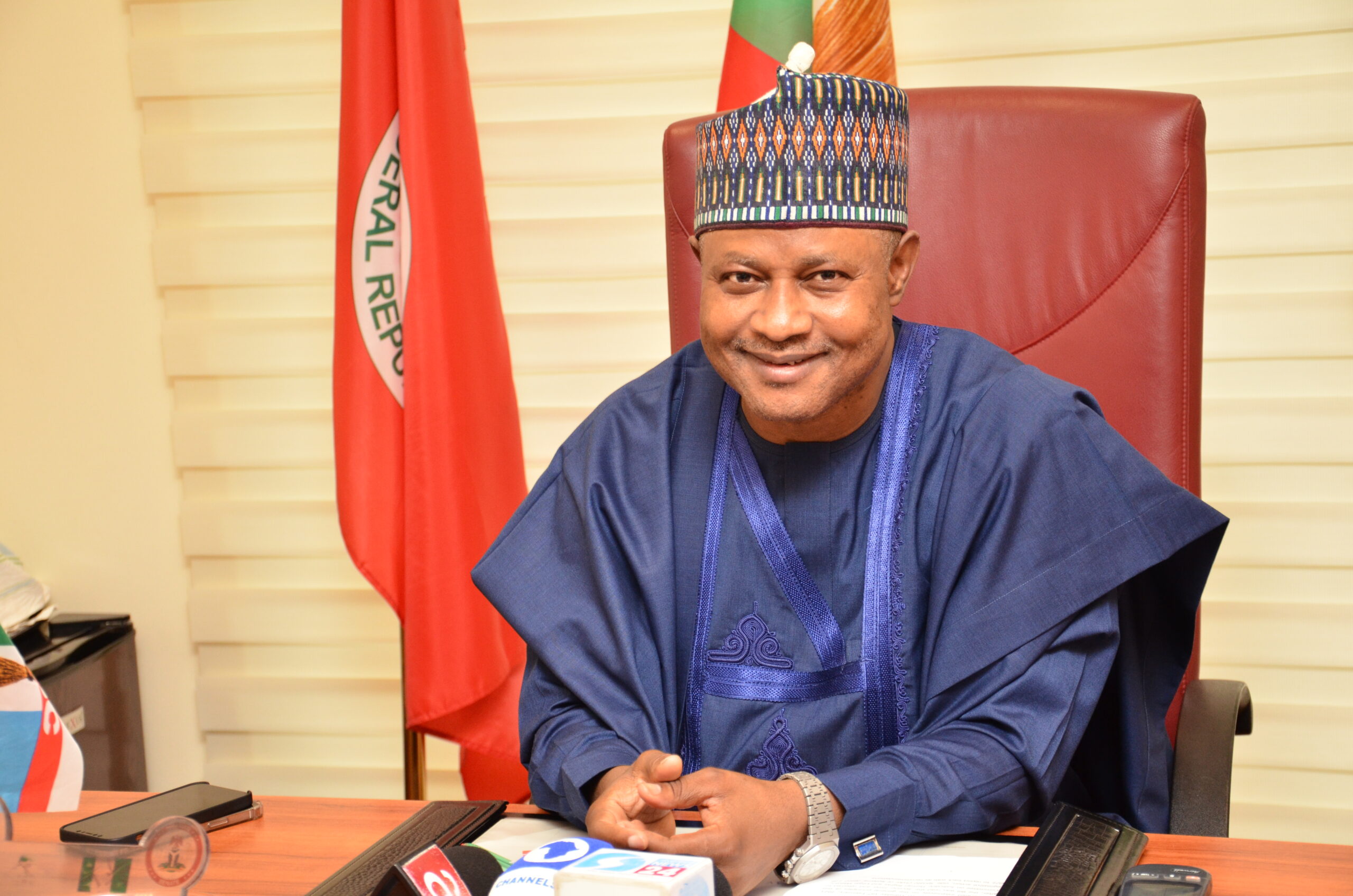
Kaduna State Governor, Uba Sani on Monday presented a N985.9 billion budget proposal for the 2026 fiscal year to the State House of Assembly, outlining a spending plan.
The proposed budget heavily focused on capital development, transparency, and community-driven projects.
He said that the proposed budget was designed to “renew, rebuild and reposition,” the state, adding that every urban and rural community was considered in the development plan.
According to him, the budget has a projected recurrent revenue of N734.29 billion and capital receipts of N251.62 billion, including grants and loans.
He said the administration had strengthened evidence-based governance through surveys on agriculture, health, poverty, GDP and malaria prevalence, which now guide the allocation of resources and programme planning.
The Governor also stated that the state remained Nigeria’s leading sub-national performer in the Open Government Partnership (OGP), having fully implemented infrastructure transparency standards such as OC4IDS.
A breakdown of the expenditure framework shows that N286.23 billion, representing 29 per cent, was earmarked for recurrent spending, while N699.69 billion, representing 71 per cent, was designated for capital expenditure.
He said the capital-heavy allocation reflected the government’s commitment to long-term asset creation and sustainable growth.
Under sectoral allocation, Educational Infrastructure and Rural Transformation each received 25 per cent, while Health was allocated 50 per cent.
Other allocations included: Agriculture and Food Security,, 11 per cent, Security six per cent, Social Development five per cent, Environment and Climate Action four percent and Governance and Administration five per cent.
The governor said the administration had focused on prudent debt management, adding that the state had contracted “almost no new loans” since he assumed office.
He disclosed that N114 billion had been spent on servicing inherited debts, while government continued to maintain essential public services.
On community development, he said, each of the state’s 285 wards received N100 million for community-selected projects under the World Development Priorities and Community Charter Programme, describing it as one of the country’s largest participatory budgeting initiatives.
He urged the lawmakers to give the 2026 Appropriation Bill accelerated consideration.
Responding to the presentation, the Speaker, Dahiru Liman, commended the governor for reviving old development initiatives and launching new projects that directly benefit both rural and urban communities.
He said the administration’s focus on underserved areas was particularly noteworthy and reaffirmed the assembly’s confidence in the governor’s leadership, noting that the state was on a path of sustained progress.
He also pledged the full commitment of lawmakers to support the government’s development agenda and assured that the lawmakers would thoroughly review the 2026 budget to ensure it reflects the people’s interests.
He said the assembly would work closely with the executive to drive inclusive development, infrastructure expansion and improved service delivery.
 | ReplyReply allForwardAdd reaction |
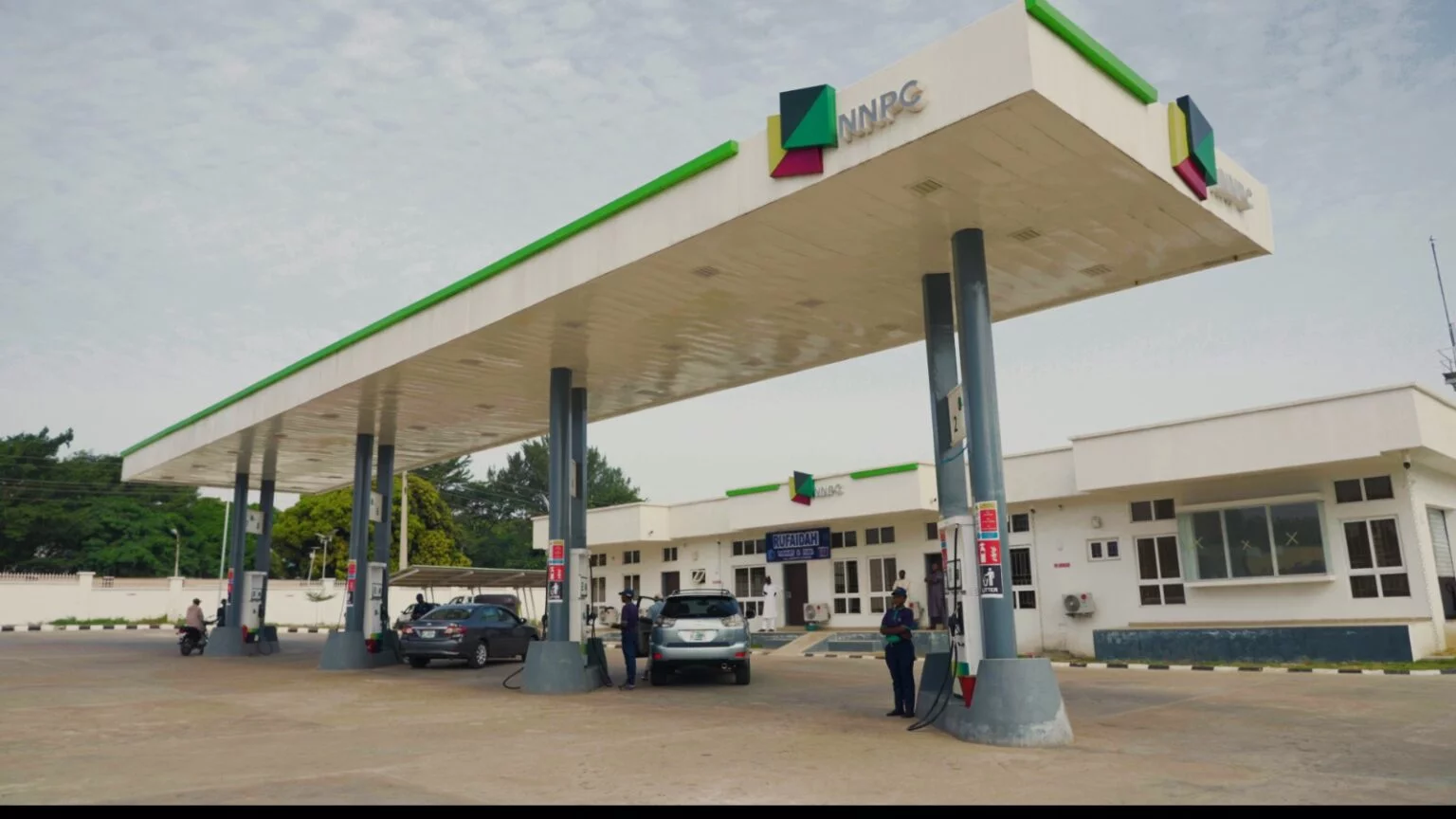
The Nigerian National Petroleum Company Limited has reduced the pump price of petrol at its retail outlets to N1,130 per litre in Lagos and N1,165 per litre in Abuja.
The new pricing reflects a N100 reduction from the previous N1,230 per litre in Lagos and a N95 decrease from N1,260 per litre in Abuja.
Checks showed that the revised price was being dispensed at several NNPC retail stations in Lagos, including outlets along Isheri Oshun Road, Apple Junction and Ago Palace Way.
Similarly, some stations operated by the national oil company in the Federal Capital Territory were selling petrol at N1,165 per litre, including outlets in Jabi, Lifecamp, Wuse Zone 5 and Wuse Zone 4.
The price adjustment follows a recent reduction in the ex-gantry price of petrol by the Dangote Refinery, which lowered its rate to N1,075 per litre amid easing global oil prices.
According to OilPrice.com, Brent crude prices recorded a sharp reversal on Tuesday, falling by nearly 27 per cent from the previous day’s high of $119 per barrel to about $87 per barrel.
Similarly, diesel is now priced at N1,430 per litre at the gantry, representing a N190 reduction from the earlier price of N1,620 per litre.
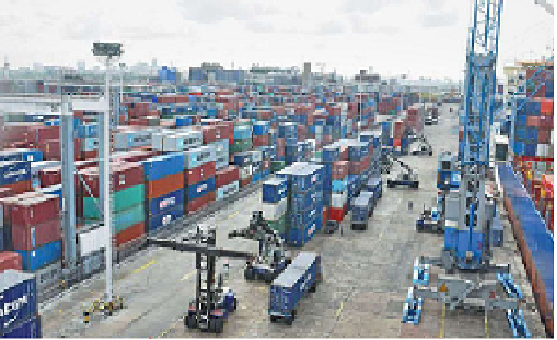
A total of six ships have arrived at Lekki, Tincan and Apapa ports in Lagos, waiting to discharge crude oil, bulk urea, aviation fuel and petrol.
The Nigerian Ports Authority (NPA) stated this in its publication, “Shipping Position”, on Wednesday in Lagos.
The document stated that 40 ships laden with petroleum products, food items and other goods were being expected in Apapa, Lekki and Tin-Can Island ports from March 11 to March 16.
The NPA added that the expected ships contain buckwheat, bitumen, empty containers, fresh fish, crude oil, bulk wheat, petrol, bulk clinker, bulk urea, aviation fuel, general cargo and containers of different goods.
20 other ships are at the ports discharging containers, petrol, bulk wheats, bulk sugar, bulk salt, bulk gypsum aviation fuel and bulk urea.
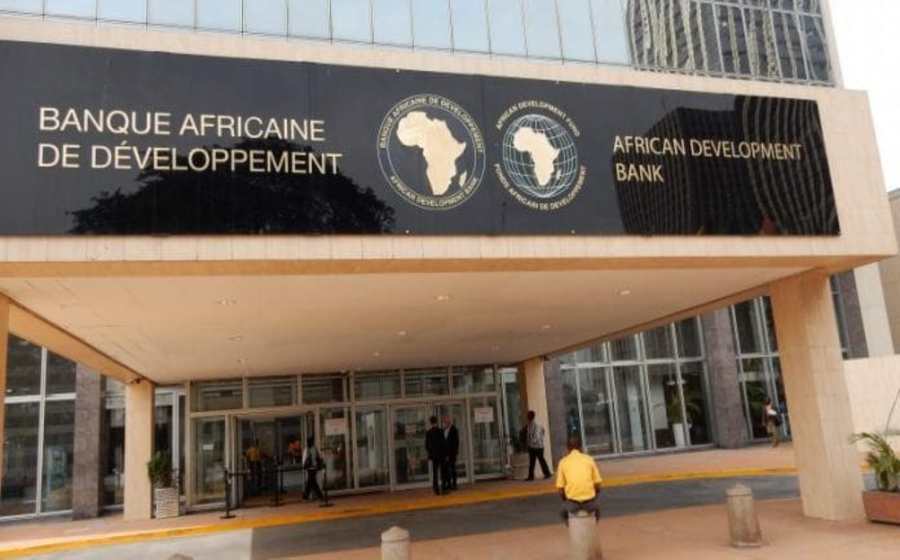
Director-General for Southern Africa, African Development Bank (AfDB), Dr. Kennedy Mbekeani, has called for stronger policy alignment and private capital mobilisation to unlock Africa’s trade potential under the African Continental Free Trade Area (AfCTA).
Mbekeani made the call while delivering a keynote address at the 2026 Africa Trade Conference in South Africa on Wednesday from Lagos.
The conference, organised by Access Bank, has the theme: “Turning Vision into Velocity: Building Africa’s Trade Ecosystem for Real-World Impact”.
According to him, Africa possesses the resources, institutions and capital needed to drive its development but must strengthen coordination and confidence in its own systems to accelerate economic growth and regional integration.
He noted that AfCTA provided a major opportunity to transform the continent into a single market capable of boosting production, consumption and trade among African countries.
“Africa has the resources, the financial institutions and the capital required for development. What we need is stronger coordination, improved policies and confidence in our own systems,” he said.
Mbekeani said the continent’s large population and vast natural resources placed it in a strong position to build one of the world’s biggest consumer markets if governments harmonised policies and created enabling environments for businesses.
According to him, Africa’s development challenge is not a lack of resources but the need to mobilise capital and channel it effectively into infrastructure and productive sectors.
“We must focus on mobilising private capital at a continental scale. The funds needed for Africa’s development already exist within the continent,” he said.
He urged African governments to deepen partnerships with the private sector in areas such as energy, transport, water and education to bridge the continent’s infrastructure deficit.
Mbekeani noted that successful public-private partnerships across several countries had shown that private investors could deliver critical infrastructure when supported by clear policies and effective regulation.
“We need governments to create enabling environments while the private sector participates actively in building the infrastructure that will support regional integration,” he said.
He also stressed the need for African institutions to shape the narrative about the continent’s investment climate, saying perceptions about risk in Africa were often exaggerated.
“Africa must begin to tell its own story. The perception of risk on the continent is sometimes higher than the reality,” Mbekeani said.
He added that stronger regional markets would reduce the continent’s exposure to global shocks and enable African countries to process more of their resources locally.
According to him, deeper economic integration will increase intra-African trade, strengthen supply chains and enhance the continent’s ability to withstand global disruptions.
Mbekeani said the AfCFTA represented a historic opportunity to build a truly integrated African market and urged governments, financial institutions and businesses to take concrete steps to turn the vision into reality.
The Chief Executive Officer of the Pan-African Payment and Settlement System (PAPSS), Mike Ogbalu, said high transaction costs and fragmented payment systems had long hindered trade within Africa.
Ogbalu noted that some of the world’s most expensive payment corridors existed in Africa, making cross-border transactions costly for businesses and individuals.
“It is ironic that the poorest people often pay the most to move money across borders. Some of the most expensive payment corridors in the world are in Africa,” he said.
He noted that PAPSS was created to address this challenge by enabling businesses and individuals to make cross-border payments in their local currencies across the continent.
Ogbalu explained that the platform allowed payments initiated in one African currency to be received in another within seconds, eliminating the need for third-party currencies and lengthy correspondent banking processes.
“A payment can originate in Nigeria in naira and arrive in Egypt in Egyptian pounds within seconds. That is the efficiency we are bringing to African trade,” he said.
According to him, the system guarantees that transactions are completed within 120 seconds, although most payments are currently processed in about 12 seconds.
He added that PAPSS had reduced the cost of cross-border payments by more than 98 per cent while ensuring transactions complied with global standards on anti-money laundering, sanctions screening and fraud management.
According to him, the platform currently operates in about 20 African countries with more than 170 participating commercial banks and fintech firms connected to the network.
“For many African entrepreneurs, their real market is not just their home country but the entire continent of over 1.4 billion people,” Ogbalu said.
He added that improving payment efficiency would help African businesses expand beyond national borders and unlock the full potential of intra-African trade under the AfCFTA.




Benue APC Denies Defection Rumours Over Members’ Attendance at Pro-Tinubu Meeting
ShareThe factional chapter of the All Progressives Congress (APC) in Benue State has dismissed speculation that some of its prominent...

Nuhu Ribadu and the New Security Order:
ShareBy Aaron Mike Odeh Nigeria’s security environment has, for decades, remained one of the most complex governance challenges confronting successive...


Bauchi Attacks: UNICEF, Gombe Support Displaced Women, Children
ShareThe United Nations Children’s Fund (UNICEF), in collaboration with the Gombe State Government, on Friday supported internally displaced women and...


NGO to Enroll 32,000 Vulnerable Kaduna Residents into Health Scheme
ShareA non-governmental organization (NGO), the Gates Foundation, said it will enroll 32,000 vulnerable persons into the Kaduna State Contributory Health...


Experts Link GBV, Stigma to Increase AMR
ShareBy Laide Akinboade, Abuja Experts in the health sector, have raised alarm over increase in link between Gender Based Violence...
Antonelli Wins Chinese GP as McLarens Fail to Start
ShareTeenager Kimi Antonelli took his first Formula 1 victory as he led team-mate George Russell home in a Mercedes one-two...


NPFL Orders Tribute for Late Nwosu
ShareThe chairman of the Nigeria Premier Football League, Gbenga Elegbeleye, has directed that a minute’s silence be observed before kick-off...

Hearn: Joshua Back in Training Camp for Comeback Fight
ShareBritish boxing promoter Eddie Hearn has disclosed that former world heavyweight champion Anthony Joshua is set to resume training camp...


NSC Commends D’Tigress After Philippines Win
ShareThe National Sports Commission (NSC) has praised Nigeria’s D’Tigress for their impressive comeback win against Philippines, at the ongoing FIBA...


Leaders Man City Frustrated by Spirited Aston Villa
ShareManchester City’s march to the Women’s Super League title was slowed as they were held to a goalless draw by...