
NEWS
Sani Receives PDP, LP Decampees in Southern Kaduna

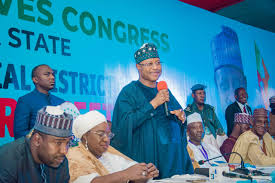
Gov. Uba Sani has received over 22 political heavyweights from the opposition parties and their supporters at the All Progressives Party(APC) zonal rally which held at Kafanchan on Friday.
The event was witnessed by thousands of APC supporters from Southern Kaduna and political stalwarts from across the state who passed a vote of confidence on Sani’s administration.
The decampees comprised serving and former federal legislators, as well as lawmakers from the State House of Assembly, former Council Chairmen, State party chairmen and flag bearers of the opposition parties.
Those who left the Peoples Democratic Party(PDP) included Sen. Danjuma Laar, the immediate past Senator who represented zone 3, Godfrey Gaiya, a former House of Representatives member and Ado Audu, a three-time member of the House of Representatives.
The representative of Zangon Kataf/Jaba Federal Constituency, Amos Magaji and Donatus Mathew, another member of the House of Representatives, representing Kaura Federal Constituency, also defected to APC.
Others were State legislators like Henry Zakarieh, representing Jaba Constituency, Samuel Kambai from Zango Constituency and Mr Emmanuel Kantiok of Zonkwa Constituency.
Also, the former Council Chairman of Jemaa Local Government, Mikiah Tokwak, former Vice Chairman, Sunday Baba and former Chairman of Kauru Local Government, Paul Wani had moved into the APC.
Similarly, former PDP Chairman in Kagarko Local Government, Shehu Tafarke, former NNPP State Chairman, Ben Kure and his successor, Nuhu Audu, including the state chairman of Labour Party, Isah Ciroma were now APC members.
Speaking at the ceremony, Sani explained that APC was now taking over Southern Kaduna which used to the political enclave of PDP as his administration was anchored on justice.
According to the Governor, he is abiding to the oath of his office by being just to every segment of the state, irrespective of party affiliations or ethno-religious backgrounds.
Sani emphasised that after any election, politics should take the back seat while governance takes the centre stage, adding that that was the hallmark of leadership.
The governor said that the focus of his administration was to bring about peaceful coexistence in order to achieve even development, arguing that if there was no peace there would be no development.
He said that President Bola Tinubu was pleased with what has been happening in the state, saying ” he wants the state to be a model of peaceful coexistence and that is why he has been supporting it.
“Tinubu had told him three days ago, that the Kaduna Light Rail project and the Kwoi-Kafanchan road are in the 2025 budget.”(NAN)
By Tambaya Julius, Abuja
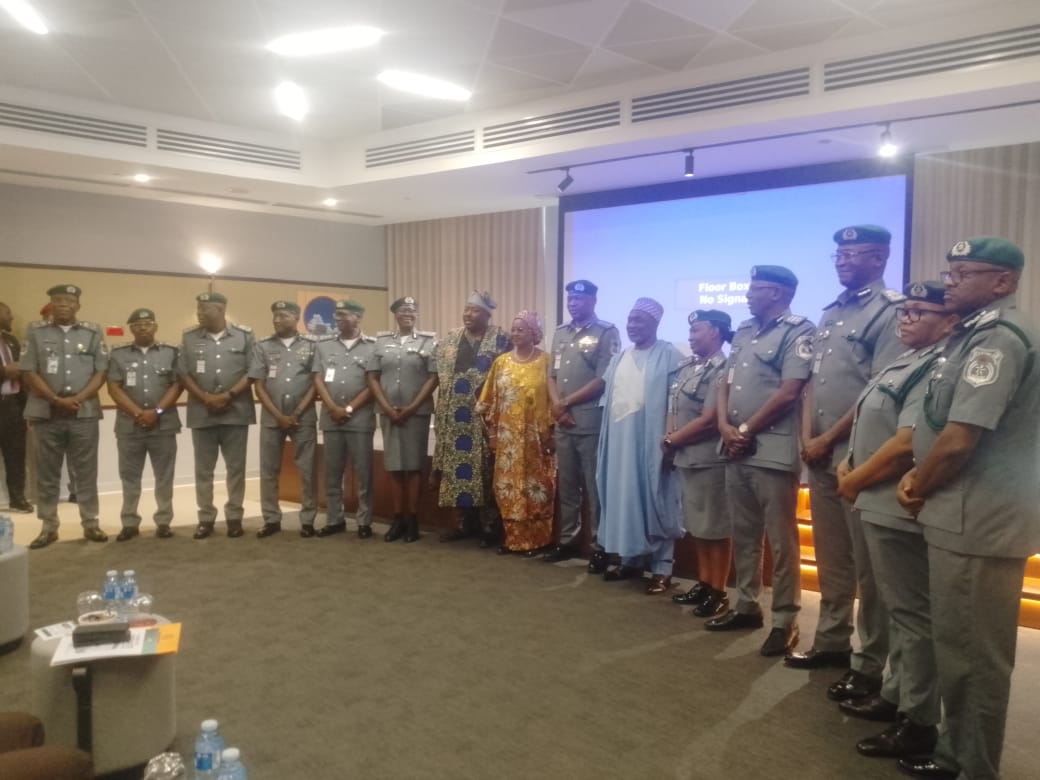
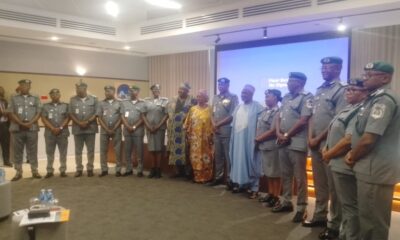
The Comptroller-General of the Nigeria Customs Service (NCS), Bashir Adewale Adeniyi, has called for a stronger partnership between the National Assembly and the Service, urging members of the Senate Committee on Customs to focus legislative oversight on institutional reforms, automation and system efficiency rather than individual transactions.
Adeniyi made the call on Wednesday at the opening of a two-day retreat organised for the Senate Committee on Customs with the theme, “Legislative Oversight in the Context of Nigeria Customs Service Modernisation and Reforms.
”The Customs boss commended the committee for dedicating time to the engagement, describing it as an opportunity for lawmakers to gain deeper understanding of the transformation taking place within the Service beyond routine budget defence, revenue monitoring and enquiries.
He noted that while the Nigeria Customs Service regularly appears before the National Assembly to present its budget, defend its performance and respond to legislative concerns, the retreat would enable senators to have a clearer understanding of the reforms driving the agency’s operations.
“We are not asking you to be less exacting with us. We are asking you to be exacting from a position of complete familiarity with what we are building,” Adeniyi said.
Highlighting the achievements of the Service, the Comptroller-General disclosed that the NCS generated ₦7.277 trillion in revenue in 2025, exceeding its annual target by 10.24 per cent, while ₦3.35 trillion had already been collected between January and May 2026.
He stressed that the revenue growth was not merely a reflection of economic circumstances but the outcome of improved systems and reforms.
“What matters is whether the growth rests on better systems or on favourable arithmetic. I put it to you that ours rests on systems, and the purpose of this retreat is to let you examine that claim rather than accept it from me,” he stated.
Adeniyi also highlighted Nigeria’s growing global recognition, noting that the Nigeria Customs Service’s current leadership role at the World Customs Organization (WCO) Council demonstrated international confidence in the country’s reform agenda.
According to him, Customs modernisation is focused on replacing discretionary processes with transparent, technology-driven systems.
He explained that the Trade Modernisation Project (TMP) and the deployment of the B’Odogwu platform were designed to automate customs operations, reduce human interference, enhance transparency and create electronic audit trails for transactions.
The Comptroller-General commended the National Assembly for enacting the Nigeria Customs Service Act 2023, describing it as the legal framework supporting the ongoing reforms.
He said the legislation introduced modern provisions covering electronic processing, advance rulings, Authorised Economic Operator status and sustainable funding mechanisms, allowing the Service to align with international standards.
Adeniyi urged lawmakers to use the retreat to evaluate the effectiveness of the law after three years of implementation and consider possible amendments required to address emerging challenges in global trade.
On legislative oversight, he argued that automation required a shift from examining individual consignments to assessing the efficiency and integrity of customs systems.
He also called for a review of Nigeria’s waiver and concession regime, noting that significant imports currently enter the country under various exemptions whose continued relevance should be periodically assessed.
He encouraged lawmakers to maintain regular engagement with the Service beyond statutory oversight meetings.
Adeniyi expressed confidence that the NCS was on course to establish a transparent and rules-based customs administration capable of supporting Nigeria’s economic development.
In his remarks, the Chairman of the Senate Committee on Customs, Sen. Jibrin Isah, commended the Nigeria Customs Service for its far-reaching reforms, describing the agency’s achievements in revenue generation, trade facilitation and anti-smuggling operations as evidence of effective leadership and institutional transformation.
The Chairman also commented his colleagues for sacrificing their legislative recess to participate in the retreat, noting that the programme was designed to deepen lawmakers’ understanding of the strategic role of the Customs Service.
He said the engagement would allow senators to interact with Customs officials, seek clarification on operational issues and provide constructive recommendations to strengthen the agency.
According to him, the Nigeria Customs Service under the leadership of Comptroller-General Adeniyi has recorded significant improvements through its reform initiatives.
“The results have manifested themselves in improved revenue generation, enhanced trade facilitation and very robust anti-smuggling activities,” he said.
The Senate Committee Chairman applauded the Service’s 2025 revenue performance, revealing that despite an approved target of about ₦6.5 trillion, the agency surpassed expectations by generating approximately ₦7.3 trillion.
“On behalf of the Senate, I commend the Comptroller-General, the management and the entire staff of the Nigeria Customs Service for this impressive performance,” he stated.
He urged the Service to raise the standard in 2026 by identifying operational challenges and addressing them to achieve improved results.“We believe that you can do a lot better.
What you need to do is identify your challenges and address them as much as possible so that you can deliver an even more robust performance,” he added.
By Tony Obiechina, Abuja
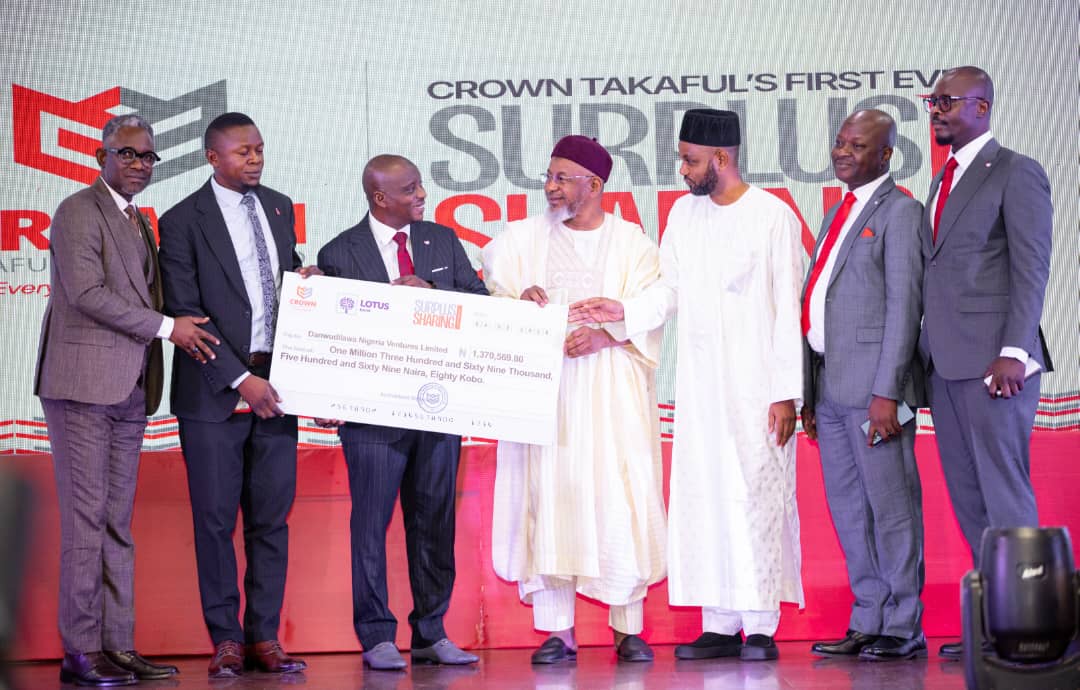
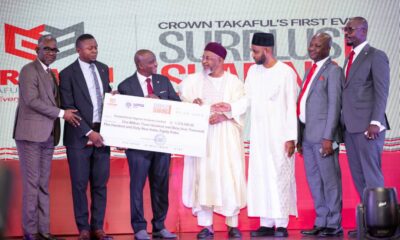
Crown Takaful Insurance Limited, Nigeria’s leading and most participant-friendly ethical insurance company, has set a new record in the ethical risk-underwriting insurance industry as the Board has approved the sharing of a total surplus distribution of N100.
9 Million naira to its participants.Surplus sharing is the chore principle of Takaful insurance model, which is anchored on mutual cooperation where participants contribute to a shared fund and, at the end of a defined period, any surplus remaining after claims, Re-Takaful (Re-Insurance) expenses and reserve, is returned to them.
The board’s decision was sequel to the regulatory approval from the National Insurance Commission (NAICOM) to the company on surplus sharing to its participants, a feat achieved within its very first year of operations, and a turning point not just for the company but for the future of ethical, faith-sensitive insurance in Nigeria.
Speaking on the company’s remarkable feat, which represents a major scorecard in the annals of Nigeria’s ethical insurance space, the Managing Director/CEO of Crown Takaful Insurance Limited, Mr. Nasir Abubakar Song, attributed the achievement to participants’ trust in the company’s board and management team and a clear proof of their commitment to world class standards in the company’s operations.
He clarified: “This approval is not just a regulatory milestone — it is a promise kept. When our participants entrusted us with their contributions, they did so believing in a system grounded in fairness, transparency, and mutual benefit. To achieve this within our first year of operation is a testament to the dedication of our team, the confidence of our participants, and the grace of Allah.
“Receiving regulatory approval to distribute surplus is our most direct and tangible way of honoring that trust. We are proud to be among the pioneers delivering the true promise of Takaful to Nigerians”, Song added.
The sharing of the FY2024 surplus to its participants implies that Crown Takaful Insurance is now fulfilling one of the most fundamental promises of Takaful – that insurance is a tool not only of protection, but of shared prosperity.
Since its licensing by the NAICOM and commencement of operations in 2024, Crown Takaful Insurance has achieved outstanding performance at all levels of assessment parameters, recording approximately N1.935 billion in gross contributions in its first year of operations.
Over the years, the company has remained focused in its mission to deliver ethical insurance solutions to individuals, families, and businesses, anchored on ethical finance values, transparency, and inclusive financial protection in the country.
By Salisu Ibrahim
When an international honour projects a nation’s policy direction, it becomes more than recognition. It becomes evidence.
At a time when global scrutiny of Nigeria’s economy is intense, the African Business Leadership Award’s (ABLA’s) decision signals that the administration of President Bola Ahmed Tinubu’s reforms in revenue mobilisation, transparency, and sub-national empowerment are being noticed — and benchmarked on global stage.
Most often, an award to a public figure is personal.
It comes and goes. And the Plaques gather dust.But Dr. Shehu’s honour is bigger than one man. It is about institutional reform as state policy. It is about the quiet, difficult work of aligning the revenue formula with current realities, strengthening local government autonomy, and forcing accountability in the oil and non-oil sectors — all central pillars of the Renewed Hope economic plan. It signals growing international validation of Nigeria’s fiscal reforms under President Tinubu.
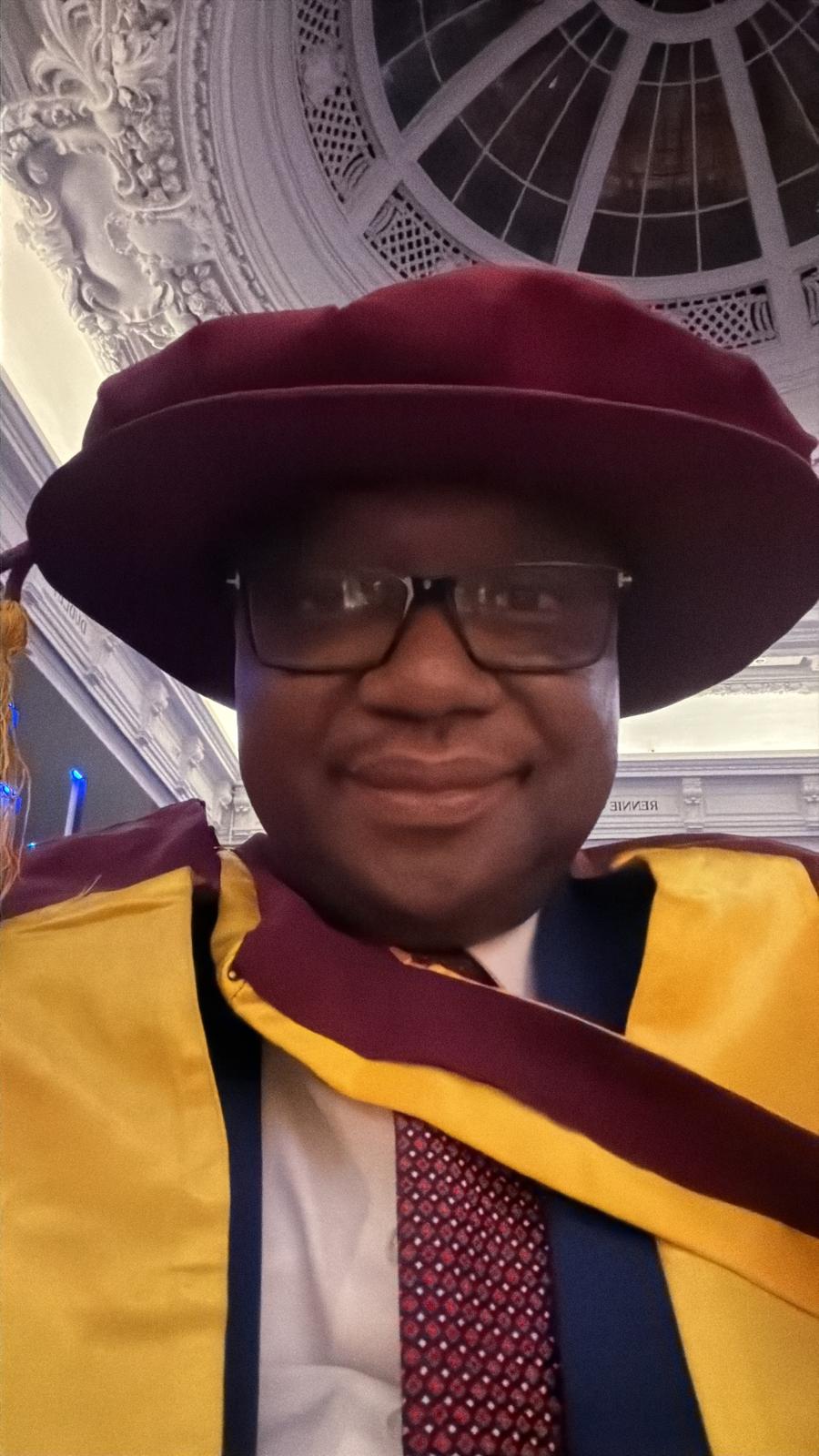
That is the significance of the African Business Leadership Award, ABLA, conferred on Dr. Mohammed Bello Shehu, Chairman of the Revenue Mobilisation Allocation and Fiscal Commission, RMAFC, in London this July.
The 2026 Fiscal Governance and Revenue Accountability Award does not just celebrate one public servant. It validates the fiscal direction of the Renewed Hope Agenda of President Bola Ahmed Tinubu.
The recognition is not just about Dr. Shehu as public servant. It is about the reforms he embodies: the difficult work of rebuilding institutions, restoring trust, and making government serve the people, in line with the Renewed Hope Agenda of President Bola Ahmed Tinubu.
At a time when Nigeria often makes global headlines for the wrong reasons, Dr. Shehu’s award shifts the narrative. It now says: Look at the policy shifts, the anti-corruption drives, and the effort to make bureaucracy serve business and citizens, not the other way around.
For Nigeria, this is not a moment for celebration alone. It is also a moment for interrogation.
When the world is spotlighting the country’s reforms through Dr. Shehu, then three questions must be asked: Are these reforms real and sustainable? Are they being felt on the streets — in Kano, Port Harcourt, and Maiduguri? Can they be institutionalized beyond one administration?
For once, the spotlight is not only on the nation’s problems. It is also on the solutions.
Through the power of ABLA that exports a Nigerian story to 54 African countries and beyond and turns RMAFC’s work into a continental case study, the fiscal reform by the present administration is gaining international recognition.
Historically, ABLA honours public sector leaders with proven stewardship and measurable impact. In July, at the 16th ABLA in London hosted by African Leadership Magazine, Dr. Shehu received the 2026 Fiscal Governance and Revenue Accountability Award alongside an Honorary Doctorate. It projects the reform measures of Dr. Shehu’s vision in line with the present administration’s Renewed Hope Agenda.
ABLA’s selection committee had specifically cited Dr. Shehu’s vision in addressing long-standing friction in Nigeria’s revenue-sharing formula, as one of the reasons for his selection. This has clearly demonstrate how Africa and the global community are watching, and taking notes of happenings in Nigeria.
Under Dr. Shehu, RMAFC is witnessing three measures that are moving the commission beyond revenue distribution towards driving a structural reforms. Thes three priorities stand out:
Modernized Revenue Allocation Framework; Strengthening Local Government Autonomy as well as Verification and Non-Oil Diversification.
Already, RMAFC is advocating for constitutional amendments to enforce timelines for new revenue formulas, grounded in current socio-economic data, following the July 2024 Supreme Court judgment. The commission is also working with ALGON to amend Section 162(6) of the Constitution to ensure direct disbursement to local councils.
It is also deploying expanded powers to audit oil and gas firms for unremitted revenues, and building state capacity to grow revenue from agriculture, solid minerals, and tourism.
In accepting the award, Dr. Shehu choose to dedicate it to RMAFC staff, stating: “This honour is not for me alone. It’s for all of us. I believe it will further inspire deeper reforms and strengthen public trust in our fiscal system.”
The Federal Ministry of Information and National Orientation has equally endorsed the award, describing the recognition as a major win for Nigerian public sector governance.
By prioritizing evidence-based revenue distribution, sub-national empowerment, and fiscal accountability, RMAFC’s trajectory has reduced political friction in the country and translate transparency into tangible outcomes with better infrastructure, functional healthcare, and improved schools.
It also explain how Dr. Shehu’s ABLA award is an invitation to Nigeria: to own its reform story, and to prove that the global spotlight is well deserved.
Ibrahim writes from Kano, could be reached on: faccageltd10@gmail.com



Customs CG Seeks Stronger NASS Partnership to Advance Modernization Agenda
ShareBy Tambaya Julius, Abuja The Comptroller-General of the Nigeria Customs Service (NCS), Bashir Adewale Adeniyi, has called for a stronger...

Ethical Insurance: Crown Takaful Distributes N100.9Mn To Participants
ShareBy Tony Obiechina, Abuja Crown Takaful Insurance Limited, Nigeria’s leading and most participant-friendly ethical insurance company, has set a new...


Abuja to London: Dr. Shehu’s ABLA Award Projects Tinubu’s Reform Agenda Globally
ShareBy Salisu Ibrahim When an international honour projects a nation’s policy direction, it becomes more than recognition. It becomes evidence.At...


Tinubu Approves Salary Increase for 250,000 Armed Forces Personnel
ShareBy David Torough, Abuja President Bola Tinubu has unveiled a major package aimed at strengthening Nigeria’s armed forces through improved...

Campaign Council Denies Adeleke’s Attack on Tinubu
ShareFrom Ayinde Akintade, Osogbo The Imole Campaign Council has slammed the misinterpretation and falsification of Governor Ademola Adeleke’s clarion call...
Lawmaker Seeks National, Global Action on Cross River Landslide
ShareFrom Ene Asuquo, Calabar The member representing Akpabuyo/Bakassi/Calabar South Federal Constituency and Chairman of the House of Representatives Committee on...


Allow Young People Takeover Governance, Abbas Tells Aged Politicians
ShareBy Ubong Ukpong, Abuja House of Representatives Speaker, Rt. Hon. Abbas Tajudeen, on Tuesday, told aged politicians and political heavy...
2027: Radda’s Chief of Staff Urges APC Stakeholders to Close Ranks
ShareFrom Rabiu Sanusi, Kano The Chief of Staff to the Katsina State Governor, Hon. Abdulkadir Mamman Nasir, has called on...


2027 Election: Only Tinubu ‘ll Win Rivers — Wike
ShareBy Laide Akinboade, Abuja Minister of the Federal Capital Territory (FCT), Nyesom Wike, on Tuesday declared that President Bola Tinubu...
Ex-International Advocates Greater Female Participation in Squash
ShareFormer Nigerian international squash player, Longdi Dasbak, on Monday has called for increased efforts to encourage girls to take up...