
NEWS
Sanwo-Olu Sues EFCC over Alleged Planned Arrest, Prosecution

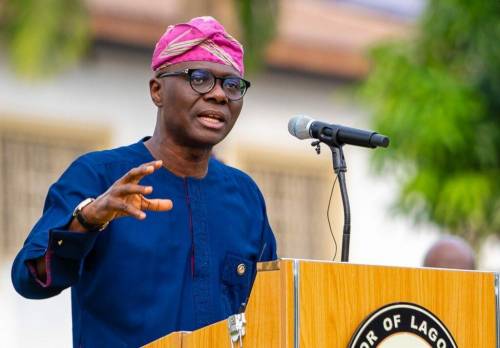
Lagos State Governor, Babajide Sanwo-Olu, has sued the Economic and Financial Crimes Commission (EFCC) over alleged threat to arrest, detain and prosecute him after his tenure as governor.Sanwo-Olu, through his lawyer, Darlington Ozurumba, filed the fundamental right enforcement suit before Justice Joyce Abdulmalik of a Federal High Court in Abuja.
When the matter was called for mention on Tuesday, Ozurumba informed the court that he had withdrawn the earlier originating summons filed and replaced it with a new one. The lawyer said the anti-graft agency had been duly served with the latest court documents.However, EFCC’s counsel, Hadiza Afegbua, said she was yet to see the documents.Besides, the proof of service of the processes was not in the court file and Justice Abdulmalik adjourned the matter until Nov. 11 for further mention.Report says that in the originating summons, marked: FHC/ABJ/CS/773/2024 dated and filed on June 6, the governor raised seven questions and sought 11 reliefs.Sanwo-Olu sought a declaration that under and by virtue of the provisions of Section 37 of the 1999 Constitution, “the plaintiff, as a citizen of Nigeria, is entitled to right to private and family life as a minimum guarantee encapsulated under the Constitution of the Republic of Nigeria, 1999 before, during and after occupation of public office created by the Constitution.”He wants the court to declare that under and by virtue of the provisions of Sections 43 and 44(1) of the 1999 Constitution, he is entitled to acquire, own, operate and manage both moveable and immovable property.This, he said, include bank accounts, as a minimum guarantee encapsulated under the constitution either before, during and after leaving public office of governor of a state.He also wants the court to declare that upon community reading of the provisions of Sections 35(1) & (4) and 41(1) of the constitution, the threat of his investigation, arrest and detention by the EFCC during his tenure of office as governor is illegal. He also said that the plan to arrest him was unconstitutional and a flagrant violation of his fundamental right to personal liberty and freedom of movement as guaranteed under Sections 35(1) & (4) and 41(1) of the Constitution of the federal Republic of Nigeria, 1999 ( as amended).The governor prayed the court to declare that the incessant harassment, threat of arrest and detention, against him upon the EFCC’s instigation by his political adversaries based on false and politically motivated allegation of corruption is a misuse of executive powers and abuse of public office.He further wants the court to declare it as an unwarranted Interference with his fundamental right to personal liberty, freedom of movement, fair hearing and equal protection of the law as guaranteed by the constitution and the Africa Charter on Human & Peoples’ Rights, CAP A9 LFN 2004.Sanwo-Olu, therefore, sought an order restraining the EFCC from harassing, intimidating, arresting, detaining, interrogating or prosecuting him in connection with his tenure as the governor of Lagos State.He also prayed the court to make an order prohibiting and restraining the commission “from seizing the properties, the international passport and travel documents of the plaintiff or freezing the bank accounts of the plaintiff, his family members or in any other way to further breach the plaintiff’s fundamental rights guaranteed under the Constitution.”He urged the court to make an order restraining the EFCC from inviting, arresting or detaining him in connection with his tenure as governor of the state or breach his fundamental rights to personal liberty, fair hearing, private and family life, freedom of movement, acquisition of moveable and immoveable property as enshrined in the lawsIn the affidavit in support of the originating summons deposed to by Martha Kanu, a litigation secretary in the law firm, the lawyer said she was informed the facts by the governor at a tele-conference meeting which she believed to be true.She alleged that as a way of getting at the governor, the EFCC was now making surreptitious plan to arrest some of his aides and family members based on the false and spurious allegations of diversion of funds.She said the officials of the commission were now mounting pressure on some of the aides of the governor to come and make incriminating statements against him.Besides, Kanu alleged that the anti-graft agency was also threatening to go after some contractors handling projects for the state government.He said the agency was compelling them to come and make statements to implicate Sanwo-Olu of corruption as part of the orchestrated contrivance to build up a trump up case against him.According to her, in a malicious attempt to get at the plaintiff, some of the plaintiff’s political adversaries in conjunction with some of the officials of the defendant are falsely ascribing to his administration of corrupt practices which are none existent.She alleged that the EFCC, through some of its officials, were desperately inventing false, spurious and malicious allegations against the governor in order to use same as a basis for investigating, arresting and prosecuting him after leaving office as governor.Report says that Sanwo-Olu was sworn in as the Governor of Lagos State on May 29, 2019 and was re-elected and sworn in again for a second term on May 29, 2023.(NAN



By David Torough, Abuja
The West African Health Organisation (WAHO) has intensified regional health surveillance following the confirmation of an imported case of Ebola virus disease in Abuja, Nigeria, on October 20, 2026.
In a statement, WAHO said it was closely monitoring the situation in collaboration with the Nigeria Centre for Disease Control and Prevention (NCDC), national health authorities and regional epidemiological surveillance mechanisms to prevent the potential spread of the disease across borders.
According to information provided by Nigerian health authorities, the patient is a woman who recently arrived from Uganda.
She reportedly developed symptoms on October 7 and received treatment at a private health facility in Abuja on October 11 before her diagnosis was confirmed through laboratory testing on October 20.As part of efforts to strengthen regional preparedness and response, WAHO said it remained fully mobilised to support member states of the Economic Community of West African States (ECOWAS) in enhancing disease surveillance and preventing cross-border transmission.
The organisation disclosed that it maintained regular contact with the NCDC and held a briefing on October 21 with directors of National Public Health Institutes (NPHIs) across ECOWAS member states to discuss the situation and reinforce regional coordination.
WAHO stressed that early detection, prompt reporting of suspected cases, effective epidemiological surveillance and coordination among health services were essential to preventing and controlling the spread of epidemic-prone diseases.
It urged the public to observe preventive measures, including frequent handwashing with soap and clean water or the use of alcohol-based hand sanitisers.
The organisation also advised people to avoid direct contact with the blood and other bodily fluids of sick or deceased persons, as well as their clothing, bedding and personal belongings.
It cautioned against handling the bodies of people who died from suspected causes, emphasising that safe and dignified burials should be conducted by trained teams.
On animal-related risks, WAHO advised the public to avoid handling or consuming bushmeat, refrain from touching sick or dead animals, including bats and primates, and ensure that all meat is thoroughly cooked before consumption.
The organisation further urged anyone experiencing symptoms consistent with Ebola, including sudden fever, severe fatigue, body aches, vomiting, diarrhoea or bleeding, to seek immediate assistance from a health facility.
It also recommended avoiding non-essential travel to affected areas and adhering strictly to official health guidance whenever travel is unavoidable.
WAHO called on the public to rely on information from official sources and refrain from spreading rumours or unverified reports that could undermine public health response efforts.
Reaffirming its commitment to regional health security, the organisation said it would continue working with the health ministries of ECOWAS member states, as well as technical and financial partners, to strengthen preparedness and protect populations across West Africa.
Through the ECOWAS Regional Centre for Surveillance and Disease Control (RCSDC), a specialised WAHO agency based in Abuja, the organisation said it would continue monitoring developments and communicate relevant information in coordination with the appropriate health authorities.
By Tambaya Julius, Abuja
The Nigeria Labour Congress (NLC) has threatened possible nationwide industrial action following the failure of talks with the Federal Government over workers’ welfare, petrol prices and other outstanding labour demands.
The warning came after a meeting between the government and organised labour at the Ministry of Labour in Abuja on Thursday, October 22, ended without an agreement.
The congress has given the Federal Government until Tuesday, October 27, to make meaningful progress on the issues, warning that its relevant organs would decide the next line of action if the next meeting fails to produce concrete commitments.
The NLC has also directed its affiliates, state councils and civil society allies to begin mobilising members for possible nationwide action.
In a statement issued after the meeting, the NLC Acting General Secretary, Benson Upah, expressed disappointment over what he described as the government delegation’s lack of preparedness for the negotiations.
According to the congress, organised labour presented its demands in good faith but left the meeting without any concrete commitments from the government.
The demands include a reduction in petrol prices to 2024 levels, renegotiation of the national minimum wage, implementation of agreed tax relief measures and resolution of the terms of settlement involving the Joint Health Sector Unions (JOHESU).
The congress also called for the resolution of issues raised by the Joint Public Service Negotiating Council (JPSNC) over peculiar allowances, wage awards and hazard allowances.
The NLC said the government delegation lacked the necessary authority to engage meaningfully on the issues presented by labour representatives.
“The meeting between the Federal Government and organised labour, convened at the Ministry of Labour in Abuja on 22nd October 2026, has ended without resolution,” the statement said.
It added that the Minister of Labour requested that the meeting be adjourned until October 27 to allow the government to prepare adequately for further discussions.
The preparations, according to the statement, would include bringing relevant ministers and heads of departments and agencies to the negotiating table.
The congress said it remained open to dialogue but would not accept continued delays in addressing workers’ concerns.
“We will report back to our organs, and if no meaningful progress is made on Tuesday, the relevant organs of the NLC will decide the next line of action,” it said.
The labour body urged workers and members of the public to remain calm while the negotiations continue, even as it directed its affiliates and allies to prepare for possible industrial action.
“However, we urge all affiliates of NLC and TUC; all state councils and our civil society allies to be alert and start mobilising for a possible action across the nation while we hope that the tenets of our demands are met by the government,” the statement added.
The October 27 meeting is expected to provide another opportunity for both sides to address the outstanding issues and prevent a possible escalation of the dispute.
However, the NLC’s decision to begin mobilisation suggests that tensions could rise if the next round of talks fails to produce meaningful progress.
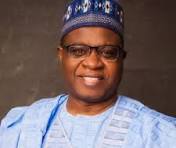
Alh. (Dr) Umaru Kwairanga, Group Chairman, Nigerian Exchange Group (NGX Group), has been named as the Top10 Magazine’s Man of the Year 2026. He emerged from among many other distinguished personalities in a multi-stage rigorous selection and screening process.
He succeeds Alh. Nasiru Haladu Danu, OFR, Chairman of Casiva Ltd, who was the magazine’s Man of the Year for 2025. He joins a club of distinguished Nigerians who have won the crown since the inception of the award over 10 years ago, with Dr. Herbert Wigwe, the late Group Managing Director of Access Bank, as the pioneer winner of the award in 2016. Also on the magazine’s roll of honour are Umar Abdullahi, Chairman, Cosgrove Group (2020); Chief Samuel Onyishi, Chairman of Peace Mass Transit (PMT) and Founder of Maduka University (2022); Muhammad Nami, former Chairman, Federal Inland Revenue Service, FIRS (2023), Senator George Akume (2024), among others.In a letter conveying Alhaji Kwairanga’s selection as the Man of the Year 2026, the Board of Editors of the Magazine said it was in recognition of his towering leadership as custodian of Nigeria’s capital market, his role in driving national economic development, his championship of corporate governance, transparency, integrity and influence that defined Nigeria’s economic narrative in 2026. These, the givers of the award said, clearly stand him out as a man of excellence worthy of celebration, “hence the decision of our management to accord you this special recognition as the Top10 Magazine’s Man of the Year 2026,” the letter said.
In a year marked by economic reforms, market volatility and renewed investor search for trust and transparency, Dr. Kwairanga stood tall as a symbol of stability, integrity and visionary leadership. Under his watch, the Nigerian Exchange has emerged as one of Africa’s best performing markets, restoring investor confidence, attracting foreign inflows and providing capital for enterprise growth that creates jobs for millions of Nigerians.
As overseer of NGX Regulation, he has championed board accountability, shareholder protection, ESG compliance and global best practices, elevating Nigerian corporate governance to world standard. His influence goes beyond the trading floor of Marina. He is a trusted counsel to regulators, a respected voice in the Presidency’s economic circle, a bridge between the private sector and government, and a mentor to a generation of investors and entrepreneurs who see in him the embodiment of ethical capitalism.
A man of unblemished integrity, quiet philanthropy and profound intellect, Dr. Kwairanga represents the best of Northern and Nigerian leadership – humble yet powerful, principled yet pragmatic, traditional yet globally minded. In a nation in search of role models who prove that one can be successful without cutting corners, powerful without being oppressive and wealthy without losing humanity, Alhaji Kwairanga stands as a beacon.
“For his towering leadership as custodian of Nigeria’s capital market, his role in driving national economic development, his championship of corporate governance and transparency, his integrity and influence that defined Nigeria’s economic narrative in 2026, the Board and Management of the Top10 Magazine unanimously select Alh. (Dr.) Umaru Kwairanga as Man of the year 2026”, stated publishers of the Top10 Magazine.
The Top10 Magazine is a monthly publication established over ten years ago as a platform to celebrate excellence and people of excellence from all human endeavours.
The Top10 Man of the Year Award was also instituted the same year as an annual award by the magazine as the highest honour reserved annually for one distinguished Nigerian whose leadership, integrity, influence and national impact have defined the year.
This year’s recipient, Alhaji Umaru, a man of untainted character and impeccable reputation, is renowned for his unwavering commitment to success. Dr. Kwairanga has 25 years’ cognate experience in the banking, pensions, investment, manufacturing and commercial sectors. He has served previously as a Council member of the Nigerian Stock Exchange and is currently a Council member of the Institute of Directors of Nigeria; and an active director on the boards of many quoted/listed and unquoted companies including Ashaka Cement Plc where he served for over ten years, first as a director and later as chairman of the Board. He is currently the GMD/CEO of Finmal Finance Services Limited.
He is a Fellow of Chartered Institute of Stockbrokers, Fellow of Certified Pension Institute Nigeria (2005) and Fellow of Institute of Directors of Nigeria. He is Chairman – Commerce, Trade and Investment subcommittee of Gombe State transition committee.
Dr. Kwairanga has a B.Sc (Hons) Business Administration (1991) and MBA (1995) both from University of Maiduguri and M.Sc. Finance & Governance from Liverpool John Moores University (2007).
Mr. Tony Iji, Publisher/Editor-In-Chief of the Top10 Magazine, said the award will be presented to Alhaji Umaru at the Top10 Magazine’s Annual Excellence Awards night slated for November 22, 2026 which will be graced by crème de la crème of the society.
To mark this high-profile event, the magazine is putting together a special award edition to celebrate him and other awardees. The edition which will comprehensively chronicle his achievements, leadership journey, and contribution to Nigeria’s capital market and the economy in general.



WAHO Steps Up Regional Health Surveillance After Ebola Case Confirmed in Abuja
ShareBy David Torough, Abuja The West African Health Organisation (WAHO) has intensified regional health surveillance following the confirmation of an...
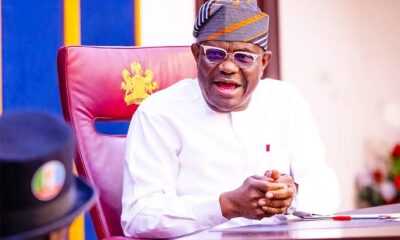

2027: Ex-Nigeria Amb, Tarzoor Tackles Wike, Ortom over Comments on Benue, Alia
ShareFrom Attah Ede, Makurdi Ex -Nigeria’s Ambassador to Namibia, Terhemen Tarzoor, has warned the immediate past Governor of Benue State...

2027: Don’t Call Benue People Shenanigans, Alia not answerable to you- Ex- Amb, Tarzoor Tells Ortom, Wike.
ShareFrom Attah Ede, Makurdi Ex -Nigeria’s Ambassador to Namibia, Terhemen Tarzoor, has warned the immediate past Governor of Benue State...

DBN Signs $61m Credit Deal With AfDB, Unveils Support Initiative Report
ShareBy Tony Obiechina, Abuja The Development Bank of Nigeria Plc (DBN) has launched DAWN: DBN Action for Women in Nigeria,...

NLC Threatens Nationwide Action as Talks With FG Collapse
ShareBy Tambaya Julius, Abuja The Nigeria Labour Congress (NLC) has threatened possible nationwide industrial action following the failure of talks...

Top10 Magazine Names Umaru Kwairanga as Man of the Year 2026
ShareAlh. (Dr) Umaru Kwairanga, Group Chairman, Nigerian Exchange Group (NGX Group), has been named as the Top10 Magazine’s Man of...

UK, Nigeria to Deepen Defence, Security Cooperation
ShareThe United Kingdom has reaffirmed its commitment to deepening defence and security cooperation with Nigeria, with emphasis on military training,...

2027: INEC Steps Up Preparations, Completes Nine Activities
ShareBy Tambaya Julius, Abuja The Independent National Electoral Commission (INEC) has completed nine of the 14 activities on its timetable...

2027: Tinubu Accords Benue Security Top Priority, Tompolo Tells Supporters
ShareLeader of the PBAT Door-to-Door Movement, Government Tompolo, has called on the people of Benue state to come out enmasse...


Senate Demands Compulsory Screening of Foreign Arrivals
ShareBy Eze Okechukwu, Abuja The Senate yesterday ordered mandatory health screening for every international passenger arriving Nigeria airports, seaports, land...