
POLITICS
SDP Suspends National Chair Secretary

. Fixes National Convention for April 27
By Jude Opara, Abuja
The National Executive Committee of the Social Democratic Party (SDP), on Saturday, suspended its national chairman, Olu Ogunloye and secretary, Shehu Gabam, for alleged misconduct.
The party’s NEC unanimously appointed the party’s deputy chairman, North, Abdul Mohammed Isaq, as interim national chairman and Simon Adesina as interim national secretary, pending the outcome of its convention, slated for April 27 to 29, 2022.
The party leadership said that the top officials were suspended for violating the party’s constitution.
The party in its meeting also voided the suspension of state chairmen and officers in any organ of the party.
“NEC observed the wanton disregard to the provisions of the SDP constitution especially Article 12.5(iv) 12.2.2(viii) and Article 9.4 to suspend some officers from the party.
“The NEC considered the various abuses of the constitution by the following under-listed officers and thereby agreed by majority decision to suspend Alhaji Shehu Gabam and Dr Olu Ogunloye.
“The NEC noted the urgency to put in place all that is required for a befitting party convention and therefore resolves that the national convention of the Social Democratic Party (SDP) is fixed for April 27th to 29th with arrival being Wednesday April 27th, 2022.
“The appointment of NWC members namely the National Youth Leader, Okechukwu Ogbonna and National Publicity Secretary, Amb. Rufus Aiyegba is here disapproved and cancelled by the NEC.
“The NEC resolved and affirmed that all State Chairmen, officers in any organ of the party purportedly suspended is not acceptable and any notice or communication in that regard is null and void and of no effect whatsoever.”
The new interim Chairman, Isaq, promised to strengthen internal cohesion within the party ahead of 2023 general elections in the country.
He said that the decision of NEC which he described as the second most powerful organ of the party was collective stressing that the task ahead was a team work designed to actualise set objectives.
“This is the second most powerful organ of the party and they have taken their decision. It is going to be a team work. So, the credit will go to everybody.
“We have quite some resourceful people in this party and you are going to see what is going to happen in Nigeria. And I want to promise you that this party is the next for the this country,” he added.






POLITICS
2027 Benue APC Crisis: Alia, Akume Separately Presents INEC Nomination Forms To State Assembly Loyalists

From Attah Ede, Makurdi
The crisis rocking the All Progressives Congress, (APC) in Benue State may not ends soon, as Governor Hyacinth Alia and Secretary to the Government of the Federation (SGF), Sen George Akume separately presented Independent National Electoral Commission, INEC Nomination forms to the candidates for the State House of Assembly who are their loyalists ahead of the 2027 general elections.
While Governor Alia successfully secured 24 members of the State House of Assembly through intense lobbying from the national secretariat of the ruling party, Sen Akume picked 13 forms for his loyalists.
The same scenario played out during the release of lists for the National Assembly members where the SGF prevailed by securing additional two Senate and 9 House of Representatives seats while the Governor got only two (2) house of representative seats.
A check from the official list released by the APC national secretariat, corroborated by State chapter of the party, indicated that in this instance, Alia secured more tickets in Benue South Senatorial District known as Zone C and his area Benue North East called Zone A while Sen Akume’s camp dominated Benue North West Senatorial District and got a few slots from the other two zones.
Presenting the Independent National Electoral Commission, INEC nomination forms to 24 State House of Assembly candidates loyal to him on Tuesday, Governor Alia enjoined them to remain true ambassadors of the party.
He said, “Today, I officially present INEC nomination forms to our APC candidates for the Benue State House of Assembly.
“I congratulate all our candidates and urge them to remain true ambassadors of our great party by engaging our people with humility, integrity, and a clear vision for effective representation in the pursuit of a better Benue” Alia represented by the State APC Chairman Benjamin Omale said.
On his part, in a statement issued by the state Publicity Secretary of APC, Benedict Yawe indicated that 24 of 37 candidates received their INEC nomination forms from Governor Alia.
He called on the party members to work together for APC victory, saying, “This is the time to close ranks, strengthen our bonds, and intensify efforts toward securing overwhelming victories for all APC candidates in the forthcoming general elections.
“Their emergence is a clear reflection of the confidence reposed in their capacity to provide purposeful representation, uphold the ideals of the APC, and advance the collective aspirations of the people of Benue State and Nigeria at large,” Yawe stated.
Spokesperson of Akume’s APC camp, Dan-Morgan Ihomun, said the APC national secretariat in its wisdom decided to delegate INEC to issue nomination forms to successful candidates from the Assembly primaries in Benue State.
He disclosed that members who are loyal to SGF Sen George Akume received their INEC forms from the SGF, while those loyal to Governor Hyacinth Alia received their INEC nomination forms from the governor.
Recall that, the National Working Committee NWC of the All Progressives Congress, APC had recently upturned the results of some National Assembly primaries conducted in Benue State, replacing candidates believed to be loyal to Governor Hyacinth Alia with aspirants aligned with the Secretary to the Government of the Federation (SGF),George Akume.
By Elijah Oguche, Abuja
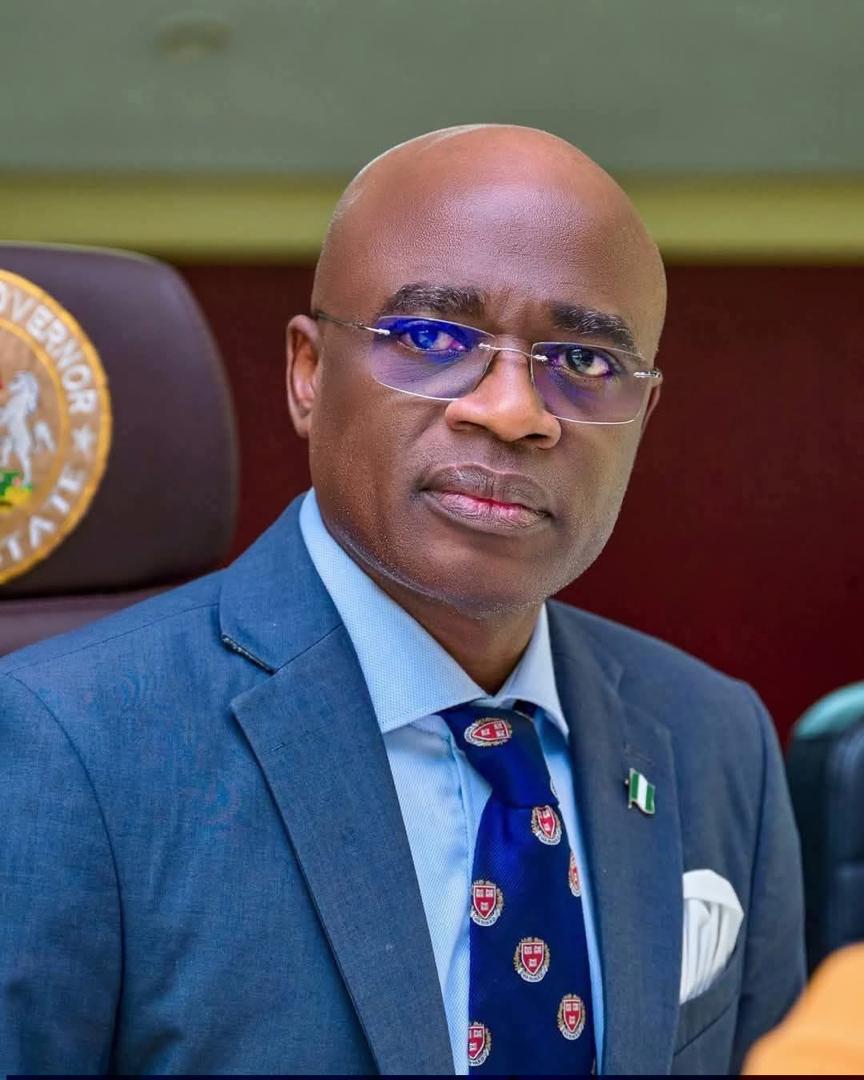
Benue state Governor, Hyacinth Alia has said his administration remains undeterred, focused, and deeply committed to the service of the people in the state.
This was contained in a statement issued yesterday by Alia’s Chief Press Secretary, Tersoo Kula in Makurdi.
The governor said that in spite of recent political narratives aimed at causing disruption, he remains steadfast in his resolve to put the people of Benue first.
”This administration has recorded progress in reviving abandoned schools and industries, supporting farmers, improving healthcare services and investing in critical infrastructure.
”We acknowledge the security challenges confronting the state”, he said, describing them as part of broader national issues requiring coordinated efforts.
He said his administration was working closely with the Federal Government, security agencies, community leaders and neighbouring states to strengthen security and restore peace in affected communities.
Alia urged residents to remain calm, vigilant and support lawful security operations by providing credible information to relevant authorities.
The governor said he is as committed to accountability, transparency and service delivery, insisting that political distractions would not derail efforts to improve the lives of Benue people.
Alis also maintained that the administration would continue to prioritise security, job creation, improved healthcare, agricultural development and other initiatives aimed at enhancing the welfare of residents.
The governor expressed confidence that the people would assess his administration based on its performance and tangible results rather than political rhetoric.
Alake Endorses Adebutu Ahead Ogun 2027 Governorship Bid
The Alake and Paramount Ruler of Egbaland, Oba Adedotun Aremu Gbadebo, have publicly endorsed the PDP governorship candidate, Hon. Oladipupo Adebutu, ahead of the 2027 Ogun governorship election.
The endorsement came when Adebutu and members of his campaign team paid a visit to the Egba Traditional Council to seek the blessings of the royal fathers for his governorship ambition.
Speaking during the meeting, Oba Gbadebo in the company of the Egba Traditional Council, described the Adebutu family as one with a longstanding legacy of generosity and commitment to the development of Egbaland.
He recalled the contributions of the PDP candidate’s father, Chief Kessington Adebukunola Adebutu, narrating how members of an Egba association had struggled to acquire a permanent secretariat in Lagos after identifying a building opposite the City Hall for purchase.
According to him, while members were making financial contributions towards acquiring the property, Chief Adebutu asked them to keep their money and personally paid for the building.
Oba Gbadebo thereafter offered prayers for the PDP candidate and publicly endorsed his governorship ambition before members of the Egba Traditional Council.
“Eventually, we found a building opposite the City Hall in Lagos and negotiated to purchase it. As members began contributing towards the cost, Baba Adebutu stood up and told us to keep the money we had contributed.
“He single-handedly paid for the building. He is the father of Oladipupo Adebutu. This step you have taken, by the grace of God, you will never regret.
“Whoever says there will be no way for you, you will eat their funeral akara.
“Once again, I warmly welcome you, and I pray that you will never regret embarking on this journey,”the monarch said.
In his response, Adebutu appreciated the royal fathers for their endorsement and prayers, assuring them that, if elected in 2027, his administration would strengthen grassroots governance by granting full financial autonomy to local governments.
Adebutu, who was accompanied by his running mate, Dr. Lateefat Sowunmi-Kolpapo, said financial independence for local government councils would accelerate development at the grassroots and improve service delivery across Ogun State.
The PDP flagbearer also insisted that governments must adopt innovative approaches to infrastructure development instead of relying solely on borrowing.
“You don’t borrow money for infrastructure anymore. I will construct roads that will improve connectivity between Ogun state and Lagos.
“For electricity, we will pursue a strong partnership between the government and the private sector.
“Once we generate adequate electricity, you will see the income of our people increase while the cost of energy comes down,” he said.
Adebutu accused successive administrations of denying local governments the financial independence needed to drive development.
“This is not about political parties. Whether APC or PDP, governors have continued to control local government allocations instead of allowing the councils to function independently.
“That must change because grassroots development begins with empowered local governments,” he said.
He argued that local councils delivered more meaningful development when they had direct access to their allocations and worked closely with traditional institutions.
He further pledged to build an inclusive administration that would prioritise the welfare of the people.
From Aliyu Askira, Kano
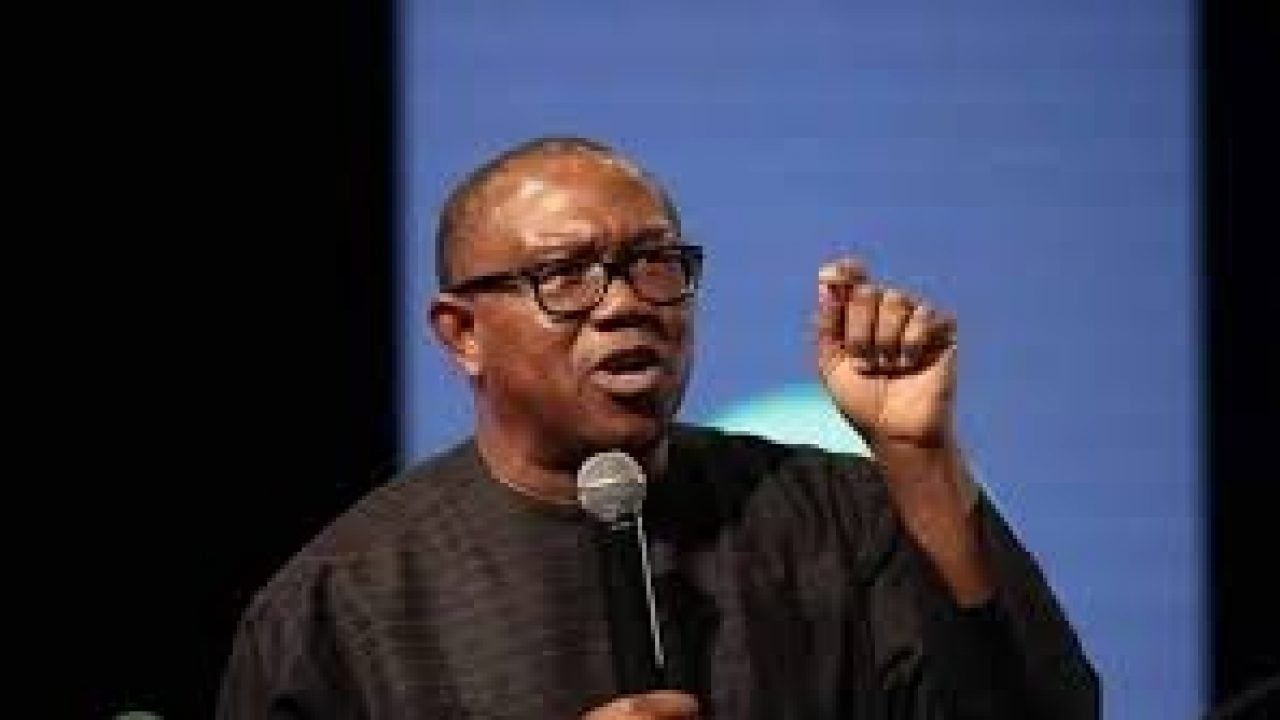
The immediate past National Chairman of the All Progressives Congress (APC), Dr. Umar Abdullahi Ganduje, has said that former Vice President Atiku Abubakar and the presidential candidate of the NDC, Peter Obi, lack the Northern grassroots structures and regional support needed to unseat President Bola Ahmed Tinubu in the 2027 presidential election.
Speaking at a public event in Kano Ganduje said Northern Nigeria remains the deciding factor in presidential elections and argued that neither opposition figure has the political strength to secure enough support in the region.
“The North is strategic in every presidential election in Nigeria. With due respect to our friends in the opposition, neither Peter Obi nor Atiku Abubakar can mobilise enough support in this region to defeat President Tinubu in 2027,” he said.
Ganduje maintained that both politicians lack the grassroots political machinery required to make significant electoral gains across the North, despite ongoing political realignments among opposition parties ahead of the next general election.
He also expressed concern over the increasing number of registered political parties in the country, urging the Independent National Electoral Commission (INEC) to strengthen the requirements for party registration.
According to him, only political parties with functional structures, well-defined ideologies and broad national presence should be recognised by the electoral commission.
The former APC national chairman said stricter registration standards would help strengthen Nigeria’s democratic process by ensuring that only viable political parties participate in elections.
His remarks come amid growing consultations and coalition talks among opposition politicians seeking to challenge President Tinubu’s re-election bid in the 2027 general election.




Customs Debunks Viral Recruitment Update, Warns Public Against Fake Information
ShareBy Tambaya Julius, Abuja The Nigeria Customs Service (NCS) has dismissed a purported recruitment update circulating on social media, describing...
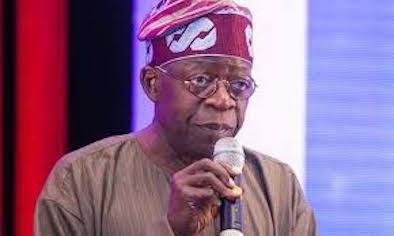
Tinubu Expands Nigerian Army Structure, Mounts 12 Divisions
ShareBy Elijah Oguche, Abuja President Bola Ahmed Tinubu has approved the expansion of the Nigerian Army’s command structure from eight...


Money Supply Hits N133.25trn as CBN Maintains Tight Monetary Stance
ShareBy Tambaya Julius, Abuja Nigeria’s broad money supply (M3) increased for the second consecutive month, rising to N133.25 trillion in...


Senate Committee Summons NSC, NFF Over Snub of Oversight Invitation
ShareBy Tambaya Julius, Abuja The Senate Committee on Sports Development has criticised the National Sports Commission (NSC) and the Nigeria...


Police Arrest Four Suspected Kidnappers, Rescue Abducted Woman in Rivers
ShareThe Police Commander in Rivers has arrested four suspected members of a kidnapping syndicate and rescued a woman abducted from...

Yusuf Hails FG Suspension of NECO Fee Hike
ShareFrom Rabiu Sanusi Kano Kano State Governor, Alhaji Abba Kabir Yusuf, has applauded the Federal Government for suspending the proposed...


Mbah Advocates Experiential learning, Unveils Human Development Model
ShareFrom Sylvia Udegbunam, Enugu Enugu State Governor, Peter Mbah has called for a fundamental overhaul of Nigeria’s education system, urging...
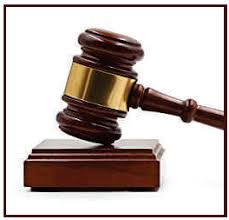

Woman Bags One year Imprisonment for Trafficking 45.6kg Cannabis
ShareA Federal High Court in Ibadan on Thursday sentenced a 40-year-old woman, Omodunmami Ayantola to one year in the correctional...


Oborevwori Approves Financial Support for Delta Law School Graduates
ShareFrom Francis Sadhere, Delta Delta State Governor, Rt. Hon. Sheriff Oborevwori, has approved the payment of financial assistance to 533...
The State of Humanities Education in Nigeria
ShareBy Kenny Ola The reality that recently dawns on Nigerian education arrives not with noise, but with poise, a gospel...