
BUSINESS
SON: Towards a Competitive Edge for Nigeria in AfCFTA

From Anthony Nwachukwu, Lagos
Within the next three years, the Standards Organisation of Nigeria
(SON), along with the relevant stakeholders, will be developing 658
industrial standardisation projects in such areas as energy,
transportation, health, and Micro, Small and Medium Enterprises
(MSMEs), among others.
The overall implication is that locally manufactured goods with the
agency’s seal can successfully compete globally, gain wider
acceptability and marketing edge, as well as generate foreign exchange
and jobs.
Since their approval by the Standards Council of Nigeria in June
2020, 264 out of the 274 (96 per cent) of the projects for the first
year have already been achieved, according to the agency’s Director of
Standards Development, Mrs. Chinyere Egwuonwu.
However, for the country to benefit immensely from this effort, the
business community must uptake the set standards, which are constantly
reviewed and updated in line with international standards in order to
remain relevant in the face of changing needs and new findings.
This reality counters the douses the fears that Nigeria, competing
under the impending Africa Continental Free Trade Agreement (AfCFTA),
would fare worse due to insufficient manufacturing and production
owing to poor industry environment, including unstable electricity
supply, which has seen manufacturers sustaining production on
alternative and expensive sources of energy, thereby spiking cost of
production.
Though cost remains a challenge in continental competition for edge
in locally manufactured goods, recent recurring developments where SON
destroyed some imported goods worth hundreds of millions of naira have
shown that the agency is equal to the task of maintaining standards on
both in-bound and out-bound products.
While such move discourages import of substandard products, SON has
been in the vanguard of also ensuring standards for locally
manufactured goods, especially export goods, to reduce the incidence
of rejection of such products overseas, loss of revenue for both
manufacturer and the country. If unchecked, such goods would reduce
further Nigeria’s chances under AfCFTA.
To ensure that Nigerian products and produce meet the required
standards for export, SON operates well-equipped laboratories of
different capacities across the country, and also certifies products
that meet the mark.
While Nigeria is unarguably the continent’s largest market by
population and territorial size, the same cannot be said of its
industrial capacity, which has continued to contract over the years,
with industries folding up, some manufacturers already relocated and
more still relocating to industry-friendly neighbouring countries.
This challenge, among others, have been fueling concerns by
stakeholders that Nigeria will ultimately become a dumping ground for
products with the advent of AfCFTA, and further depletion of the
country’s capacity to generate employment for its teeming youth, as
well as foreign exchange from such trade.
Nevertheless, the challenge of consumer protection from producers
and merchants of poor quality products/produce led to the recent
rising frequency of seizures of imported and export-bound substandard
goods.
According to the SON Director-General, Mallam Farouk Salim, the
agency has a responsibility to ensure that manufacturers deliver
quality products that would meet international standard. With AfCFTA,
“if our manufacturers are not doing the right thing by producing
quality products, other countries will take over the market,” he
stated at a recent capacity building programme for journalists.
“Therefore, SON has the responsibility to ensure that goods
produced here meet the required standards. Anybody who produces fake
or substandard products will face the punishment as prescribed by law,
because of the harmful effects of such goods on the people and the
society.”
Similarly, SON is to ensure that “whatever comes into this country
won’t harm our people. We have the best electric cables and
lubricating oil, among many other products like that. Direct or
indirect breaking of rules will be taken to court for prosecution.”
Armed with highly qualified professionals manning its various
laboratories and standardisation units across the federation, the
agency has called on state governments and corporate organisations to
partner it in helping Small and Medium-scale Enterprises (SMEs) to
deliver quality products, with the implication including home-grown
jobs and a deepening economy.
According to Salim, with over 40 million SMEs in the country, which
currently account for about 60 per cent employment, such synergy will
further reduce unemployment as more hands go into private ventures.
SON, on its part, will train and certify the SMEs’ products, as well
as teach the business owners branding and packing, among other indices
of product classification.
More so, the agency has a Memorandum of Understanding with Katsina
State to groom SMEs on standards, and was working on partnership with
four others – Jigawa, Kano, Bauchi and Sokoto.
The focus is, “we go in, train small scale industries on how to
produce their goods cleanly, how to package and market them, because
if any of these aspects is not done right, the goods will not do
well.”
He added, “One of the biggest problem we have in this country is
youth unemployment, both educated and uneducated. There are not enough
jobs in the federal government and in these various industries. So we
need to encourage small-scale producers for even the youths to be part
of the small scale industries and the country can be lifted,
unemployment will be minimal and we have less chaos.”
In the pursuit of standards, Salim noted that SON has one of the
most sophisticated facilities in the country, and recently acquired
laboratories that were accredited in paint, electrical and food and
nutrition even as he assured that they would continue to build
capacities. And with the help of the federal government, they were
building new laboratories and new offices for their activities to
reach every part of the country.
To enforce compliance, however, “we make sure there are
consequences for any substandard product and any person producing
substandard products. We are to ensure that manufactured goods, (like)
building materials are up to standard because collapsing buildings are
not discriminatory; whoever is in that building dies.
“We are committed to improving our responsibility. Over the years,
we have collaborated with market associations and importers
associations, even though our responsibility is primarily to help our
local producers, but Nigeria has importers and they are legitimate
businessmen and are importing things needed in Nigeria.
“So, our responsibility is to ensure that whatever comes to this
country is standard good, and not going to harm our people and our
local industry.
“We have factories that are doing bad things. We went there
(recently) and made sure they put those bad products back into the
system and rebuild them, because we are not going there to make them
lose their business but to ensure they do what they are supposed to
do. So, we quietly put hundreds and hundreds of tonnes of materials
back and they have to recycle and produce the right thing.
“We have able professionals working with us. In fact, I can say
this without sounding too proud that there are very few organisations
in Nigeria with a combination of highly intelligent and motivated
people like our organisation and I am very proud of that.”






The Dangote Petroleum Refinery has finally stopped the sale of Premium Motor Spirit (petrol) to major marketers importing petroleum products into Nigeria.
An official of the refinery confirmed this to our correspondent, saying the refinery would no longer sell petrol to those blending Dangote fuel with imported grades.
Another source told our correspondent that the refinery now prefers to sell its petrol to members of the Independent Petroleum Marketers Association of Nigeria and others not known for importing.
“We are selling to independent marketers and others who are not importing,” he stated.It was learnt that the development informed why some marketers went to court to get an order that the Nigerian Midstream and Downstream Petroleum Regulatory Authority should continue to grant them import licences.
The marketers feared that they might be left stranded if they could not import fuel at a time when the Dangote refinery had halted petrol sales to them. Dangote had earlier threatened to stop transacting business with fuel importers, whom it accused of blending its Euro-5 petrol grade with imported grades.
It is concerned that such practices could make it difficult to distinguish between products supplied directly by the refinery and products subsequently blended or handled by third parties.
Reacting, importers and petroleum marketers kicked against the restriction of petrol sales to marketers who import petrol, describing the move as an attempt to block imports. The marketers also challenged the refinery to provide evidence that imported petrol entering the Nigerian market is below the required quality standard.
The marketers, who preferred not to be mentioned, accused Dangote of trying to prevent the importation of petrol. “We know what Dangote is trying to do. He is just trying to block imports,” one of the marketers said. The marketer argued that a company that sells petrol could not dictate whether a consumer should combine its product with fuel purchased from another supplier.
Using the example of motorists buying petrol from different filling stations, the marketer said Dangote could not prevent consumers from combining products sourced from different suppliers.
Another marketer also argued that the Federal Government had a responsibility to ensure an adequate petrol supply and protect consumers, insisting that imports remain necessary when domestic production drops.
Speaking, the National Vice Chairman of the IPMAN, Hamed Fashola, stated that the Dangote refinery is selective about who it sells petrol to because not all major marketers import.
Clarifying IPMAN’s purchasing position amid market competition, Fashola noted that independent marketers operate flexibly to secure the most competitive pricing, sourcing supply indiscriminately from both local refineries and importers.
Meanwhile, the National Publicity Secretary of the IPMAN, Chinedu Ukadike, expressed the belief that the Dangote refinery is open to doing business with anyone.
Ukadike noted that independent marketers are ready to buy and sell petrol from all suppliers, stressing that they were not currently involved in importing the product.
While saying he would not know if importers truly blend Dangote’s petrol with imported petrol, he concluded that Dangote is in the best position to determine whatever it can do to discourage blending.
“So, if there is any measure to discourage adulteration of petroleum products by Dangote, I think the refinery and its experts know best. They know the best way to deal with that. But our own is to continue to buy and sell to marketers. If there is a way to discourage adulteration of petroleum products, I won’t stop Dangote from doing so,” Ukadike added.
Nigeria has emerged as the biggest climber in Africa’s latest investment risk ranking, rising four places to eighth position as economic reforms implemented by President Bola Tinubu improved the country’s relative attractiveness to investors, a new report by Bloomberg has stated.
Nigeria overtook Rwanda, Tanzania, Kenya and Namibia in the 2026 Bloomberg Economics Investment Risk-O-Meter, which assesses the relative investability of 19 African economies.
Bloomberg, in the report released on Monday, said Nigeria’s improvement was driven by stronger performance in three of the five indicators used in the assessment: economic strength, fiscal strength and external vulnerability.
The development puts Nigeria among the biggest gainers on the continent, despite ongoing concerns about the country’s high public debt, cost of living, inflation, infrastructure deficit and foreign exchange pressures.
Mauritius emerged as the most investable African market in the latest ranking, while Botswana fell two places. South Africa, which topped the ranking in the previous edition, also dropped one place following a weaker economic growth outlook.
Nigeria’s improved position comes more than three years after Tinubu assumed office and embarked on a series of major economic reforms aimed at restructuring the country’s fiscal and monetary environment.
Among the most significant measures were the removal of the petrol subsidy, reforms to the foreign exchange market and changes to electricity tariffs.
The Federal Government has repeatedly defended the reforms as necessary to address distortions that had weighed on public finances, discouraged investment and placed pressure on foreign exchange reserves.
However, the policies have also increased economic hardship for households and businesses, particularly through higher transport, food and energy costs. Despite the adjustment pains, Nigeria’s economy has continued to expand during the period under review.
Real Gross Domestic Product growth rose from 2.54 per cent in the third quarter of 2023 to 3.46 per cent in the fourth quarter of that year.
The economy subsequently grew by an average of 3.19 per cent in 2024 before accelerating to 3.85 per cent in 2025, its strongest annual performance within the period covered by the assessment.
Growth stood at 3.89 per cent in the first quarter of 2026, bringing the average quarterly growth between the third quarter of 2023 and the first quarter of 2026 to about 3.46 per cent.
The stronger growth performance has come alongside efforts by the government to increase revenue, reduce fiscal leakages and attract investment into critical sectors of the economy.
Nigeria’s improved position in the Bloomberg ranking, however, comes against the backdrop of a substantial increase in public debt.
Data from the Debt Management Office showed that Nigeria’s total public debt stood at N87.38tn as of June 30, 2023, shortly after Tinubu took office. By December 31, 2025, the figure had risen to N159.28tn. This represents an increase of N71.90tn, or about 82.3 per cent, in two and a half years.
The increase was driven by new borrowing, foreign exchange adjustments and the securitisation of certain legacy obligations, according to the DMO.
The development is significant for a country that has struggled for years to attract sufficient foreign capital because of concerns over exchange-rate instability, policy uncertainty, weak infrastructure, insecurity and limited fiscal space.
The reforms under the Tinubu administration have sought to address some of these constraints by allowing market forces a greater role in determining fuel prices, foreign exchange rates and electricity tariffs.
The foreign exchange reforms, in particular, were designed to reduce multiple exchange rates and improve transparency in the currency market, while the removal of the petrol subsidy was intended to reduce the government’s fiscal burden.
The electricity tariff reforms were also aimed at improving the financial viability of the power sector and encouraging investment by allowing electricity prices for some customer categories to better reflect supply costs.
Nigeria’s rise in the Bloomberg ranking therefore marks an improvement in its relative position among African investment destinations, even as investors continue to monitor the sustainability of its reforms, debt burden and economic growth.
By Tambaya Julius, Abuja
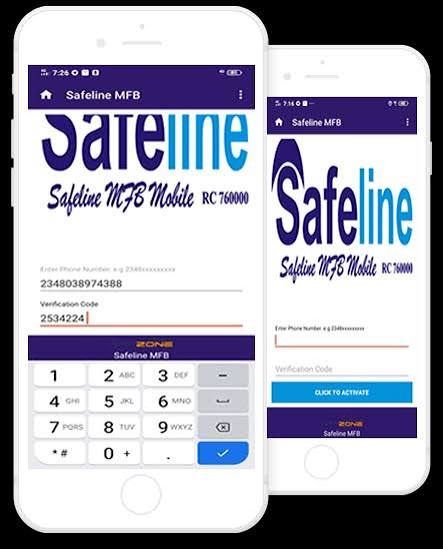
Safeline Microfinance Bank (SMFB), established by the Federal Road Safety Corps (FRSC), has formally transferred its shares to ROBOPAY NIG. LTD., in a move aimed at strengthening the bank’s capital base, technology and capacity for sustainable growth.
The share transfer ceremony took place on Monday, at the bank’s premises in Abuja.
Speaking at the ceremony, Chairman of the Board of Safeline Microfinance Bank, Engr. Ibrahim Babagana, fwc, Deputy Corps Marshal (Rtd.), said the decision followed the Board’s careful assessment of the changing regulatory environment and government policies affecting the microfinance banking sector.
Babagana said the changing financial landscape meant that the bank needed significant additional capital, greater investment in technology and stronger human resources to remain competitive.
He explained that the Board therefore decided to transfer ownership to an investor with the financial capacity and commitment to make the necessary investments and put the bank on a stronger path towards long-term sustainability.
The Board Chairman expressed confidence in ROBOPAY NIG. LTD., saying the company had demonstrated the commitment and vision needed to build on the foundation laid by the FRSC.
He said the new owners had shown particular interest in strengthening the bank’s capital base, introducing modern technology and investing in its workforce.
According to him, these areas would be critical to keeping Safeline Microfinance Bank competitive as the financial services industry becomes increasingly digital.
Responding on behalf of ROBOPAY NIG. LTD., Malam Aliyu Abiodun thanked the Board and Management of Safeline Microfinance Bank for the confidence reposed in the company.
Abiodun described the acquisition as a major milestone and an opportunity to unlock the bank’s existing potential.
He said the institution already had valuable assets, structures and an established foundation which ROBOPAY would build upon through strategic investments in capital, technology and human resources.
He added that ROBOPAY would deploy financial technology (FinTech) solutions to modernise the bank’s operations, improve service delivery and strengthen its position in the financial services market.
Abiodun assured that the company would build on the foundation established by the FRSC while introducing innovative solutions to reposition Safeline Microfinance Bank for the changing demands of Nigeria’s financial sector.
The share transfer marks a new phase for Safeline Microfinance Bank, with the new ownership expected to pursue a more technology-driven and investment-focused approach to the institution’s growth.
Both parties expressed their commitment to ensuring a smooth transition and strengthening the bank’s capacity to deliver sustainable value to its customers and other stakeholders.



ASUSS Opposes NUT Strike in FCT, Urges Teachers to Ignore Stay-at-home Directive
ShareBy Laide Akinboade, Abuja The Academic Staff Union of Secondary Schools (ASUSS), Federal Capital Territory (FCT) Chapter, has dissociated itself...
Edo Varsity Lecturer Dies after Sex Romp in Hotel
ShareA senior lecturer at the Ambrose Alli University, Ekpoma in Edo State, Dr. Matthew Uwuigbe, has died under mysterious circumstances...

Over 84 Per Cent Nigerians willing to Vote During 2027 Elections – Yiaga
ShareYiaga Africa said 84 per cent of Nigerians intend to vote during the 2027 general elections, urging political parties to...

PNC 2026: NCDMB, DMG Affirm Collaboration with Bayelsa, Unveil New Activities
ShareFrom Mike Tayese, Yenagoa As preparations intensify for the 2026 edition of the Practical Nigerian Content (PNC) Forum, slated for...

Tinubu’s $700 Billion Mineral Resources Deal With America at Whose Interest?
ShareBy Hajia Hadiza Mohammed For some time now the hottest issue of debate in the Nigeria media space has been...

Atiku’s Production Subsidy: Has politics overtaken economics?
ShareBy Kayode Oladele Alhaji Atiku Abubakar, former Vice President of Nigeria and presidential candidate of the African Democratic Congress, (ADC),...

2027: Governors’ Backing Boosts Tinubu’s Chances, says Presidency
ShareBy Tambaya Julius, Abuja The Presidency has said the growing number of governors backing President Bola Tinubu has strengthened his...


Security Operatives Rescue 20 Abducted NYSC Members in Imo
ShareBy Tambaya Julius, Abuja Security operatives have rescued 20 members of the National Youth Service Corps (NYSC) who were abducted...

Nigeria’s Oil Reforms will Unlock $50bn Deep Offshore Investments – Tinubu
SharePresident Bola Tinubu said recent reforms in Nigeria’s oil and gas sector are designed to unlock up to 50 billion...
Ododo Condoles Families of NAF Personnel, Armed Forces Over Ondo Crash
ShareFrom Joseph Amedu, Lokoja Kogi State Governor, Ahmed Ododo has commiserated with the families of the Nigerian Air Force personnel...