
Health
Stakeholders Demand Affordable, Quality Menstrual Products

Stakeholders in the health, manufacturing, regulatory and development sectors have called for urgent policy and regulatory reforms to make menstrual products more affordable and accessible to millions of Nigerian women and girls battling period poverty.
The call was made at the Nigeria Menstrual Health Forum: “Driving Standards and Policy Reform for Affordable Menstrual Products,”organised in Lagos by the United Nations Population Fund, UNFPA, in collaboration with the Standards Organisation of Nigeria, SON, and the Federal Ministry of Women Affairs and Social Development, with funding from the Sanitation and Hygiene Fund, SHF.
The two-day forum brought together government agencies, manufacturers, private sector players, civil society organisations and development partners to address affordability, quality standards, local production and market access for menstrual products.
An estimated 37 million women and girls in Nigeria are affected by period poverty, while 24 per cent of schoolgirls regularly miss classes because of inadequate menstrual materials and poor water, sanitation and hygiene facilities.
The situation has been worsened by inflation, with the price of menstrual pads rising from about N200–N400 three years ago to N500–N750 or more, forcing some women and girls to resort to unsafe alternatives, including old cloth, mattress foam and reused sanitary pads.
Speaking at the forum, UNFPA Gender and Adolescent Unit representative, Dr Zubaida Abubakar, said the focus was not merely on increasing access to menstrual products but ensuring that products available in the market were affordable, safe and of good quality.
“This forum marks a turning point in Nigeria’s menstrual health landscape. By driving standards and policy reform, we aim to dismantle barriers to access, ensure dignity for women and girls, and unlock opportunities for education, health, and empowerment,” Abubakar said.
She explained that the objective was to create an environment where local manufacturers could produce menstrual commodities at lower costs rather than relying mainly on government subsidies.
“We cannot expect the government alone to be responsible for subsidising menstrual commodities. What we want to do is make sure that the manufacturers are able to produce them at a lower cost,” she said.
According to her, the goal was to “flood the market with affordable, quality-standard” products capable of reaching women and girls across the country.
The forum also focused on strengthening standards and certification to prevent substandard menstrual products from entering the Nigerian market.
Head, National Product Certification Department, SON, Phebean Arumemi, said standards could help manufacturers reduce production costs by minimising waste and improving production processes.
“One of the key benefits from standards is cost management,” Arumemi said, stressing that the agency was working with manufacturers, particularly micro, small and medium enterprises, MSMEs, to improve their capacity to meet quality requirements.
She said SON’s priority was not to shut down factories but to provide mentorship and compliance support.
“Our first priority is not to close down factories. It is mentorship support to help them escalate from where they are now,” she said.
Also speaking, Elisha Sule of SHF said greater coordination among regulators, manufacturers and financiers was critical to developing a sustainable menstrual health market.
“The businesses are there, the regulators are there, NAFDAC is there, SON is there. We need someone to bring us all together to keep talking. And so, without that coordination, we’re not going to be able to move forward,” Sule said.
He said many women-led businesses in the sector required capacity building and access to finance to scale production, urging stronger collaboration with financial institutions, including the Development Bank of Nigeria, DBN.
Meanwhile, investment adviser Kunle Awolowo of ONYX Investment Advisory Limited, advocated import substitution to reduce production costs, noting that up to 90 per cent of inputs used by some local manufacturers were imported.
He also suggested smaller product packages to make menstrual products more affordable to low-income consumers.
The forum is part of the SHF-funded initiative, Menstrual Health & Hygiene: Unlocking Women’s Power, implemented across six African countries.
Nigeria has adopted the Africa Regional Standard for menstrual products and is pursuing ISO certification, while it has also developed a National Policy on Menstrual Health and Hygiene Management, 2025–2030.
The stakeholders said ending period poverty would not only restore dignity but also improve health, school attendance, gender equality and women’s economic participation.(PUNCH)









By Eze Okechukwu, Abuja
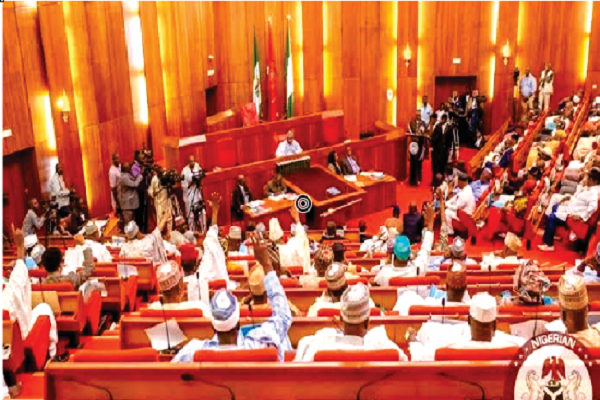
The Senate yesterday ordered mandatory health screening for every international passenger arriving Nigeria airports, seaports, land borders as Ebola resurfaces in the Democratic Republic of Congo with a scare case reported in the FCT.
The resolution followed an urgent motion by Senator Francis Fadahunsi, who warned that with Lassa fever already ravaging states, Nigeria cannot afford another outbreak.
“Protecting our entry points is far cheaper than managing Ebola,” Fadahunsi told the chamber.
Lawmakers insisted screening must be total and indiscriminate — no exemptions based on nationality or departure country because infected travellers can transit through safe-listed nations.
Senator Diket Plang raised the stakes further, demanding immediate funding for NCDC and Port Health Services, including release of withheld funds and emergency budget.
Senate President Godswill Akpabio said the Federal Government has started releasing Ebola response funds but ordered relevant committees to track every kobo.
“Ascertain whether the funds were released and judiciously utilised. Any outstanding debt must be released by the Finance Ministry without delay,” Akpabio directed.

By Laide Akinboade, Abuja
The Federal Government (FG), on yesterday confirmed one case of Ebola disease in the Federal Capital Territory (FCT), following laboratory confirmation.
Minister of Health and Social Welfare, Prof.
Muhammad Ali Pate, stated this while briefing journalists in Abuja.He said the patient, a woman, who was from Uganda, was admitted in Abuja and the diagnosis has been confirmed.
The statement reads, “The patient, a woman who recently arrived in Nigeria on an international flight from Uganda, was admitted to a private hospital in the FCT, where she received care for several days before the diagnosis was confirmed.
She is currently in isolation and receiving medical care.“The Federal Minister of Health and Social Welfare and NCDC are working closely with the FCT Health Services Secretariat and other relevant authorities to contain the infection and prevent further spread..
“Contact tracing has commenced with 44 close contacts identified presently, with public health teams identifying and monitoring people who may have been exposed, including healthcare workers, patients, caregivers and travel contacts. Surveillance has been intensified, and the hospital is receiving immediate support to strengthen infection prevention and control measures.
“The FG calls on all public and private healthcare facilities nationwide to be on high alert. Healthcare workers must maintain a high index of suspicion, promptly identify and isolate suspected cases, observe strict infection prevention and control measures, and immediately report suspected cases to public health authorities.
“What Nigerians Should Know and Do
Ebola spreads through direct contact with the blood or body fluids of someone who is sick with the disease or has died from it, or through contact with contaminated materials. A person with Ebola cannot spread the disease before symptoms begin”.
The Federal Government therefore advised residents to remain calm but vigilant.
“Remain calm but vigilant. There is no need for panic. Practise regular hand hygiene and avoid contact with the body fluids of anyone suspected to have Ebola.
Watch for symptoms, including fever, severe weakness, headache, vomiting and diarrhoea, particularly following possible exposure.
“Report any possible exposure immediately, even if you feel well. If you develop symptoms, avoid close contact with others and call public health authorities for guidance before visiting a healthcare facility.
” Cooperate with public health teams. Anyone contacted during contact tracing, including relevant airline passengers, should provide the necessary information and follow public health advice.
“Avoid rumours and stigma. Share only verified information from official health authorities” .
The Minister recalled, “Our Assurance to Nigerians. Nigeria successfully contained Ebola in 2014, and we have the experience and public health systems to respond to this case. However, containing Ebola requires everyone to play their part.
“The Federal Government, FCT authorities and other partners are working together to protect healthcare workers, patients and the wider public. Investigations are ongoing, and we will continue to provide accurate and timely information.
” We urge Nigerians to remain calm, stay vigilant and cooperate with public health authorities. Early detection, prompt reporting and everyone’s cooperation are critical to preventing further spread.
“The Government of Nigeria through the Presidential Taskforce on EVD and NCDC will continue to provide updates.
NCDC free call centre is available 24 hours a day, seven days a week. For information or to report a suspected case, please call NCDC toll-free number 6232″.

By Laide Akinboade, Abuja
The Benue State House of Assembly has passed into law a landmark legislation aimed at eliminating tuberculosis (TB) and protecting persons affected by the disease from discrimination and human-rights violations.
The legislation, known as the Tuberculosis Elimination, Human Rights Protection and Anti-Discrimination Law of Benue State, 2026, was passed into Law during Thursday plenary presided over by Speaker, Rt.
Hon.Berger Alfred Emberga, MNIQS, RQS, following consideration of the report of the House Standing Committee on Health and Human Services.The committee, chaired by Hon. Matthew Damkor, Ph.D., said the legislation was necessary to provide a comprehensive legal framework for tuberculosis prevention, diagnosis, treatment, care and control across the state.
The law also seeks to safeguard the rights of persons affected by Tuberculosis (TB), including their rights to dignity, healthcare, privacy, information, employment, education and social protection.
In its report, the committee identified several areas of the original Bill that required amendment, particularly provisions relating to federal laws and institutions, implementation responsibilities, screening and isolation, enforcement mechanisms, offences and penalties.
The committee recommended the removal of provisions purporting to amend federal legislation, particularly the Employees’ Compensation Act, 2010, noting that such amendments were inappropriate for state legislation.
It also recommended that references to federal institutions as implementing authorities be replaced with relevant Benue State institutions, while allowing for lawful collaboration with federal authorities.
The committee further recommended that the Commissioner for Health and Human Services, through the Ministry of Health and relevant state agencies, be clearly designated to coordinate the implementation of the law.
On the protection of fundamental rights, the House called for clearer safeguards in provisions dealing with TB screening, isolation and restriction of movement, including informed consent, confidentiality, medical necessity, proportionality and the use of the least restrictive measures.
It also recommended the establishment of an accessible mechanism for receiving complaints, addressing discrimination and providing remedies to persons whose rights may have been violated under the law.
The House further urged relevant agencies to ensure that offences and penalties under the legislation are clearly defined, proportionate and enforceable.
After considering and adopting the committee’s recommendations clause-by-clause, the bill was read for the third time and subsequently passed into law by the Speaker, Rt. Hon. Emberga following a unanimous consideration and adoption by members.
The Tuberculosis Law which was sponsored by Hon. Dr. Simon Gabo of Mata State Constituency and others, is expected to strengthen Benue State’s response to tuberculosis and provide a stronger legal framework for protecting persons affected by the disease from stigmatization, discrimination and other rights violations.
Meanwhile, Civil Society Organisations, Lawyers Alert and Media Health and Rights Initiative of Nigeria, MHR, have commended the Benue State House of Assembly for taking steps to strengthen the state’s response to tuberculosis, and protect the rights of persons affected by the disease.
In a joint statement, the President of Lawyers Alert, Rommy Mom and the Executive of MHR, Alu Azege said the Bill brings health and human rights dimensions of TB into legislative conversation in the state.




2027: Don’t Call Benue People Shenanigans, Alia not answerable to you- Ex- Amb, Tarzoor Tells Ortom, Wike.
ShareFrom Attah Ede, Makurdi Ex -Nigeria’s Ambassador to Namibia, Terhemen Tarzoor, has warned the immediate past Governor of Benue State...

DBN Signs $61m Credit Deal With AfDB, Unveils Support Initiative Report
ShareBy Tony Obiechina, Abuja The Development Bank of Nigeria Plc (DBN) has launched DAWN: DBN Action for Women in Nigeria,...

NLC Threatens Nationwide Action as Talks With FG Collapse
ShareBy Tambaya Julius, Abuja The Nigeria Labour Congress (NLC) has threatened possible nationwide industrial action following the failure of talks...


Top10 Magazine Names Umaru Kwairanga as Man of the Year 2026
ShareAlh. (Dr) Umaru Kwairanga, Group Chairman, Nigerian Exchange Group (NGX Group), has been named as the Top10 Magazine’s Man of...


UK, Nigeria to Deepen Defence, Security Cooperation
ShareThe United Kingdom has reaffirmed its commitment to deepening defence and security cooperation with Nigeria, with emphasis on military training,...


2027: INEC Steps Up Preparations, Completes Nine Activities
ShareBy Tambaya Julius, Abuja The Independent National Electoral Commission (INEC) has completed nine of the 14 activities on its timetable...


2027: Tinubu Accords Benue Security Top Priority, Tompolo Tells Supporters
ShareLeader of the PBAT Door-to-Door Movement, Government Tompolo, has called on the people of Benue state to come out enmasse...


Senate Demands Compulsory Screening of Foreign Arrivals
ShareBy Eze Okechukwu, Abuja The Senate yesterday ordered mandatory health screening for every international passenger arriving Nigeria airports, seaports, land...

Reps Summon Telecom Operators over Poor Network Services
ShareBy Ubong Ukpong, Abuja The House of Representatives on Wednesday, summoned telecommunication operators in the country to appear before it...


Bill to Design, Manufacture, Commercialize Drones Passes Second Reading in Reps
ShareBy Ubong Ukpong, Abuja A bill for an Act to move the nation to developing the capacity to design, manufacture...