
Health
Salako Urges Increased Investment in Radiopharmaceutical Cancer Therapy

The Minister of State for Health and Social Welfare, Dr Iziaq Adekunle Salako, has called for increased investment in radiopharmaceutical therapy to strengthen cancer care and advance precision medicine in Nigeria.
Salako made the call at the International Symposium on Radiopharmaceutical Therapy (ISRT) event held on Friday in Lagos.
The World Association of Radiopharmaceutical and Molecular Therapy (WARMTH), International Centers for Precision Oncology Foundation and Chris Oyakhilome Loveworld Medical Centre, organised the two- day event.
The symposium targets better, more accurate and personalised cancer diagnosis and treatment for people in Africa.
Represented by Dr David Oladele, Deputy Director, Research, Nigerian Institute of Medical Research, Yaba, Salako commended the organisers and stakeholders for addressing Nigeria’s growing cancer burden.
He described radiopharmaceutical therapy as an important frontier in modern medicine, combining nuclear medicine, molecular imaging, pharmaceutical sciences, oncology and precision medicine for targeted cancer treatment.
The minister said the Federal Government remained committed to strengthening the health system under President Bola Tinubu’s Renewed Hope Agenda and the Health Sector Reform Investment Initiative.
He urged participants to deepen collaboration between Nigerian and international institutions, promote technology transfer, strengthen capacity development and develop partnerships to make radiopharmaceutical therapy more accessible.
Salako expressed hope that the symposium would produce actionable recommendations and partnerships capable of strengthening cancer care and advancing precision medicine across Nigeria.
He congratulated the organisers and wished participants fruitful deliberations and a successful symposium.
Delivering the opening remarks, Dr Deola Philips, Executive Minister, Ministry of Healing and Social Services and Chairman, Loveworld Medical Centre, commended Pastor Chris Oyakhilome for his compassion toward the sick.
Philips said Oyakhilome’s compassion had inspired healthcare initiatives, including trauma care, blood donation, volunteer medical services and community clinics.
She said ISRT promoted precise, personalised cancer care, strengthened local expertise and demonstrated Africa’s capacity to develop and deliver advanced diagnostics and targeted treatments to international standards.
President-elect of WARMTH, ISRT Scientific Chair and Director of Operations, Loveworld Medical Centre, Dr Masha Maharaj, said collaboration, education and research were crucial to advancing nuclear medicine globally.
She said ISRT symposiums provided practical workshops for young scientists and emerging departments to gain knowledge and confidence, exchange ideas and collaborate with international experts.
She said research showed that theranostics could improve outcomes for patients with advanced prostate cancer, adding that Nigeria had begun actinium treatments for breast cancer, sarcoma and lung cancer.
In a video displayed on a slide, Dr Savvas Frangeras, Nuclear Physician, Cyprus, and President, World Federation of Nuclear Medicine, praised Maharaj for fostering cooperation between the organisations.
Frangeras said the symposium supported efforts by international bodies to strengthen nuclear medicine in Africa and develop sustainable strategies for addressing the continent’s challenges.
He expressed hope that the Nigerian Society of Nuclear Medicine and Molecular Imaging would join the initiative, wishing participants a successful and productive symposium.
Prof. Richard Baum, a pioneer in molecular imaging, theranostics and radiopharmaceutical therapy, said the professional environment provided ideal conditions for learning, exchange and international friendships.
Baum commended Maharaj and her team for creating a platform that advanced radiopharmaceutical therapy, precision oncology, collaboration and global partnerships for patients in Africa and beyond.
Dr Emeka Eze, Medical Director, Loveworld, and Chairman, ISRT 2026, said precision oncology offered targeted cancer care, potentially reducing the side effects of conventional chemotherapy while improving diagnosis and treatment outcomes.
Eze said radiopharmaceuticals targeted diseased cells and helped detect cancers and other conditions, describing nuclear medicine technology at Loveworld Medical Centre as a major treatment breakthrough.
He commended the Nigerian government for supporting nuclear medicine and assured cancer patients of scientifically proven treatment alternatives, although he acknowledged that advanced medical care remained expensive.
Dr Anthony Oseghale, Director of Health Services, Ministry of Healing Health and Social Services, Loveworld Nation, Oyakhilome for his compassion and global healthcare interventions.
Oseghale said ISRT 2026 reflected Loveworld’s commitment to precision medicine, while Vision 10,000 provided free eye surgeries, eyeglasses, medication and specialist consultations, reaching thousands of people.
He said the Volunteer Medical Corps comprised millions of health professionals and students providing free healthcare, while Community Clinics offered free services, medications and consumables across communities.
According to him, Loveworld Medical Centre had expanded access to advanced healthcare, with plans for a community clinic in Kenya, enabling patients to receive specialised treatment without travelling abroad.(NAN)
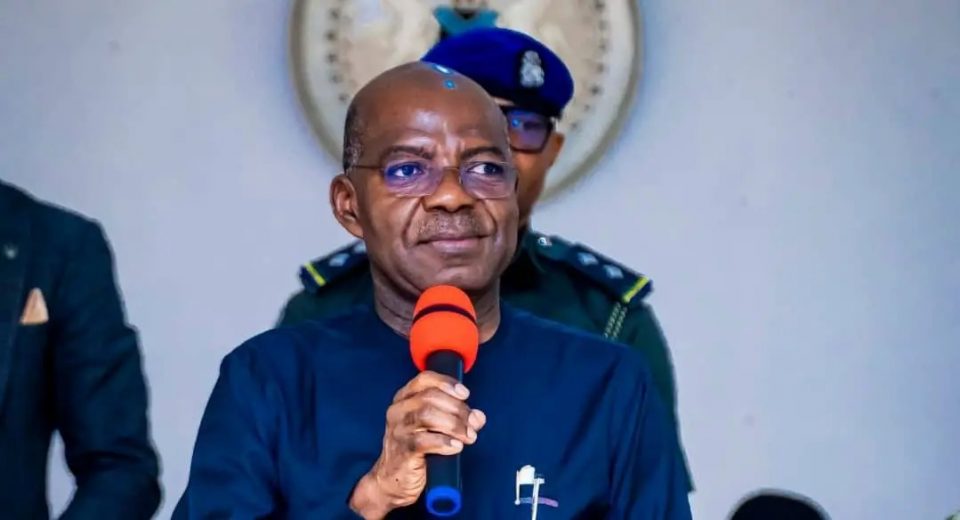
Abia State Governor, Alex Otti said the rising cases of cancer, brain tumour, stroke and tuberculosis among Abia youths poses serious concern to him.
Otti expressed the concern at the August edition of his media monthly chat, held at the Okpara Auditorium, Umuahia, on Thursday night.
He described the trend as one of the issues that “has continued to keep me awake all night”.
He said that there was an urgent need to identify factors contributing to the increase in serious health conditions among Abia youths.
The governor, therefore, directed the Commissioner for Health to intensify public health education, with focus on preventive healthcare.
He urged Abia people to pay attention to what they eat, how they eat, when they eat and the quantity they eat.
He emphasised that the government would prioritise prevention rather than waiting until illnesses escalated to when it required treatment.
Otti disclosed that the State Government was spending enormous financial resources for the treatment of Abia indigenes suffering various diseases in different hospitals in the country, including Lagos and Abuja.
He said that his administration was establishing specialist hospitals in the three senatorial zones in the state to make quality health care accessible to the people.
He said that other healthcare facilities in the state were being strengthened to respond to emerging health challenges.
According to him, the goal is to ensure that residents accessed quality and specialised health care within Abia, “instead of travelling outside”.
On infrastructure, he gave assurance that construction work on a major road that was delayed would resume and be completed soon.
He said that the challenge affecting the project had been resolved and that completion was close.
The governor also assured residents that the planned remodeling of Ubani Ultra-modern Market had not been abandoned.
He said that work on the market would commence soon, adding that the government remained committed to the project.
He said that his administration prioritised the welfare and educational needs of persons with disabilities, contrary to the allegations that they were being discriminated against in admission processes.
Otti directed the Commissioner for Basic and Secondary Education to investigate and correct any confirmed case.
He emphasised that the administration would continue to address genuine complaints by citizens and ensure fair implementation of programmes. (NAN)
From Dan Amasingha, Minna
A fresh outbreak of diphtheria has claimed 11 more lives in Niger State, raising the death toll from the disease to 28 as health authorities battle its spread across affected communities.
The latest fatalities were recorded in Chanchaga and Katcha Local Government Areas, where officials blamed low childhood immunisation coverage for the increasing number of deaths.
Executive Director of the Niger State Primary Health Care Development Agency (NSPHCDA), Dr. Junaidu Inuwa, disclosed this on Thursday in Minna during a two-day capacity-building workshop for Ward Development Committees (WDCs) on Community Engagement and Accountability to Affected Population (AAP), organised in partnership with the United Nations Children’s Fund (UNICEF).
Dr. Inuwa said the state had earlier confirmed 124 diphtheria cases between January and early August, with 17 deaths recorded before the latest outbreak.
He revealed that while 74 patients have been successfully treated and discharged from affected communities in Bida and Agaie local government areas, surveillance has been intensified in Suleja LGA to contain the disease.
The health official expressed concern over what he described as the refusal of some parents and guardians to vaccinate their children, warning that the trend was exposing children to preventable diseases.
“Most parents are not immunising their children, and the community structures need to do more in sensitising families. We recently recorded an outbreak in Chanchaga and Katcha where 10 patients died, and we lost another patient on Tuesday at the General Hospital, Minna,” he said.
He urged Ward Development Committees to intensify grassroots mobilisation and encourage mothers to present their children for routine immunisation, stressing that early vaccination remains the most effective protection against diphtheria.
UNICEF’s Social and Behavioural Change Specialist in the Kaduna Field Office, Ibrahim Mohammed, said the training was aimed at strengthening community structures to support healthcare delivery through awareness creation and accountability.
According to him, the programme adopts an integrated approach covering health, nutrition, water, sanitation and hygiene (WASH), child protection, and education to improve community response to disease outbreaks.
Health authorities have appealed to residents to promptly report suspected diphtheria symptoms and ensure eligible children receive routine vaccines to curb further spread of the disease across the state.
By Abiemwense Moru
For millions of Nigerians, viral hepatitis remains a silent health threat, progressing unnoticed for years without obvious symptoms.
It often manifests as severe liver disease, cirrhosis or cancer, by which time treatment may be limited, more complex and costly.
As the world marked the 2026 World Hepatitis Day recently, health experts renewed calls for increased awareness, wider screening and improved access to treatment to reduce infections and prevent avoidable deaths.
The global theme, “Hepatitis: Let’s Break It Down,” underscores the need to remove barriers to information, testing, vaccination and treatment while ensuring equitable access to quality healthcare.
According to the World Health Organisation (WHO), viral hepatitis causes about 1.3 million deaths annually, mainly from liver cirrhosis and liver cancer.
Hundreds of millions of people live with chronic hepatitis B and C globally, many unaware of their infection because symptoms often appear only after significant liver damage.
Nigeria bears one of Africa’s highest hepatitis burdens, with more than 20 million people estimated to be living with hepatitis B and C.
Many remain undiagnosed, fuelling continued transmission within communities.
Health experts therefore advocate greater awareness, wider screening and timely treatment to reduce infections and prevent complications.
Consultant Gastroenterologist and Hepatologist, Dr Adaeze Oreh, says hepatitis B and C remain major public health challenges because many infected Nigerians are unaware of their status until extensive liver damage occurs.
She says widespread misconceptions, including beliefs that hepatitis results from spiritual attacks or witchcraft, discourage testing in spite of the availability of effective prevention and treatment.
According to Oreh, delayed diagnosis allows infections to progress silently and increases transmission within families, communities and healthcare settings.
She says simple blood tests can detect hepatitis early, enabling treatment that prevents liver failure, cirrhosis and liver cancer.
Oreh also advocates routine screening and administering hepatitis B vaccines within 24 hours of birth to prevent mother-to-child transmission, noting that many infections are detected only during routine medical examinations.
For Grace James, a hepatitis B diagnosis during antenatal screening initially brought fear and uncertainty.
However, counselling and regular medical follow-up reassured her that proper care could protect both mother and child.
She says adherence to medical advice and strong family support have enabled her to remain healthy.
James believes her experience demonstrates how early diagnosis and accurate information can transform fear into confidence while reducing the risk of complications and transmission.
Similarly, Musa Abdullahi discovered his hepatitis status during a routine medical examination conducted for employment.
Although he had no symptoms, doctors placed him on regular monitoring and advised him on healthy lifestyle practices to protect his liver.
Today, Abdullahi says he continues to live and work normally, urging Nigerians to embrace screening because knowing one’s status is the first step towards prevention and treatment.
While personal experiences illustrate hepatitis’ human impact, state governments are expanding interventions to improve early detection, vaccination and awareness.
In Adamawa, authorities say more than 240,000 residents have been screened under an ongoing campaign targeting about 300,000 people in Yola South Local Government Area.
The Commissioner for Health and Human Services, Mr Muhammed Jada, says many infected persons remain unaware of their status until serious complications develop.
He says awareness, testing, vaccination and timely treatment are essential to reducing hepatitis-related deaths while urging stronger efforts to combat stigma that discourages people from seeking care.
The state has also strengthened routine childhood immunisation, blood safety measures, infection prevention and public awareness campaigns.
Executive Chairman of the Adamawa Health Management Service Board, Dr Aiden Amzaranda, says the state’s hepatitis burden is worrying, citing findings from Garkida General Hospital where about 120 of 400 people screened tested positive.
In Plateau, the Commissioner for Health, Dr Nicholas Ba’amlong, reports hepatitis B and C prevalence rates of 13.9 per cent and 6.8 per cent respectively, while studies among pregnant women indicate a prevalence of 9.2 per cent.
Data from the hepatology unit of Jos University Teaching Hospital also point to increasing numbers of chronic hepatitis B and liver cancer patients, underscoring the need for wider screening and vaccination.
Consultant Gastroenterologist and Hepatologist, Prof. Duguru John, says hepatitis is commonly transmitted through unscreened blood transfusions, unprotected sex, mother-to-child transmission and the sharing of unsterilised sharp objects.
He urges Nigerians to receive vaccinations, insist on properly screened blood and practise safe infection-prevention measures.
Medical Director of Mercy Way Medical Centre, Dr Patrick Omogbohun, says viral hepatitis accounts for about 80 per cent of liver cancer deaths globally.
According to him, more than 800,000 people develop liver cancer annually while over 700,000 die from the disease, highlighting the need for stronger prevention, screening and treatment programmes.
Although millions remain unaware of their infection, he notes that effective vaccines, diagnostic tools and treatments are available and should be made more accessible.
Lagos State has also intensified free screening, vaccination and awareness campaigns across communities, including Ikorodu, Isolo and Ajeromi.
The initiative provides hepatitis screening, counselling, vaccination and referral services, while public awareness campaigns use radio, television, social media and community outreach to educate residents.
State AIDS Programme Coordinator, Dr Oladipupo Fisher, identifies poor awareness as a major obstacle to hepatitis prevention.
The state has trained 28 health facilities to provide hepatitis services and vaccinated thousands of healthcare workers, with development partners supporting the effort through donations of vaccines, testing kits and outreach activities.
Beyond state interventions, the Africa Centres for Disease Control and Prevention says Africa has the knowledge and tools needed to eliminate viral hepatitis if governments sustain investment and collaboration.
The agency advocates expanded testing and treatment, timely birth-dose vaccination, stronger laboratory systems and increased domestic financing.
Globally, WHO aims to reduce new hepatitis infections by 90 per cent and hepatitis-related deaths by 65 per cent by 2030, but warns that millions remain undiagnosed and untreated, especially in low-resource settings.
For Nigeria, the message from this year’s World Hepatitis Day is clear; awareness, routine screening, vaccination and timely treatment must become integral to healthcare delivery.
Although viral hepatitis remains a major public health challenge, experts say it is largely preventable, detectable and, in many cases, treatable.
They urge sustained investment in prevention, improved access to care and stronger public awareness to reduce infections and prevent avoidable deaths.
Such efforts, they say, will help Nigeria achieve the global goal of eliminating viral hepatitis as a public health threat by 2030. (NAN)


Salako Urges Increased Investment in Radiopharmaceutical Cancer Therapy
ShareThe Minister of State for Health and Social Welfare, Dr Iziaq Adekunle Salako, has called for increased investment in radiopharmaceutical...


Rising Cases of Cancer, Brain Tumour, Others among Youths Disturbing – Otti
ShareAbia State Governor, Alex Otti said the rising cases of cancer, brain tumour, stroke and tuberculosis among Abia youths poses...
Diphtheria Death Toll Hits 28 in Niger
ShareFrom Dan Amasingha, Minna A fresh outbreak of diphtheria has claimed 11 more lives in Niger State, raising the death...


RMAFC Advocates Workplace Safety with Fire Training for Staff
ShareBy Tony Obiechina, Abuja The Chairman of the Revenue Mobilisation Allocation and Fiscal Commission (RMAFC), Dr. Mohammed Bello Shehu has...

Customs Sharpens Operational Edge as 50 Officers Graduate from NCCSC
ShareFifty officers of the Nigeria Customs Service (NCS) have completed the three-month Junior Course 25 at the Nigeria Customs Command...

Lydia Memorial Hospital Takes Free Healthcare to Akpodo, Treats Over 250 Residents
ShareBy David Torough, Abuja Residents of Akpodo Community in Okpokwu Local Government Area of Benue State on Sunday, August 30,...
Nigeria’s Tertiary Healthcare; The Waterbed, the Blackout and the Long Road
ShareBy Prince Charles Dickson In February 2026, Ogonna Egwu took her gravely ill mother to the Accident and Emergency Ward...


2027: Tinubu, Atiku and Obi Step up New Strategies for Nigeria’s Presidency
ShareBy Raphael Atuu As the 2027 general elections draw closer, the political atmosphere in Nigeria is gradually heating up, with...


Tinubu Reports Xenophobic Attacks to AU
SharePresident Bola Tinubu has formally reported recurring xenophobic and Afrophobic attacks against Africans and other nationals in South Africa to...


Alia Changing Infrastructure Narrative in Benue South, Says Council Boss
ShareFrom Attah Ede, Makurdi The Chairman of Agatu Local Government Area of Benue State, Melvin Ejeh, has commended Governor Hyacinth...