
Education
Strike: ASUU Payment Platform, UTAS, Failed Integrity Test, FG Insists


The Federal Government says it is still waiting for the Academic Staff Union of Universities (ASUU) to upgrade and return to it the Universities Transparency Accountability Solution (UTAS), which was said to have failed integrity test.
The News Agency of Nigeria (NAN) reports that ASUU has embarked on one month warning strike on Feb.
14, to press home their demands involving about N1. 3 trillion.The union also want the federal government to adopt the UTAS payment platform to replace the Integrated Personnel and Payment Information System (IPPIS).
The Director-General of the National Information Technology Development Agency (NITDA), Mr Kashifu Inuwa, however, insisted that UTAS has failed the necessary tests that should qualify it to be used as a payment platform.
Inuwa stated this when he fielded questions from State House correspondents at the end of the meeting of the Federal Executive Council (FEC), presided by Vice-President Yemi Osinbajo at the Council Chambers, Presidential Villa, Abuja, on Wednesday.
Reacting to the contentious issues that led to the ongoing ASUU strike, the Minister of Communications and Digital Economy, Prof. Isa Pantami, said when he received a letter from the Minister of Labour and Employment, Dr Chris Ngige, requesting a review of the submission and the technical ability of the software of the system, he forwarded the request to NITDA
He said: “NITDA conducted their own analysis, their own testing and sent same back to me, and I drafted a cover letter I forwarded to the Minister of Labour and Employment, and I copied the two Ministers of Education, Minister of Finance, Budget and National Planning, and also office of the Accountant General of the Federation and even NUC (National University Commission).”
Pantami, however, directed the director-general of NITDA, who sat beside him, to give the situation report on the matter.
Inuwa said: “When we received the request to review UTAS, you know, building complex system like UTAS that involves employees’ personal data, and also payment system, we have to subject it to do best practice tests before approving.
“Normally, when we are reviewing that kind of system, we perform three tests.
“Firstly, because when you’re building system, it’s not just about the technology, you need to consider the people that will use this system and the process.
“If you don’t align people, process and technology, you will never get result. No matter how good the technology is, if the people don’t understand how to use it, they won’t use it. And if the process is different from the way the people work, also, they won’t use it.
“So that is a process of building technology.
“You need to get the business requirement. What do you want to achieve? So it’s not the technology that will come first, it is the business requirement, what do you want to achieve, then you need to identify the capabilities you need to achieve, that is your business objective.
“Part of the capability is the technology you need to bring in and the people that will operate the technology before you start thinking of the technology, because technology is always a tool that will help you to achieve an objective or to do your work. If you bring the tool before knowing what to do with it, it will be useless.
“So, when they came, we said okay, fine, we will do user acceptance test. ASUU you’ve built this system, but you are not the one that will use the system. There are people in Bursary, and all the finance that will use this system.
“So we need to do users’ acceptance test with them, let them come show them the system, let them see if it can help them to do the work there.
“Secondly, we said we’ll do vulnerability test to test the security integrity of the system. Because if there is vulnerability, people can hack it, can change and it involves financial transactions. Adding zero means a lot. So we say we need to do that.
“And also we need to do stress test. You can build a system on your laptop or on a small computer, use it but when you put so many data it will crash, we need to do the stress test to make sure that system can do.
“This is on the system. Then also you need to have a data centre where you need to put that system because just having a system without the data centre it will not operate also.
“So, we did all these three tests with them. And the system couldn’t pass. We wrote the reports and submitted it back to the Minister, which he forwarded to all relevant institutions, including ASUU.
“As we speak now, ASUU is working, trying to fix all the issues we highlighted with the system and we will review it again, but that is just one half of the story.’’
According to him, ASUU is yet to inform the federal government where the data centre of the system will be installed.
“The second half of the story also, we need to find where to put that system like IPPIS we have a data centre built for it. ASUU where are we going to put it?
“That means we need to have the data centre and also we need to check the data centre to make sure it meets minimum requirement, because if you put people’s information and the system crashes, how can you pay them salary?
“You need to build redundancy. There are a lot of things to do. So, but as we speak, they’re trying to fix all the issues we highlighted with the system. Then when we finish that, we need to look at the second half of the story, getting where to install it.”
NAN recalls that the Minister of Labour and Employment, Dr Chris Ngige, had on Match 1 briefed President Muhammadu Buhari on the progress report over the on-going negotiation between federal government and ASUU.
Ngige, who spoke to newsmen at the end of the meeting with the president, said the federal government had so far paid over N92 billion as earned allowances and revitalisation fee to federal owned universities across the country.
He said this was part of the implementation of the 2020 December agreement reached with the ASUU. (NAN)



The Zamfara State Universal Basic Education Board (ZSUBEB) has flagged off the training of 75 State and Local Government Education Authority Social Mobilisation Officers (SMOs) on the utilisation of School-Based Management Committee (SBMC) operational documents.
The training, held at the ZSUBEB Headquarters, Gusau, on Monday, was aimed at strengthening the capacity of the officers to engage communities and stakeholders on improving retention and the quality of basic education in the state.
At the formal flag-off, the Executive Chairman, ZSUBEB, Prof. Nasir Garba Anka, represented by the Permanent Member I, Madawaki Alhaji Dahiru Shehu, said social mobilisation remains critical to the success of government interventions in the education sector.
“Social Mobilisation Officers are an important link between government, schools, parents, communities, traditional and religious institutions, as well as civil society organisations and other stakeholders.”
Madawaki explained that the responsibilities of Social Mobilisation Officers go beyond information dissemination.
“They are expected to build trust, create awareness, encourage community participation, identify barriers to education and promote ownership of educational programmes.”
He emphasised that sustainable progress in basic education cannot be achieved by government alone, but requires the active participation of parents, communities, traditional and religious leaders, teachers, SBMCs and development partners.
In a goodwill message, the State Coordinator of UBEC, Zamfara State Office, Malam Tanimu Abdulkadir, who spoke on behalf of the Executive Secretary of UBEC, Dr. Aisha Garba, and the management of the Commission, commended ZSUBEB for organising the training.
Malam Abdulkadir cited the recent Enrolment Drive Campaign at JNI Primary School, Gusau, where 87 out-of-school children were enrolled, as an example of what effective community mobilisation can achieve.
He further disclosed that UBEC has made SBMC functionality an important indicator in its school monitoring exercise.
Representatives of the Teachers Service Board, Senior Secondary Education Board and Ministry of Education, Science and Technology also pledged their continued support and collaboration.
In his remarks, the Director of Social Mobilisation, ZSUBEB, Alhaji Sani Usman Gummi, thanked the participating institutions, development partners, facilitators, organisers and other stakeholders for their contributions.
Kano State Governor, Abba Kabir Yusuf, has approved the implementation of the January and July 2026 promotions of 18,984 teaching and non-teaching staff of the State Universal Basic Education Board (SUBEB).
The approval also provides for the release of N235, 116,339.
09 to facilitate the implementation of the promotions across the state’s 44 Local Government Education Authorities (LGEAs).The decision followed a request by the Executive Chairman of SUBEB, Yusuf Kabir, for funds to implement the promotions for eligible staff whose promotions for the two 2026 cycles had been processed.
In a letter dated September 2, 2026, the Board said it had completed the necessary processes, including verification of staff eligibility and computation of the corresponding salary adjustments.
According to SUBEB, the timely implementation of promotions is essential to staff motivation, career development, capacity strengthening and improved service delivery in the basic education sector.
The Board noted that SUBEB, one of the largest public institutions in Kano State, has approximately 60,000 teaching and non-teaching personnel serving across the 44 LGEAs.
It further disclosed that the present administration inherited outstanding promotion backlogs, involving arrears spanning seven years, as well as another backlog of about one-and-a-half years.
SUBEB said Governor Yusuf had previously approved and facilitated the implementation of the outstanding promotions, describing the intervention as having improved staff morale and restored confidence among personnel.
The Board said the latest approval further demonstrates the administration’s attention to the welfare and career progression of public servants in the state.
The request was subsequently ratified at a recent meeting of the Kano State Executive Council, paving the way for the release of the approved funds and the implementation of the January and July 2026 promotions.
The Registrar of the Joint Admissions and Matriculation Board, Prof. Segun Aina, has explained the decision to establish a Unified Tertiary Matriculation Examination centre in Canada, saying the move is aimed at expanding access to education rather than generating revenue.
Aina said the proposed centre in Ottawa would serve Nigerians living in Canada and other parts of North America who wish to sit the examination for admission into Nigerian tertiary institutions.
The registrar gave the explanation in a series of posts on X on Tuesday, following public questions about the planned centre, which is expected to begin operations for the 2027 UTME.
He said JAMB currently conducts the examination in about 10 foreign countries as a service to candidates, adding that the number of applicants was not the primary consideration for establishing such centres.
“UTME is currently being written in about 10 countries as a service to enhance access to education. We also conduct the exams in correctional service centres for the same reason. So the number of candidates is not the main driving force,” Aina wrote.
He noted that although JAMB had multiple examination centres across Africa, there was none in North America before the planned Ottawa centre.
According to him, the board had received enquiries from prospective candidates and expected more interest following the announcement.
Asked who would use the centre, Aina said Nigerians relocated abroad for various reasons each year, including the children of Nigerian public servants posted overseas.
“Anyone of the 100s of people who move back yearly for one reason or the other, including the children of many service personnel with tenured postings all around the world,” he said.
Aina also dismissed concerns that the board would need to acquire or rent a building and employ additional personnel to operate the centre.
He explained that JAMB works with Nigerian diplomatic missions in countries where it conducts the UTME, using temporary spaces within high commission premises and the assistance of their staff.
“We partner with the Nigerian High Commissions in various countries. We set up temporary spaces within their premises and use their staff to assist us run the exams,” he said.
The registrar further said no money had been spent on the proposed Canadian centre, explaining that the arrangement was initiated during a visit to Canada for a conference.
“Not a single kobo has gone into this exploration so far — I was in Canada for a conference and used the opportunity to make the connection,” he wrote in another post.
He added that the board did not maintain permanent facilities or computer-based test centres in Ottawa, saying the examination would be conducted within the Nigerian High Commission’s premises to keep costs low.
Aina said the board’s foreign examination centres were not established primarily on the basis of financial viability but to make access to Nigerian tertiary education easier for eligible candidates.
In a separate post, he argued that the absence of a centre in North America had meant there could not previously have been candidates sitting the UTME there.
“There couldn’t have been any candidates in North America since we didn’t have any centres there, sir. You are making our point whilst seeming to argue against it,” he wrote in response to a question about demand.
JAMB’s spokesperson, Fabian Benjamin, also defended the decision, urging critics to seek clarification before questioning the board’s plans.
Benjamin said the board had received indications of interest from more than 100 candidates who wished to sit the examination in Canada.
“How will you feel if you know that over 100 candidates have already indicated their interest to sit the exam in Canada. Let us promote the nation please,” he wrote.
He added that the board would continue working to promote Nigerian universities by facilitating admissions for international students, despite criticism of its efforts.
JAMB announced plans to establish a UTME centre in Ottawa, Canada, where Nigerians living in the country and other parts of North America would be able to sit the examination from 2027.
The board disclosed the plan following a visit by Aina to the Nigerian High Commission in Ottawa, saying the centre would provide eligible candidates with easier access to the examination.



ASUSS Opposes NUT Strike in FCT, Urges Teachers to Ignore Stay-at-home Directive
ShareBy Laide Akinboade, Abuja The Academic Staff Union of Secondary Schools (ASUSS), Federal Capital Territory (FCT) Chapter, has dissociated itself...
Edo Varsity Lecturer Dies after Sex Romp in Hotel
ShareA senior lecturer at the Ambrose Alli University, Ekpoma in Edo State, Dr. Matthew Uwuigbe, has died under mysterious circumstances...

Over 84 Per Cent Nigerians willing to Vote During 2027 Elections – Yiaga
ShareYiaga Africa said 84 per cent of Nigerians intend to vote during the 2027 general elections, urging political parties to...

PNC 2026: NCDMB, DMG Affirm Collaboration with Bayelsa, Unveil New Activities
ShareFrom Mike Tayese, Yenagoa As preparations intensify for the 2026 edition of the Practical Nigerian Content (PNC) Forum, slated for...
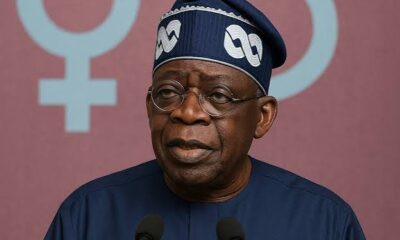

Tinubu’s $700 Billion Mineral Resources Deal With America at Whose Interest?
ShareBy Hajia Hadiza Mohammed For some time now the hottest issue of debate in the Nigeria media space has been...
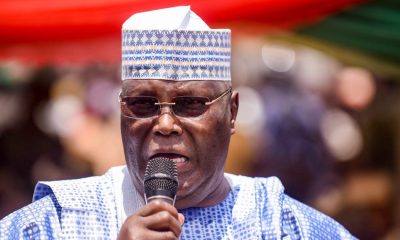

Atiku’s Production Subsidy: Has politics overtaken economics?
ShareBy Kayode Oladele Alhaji Atiku Abubakar, former Vice President of Nigeria and presidential candidate of the African Democratic Congress, (ADC),...
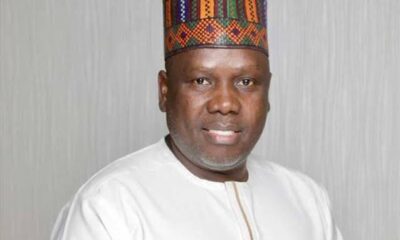

2027: Governors’ Backing Boosts Tinubu’s Chances, says Presidency
ShareBy Tambaya Julius, Abuja The Presidency has said the growing number of governors backing President Bola Tinubu has strengthened his...
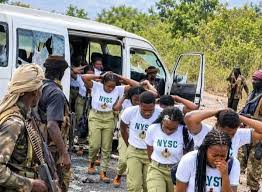

Security Operatives Rescue 20 Abducted NYSC Members in Imo
ShareBy Tambaya Julius, Abuja Security operatives have rescued 20 members of the National Youth Service Corps (NYSC) who were abducted...

Nigeria’s Oil Reforms will Unlock $50bn Deep Offshore Investments – Tinubu
SharePresident Bola Tinubu said recent reforms in Nigeria’s oil and gas sector are designed to unlock up to 50 billion...
Ododo Condoles Families of NAF Personnel, Armed Forces Over Ondo Crash
ShareFrom Joseph Amedu, Lokoja Kogi State Governor, Ahmed Ododo has commiserated with the families of the Nigerian Air Force personnel...