
view point
Supporting Tertiary Education through Increased Taxation


By Rahma Oladosu
The most prominent avenue through which the Tertiary Education Trust Fund (TETFund) raises funds to prosecute its statutory intervention projects and programmes in Nigerian tertiary institutions is through the Education Tax known as EDT.
The intervention agency’s main source of income is the two per cent education tax paid from the assessable profit of companies registered in Nigeria.
The Federal Inland Revenue Services (FIRS) collects this tax on behalf of the Fund.EDT is the magic wand for educational intervention in Nigeria.
It is through the instrumentality of the EDT that many Nigerian universities, polytechnics and Colleges of Education (CoEs) are now wearing a new look.The EDT is deployed to build Senate Buildings, Lecture Theatres, Science Laboratories, Student Hostels, and Staff Offices, among other facilities in seversl public tertiary institutions.
One will not be exaggerating to also assert that nothing but the EDT is what facilitated the establishment of TETFund’s Centre of Excellence, Academic Publishing Centres, and Research Centres in several public universities, polytechnics and CoEs, across the country.
How about the National Research Fund (NRF) for research grants to Nigerian academics, lecturers and researchers? It is certain that the EDT is the enabler.
In short, it is through the aid of the EDT that the lost glory and fortunes of many Nigerian tertiary institutions are either restored or salvaged through robust and aggressive infrastructural development on campuses.
Nevertheless, the failure of registered companies (in the past) in meeting their EDT obligation appears to be constraining TETFund from accessing funds to fulfill their mandate.
A former Executive Secretary of TETFund, Dr Abdullahi Bichi Baffa, sometime in 2016, alleged that over 50 per cent of registered companies in the country are evading the two per cent EDT imposed by the Federal Government, thereby putting the agency in a difficult situation.
Fast forward to 2022, the agency seems to have tackled the age-long crises of inadequate EDT.
It is gratifying to note that the EDT’s receipts have risen in recent years. In 2021, for example, the intervention agency received N189 billion as EDT.
This was disclosed at TETFund’s ‘2021 Education Development Tax, EDT, Forum’ in Jos. The forum, organised in collaboration with the Federal Inland Revenue Service (FIRS), aimed at improving EDT in the country.
The event tagged “Improving EDT Collection in the Post Pandemic Era”, had participants from various higher institutions of learning and other government organisations.
The Director Strategic Planning and Development of TETFUND, Dr Irene Erivwo said that the figures generated in the year under review were far lower compared to previous years.
He, however, explained that the advent of COVID-19 pandemic had grossly affected the revenue generation in the nation, hence the need for deeper collaboration towards scaling up the generation of EDT.
“Over the years, TETFUND has been recording improvement in the education tax collection. For example, in 2013, the Fund had an EDT of more than N270 billion and since then FIRS has been striving to achieve the annual EDT targets in spite of the obvious challenges.
“In 2021, the fund received an EDT of N189 billion, which was considerably lower than the previous years. COVID-19 pandemic, no doubt affected economic activities globally and this had negative effect in the EDT collection for 2021.
“We are equally aware that economic activities were seriously slowed down and, in some cases, halted from March 2020 when lock-down was imposed and movement within the country restricted.
“This affected the performance of industries and companies which invariably affected the EDT collection for 2021,” he said.
The forum availed stakeholders in education and revenue sectors the opportunity to brainstorm on ways to improve EDT collection. The forum also created an opportunity for the enhancement of the existing working relationship between the stakeholders.
“It has become necessary that the government should look for ways and means to increase drive in EDT collection to enable the Fund meet up with the challenges and its commitment to the development of our tertiary education system.
It is worrisome that the EDT collection for 2021 was far below the target set for the year, hence the need for such a forum to address these issues,” Erivwo added.
TETFUND had recorded significant impact on infrastructural development, adding that the National Research Fund (NRF) has increased from N5 billion to N7.5 billion in 2020 and N8.5 billion in 2021.
The Fund supported the establishment of centres of excellence each in twelve selected institutions between 2020 and 2021.
It has started a capacity building programme for beneficiary institutions aimed at improving the global competitiveness and visibility of universities, entrepreneurship and skills development for polytechnics and pedagogy skills and curriculum development for colleges of education.
Muhammad Nami, the Executive Chairman of FIRS, described the forum as timely, adding that it would foster relationship and create opportunity for exchange of ideas toward the actualisation of their mandates.
Represented by Dr Dick Irri, the Coordinating Director, Compliance Support Group of FIRS, Nami acknowledged that 2021 was indeed a challenging year.
He, however, said that it had put modalities on ground, including the deployment of a home-grown technology and that more taxes would be collected in 2022.
He maintained that the newly developed software known as “Taxpromax”, would enable taxpayers file and pay taxes with ease.
The steady increase in the EDT portends good omen for TETFund, and also, hundreds of Nigerian tertiary institutions that are beneficiaries of the intervention agency’s ‘milk of human kindness’.
No doubt the challenges plaguing Nigeria’s tertiary education system are multi-faceted. Addressing them does not appear to be simple. It is taxing, and requires funds indeed. A lot of funds.
Rahma Olamide Oladosu writes from Abuja and can be reached through: oladosurahma@gmail.com.
By Tochukwu Jimo Obi
Nigeria’s political environment is gradually heating up as preparations for the 2027 general elections gather momentum. While political competition is an essential component of democracy, the recent spate of inflammatory and threatening statements by some political actors is deeply disturbing.
Statements suggesting that citizens could be punished, intimidated or forced to support a particular political party represent a dangerous departure from the principles of democratic participation. If left unchecked, such rhetoric could create an atmosphere of fear ahead of an election in which every Nigerian must be free to exercise his or her franchise without intimidation.Of particular concern are the recent comments attributed to the Chairman of Kuje Area Council in the Federal Capital Territory, Samuel Danjuma Shekwolo. In a widely circulated video, the council chairman appeared to tell residents that they should support the All Progressives Congress or leave the area council. He linked his position to development projects attributed to the Federal Government and the FCT administration. Although Shekwolo subsequently denied that he intended to threaten or disenfranchise residents and argued that his comments had been taken out of context, the controversy itself should not be dismissed.
Even more disturbing are the recent comments attributed to Borno State Commissioner for Youth and Sports Development, Sainna Buba. Speaking at a political event in Maiduguri, Buba reportedly warned that those who refused to support the APC would be flogged and used language suggesting that opponents could have their fingers broken. Coming from a serving government official, such language is unacceptable in a democracy. Political persuasion is legitimate; threats of physical punishment are not. The comments have already attracted condemnation and calls for an investigation.
These incidents must also be viewed against the backdrop of the recent controversy involving Senator Francis Fadahunsi of Osun East. Fadahunsi was criticised over comments concerning members of the Accord Party ahead of the August 15 Osun governorship election. The remarks were interpreted by some as an incitement to violence, although the senator subsequently denied advocating physical violence, insisting that he meant his supporters should politically defeat the opposition through their votes. The Osun State Police Command subsequently invited him for questioning.
The pattern should concern every Nigerian, regardless of political affiliation. At a time when the National Peace Committee is making deliberate efforts to prevent violence and encourage issue based campaigns, some politicians and public officials appear determined to undermine that effort through reckless utterances. On August 18, presidential candidates and political parties signed the first National Peace Accord ahead of the 2027 elections, committing themselves to peaceful and issue based campaigns and rejecting violence, intimidation, hate speech and inflammatory rhetoric.
The National Peace Committee deserves commendation for its continuing intervention in Nigeria’s electoral process. Its stated objective is to promote peaceful, credible elections and ensure that citizens can participate freely in the democratic process. But peace accords cannot succeed merely because political leaders sign documents. They must be backed by responsible conduct and, where necessary, firm enforcement by state institutions.
This is where the security agencies must rise to the occasion. Threats against voters, political opponents or any group of citizens should not be treated as ordinary political rhetoric simply because they emanate from influential politicians or government officials. Every credible allegation should be investigated promptly, impartially and transparently. Where an investigation establishes criminal conduct, the appropriate legal consequences should follow. Selective enforcement will only deepen public suspicion and reinforce the perception that politically connected individuals are above the law.
Election is not a do or die affair. It is a contest in which candidates and parties seek the consent of the people. Nigerians have the constitutional and democratic right to support the APC, NDC, PDP, Labour Party, ADC or any other political platform of their choice. They equally have the right to reject every one of them. No politician owns a community, local government, state or constituency simply because he or she occupies public office. Government projects are funded with public resources and cannot legitimately be presented as a political debt that citizens must repay with their votes.
There is therefore a need for political leaders, particularly those holding public office, to understand the enormous influence of their words. The recent action of Edo State Governor Monday Okpebholo over the controversial remarks of his aide, Apostle Kassy Chukwu, provides an important example of how political leadership should respond when an appointee crosses the line. Chukwu had warned that singer David Adeleke, popularly known as Davido, should not return to Edo State, prompting the state government to distance itself from the statement and subsequent reports that the governor terminated his appointment.
Other governors, ministers, lawmakers and political leaders should take note. Nigeria cannot afford another electoral season in which careless words become catalysts for violence. The security agencies must investigate threatening statements without fear or favour, while political parties must discipline members who endanger the peace. The responsibility for a peaceful 2027 election belongs to everyone, but those entrusted with public office bear an even greater responsibility. Democracy thrives when citizens are persuaded, not threatened; when opponents are challenged with ideas, not intimidation; and when every voter is allowed to walk into the polling booth and freely choose who should govern them.
Tochukwu Jimo Obi, Obosi Anambra State.
By Idris Rufai
Big Brother Naija, popularly known as BBNaija, has become one of Nigeria’s most watched and discussed reality television programmes. Over the years, the show has attracted millions of viewers with its entertainment, competitions, relationships, parties and large cash prizes.
However, as the programme enters another season under the theme “Show Ya Sef”(Show Yourself), season 11, one question continues to bother me: What exactly are we showing ourselves, and more importantly, what are we showing the next generation?As a young Nigerian and a student of Mass Communication, I believe entertainment should not be separated completely from responsibility.
The media has enormous power to influence the way people think, behave and perceive society. Therefore, programmes with millions of viewers should be examined not only from the perspective of entertainment but also from the perspective of their possible influence on society.I first took time to watch BBNaija in 2020. When Olamilekan “Laycon” Agbeleshe emerged as the winner.At the time, I was curious about what attracted so many people to the programme. I initially expected a reality show that would combine entertainment with education, character development, talent discovery and positive contributions to society. However, after watching the programme on several occasions, I found myself asking what lasting values some aspects of the show were passing to viewers, particularly young people.
My concern is not that entertainment itself is wrong. People need entertainment, relaxation and programmes that allow them to escape from the pressures of everyday life. My concern is the type of entertainment being presented and the values that may be communicated through it.
One of the areas that raises concern for me is the manner in which some housemates present themselves during night and pool parties. Certain forms of dressing, dancing and other displays may be considered normal entertainment by some viewers, but others may see them as inconsistent with the moral and cultural standards expected in many Nigerian communities.
Nigeria is a country with diverse cultures, traditions and moral values. We are Africans, and our cultural heritage has historically placed importance on values such as dignity, respect, modesty and responsible behaviour. Therefore, while our media industry should evolve with changing times, it should also consider the cultural environment in which its programmes are being consumed.
The issue becomes even more important when we consider children and teenagers. Today, children can easily access smartphones, laptops and social media platforms from their homes. They do not necessarily need to sit in front of a television to encounter content from programmes such as BBNaija. Clips from reality shows can quickly circulate across social media platforms and reach children who may not even be old enough to understand the context surrounding what they are watching.
Young people are impressionable. What they repeatedly see can influence what they eventually consider normal, acceptable or desirable. This is why media regulatory bodies have a responsibility to consider the possible consequences of the content they put before the public.
Some viewers may argue that BBNaija is simply entertainment and that nobody is forced to watch it. That argument deserves consideration. Adults have the right to choose the programmes they watch. However, when a programme has such a large influence on popular culture, its producers should also recognise that its impact can extend beyond the individual viewer.
There is also the question of what happens after the show. The winner receives a substantial financial reward and other prizes, while contestants gain popularity and social media influence. But beyond the money, fame and entertainment, what positive legacy does the programme leave for society?
Could reality television in Nigeria do more to promote entrepreneurship, education, creativity, leadership, talent development, community service and responsible citizenship? Could contestants be challenged to develop businesses, solve community problems, promote Nigerian culture or participate in educational and social initiatives while still providing the entertainment audiences enjoy?
I believe it is possible.This is not a call for the complete cancellation of BBNaija or other reality television programmes. Rather, it is a call for responsible entertainment. The Nigerian entertainment industry is capable of producing programmes that are exciting and commercially successful while still promoting values that contribute positively to society.
Regulatory bodies also have an important role to play. They should continue to ensure that broadcast content complies with established broadcasting standards and protects vulnerable audiences, particularly children, also have a role in guiding children on what they watch and helping them understand the difference between entertainment and acceptable real life behaviour.
As we embrace modern entertainment, we should not allow the pursuit of ratings, popularity, money and fame to completely overshadow our cultural and moral responsibilities.
The theme “Show Yourself” therefore gives us an opportunity to ask a deeper question: What kind of self are we encouraging young Nigerians to show?
Are we showing creativity, intelligence, entrepreneurship, leadership, talent and cultural pride? Or are we increasingly celebrating behaviour simply because it attracts attention?
BBNaija has the platform and influence to do more. Its millions of viewers represent an enormous opportunity to entertain while also inspiring, educating and empowering young people.
We should not reject entertainment, but we should demand better entertainment.
We should not reject modern culture, but we should preserve the values that define us.
And above all, as we tell young people to “show yourself,” we must also ask them, and those who create the content they consume, what exactly are we showing the next generation?.
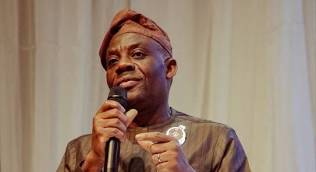
From one policy flip-flop to another, the Federal Government of Nigeria has scrapped the 6-3-3-4 system of education, which it introduced with fanfare over four decades ago. In its place is now a linear 12-year schooling from primary to the end of secondary education.
Under the old arrangement, six years were for primary schooling, three years for junior secondary school, another three years for senior secondary schooling, and a minimum of four years of university education.
The Minister of Education, Tunji Alausa, on 1 July, said the transition from JSS 3 to SSS 1 presented a quagmire to the country.
“We have 20 million dropouts from primary school to Junior Secondary School. Where are the students? We found out that we have 80,000 public primaries and about 15,000 Junior Secondary schools. That is a ratio of one-to-eight,” he stated.Education is a public asset, whose overhaul – when it becomes imperative – requires a broad and rigorous debate in the best interest of society. But the Nigerian government failed to do so; just as it recently did in the restructuring of the National Youth Service Corps (NYSC) scheme, which sparked strong public criticism.
Education is still on the Concurrent Legislative List in the 1999 Constitution, as amended, depicting the shared responsibility of the federal and state governments for it. Besides, the private sector is heavily involved in all its levels.
The discarded 6-3-3-4 arrangement was introduced in 1982, following its formulation in 1977, after a serious national discourse. The school curriculum was changed and tailored to pre-career paths and labour demands. This was evident in the introduction of technical and business subjects like Technical Drawing, Computer Science, Fishery and Animal Husbandry.
Also, Marketing, Horticulture, Introductory Technology, Creative Arts, Entrepreneurship, Data Processing and Interior Decoration, which competed for students’ interests alongside the core subjects of Mathematics, Physics, Chemistry, Biology, Geography, Fine Arts, Agricultural science, Government, English language and English Literature.
In 2025, the Federal Ministry of Education and the Nigerian Educational Research and Development Council (NERDC) sensed an overload of the classroom with subjects and decided on reducing them. Therefore, the JSS classes had their subjects reduced to 12, from 18; while subjects in the SSS classes were slashed from 20 to 9.
The idea behind Junior and Senior Secondary Schools was for the system to fish out pupils with less cognitive abilities in academics.
These set of pupils, unable to continue with senior secondary schooling, were to be guided through counselling towards the acquisition of vocational skills, according to their abilities. Passing the JSS level was a prerequisite for transiting to the SSS level.
For Mr Alausa to lay the blame for Nigeria’s 20 million out-of-school students at the feet of the failure of the 6-3-3-4 system is to be disingenuous and economical with the truth. The fact is that the high level of insecurity, especially in the northern part of the country, dearth of teachers, dilapidated school infrastructure, poverty and cultural practices that encourage the early marriages of girls before the age of 18, significantly contribute to and sustain the anomaly.
Data published by the ICIR recently showed that 26 schools were attacked by insurgents and kidnappers between April 2024 and May 2026, resulting in the kidnap of 2,416 students for ransom. Inside the Internally Displaced Persons (IDP) camps in Borno, Benue, Plateau and other states, are children of school age. Some traumatised Chibok school girls, abducted in 2014, vowed after their rescue never to go back to school. Other victims with the same harrowing experience in other places, have developed a similar aversion to schooling mindset.
It is not surprising “that three out of four children at the basic education level cannot read or understand an age-appropriate text by the age of 10”, as the minister lamented. Many states in Nigeria also don’t accord education the priority it deserves.
This is evident in the ₦97.88 billion Universal Basic Education Commission (UBEC) funds laying idle, as of 18 March, 2026, as states refused to apply for them towards revamping their basic education systems. This would require the states to provide their own 50 per cent counterpart funding to qualify for the funds. Only 21 states have been able to access these funds till date.
As a result, UNESCO warns that “Nigeria risks a “generational catastrophe” if foundational investments are not made in education in the country. This is the core of the problem. Many state governments have refused to invest sufficiently in the educational sector.
The former Executive Secretary of UBEC, Hamid Bobboyi, during a 2024 workshop with the Private Sector Advisory Group, said that out of 694,078 teachers required, only 499,202 were available, thus leaving a deficit of 194,876 teachers in our basic schools across the country. To save the schools from total closure, Parents Teachers Association (PTA) in most host communities now resort to hiring and paying teachers.
In some cases, classes One and Two are merged for a teacher to handle. Many of the pupils try to learn sitting on the bare floor, while the teachers themselves have no writing tables. These absurdities are not acceptable, amid thousands of jobless NCE holders and graduates across the country.
According to a stakeholder, “Right now, the problem of primary and post-primary education in Nigeria is not restructuring, it is the provision of a better learning environment, laboratories, infrastructure, and qualified teachers, among others.”
The minister needs to be told in simple terms that the 6-3-3-4 system, in itself, did not fail. Only the government did with its inadequate financing and implementation of the system. With the absence of technical equipment, workshops, electricity, and trained teachers/other personnel required for its implementation, it could be argued that the system never really took off.
A policy somersault like this was why History was removed as a subject from the school curriculum, until recently when the public clamour for its return became impossible to ignore.
Also, the government almost fell into a considerable blunder with last week’s increase of WASC and NECO registration fees to ₦50,000, without consultations. Political expediency must have informed the quick retraction of that decision, at least for now.
All matters educational are apparently too sensitive to be left in the hands of politicians alone. Government should desist from policies that have not been properly thought through, which have the capacity to set the country back in a major way, particularly in terms of powering its future. In order to attain the desired outcomes, education requires serious, sustained investments, not cosmetic restructuring.



10 Years. N1.2bn. 40+ Tertiary Institutions by 2026. OPay Is Here to Stay
ShareFor a Nigerian student, a scholarship can mean more than money. It can mean staying in school when a family...

NCS Sets Physical Screening for 2024/2025 Recruitment, Warns Candidates Against Absence
ShareBy Tambaya Julius, Abuja The Nigeria Customs Service (NCS) has fixed physical screening and documentation for successful candidates shortlisted in...
A leadership Lesson for Nigeria from Dolly Parton
ShareBy Dakuku Peterside Dolly Parton has never governed a state, controlled a public budget, or commanded the machinery of government....
NSIA’s Healthcare Journey: From Vision to Measurable Impact
ShareBy Tony Obiechina At the Nigeria Sovereign Investment Authority NSIA), the mandate to deploy patient capital is anchored in a...


Messi Legacy will Live Forever, Says Beckham
ShareDavid Beckham said Lionel Messi’s “legacy will live forever” after the Argentina legend announced his retirement from international football. Messi...

Katsina, UNICEF Inaugurate Campaign against Diphtheria, Malnutrition
ShareThe Katsina State Government, in collaboration with the United Nations Children’s Fund (UNICEF), has intensified sensitisation on diphtheria prevention and...

JAMB, WAEC Clarify N4,000 One-off O’Level Result Verification
ShareThe Joint Admissions and Matriculation Board (JAMB) and the West African Examinations Council (WAEC) have clarified that candidates seeking admission...

NYSC Commends Security Agencies for Rescue of 16 Abducted Corps Members
ShareThe National Youth Service Corps (NYSC) has commended security agencies and other groups for the successful rescue of 16 corps...

NAPTIP Urges CSOs to Expose Criminal Elements
ShareThe Director-General of the National Agency for the Prohibition of Trafficking in Persons (NAPTIP), Hajia Binta Adamu-Bello, has charged the...

NEMA, FRSC, Fire Service Step up Early-warning, Preventive Safety Measures
ShareThe National Emergency Management Agency (NEMA), Federal Road Safety Corps (FRSC) and Federal Fire Service (FFS) have intensified preventive measures...