
Education
TETFund Promises to Reduce Unemployment Rate


The Executive Secretary of Tertiary Education Trust Fund (TETFund), Sonny Echono has said they would support the present administration’s measures that will improve employment of graduates in the county.
The Executive Secretary made the pledge at an Implementation Support Workshop for National Employability Benchmarking Programme in Nigerian universities on Wednesday in Abuja.
He stressed the importance of implementing the recommendations contained in a report submitted by the International Finance Corporation (IFC) to ultimately reduce the high rate of unemployment in the country.
“The report indicates that the aggregate average score of Nigerian benchmark institutions across the five dimensions of employability is 2.
3 out of 4.0 which is just above the average of all institutions benchmarked globally (2.2).“The report which also covers the assessment of the institutions’ Digital Learning Strategy shows that surveyed universities lagged behind global best practices in application of digital learning strategies, access to large multidisciplinary databases and digital course-reserves as well as the level of faculty digital skills.
“This obviously requires deliberate action on the part of all stakeholders to address our peculiar challenges,” he added.
Echono said that Nigeria being a developing economy is faced with the challenges of high unemployment, particularly youth unemployment which is at an all-time high in the country.
He added that an increasing number of young Nigerian graduates from tertiary education institutions are being released into the labour market with a continuously shrinking absorptive capacity.
“The structure of the economy which is largely import dependent has further limited the ability of the country to generate commensurable jobs due to low level of industrialisation, thereby aggravating the unemployment situation in Nigeria.
“Thus, aligning our intervention activities to meet our changing needs, and strengthening our education delivery towards fostering an entrepreneurship culture are some of the best ways for unleashing the enormous youth potential,” he said.
He said that strengthening entrepreneurship education and training are crucial to achieving this.
“As an intervention agency for tertiary education in Nigeria, TETFund is deliberately refocusing its intervention activities to support learning outcomes and employability of Nigerian tertiary education graduates.
“I am pleased to report that the Strategic and Operational Plan for refocusing TETFund entrepreneurship intervention for employability and innovation was approved by the Federal Ministry of Education in March 2023.
“Consequently, the requirements and guidelines for accessing entrepreneurship development intervention of the Fund were revised in line with the approved plan.
“In addition, the Fund is in the process of establishing entrepreneurship and innovation hubs in our beneficiary institutions across the six geo-political zones of the country, to link them with industry.
“This is with a view to enhance entrepreneurship development, innovation and employability in line with contemporary global best practices,” he said.
He, therefore, said that the interventions would help promote the transformation of beneficiary institutions into catalysts for knowledge creation and organising the translation of knowledge into usable products and services for addressing societal problems.

The Federal Government has approved N4bn for the payment of allowances to Nigerian students studying abroad under the Bilateral Education Agreement.
The approval follows outcries from the beneficiaries who had lamented that they were being pushed into forced labour and prostitution due to prolonged hardship occasioned by the nonpayment of their allowance by the Federal Government.
The Minister of Education, Tunji Alausa, disclosed that the fund, representing part of the N8bn budgeted for the programme this year, had been released as the first tranche to address outstanding payments owed to the scholars.
“The Federal Ministry of Finance has approved N4bn to pay the first tranche, and I am working with the Minister of Finance to settle the remaining N4bn.
Hopefully, in the next few weeks, they will receive all their allowances for 2025 and 2026.According to him, efforts are ongoing between both ministries to ensure that all outstanding payments are cleared, with the balance expected to be released within four weeks.
The development follows a disturbing viral video from affected students across countries, including Russia, Serbia and Venezuela, who said delays in stipends spanning over a year had left many struggling to survive, with some resorting to menial jobs while others claimed female students had been forced into prostitution.
The outcry comes barely a year after the Federal Government terminated the scholarship programme and promised to ensure that current students are funded to complete their studies.
In 2025, the minister cited inefficiency and misallocation of national resources as reasons for terminating the programme, following similar complaints from previous beneficiaries.
The programme, established through diplomatic partnerships, had enabled Nigerian students to study in countries such as China, Russia, Hungary, Morocco, Algeria, Egypt and Serbia.
He explained that the scheme had become unsustainable, noting that the government planned to spend about N9bn on just 1,200 students in 2025.
However, the minister assured that all current beneficiaries of the scheme would continue to receive full government support until they complete their studies and return to Nigeria.
Despite assurances that current beneficiaries would not be affected, several students said they had not received stipends for over two years, leaving them stranded.
In the viral video, about 16 Nigerian scholars in Russia appealed to the government for urgent intervention, describing their situation as dire.
One of the students, a fifth-year medical student in Rostov, said many had been pushed into extreme conditions to survive.
A student leader in Russia, who spoke on condition of anonymity, confirmed the development recently, lamenting that the rising cost of living and currency challenges had worsened their situation.
She added that restrictions on student work permits in some countries further limit their ability to earn income.
Another student in Venezuela described the situation as abandonment, noting that scholars from other countries receive regular support from their governments.
He said, “It is only Nigerians that are abandoned. Other countries like Mozambique, Burkina Faso, and Brazil, send delegates to check on their students and pay them, but no one comes from Nigeria.
A parent of an affected scholar, who spoke anonymously with our correspondent, said relevant government agencies had been engaged to facilitate the payment.
“The situation requires prompt attention. These children were sent abroad through a government programme. There have been delays in stipends despite repeated appeals to the Ministry of Finance, Ministry of Education and other agencies.”
The Federal Government had earlier, in January, dismissed claims that Nigerian scholarship students in Morocco were abandoned, following a viral video that showed some students facing hardship, including homelessness and lack of medical support.
The video, shared on X by activist Martins Otse, featured interviews with Nigerian students in Morocco who alleged they had gone for years without receiving financial support despite being beneficiaries of government scholarships.
Reacting, the Federal Ministry of Education, in a statement signed by its Director of Press and Public Relations, Boriowo Folasade, insisted that no student on a valid Federal Government scholarship had been neglected.
Alausa was quoted as saying that all beneficiaries enrolled under the Bilateral Education Scholarship Programme before 2024 had received payments up to the 2024 budget year in line with government obligations.
The statement noted that any delays in outstanding payments were due to fiscal constraints and were being addressed through ongoing engagements between the Ministry of Education and the Ministry of Finance.

The Federal Government has approved exemption of candidates seeking admission into the National Certificate in Education (NCE) programme with a minimum of four credits from sitting for the Unified Tertiary Matriculation Examination (UTME).
The Minister of Education, Dr.
Tunji Alausa, announced the policy on Monday in Abuja, at the 2026 Policy Meeting on Admissions into Tertiary Institutions organised by the Joint Admissions and Matriculation Board (JAMB).The event also featured the 6th Edition of the National Tertiary Admissions Performance-Merit (NATAP-M) awards.
Alausa said the decision followed consultations with stakeholders aimed at expanding access to teacher education and strengthening enrollment in Colleges of Education (CoE) nationwide.
He explained that eligible candidates would, however, be required to register with JAMB for proper screening, verification and issuance of admission letters through the Central Admissions Processing System (CAPS).
According to him, the exemption is part of deliberate reforms to harness the admission capacity of colleges of education, particularly within local communities.
“Accordingly, candidates seeking admission into the NCE programme, who possess a minimum of four credit passes, will no longer be required to sit for the UTME.
“However, it is imperative to emphasise that such candidates shall mandatorily register with JAMB, and their credentials shall be duly screened, verified, and certified for the issuance of admission letters thr“In recognition of this reality, the Federal Ministry of Education, in consultation with relevant stakeholders, has taken a deliberate policy position.
ough CAPS, in accordance with extant regulations.”
The minister added that the exemption would also apply to candidates seeking admission into National Diploma programmes in non-technology agricultural and agriculture-related courses.
He said the measure was designed to ease pressure associated with UTME, while encouraging participation in critical sectors essential to national development.
He reiterated that admissions conducted outside CAPS remained illegal and would not be recognised by the government.
He also warned that institutions violating established admission procedures risked sanctions, including suspension of operating licences where applicable.
Alausa reaffirmed the government’s position on 16 years as the minimum admission age into tertiary institutions, noting that the decision aimed at maintaining inclusivity and academic readiness.
He noted that the federal government was implementing wide-ranging reforms in the education sector focused on access, quality, governance and accountability.
He commended JAMB for deploying technology-driven solutions that enhanced fairness and credibility in the admissions process.
He added that efforts were ongoing to deepen inclusion for Persons living With Disabilities through application fee waivers and targeted support initiatives.
“This initiative is not only humane but also a powerful affirmation of our national commitment to equity and equal opportunity.
“The increasing participation of candidates with disabilities in our examinations and admissions processes is clear evidence that when barriers are removed, potential is unleashed,” Alausa said.
The minister further disclosed that the government was advancing digital transformation in education through expanded computer-based testing and integration of artificial intelligence and emerging technologies into curricula.
He said the federal government had equally achieved progress in stabilising the university system, following successful renegotiation of agreements aimed at ensuring uninterrupted academic calendars.
Alausa reaffirmed the government’s commitment to combating examination malpractice through strengthened verification systems and enhanced collaboration among relevant agencies.
He urged stakeholders to uphold integrity and fairness in admissions decisions, noting that outcomes of the policy meeting would affect millions of Nigerian youths seeking tertiary education opportunities.

The West African Examinations Council (WAEC) has intensified measures to protect the integrity of the 2026 Computer-Based WASSCE, as 1,959,636 candidates sit for the examination across Nigeria and neighbouring countries.
The Head of WAEC National Office, Amos Dangut, disclosed this during a news conference at the council’s national office in Yaba.
Dangut said that WAEC has strengthened its serialisation technology by ensuring candidates receive differently arranged questions, thereby reducing malpractice and preserving the integrity of examinations nationwide.
He said WAEC has equally strengthened its question serialisation system to ensure that candidates receive differently sequenced questions, reducing opportunities for collusion and malpractice.
He noted that the adoption of the computer-based examination has increased significantly this year, following its successful introduction in 2025 and strong support from the Federal Ministry of Education.
Dangut explained that several schools in neighbouring countries offering the WAEC syllabus also opted for the computer-based format, reflecting growing regional confidence in the system.
“This year, more schools have chosen the CB-WASSCE option due to its seamless nature, alignment with global best practices, and the success of last year’s edition,” he said.
The official noted that the examination, which began April 21 with practical papers, is scheduled to end June 19, adding, “It’s covering a period of eight weeks and three days”.
Dangut revealed that the 2026 entry figures include 958,564 male candidates and 1,001,072 female candidates, noting an increase in female participation when compared to previous years.
He also confirmed that about 29,000 senior secondary school teachers, nominated by various ministries of education, are serving as supervisors for the conduct of the examination nationwide.
“The council decisively addresses examination malpractice. Penalties will be meted out to erring candidates, supervisors, and schools, as approved by the Nigeria Examinations Committee,” he added.
On security, Dangut acknowledged ongoing challenges in some parts of the country but assured that the council is working closely with the Nigeria Police Force, state governments, and other security agencies to ensure smooth conduct.
He warned candidates, parents, and schools against engaging rogue websites and malpractice syndicates, stating that offenders would be tracked and prosecuted in collaboration with the law enforcement agencies.
According to Dangut, results will be released 45 days after the final paper, and certificates issued within 90 days, including access to digital certificates via its official platform.




APC Governors’ Forum’s Missing N800bn
ShareBy Festus Adedayo On Thursday last week, President Bola Tinubu perfectly played the role of the General of a troop...
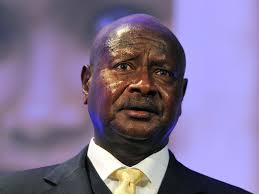

Museveni’s Seventh Term and Africa’s Gerontocracy Debate
ShareBy Fortune Abang Uganda’s President Yoweri Museveni, 81, sworn in for a seventh term after nearly four decades in power,...
Driving Africa’s Fair Energy Transition through Technology and Innovation
ShareBy Bart Nnaji Africa’s energy journey is often portrayed as a stark choice between climate responsibility and development. In reality,...
Finding and Selecting ‘A’ Players
ShareBy Omagbitse Barrow I met with a CEO and HR Manager of a leading company in Nigeria to discuss this...
Xenophobia: Have Young South Africans Forgotten Pan-African Solidarity?
ShareBy Chijioke Okoronkwo In late April, a new wave of violent anti-migrant protests erupted in South Africa, claiming lives and...
Why I’m Not Afraid to Face Tinubu in 2027 — Adebayo
ShareSays Hunger, Poverty More Important Than Regional Politics By Mike Odiakose, Abuja The presidential candidate of the Social Democratic Party...


COAS Welfare Flight Moves 341 Personnel into, Out of North East Theatre – Army
ShareThe Nigerian Army has successfully conducted its Chief of Army Staff (COAS) second welfare flight for May, facilitating the movement...
OPFY Troops Neutralize Lakurawa Terrorists in Northwest, Recover Arms, Livestock
ShareFrom Ifeanyichukwu Nwannah, Gusau Troops of Sector 2, Operation Fansan Yamma in continuation of a series of offensive operations against...


FRSC Inducts 145 Special Marshals in Enugu
ShareFrom Sylvia Udegbunam, Enugu The Federal Road Safety Corps (FRSC) has inducted 145 fresh Special Marshals to ensure traffic flow...


No Troop Casualty in Al-Minuki Operation – DHQ
ShareThe Defence Headquarters says no Nigerian soldier was killed during the operation that eliminated the terrorist commander, Abu Bilal Al-Minuki....