
NEWS
TEXT OF THE BROADCAST BY PRESIDENT BOLA AHMED TINUBU, COMMANDER-IN-CHIEF OF THE ARMED FORCES, DECLARING STATE OF EMERGENCY IN RIVERS STATE ON TUESDAY 18 MARCH 2025

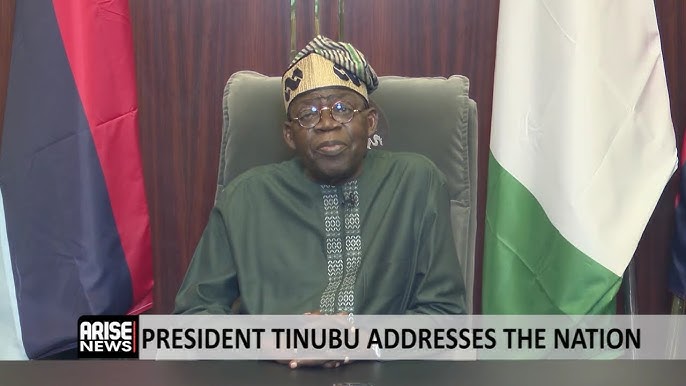
Fellow Nigerians, I feel greatly disturbed at the turn we have come to regarding the political crisis in Rivers State. Like many of you, I have watched with concern the development with the hope that the parties involved would allow good sense to prevail at the soonest, but all that hope burned out without any solution to the crisis.
With the crisis persisting, there is no way democratic governance, which we have all fought and worked for over the years, can thrive in a way that will redound to the benefit of the good people of the state.
The state has been at a standstill since the crisis started, with the good people of the state not being able to have access to the dividends of democracy.Also, it is public knowledge that the Governor of Rivers State for unjustifiable reasons, demolished the House of Assembly of the state as far back as 13th December 2023 and has, up until now, fourteen (14) months after, not rebuilt same. I have made personal interventions between the contending parties for a peaceful resolution of the crisis, but my efforts have been largely ignored by the parties to the crisis. I am also aware that many well-meaning Nigerians, Leaders of thought and Patriotic groups have also intervened at various times with the best of intentions to resolve the matter, but all their efforts were also to no avail. Still, I thank them.
On February 28, 2025, the supreme court, in a judgment in respect of about eight consolidated appeals concerning the political crisis in Rivers State, based on several grave unconstitutional acts and disregard of rule of law that have been committed by the Governor of Rivers State as shown by the evidence before it pronounced in very clear terms:
“a government cannot be said to exist without one of the three arms that make up the government of a state under the 1999 Constitution as amended. In this case the head of the executive arm of the government has chosen to collapse the legislature to enable him to govern without the legislature as a despot. As it is there is no government in Rivers State.”
The above pronouncement came after a catalogue of judicial findings of constitutional breaches against the Governor Siminalayi Fubara.
Going Forward in their judgment, and having found and held that 27 members of the House who had allegedly defected
“are still valid members of Rivers State House of Assembly and cannot be prevented from participating in the proceedings of that House by the 8th Respondent (that is, the Governor) in cohorts with four members”
The Supreme Court then made some orders to restore the state to immediate constitutional democracy. These orders include the immediate passing of an Appropriation Bill by the Rivers State House of Assembly which up till now has not been facilitated.
Some militants had threatened fire and brimstone against their perceived enemy of the governor who has up till now NOT disowned them.
Apart from that both the House and the governor have not been able to work together.
Both of them do not realise that they are in office to work together for the peace and good governance of the state.
The latest security reports made available to me show that between yesterday and today there have been disturbing incidents of vandalization of pipelines by some militant without the governor taking any action to curtail them. I have, of course given stern order to the security agencies to ensure safety of lives of the good people of Rivers State and the oil pipelines.
With all these and many more, no good and responsible President will standby and allow the grave situation to continue without taking remedial steps prescribed by the Constitution to address the situation in the state, which no doubt requires extraordinary measures to restore good governance, peace, order and security.
In the circumstance, having soberly reflected on and evaluated the political situation in Rivers State and the Governor and Deputy Governor of Rivers State having failed to make a request to me as President to issue this proclamation as required by section 305(5) of the 1999 Constitution as amended, it has become inevitably compelling for me to invoke the provision of section 305 of the Constitution of the Federal Republic of Nigeria, 1999 as amended, to declare a state of emergency in Rivers State with effect from today, 18th March, 2025 and I so do.
By this declaration, the Governor of Rivers State, Mr Siminalayi Fubara, his deputy, Mrs Ngozi Odu and all elected members of the House of Assembly of Rivers State are hereby suspended for an initial period of six months.
In the meantime, I hereby nominate Vice Admiral Ibokette Ibas (Rtd) as Administrator to take charge of the affairs of the state in the interest of the good people of Rivers State. For the avoidance of doubt, this declaration does not affect the judicial arm of Rivers State, which shall continue to function in accordance with their constitutional mandate.
The Administrator will not make any new laws. He will, however, be free to formulate regulations as may be found necessary to do his job, but such regulations will need to be considered and approved by the Federal Executive Council and promulgated by the President for the state.
This declaration has been published in the Federal Gazette, a copy of which has been forwarded to the National Assembly in accordance with the Constitution. It is my fervent hope that this inevitable intervention will help to restore peace and order in Rivers State by awakening all the contenders to the constitutional imperatives binding on all political players in Rivers State in particular and Nigeria as a whole.
Long live a united, peaceful, secure and democratic Rivers State in particular and the Federal Republic of Nigeria as a whole.

The Federal High Court in Abuja on Wednesday dismissed a N10bn fundamental rights suit filed by Nollywood actor Emeka Ike against Lere Olayinka, Senior Special Assistant on Public Communications to the Minister of the Federal Capital Territory, Nyesom Wike and the Independent National Electoral Commission.
Justice Salim Ibrahim dismissed the suit after upholding the preliminary objections filed by the respondents, who challenged its competence and proper constitution.
The judge also dismissed the substantive suit for lack of proof.
Ike had accused Olayinka of violating his fundamental right to privacy by publishing his voter registration details on his X handle in May.
The actor alleged that the publication exposed his personal information, including details of the transfer of his voter registration from Imo State to the Federal Capital Territory.
Ike subsequently instituted the suit, marked FHC/ABJ/CS/1272/2026, through his lawyer, L.T. Adeh, seeking N10bn in aggravated and general damages against the respondents.
The actor, who aspired to contest the AMAC/Bwari Federal Constituency seat in the House of Representatives in the 2027 general elections on the platform of the Nigerian Democratic Congress, lost the party’s primary election.
In the suit, Ike asked the court to declare that Olayinka’s publication of his voter registration details without his consent “amounts to gross breach and violation of the applicant’s fundamental right to privacy and the protection of personal data”.
He relied on Section 37 of the 1999 Constitution, Article 12 of the Universal Declaration of Human Rights, and Sections 24 and 39 of the Nigeria Data Protection Act, 2023, to support his claim.
The actor also sought a declaration that INEC owed him and other registered voters a “statutory duty of care” to protect their personal information against unauthorised access.
He further asked the court to declare that INEC’s June 2 press statement, issued in response to the circulation of his voter information on social media, amounted to a tacit admission of guilt and liability.
File: The Senior Special Assistant on Public Communications and Social Media to the Minister of the Federal Capital Territory, Lere Olayinka.
Ike sought an order directing Olayinka to remove the disputed publication from his X account, #OlayinkaLere, and tender a written apology for the alleged infringement of his rights.
However, INEC and Olayinka urged the court to dismiss the suit, insisting that the publication did not amount to a breach of Ike’s fundamental rights.
In its counter-affidavit, INEC maintained that the information complained about was neither classified, sensitive nor confidential, arguing that the electoral body was legally empowered to make certain voter information available to the public.
The commission’s response was deposed to by Anthonia Makwe, an assistant director and data protection officer in its Legal Drafting and Clearance Department.
INEC argued that it had the “statutory and constitutional power to make available information of its voters to the general public without the consent of any registered voter”.
The commission said its statutory responsibilities included the compilation, maintenance, display, publication, certification and management of the voters’ register in accordance with the Constitution, the Electoral Act, 2026, and the Nigeria Data Protection Act, 2023.
It also denied that the information allegedly published by Olayinka originated from its database.
INEC stated that it had not breached its statutory duty to protect voters’ personal information within its secured portal and restricted database.
Olayinka, in his counter-affidavit, also denied wrongdoing, maintaining that the document he published contained only Ike’s name and passport photograph, which he claimed were already in the public domain.
He argued that the information was not obtained through any unlawful means and that he owed the actor no duty of confidentiality requiring his consent before publishing the material.
The FCT minister’s aide further contended that Ike, having presented himself as a public figure and expressed an intention to contest an election, could not claim to have suffered trauma from the circulation of his name and photograph.
Olayinka also argued that the publication was made after Ike allegedly led a group of hoodlums to INEC’s office to disrupt its activities following his declaration of interest in the election.
According to him, the publication was intended to remind the actor that he had recently transferred his voter registration area and draw public attention to the relevant electoral provisions.
He further cited Section 19(1) of the Electoral Act, 2026, arguing that INEC was required to publish the voters’ register within the period prescribed by law ahead of a general election.
Olayinka also relied on INEC’s June 2 statement, which he said confirmed that there had been no external breach of its continuous voter registration database, hacking incident or unauthorised access to its information technology infrastructure.
The statement, as quoted in his counter-affidavit, said, “There was no external breach of its CVR database, no hacking incident and no unauthorised external access to the commission’s ICT infrastructure.”
He argued that he was not a data controller under the Nigeria Data Protection Act, 2023, and therefore had no statutory obligation to safeguard the actor’s information in the manner alleged.
Rejecting Ike’s demand for damages, Olayinka described the N10bn claim as being made in bad faith, calling it “an indication that the applicant is a gold digger who wants to reap where he did not sow”.
He insisted that he should not be held liable for publishing information he claimed was already publicly accessible and urged the court to dismiss the suit in the interest of justice.
By Ubong Ukpong, Abuja
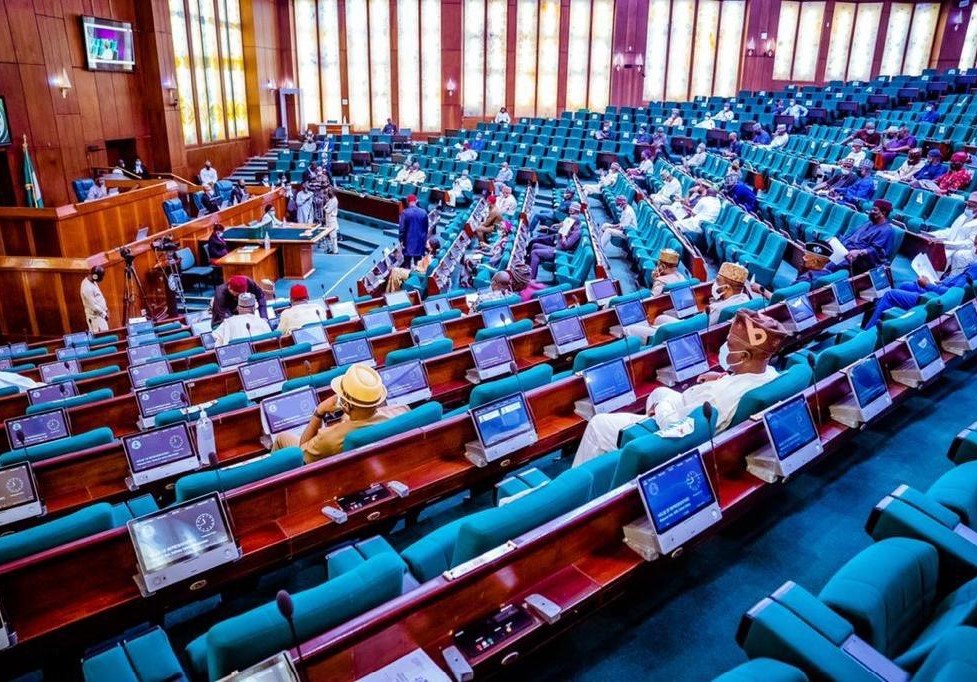
The House of Representatives on Wednesday threatened to issue warrants of arrest against chief executives of telecommunications companies if they fail to appear before its committee investigating persistent poor network services across the country.
The warning was issued by the House Ad Hoc Committee investigating the quality of telecommunications services after lawmakers rejected an attempt by the Association of Licensed Telecommunications Operators of Nigeria (ALTON) to represent the affected companies through its chairman, Engr.
Gbenga Adebayo.The committee, chaired by Rep.
Olumide Osoba (APC, Ogun State), directed that the chief executives and other top management officials of the affected telecommunications operators appear before it on November 4, 2026, warning that failure to honour the invitation could attract warrants of arrest.The committee had, on October 21, invited MTN Nigeria, Airtel Nigeria, Globacom, Mafab Communications and other licensed operators to explain persistent complaints about dropped calls, slow internet connectivity, failed transactions and inadequate network coverage.
However, the operators reportedly delegated Adebayo to represent them at the hearing, a move that drew the committee’s disapproval, with lawmakers insisting that each company must personally account for its service delivery and address complaints relating to its operations.
Moving a motion on the matter, Rep. Sunday Umeha argued that the telecommunications companies were individually licensed by the Federal Government and could not rely on their membership of an industry association to avoid appearing before the legislature.
Umeha also faulted a letter reportedly written by ALTON questioning the committee’s authority to compel the operators to attend the hearing, describing the position as inconsistent with the constitutional responsibilities of the National Assembly.
“I was shocked with what I saw in the letter. I saw a situation where ALTON is saying that they are not bound to appear before this committee. They see their appearance as a privilege to this committee and not as a statutory obligation,” he said.
Citing Section 88 of the 1999 Constitution, as amended, Umeha maintained that the National Assembly had the authority to investigate matters within its legislative competence, including the implementation of government policies affecting telecommunications services.
He argued that the committee was not bound by ALTON’s internal arrangements and that the operators should appear individually unless the committee expressly accepted an authorised representative.
The position was reinforced when a representative of the Nigerian Communications Commission (NCC) confirmed that the commission had communicated the invitations to the chief executives individually.
The confirmation further angered lawmakers, who maintained that the operators had received sufficient notice and had been given adequate opportunities to honour the invitation.
Umeha recalled that the committee had considered a motion to summon the executives for arrest at its previous sitting but agreed to give them another opportunity to appear.
He said the operators had again failed to honour the invitation despite additional communication facilitated through the NCC.
Seconding the motion, the House spokesperson, Rep. Akin Rotimi Jr., also faulted ALTON’s attempt to speak on behalf of the operators, arguing that telecommunications subscribers deal directly with individual service providers and expect each company to be accountable for its network performance.
Rotimi expressed concern over poor network coverage in parts of his constituency in Ekiti State, warning that the absence of mobile signals in some communities and along major routes could have serious security implications.
He alleged that two traditional rulers in his constituency had been killed in an ambush along a stretch of road where mobile network signals were unavailable for approximately 20 minutes.
The lawmaker said such connectivity gaps could leave residents and travellers unable to contact security agencies or seek emergency assistance when confronted with danger.
He further criticised telecommunications operators for concentrating infrastructure in commercially attractive locations while leaving some rural communities and underserved areas with inadequate coverage.
The committee also questioned Adebayo over a reported ₦8.46 billion fine imposed on Globacom, asking whether the ALTON chairman could adequately address regulatory and operational issues concerning an individual company while appearing in a representative capacity.
Following deliberations, Osoba put Umeha’s motion to a voice vote, and the ayes prevailed. The committee subsequently adjourned its sitting until November 4, 2026, when the affected operators are expected to appear.
NCC figures highlight scale of consumer complaints
The investigation comes amid sustained public complaints about deteriorating telecommunications services, including dropped calls, slow internet speeds, failed airtime and data transactions, and persistent gaps in network coverage.
The NCC reportedly disclosed on October 20 that telecommunications operators had compensated 75 million subscribers for poor service in 2026, while nearly three million other subscribers received refunds for failed airtime and data transactions.
The commission also reported that more than 6,500 network interventions had been undertaken during the year to address service-related challenges.
Despite these interventions and compensation measures, consumer complaints have remained significant.
Data for the first half of 2026 showed that the four major operators recorded a combined 413,587 consumer complaints. Airtel Nigeria accounted for 228,992 complaints, followed by MTN Nigeria with 124,405, Globacom with 56,810 and T2mobile with 3,885.
Although the operators reportedly resolved 406,938 complaints, concerns over the consistency and reliability of telecommunications services have persisted, raising questions about the effectiveness of existing measures to protect subscribers.
The House committee is seeking direct explanations from the operators’ leadership on the causes of persistent service failures and the concrete steps being taken to improve network quality.
The November 4 hearing is expected to provide an opportunity for the lawmakers to examine the operators’ infrastructure investments, compliance with regulatory requirements and efforts to extend reliable services to underserved communities.
Cross River Moves to Resettle Community Displaced by 16-year Conflict
The Cross River government has renewed efforts to resettle indigenes of Ebijakara community, Abi Local Government Area, displaced by a protracted communal conflict for about 16 years.
Deputy Governor, Peter Odey, gave the assurance on Wednesday during a meeting with community leaders and security stakeholders at Government House, Calabar.
Odey reaffirmed the government’s commitment to resolving outstanding issues arising from the conflict between Ebom and Ebijakara communities.
The conflict, involving Ebom and Ebijakara, as well as Ediba and Usumutong communities, began around 2005.
Although hostilities officially ended on June 20, 2020, Ebijakara remains largely deserted, with many displaced indigenes yet to return to their ancestral homes.
The renewed intervention seeks to address unresolved issues, facilitate the safe return of displaced residents and restore normal life in the affected community.
The situation has persisted despite recommendations by the 2019 Ndoma-Egba Peace Committee, which sought to establish a framework for resolving the crisis.
The recommendations were also expected to promote peaceful coexistence among the affected communities and provide a lasting solution to their disputes.
The meeting brought together community leaders and security stakeholders to deliberate on advancing the peace process and addressing the lingering consequences of the conflict.
For displaced Ebijakara indigenes, successful resettlement would mark a significant step towards rebuilding their lives, restoring livelihoods and reclaiming homes abandoned for years.
The government’s renewed commitment comes six years after the official end of hostilities, with the community still awaiting the full restoration of normalcy. (NAN)

By Innocent Okwuosa
The implementation of IFRS S1 and S2 must not be approached strictly from a regulatory compliance perspective. Rather, it should lead to a change in responsible business behaviour.
For there to be this change, sustainability practices must be integrated and embedded in an entity’s operations. Today I want to provide more clarification and guidance on this.One of the documents in the Financial Reporting Council’s (FRC) Phase Two implementation, requires an entity to identify all Sustainability Related Risks and Opportunities (SRROs) that could reasonably be expected to affect its prospect and carry out a materiality assessment of each identified SRRO.
The materiality assessment enables the entity to zero in on those relevant SRROs for prioritisation. Materiality assessment is predicated on the likelihood/probability and magnitude of occurrence.The magnitude of occurrence speaks directly to financial materiality i.e. SRRO’s effect on financial performance, position, cash flow, and access to or costs of capital. Prioritisation should be predicated on the SRROs with the highest financial effect, determined as likelihood/probability of occurrence multiplied by the magnitude. It is not my intention to go into the intricacies involved in this determination, but ultimately the entity would identify and prioritise the SRROs that could affect its prospect.
As such, the integration of sustainability begins with the entity identifying the sustainability practices that address the identified and materially assessed SRROs. Then, the entity must first update its Risk
Register to include all the identified and materially assessed sustainability related risks. By doing this it would have acknowledged that they are part of the risks that it will now have to deal with and manage, going forward. If after Phase Two, an entity has not updated its Risk Register to include sustainability related risks, then there is outstanding work to be done. These form part of the risks to be integrated in the entity’s wider Enterprise Risk Management (ERM) framework. The ERM is a Phase Three document, and so it will be covered in future series.
Let us now focus on the sustainability practices to address the identified and materially assessed sustainability related risks. The implementation of IFRS S1 and S2 should embed sustainability practices within an entity’s operation, but this is not always the case, especially when implementation has been approached from a regulatory compliance perspective. The starting point in addressing the identified sustainability related risks is for the entity to come up with sustainability practices that will help manage these risks.
By instituting practices that address the SRRO, sustainability disclosures will now be about an entity’s sustainability practices. Such practices can be articulated in a document called its Sustainability Practices Framework or Policy. The implementation of IFRS S1 and S2 should result in the production of this Framework or Policy. Let us take the example of a brewery where the industry guidance shows that water is a sustainability risk facing that industry. Having identified and materially assessed this risk, then the question would be what practice the entity is putting in place to manage water. This would then form part of what is contained in the Sustainability Practices Framework or Policy.
Energy management is a material sustainability risk in the hotel business, hence the practices an entity in this industry puts in place to manage energy are part of its sustainability practices. In the financial sector, integration of ESG in credit analysis and investment management is a sustainability risk. What practices a financial institution has put in place to address this forms part of what is captured in its Sustainability Practices Framework or Policy. We can go on and on. You can now understand why identification and materiality assessment holds the key to the integration of sustainability practices in an entity’s operation.
The above explains why IFRS S2 requires the disclosure of certain industry specific metrics as a way of measuring performance on sustainability practices. That is why IFRS S2 will require an entity, for instance, in the food and beverage industry to disclose its energy management practices through metrics like (1) operational energy consumed, (2) percentage grid electricity, and (3) percentage renewable and water management practices through other metrics like (1) total water withdrawn, (2) total water consumed; percentage of each in regions with High or Extremely High Baseline Water Stress. Sustainability practices are what lead to reduction in energy and water consumption, thereby mitigating their impacts on the environment.
Evidence from the field shows that what I have stated above about a Sustainability Practices Framework or Policy is challenged, and I want to dwell a little bit on this. The first challenge stems from the fact that the FRC documentation does not require an entity to submit a Sustainability Practices Framework or Policy. Rather, what FRC requires in Phase Two is a Sustainability Disclosure Policy, and this is understandable since FRC’s focus is on reporting and disclosures, which are its mandate.
During implementation, some entities show that they have ESG or Sustainability Policy or Framework, and when one looks at these, one discovers that they are full of aspirational statements such as: “we believe the environment should be good for all,” “we will ensure we cause no damage to people and the environment and will work harmoniously with communities where we operate,” etc. In all, we see genuine intentions to evolve sustainability practices by these entities, but the missing link is evolving actual practices that address the identified and materially assessed sustainability-related risks, as opposed to just crafting aspirational statements.
Another challenge is that the existing ESG or Sustainability Framework or Policy serves different purposes and does not always mean the same thing from one entity to another. In one entity, it may contain those aspirational statements and embed the entity’s ERM and list of operational and conventional risks the entity is managing. In others, it tends towards a disclosure framework and risk governance structure. Thus, existing ESG or Sustainability Framework or Policy does not strictly address Sustainability Practices deployed to manage identified and materially assessed SRRO.
However, there are some entities in the financial sector that have done very well in articulating practices around how ESG has been integrated into their credit analysis following sustainable banking principles, but limitations still exist as these do not address financed emission, which is understandable. Similarly in other sectors, sustainability practices to manage sustainability risks are in place. In all, they do not always address all identified SRROs which IFRS S1 and S2 implementation will trigger.
Where the entity is now asked to produce the right Sustainability Practices Framework or Policy in line with the exigencies of IFRS S1 and S2 implementation, the challenge becomes the fact that it is not part of what FRC has specified, leaving it at the discretion of the entity to produce as an internal document. Yet, it is advisable for entities to still produce Sustainability Practices Frameworks or Policies, as if it is part of what should be submitted to FRC, even if they are internal documents, as these mark the beginning of embedding sustainability practices within the operation of the entities.
In a future amendment of the Sustainability Reporting Guideline (SRG Two), we will advocate for FRC to include Sustainability Practices Framework or Policy as an additional document to be submitted to it. Sustainability Practices should speak to a Sustainability Strategy to present an overall picture of how an entity is responding to or plans to respond to Sustainability Related Risks and Opportunities. In this lies
the integration of sustainability practices into an entity’s operation and a change in business behaviour, since practices are bound to change behaviour.
Innocent Okwuosa is the immediate past chair, NIRC; the 59th president of the Institute of Chartered Accountants of Nigeria, and an adjunct associate professor at Pan Atlantic University, Lekki, Lagos.



Court Dismisses Emeka Ike’s N10bn Suit against Wike’s Aide
ShareThe Federal High Court in Abuja on Wednesday dismissed a N10bn fundamental rights suit filed by Nollywood actor Emeka Ike...

Reps Threaten to Arrest Telecom CEOs Over Poor Network Services
ShareBy Ubong Ukpong, Abuja The House of Representatives on Wednesday threatened to issue warrants of arrest against chief executives of...

A Guide to IFRS S1 and S2 Sustainability Implementation (4)
ShareBy Innocent Okwuosa The implementation of IFRS S1 and S2 must not be approached strictly from a regulatory compliance perspective....

2027: Reward Tinubu with Votes for Federal University – Wike
ShareBy Laide Akinboade Abuja The Minister of the Federal Capital Territory, Nyesom Wike, has said the Ogoni people of Rivers...

FCSC, Soft Alliance Explore IPPIS Integration to Improve Civil Service Management
ShareThe Federal Civil Service Commission (FCSC) and Soft Alliance and Resource Ltd. are exploring ways to integrate the commission’s statutory...


Tinubu Presides over FEC Meeting
SharePresident Bola Tinubu is presiding over a meeting of the Federal Executive Council at the Council Chamber of the State...

Wike Question Atiku, Obi, Contributions to Rivers State
ShareBy Laide Akinboade Abuja Minister of the Federal Capital Territory, Nyesom Wike, has challenged former Vice-President Atiku Abubakar and former...


Police Arrest NSCDC Officer for Firing Gun at Abuja Market
ShareThe Federal Capital Territory Police Command has arrested a Deputy Superintendent of Corps with the Nigeria Security and Civil Defence...


World Bank Projects 23 Per Cent Surge in Global Commodity Prices
ShareBy Tambaya Julius, Abuja The World Bank Group has projected a 23 per cent increase in global commodity prices in...


NELFUND Mounts Tight Monitoring System over Students Loan Payment
ShareBy Tambaya Julius, Abuja The Nigerian Education Loan Fund (NELFUND) has announced plans to strengthen its payment and monitoring systems...