
NEWS
The Trees Kept Voting for the Axe, As Long as Leaders Remain Financially Comfortable, Their Policies Will Never Favour Ordinary Nigerians

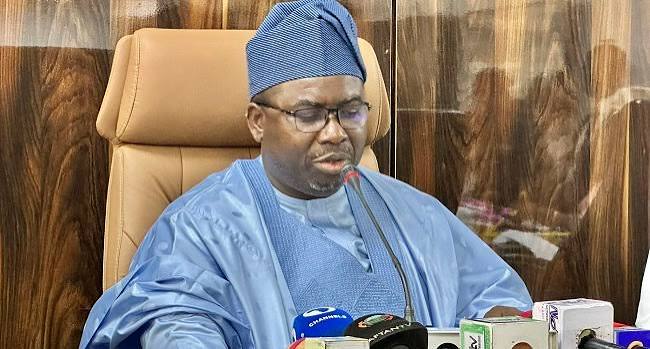
By Daniel Nduka Okonkwo
How can a government claiming to be building a sustainable economy when ordinary Nigerians are expected to survive on a minimum wage of ₦70,000 a month, while the officials who shape the nation’s economic policies enjoy remuneration packages exceeding ₦2 million monthly, including allowances? The injustice becomes even more glaring when ₦70,000 is recognised as merely the official minimum-wage benchmark, far removed from the reality of millions of workers who earn ₦30,000 a month or even less.
While political officeholders remain financially insulated from the hardship their policies impose, ordinary Nigerians are crushed by soaring food prices, unaffordable transportation, rising electricity bills, and the relentless cost of survival.This is the fundamental contradiction at the heart of Nigeria’s economic crisis: those who design the policies are shielded from the suffering of those forced to live with their consequences. What, then, does economic reform mean to a worker whose income cannot adequately feed a family, educate children, and provide shelter? No government can credibly claim to be building a sustainable economy while millions of its citizens struggle merely to survive and those entrusted with shaping their economic future remain protected by financial privileges far beyond the reach of ordinary people.
Nigeria’s economic reforms, domestic crude oil pricing, petrol affordability, and the widening divide between political privilege and public hardship
Nigeria’s economic crisis raises a fundamental question about governance: can policies designed by financially insulated political leaders adequately protect citizens struggling to afford food, transportation, electricity, and housing? The question becomes more urgent when government officials defend painful economic reforms in the language of fiscal discipline while millions of households confront rising living costs.
The metaphor of trees voting for the axe captures a disturbing political contradiction people may continue supporting systems whose decisions undermine their welfare. In Nigeria, the deeper question is whether those making economic decisions adequately understand the hardship their policies impose on ordinary citizens.
For millions of Nigerians, economic policy is not an abstract debate about exchange rates, foreign reserves, fiscal balances, or market efficiency. It is the daily calculation of whether a salary will last until the end of the month, whether children can remain in school, whether a family can afford nutritious food, and whether workers can travel to their workplaces without surrendering a substantial portion of their earnings.
Political officeholders, however, may benefit from official remuneration, allowances, and publicly funded facilities that cushion some of these pressures. This disparity creates an elite, mass disconnect in which the experiences and incentives of decision-makers become detached from the economic realities of the people they govern.
The argument is not that every economic reform is inherently wrong or that Nigeria can indefinitely ignore the fiscal costs of subsidies. Poorly administered subsidy systems can encourage waste, diversion, and rent-seeking, while unsustainable public expenditure can undermine economic stability. The fundamental question is whether reforms are designed and implemented fairly, whether their burdens are distributed equitably, and whether their promised benefits can be demonstrated. A government cannot establish the success of its economic programme merely by pointing to improvements in selected macroeconomic indicators while households continue to experience declining purchasing power, inadequate public services, and rising living costs.
The implementation of Nigeria’s ₦70,000 national minimum wage under the 2024 minimum-wage legislation represented an important development in labour policy. Yet a higher nominal wage does not automatically translate into greater economic security. When food prices, transportation fares, electricity expenses, and other essential costs rise faster than earnings, workers may receive more money while becoming less able to afford necessities.
The real test of a minimum wage is therefore not simply its numerical value but the quantity of essential goods and services it can purchase.
The consequences extend beyond individual households. Rising energy costs increase expenses for transport operators, farmers, manufacturers, and small businesses, many of which pass those costs on to consumers. Workers face higher prices without automatic adjustments to their salaries, leaving less money for healthcare, education, and savings. A wage increase that fails to keep pace with living costs can offer limited relief. Government policy must address the conditions eroding purchasing power rather than treating the announcement of a new minimum wage as sufficient evidence of improved welfare.
The disparity between workers’ earnings and political officeholders’ remuneration raises legitimate questions about the cost of governance. In an August 2024 clarification, the Revenue Mobilisation Allocation and Fiscal Commission (RMAFC) stated that a senator’s prescribed monthly salary and allowances totalled ₦1,063,860. Its published breakdown included ₦126,650 for motor vehicle fuelling and maintenance, ₦126,650 for domestic staff, ₦50,660 for entertainment, ₦50,660 for utilities, and ₦42,216.66 for wardrobe expenses.
The package also included a constituency allowance of approximately ₦422,167. These figures represent the commission’s prescribed remuneration schedule, not necessarily every payment or benefit an individual senator receives.
The contrast is significant: under that published schedule, a senator’s prescribed vehicle-fuelling and maintenance allowance alone exceeds the entire monthly national minimum wage of ₦70,000. Allowances for domestic staff, utilities, and other expenses widen the disparity. Public officeholders require appropriate resources to discharge legitimate responsibilities, but the scale and structure of their remuneration deserve scrutiny in a country where many citizens struggle to meet basic needs.
Claims about additional office-running payments, bulletproof vehicles, medical benefits, and other privileges must be verified against budget documents, payment records, and official disclosures before being presented as facts. The public deserves accountability grounded in evidence, not speculation.
Nigeria’s petroleum industry presents another contradiction: a major crude oil producer whose citizens have endured expensive petrol, foreign-exchange pressures, and costly energy. The emergence of domestic refining capacity, particularly the Dangote Refinery, has raised expectations that local production could reduce dependence on imported petroleum products and strengthen energy security. Yet domestic refining does not automatically guarantee cheaper fuel. Refiners must account for crude oil, processing, financing, transportation, distribution, and other operating expenses, while international oil prices, exchange rates, and refining margins influence the final cost of petroleum products.
The debate becomes particularly important when domestically produced crude oil is sold to local refiners at prices linked to international market benchmarks. Although crude oil has an internationally
recognized economic value, the fact that Nigeria’s crude is priced against global benchmarks should not end the debate about how the country’s natural wealth can best serve its people. Crude oil is a natural resource belonging to the nation, and its management should ultimately contribute to the welfare, economic security, and prosperity of Nigerians.
Selling crude oil below its market value can reduce public revenue, create implicit fiscal costs, and encourage arbitrage or preferential access. However, policymakers must also account for the wider economic consequences of expensive energy, including rising transportation costs, declining industrial competitiveness, higher food prices, and the crushing pressure on households that depend on petrol-powered generators because the electricity supply remains unreliable. These costs are not abstract economic figures; they affect how much ordinary Nigerians spend on food, how businesses remain operational, and whether families can afford necessities.
The national interest must therefore be measured not only by how much revenue the government earns from crude oil but also by how the management and pricing of that resource affect people’s lives. If petroleum pricing policies generate substantial revenue while imposing unsustainable costs on households and businesses, those consequences deserve serious scrutiny.
The objective should not be to sell crude oil cheaply at any cost, but to develop a transparent, sustainable, and accountable petroleum pricing framework that balances public revenue with energy affordability, industrial growth, and citizens’ welfare. Nigeria’s natural wealth should not merely strengthen government accounts; it should also improve the living conditions of the people in whose name that wealth is held.
Nigeria should therefore evaluate transparent crude-supply arrangements, predictable pricing mechanisms, refinery efficiency, competition among suppliers, and the broader benefits of domestic production. Any intervention must be assessed for its fiscal implications, operational feasibility, and vulnerability to diversion or rent-seeking. Policymakers should explain what economic advantages domestic refining is expected to deliver, how those advantages will be measured, and what obstacles prevent them from reaching consumers.
The objective should be an efficient petroleum market that strengthens energy security and domestic production while protecting the public interest, rather than an assumption that local refining alone will resolve fuel affordability.
The federal government and supporters of petrol subsidy removal have a substantive economic argument. Maintaining prices below their economic cost can require significant public expenditure, weaken government finances, and divert resources from infrastructure, healthcare, education, and other priorities. Poorly administered subsidy arrangements can also create opportunities for smuggling, diversion, and fraudulent claims. Allowing petroleum prices to reflect market conditions can reduce direct subsidy obligations and potentially improve incentives for investment in domestic refining. These considerations deserve serious examination in a country facing substantial financing needs and competing demands on public revenue.
The International Monetary Fund has acknowledged improvements in aspects of Nigeria’s macroeconomic position following the government’s reform measures while also highlighting persistent
poverty and food insecurity. Its 2025 Article IV assessment underscores the importance of fiscal sustainability, effective public spending, and support for vulnerable households. The central issue is not whether subsidy removal can produce fiscal benefits in principle, but whether those benefits are realised, transparently accounted for, and translated into improvements in public welfare. Projected savings must not be confused with money actually received, recorded, and allocated to development priorities.
The government must demonstrate what happened to the resources expected to be released by subsidy removal. Oil production, international prices, exchange rates, and debt-servicing obligations complicate public finance, but these constraints make transparent accounting more important, not less. Regular public disclosures should distinguish estimated savings from realised fiscal gains, identify transfers to relevant levels of government, and explain how the resulting resources were spent.
Independent audits, accessible budget reports, and measurable performance indicators would enable citizens to assess whether promised investments in infrastructure, healthcare, education, and social protection are materialising. Without such evidence, asking citizens to accept persistently higher living costs in exchange for benefits they cannot identify or verify risks deepening public distrust.
The central distributional question surrounding Nigeria’s economic reforms is not simply whether they impose costs, but who bears those costs and what protections exist for people least able to absorb them. Higher petrol prices will increase transport fares, raise the cost of moving agricultural produce and manufactured goods, and push up the operating expenses of small businesses.
Employers may respond by increasing prices, reducing production, or limiting employment. Households then face competing demands on shrinking real incomes, often having to choose between food, healthcare, education, and other necessities. These pressures are especially severe where public transportation is inadequate, electricity supply is unreliable, and social protection programmes fail to reach vulnerable citizens effectively.
When policymakers are financially insulated from the consequences of their decisions, they may experience these pressures differently from citizens who depend on public transport, struggle to pay electricity bills, or devote most of their earnings to food. This does not mean every wealthy official lacks empathy or that financial comfort inevitably produces bad policy.
It is an institutional concern about incentives, accountability, and the relationship between decision-makers and the people affected by their choices. Appeals for patience become less persuasive when citizens see limited evidence of restraint in government expenditure or tangible improvements in public services. Shared sacrifice must be demonstrated through decisions, budgets, and measurable outcomes, not merely invoked in official speeches.
Fiscal discipline must therefore extend beyond the removal of consumer subsidies. It should include transparent reviews of recurrent expenditure, stronger procurement controls, the elimination of waste, reduced administrative duplication, and rigorous assessments of whether public institutions deliver value for money. Official allowances, travel budgets, vehicle purchases, office renovations, and administrative expenses should be assessed against clearly defined responsibilities and the country’s fiscal circumstances.
Where expenditure is unnecessary or disproportionate, savings should be redirected towards essential services and productive investment. The objective is not to punish public officials for holding office, but to ensure that the privileges associated with public service remain proportionate to their responsibilities and that the government applies financial discipline to its own spending as rigorously as it applies it to household support.
International institutions, including the IMF and World Bank, emphasise fiscal sustainability, improved revenue collection, economic stability, infrastructure investment, and conditions that support private-sector growth.
These are legitimate policy objectives, but macroeconomic stability and social welfare are not interchangeable measures of success. A stronger exchange rate does not automatically mean that low-income families can afford nutritious food.
Higher government revenue does not guarantee adequately supplied hospitals, while increased investment does not ensure that employment reaches communities experiencing the greatest hardship. The World Bank has also stressed the importance of translating Nigeria’s economic progress into tangible gains for poor and vulnerable citizens through more efficient public expenditure, measures to address food inflation, and stronger social protection.
A fairer economic settlement would require independently verifiable accounts of subsidy-related savings, transparent reviews of the cost of governance, and clear reporting on the outcomes of public expenditure. Nigeria should assess domestic crude supply and refining arrangements through transparent economic analysis, weighing their fiscal implications against their effects on energy affordability, industrial competitiveness, and household welfare.
Minimum-wage policy should be accompanied by effective enforcement, measures to improve productivity, and attention to the erosion of real earnings. Targeted cash transfers, affordable public transportation, accessible healthcare, and reliable electricity can help protect vulnerable households as broader reforms take effect. These interventions must themselves be transparent, properly targeted, and independently evaluated to minimise waste and ensure that assistance reaches those for whom it is intended.
The test of leadership is not whether officials can persuade Nigerians to endure difficult reforms, but whether they can demonstrate that those reforms are necessary, fairly implemented, and capable of producing measurable public benefits.
If the country must ask citizens to sacrifice in the interest of economic stability, the political class must demonstrate restraint, transparency, and accountability. If Nigeria’s petroleum resources are to be valued at international market rates, the government must also ensure that the wider economic benefits are not undermined by wasteful expenditure, weak public services, and inadequate protection for vulnerable households. As long as political leaders remain insulated from the economic insecurity experienced by those they govern, public confidence will remain fragile. The solution is not to abandon fiscal discipline, but to apply it consistently, beginning with the institutions that control public resources. Economic reform must not become a system in which ordinary Nigerians are permanently required to sacrifice while those in power remain protected from the consequences. If national recovery requires shared sacrifice, that sacrifice must begin at the top and ultimately produce tangible improvements in the lives of the people.
Daniel Nduka Okonkwo is an investigative journalist, human rights advocate, and policy analyst based in Nigeria. He is the founder and publisher of Profiles International Human Rights Advocate (PIHRA), a platform documenting the courage of human rights defenders and examining issues of governance, accountability, security, and fundamental rights.
His reporting on Nigerian governance, security-sector accountability, public finance, and human rights has appeared in Sahara Reporters, Vanguard, Daily Trust, African Defence Forum, Opinion Nigeria, and Daily Intel. Read more of his work on the PIHRA website:https://www.
From Mike Tayese, Yenagoa
Bayelsa Starlets Academy will like to strengthen their campaign in the ongoing N-Youth League when they take on FC Prague Nigeria of Abia State today Tuesday, October 13, 2026, at the Samson Siasia Stadium, Yenagoa, with kick-off scheduled for 10:00 a.
m.The encounter promises to be an exciting contest as both sides seek to make a strong statement in the competition.
The Yenagoa-based academy, which is affiliated to Spanish football giants, FC Barcelona, will be eager to showcase their growing quality, tactical discipline and attacking strength against a determined FC Prague Nigeria side.
Bayelsa Starlets Academy have continued to nurture young football talents through structured training and competitive football, providing promising players with a platform to showcase their abilities and pursue greater opportunities in the game.
The fixture is expected to test the Starlets’ organisation, creativity in midfield and efficiency in front of goal as they seek to impose their style of play on their opponents.
Having emerged as champions of the Nationwide League One (NLO) U-19 Youth League, Bayelsa Starlets will be keen to build on that achievement and maintain their impressive development trajectory.
For the academy, the encounter represents yet another opportunity to strengthen team cohesion, gain valuable competitive experience and demonstrate the progress made under its development programme.
The outcome could prove significant to both teams’ ambitions as the N-Youth League continues to provide a platform for the development and exposure of emerging football talents.
Speaking ahead of the fixture, Bayelsa Starlets Academy Head Coach, Gomo Onduku, expressed confidence in his team’s readiness for the challenge, noting that the players have continued to improve as preparations progressed.
Onduku added that the team has worked hard in preparation for the encounter and was determined to secure victory against FC Prague Nigeria.
Similarly, Bayelsa Starlets midfielder, Tengi Ibuama, said the team would approach the fixture with the seriousness of a cup final, stressing that their priority was to win every match in the zone.
The Starlets will now look to translate their preparations into a strong performance on home soil as they seek to maintain their positive momentum in the N-Youth League.
By Raphael Atuu, Abuja
The Federal Ministry of Housing and Urban Development has advocated for stronger land, mortgage and institutional systems to accelerate inclusive housing delivery across Nigeria.
This is the key message at the ongoing 15th meeting of the National Council on Land, Housing and Urban Development (NCLHUD), holding in Sokoto, October 12th – 16th, 2026
Under the theme: “Strengthening Mortgage, Land and Institutional Systems for Accelerated and Inclusive Housing Delivery.
”, the meeting is a gathering of stakeholders in the built environment from both Federal and States, including professional and regulatory bodies in the housing sector.In his remarks, Director of Planning, Research and Statistics of the Ministry,. Mukhtar Iliyasu Umar, noted that the Council provides an important platform for stakeholders to examine challenges in the housing sector and develop practical solutions to improve housing delivery nationwide.
He stated that the meeting is convening a three-stage deliberation process for the consideration, harmonisation and adoption of policy recommendations aimed at addressing critical challenges in Nigeria’s housing and urban development sector.
He emphasised the importance of each stage of the deliberations, noting that the quality of the final decisions would depend largely on the depth of technical analysis, the quality of recommendations and the effectiveness of the harmonisation process.
Sokoto State Commissioner for Lands, Housing, Survey and Country Planning, Barrister Nasiru Aliyu Dantsoho, said the theme was strategically chosen to ensure that housing policies are designed to promote access to decent and affordable housing for every citizen.
He expressed concern over Nigeria’s housing deficit, estimated at over 14.5 million units, noting that approximately 50.6 million people live in unsafe housing conditions. Describing the situation as worrisome, Dantsoho called for urgent and sustained interventions to address the country’s housing challenges.
Accordingly, the Commissioner advocated a reduction in mortgage interest rates from the current double-digit levels to single-digit rates, as well as an extension of mortgage repayment periods from 25 to 35 years, saying that the measures would make mortgage repayments more affordable and improve access to homeownership for Nigerians.
He also called for the expansion of mortgage financing beyond the formal public and private sectors to accommodate Nigerians in the informal sector, particularly traders, farmers, and other self-employed individuals who constitute a significant proportion of the population but are often excluded from existing housing finance policies.
Bar Dantsoho further urged financial institutions, including the Federal Mortgage Bank of Nigeria (FMBN), to provide adequate funding and introduce flexible repayment arrangements tailored to the income patterns of different categories of borrowers.
He emphasised the importance of digitising land administration systems across the states to enhance efficiency, promote transparency, and facilitate access to land for housing development.
On his part, the permanent Secretary, Sokoto state ministry of lands and housing, Engr. Ahmad Moyi Tambuwal highlighted the state’s ongoing efforts to improve land administration, including the digitisation of land records, reduction in the time required to process Certificates of Occupancy and the provision of land for mass housing projects under the Federal Government’s Renewed Hope Housing Programme.
He noted that “the delivery of adequate and affordable housing requires more than the construction of houses. It also depends on efficient land administration, accessible mortgage finance, effective policies and stronger collaboration among government institutions and private-sector stakeholders”
NCLHUD is a forum for participants to share experiences, harmonise policies, identify institutional gaps and develop practical recommendations that would improve land administration, expand access to housing finance and accelerate housing delivery across the country.
Participants at the meeting were encouraged to develop recommendations that address pressing challenges in land administration, housing finance, institutional coordination and sustainable urban development across the country.
The reports and recommendations from the technical sessions will be harmonised for consideration at subsequent stages of the Council meeting.
The Ministry reaffirmed its commitment to strengthening the housing sector and promoting accessible, affordable and inclusive housing for Nigerians. It expressed confidence that the collective contributions of participants would provide a sound foundation for meaningful deliberations and effective decisions by the Council.
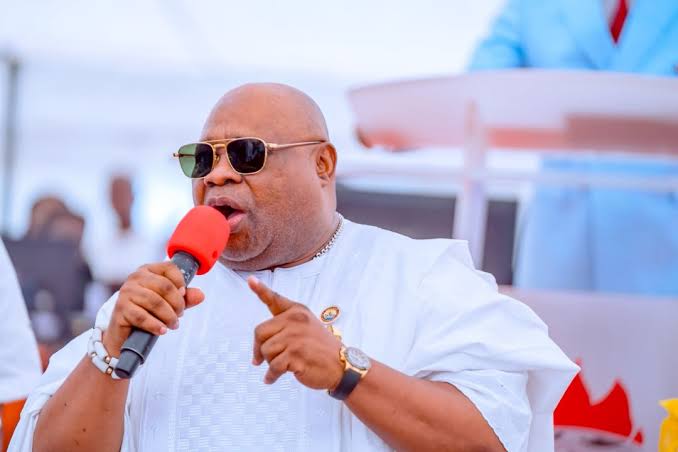
From Ayinde Akintade, Osogbo
The Osun State Government under the leadership of Governor Ademola Adeleke has signed two separate Memoranda of Understanding with Balou International Nigeria Limited and Alive-and-Kicking Nigeria Limited to boost industrialization at the Living Spring Free Trade Zone, Ede.
The MoUs were signed on behalf of the Osun State Government by the Commissioner for Commerce and Industry, Revd Dr.
Bunmi Jenyo in his office.In the first agreement, the Osun State Government signed with Balou International Nigeria Limited, the refurbishment and use of the Transit Camp Building at the Living Spring Free Trade Zone for multipurpose use.
The agreement was signed by the Chief Executive Officer of Balou International Nigeria Limited, Chief Ronnie Liu.
Under the agreement, the company will revive, rehabilitate and operationalise the Transit Camp as a fully functional industrial hub. The facility will provide accommodation for investors, a Chinese restaurant, showroom and office space.
As part of its industrialisation plan, the company intends to establish an Air Compressor Plant, an Electric Motorcycle Assembly Plant and an Industrial Tools Factory within the zone.
The partnership will also mobilise local and foreign investments into the Living Spring Free Trade Zone through the facilitation of Balou International Nigeria Limited, and create anchor industrial clusters in manufacturing, logistics, renewable energy, agro processing and ICT.
The development is expected to generate employment, promote exports, attract Foreign Direct Investment (FDI) and increase the Internally Generated Revenue of Osun State.
In the second agreement, the government signed with Alive-and-Kicking Nigeria Limited, the establishment of a multi-sports balls production factory within the same zone. The MoU was signed by the Chief Executive Officer of the company, Dr. Bob Olukoya.
Under this agreement, both parties will collaborate to establish a 7-line balls manufacturing factory that will produce world-class standard footballs, basketballs, rugby balls, volleyballs, handballs, American footballs and tennis balls.
The project is designed to further promote and operationalise the Made-in-Nigeria policy within the sports sector, enhance local manufacturing capability, create massive direct and indirect employment and reduce dependence on imported sports balls.
The two projects are expected to position Osun State as a viable hub for sports equipment manufacturing, leather and rubber processing, and general industrial manufacturing in Nigeria and West Africa.
The initiatives align with the development goals of the administration of Senator Ademola Jackson Nurudeen Adeleke to fully industrialise the state before the end of its tenure in 2030.


Bayelsa Starlets Academy Set for FC Prague Test
ShareFrom Mike Tayese, Yenagoa Bayelsa Starlets Academy will like to strengthen their campaign in the ongoing N-Youth League when they...

FG Strengthens Mortgage, Land Systems for Affordable Housing
ShareBy Raphael Atuu, Abuja The Federal Ministry of Housing and Urban Development has advocated for stronger land, mortgage and institutional...


Osun Signs MoU with Companies to Boost Industrialization
ShareFrom Ayinde Akintade, Osogbo The Osun State Government under the leadership of Governor Ademola Adeleke has signed two separate Memoranda...


Abuja Motorists Decry Continuous Increase in Petrol Price
ShareSome motorists in the Federal Capital Territory (FCT) have raised concerns over the continuous increase in the price of Premium...


CBN Maintains Deadline for Local Data Storage
ShareThe Central Bank of Nigeria has ruled out an extension of the 1 January 2027, deadline for financial institutions to...
FG, Norway Partner on Satellite Surveillance to Combat Illegal Fishing
ShareThe Federal Government has assured Norway of Nigeria’s participation in the Blue Justice Initiative to strengthen satellite surveillance of its...


Niger Delta Deserves More than 13 Per Cent Derivation, Says Obasanjo
ShareFrom Mike Tayese, Yenagoa Former President of Nigeria, Chief Olusegun Obasanjo, on Monday, advocated an increase in the 13 per...

PDP Lawyers Give INEC Three-day Ultimatum to Publish Pantami’s Name
ShareLawyers to the Peoples Democratic Party and its Gombe State governorship candidate, Professor Isa Ali Ibrahim, have given the Independent...
FG Urges Defence Correspondents to Project Nigeria Positively
SharePermanent Secretary, General Services, Office of the Secretary to the Government of the Federation (OSGF), Dr. Ibrahim Kana, has urged...
High Cost of Dental Care Limits Access to Treatment in Nigeria — Dentist
ShareDeputy Medical Director, General Hospital, Apapa, Dr. Ridwan Kekere-Ekun, said high costs of dental materials, equipment and hospital operations limit...