
NEWS
Tinubu, 2027 and Buhari’s Sad Death


By Tunde Rahman
As if blessed with clairvoyance or possibly having a premonition of President Muhammadu Buhari’s imminent death, former Secretary to the Government of the Federation, Mr Boss Mustapha, seemed to have stirred up the debate around the former president’s political strength and likely impact on the 2027 election, even in death.
On Wednesday, 9 July, just four days before Buhari’s death, the former SGF claimed President Bola Tinubu did not make Buhari president in 2015. He was speaking at the public presentation of a book, titled According to the President: Lessons From A Presidential Spokesman’s Experience, written by Mallam Garba Shehu, spokesman to the late Buhari.In his keynote address at the book launch, Mustapha argued that the former president’s fame was never in doubt and that he already had over 12 million votes in his kitty before the 2015 election. “The merger of the legacy parties merely contributed three million votes to his victory at the 2015 presidential election,” he noted.To speak of the true motive behind such a claim or whether the 12 million votes endured would only be conjectural. Yet, it begs the question: If Buhari had always had a guaranteed bloc of 12 million votes, and the alliance partners contributed only three million votes, many would wonder why those massive votes didn’t make him president in 2003, 2007, and 2011 until President Tinubu and others teamed up with him to form an alliance that produced the all–conquering All Progressives Congress (APC).This might have been akin to dissipating energy on a matter that would have been merely academic if the late President himself had not often acknowledged President Tinubu’s help in his ascent to the exalted office. Last 29 March, in a telephone call to the president on his 73rd birthday, Buhari rejoiced with him and thanked Tinubu effusively for his contributions to his emergence as president in 2015.Notwithstanding the foregoing, the former SGF’s assertion provides a valuable insight into assessing the potential influence the former president’s death may have on the 2027 election.Former President Buhari lived a remarkable life by every measure, and his departure in a blaze of glory was no less extraordinary. President Tinubu accorded him a historic state burial. In the wake of Buhari’s demise on Sunday, 13 July, in a London hospital, President Tinubu declared seven days of national mourning and ordered the nation’s flag flown at half-staff. The president was on hand to receive Buhari’s body as it arrived in Katsina from the United Kingdom. Just as significant, the FederalGovernment declared a public holiday on Tuesday, 15 July, when Buhari’s remains were buried in his Daura hometown in Katsina State.President Tinubu led dignitaries, including President Umaru Sissoco Embaló of Guinea-Bissau; Prime Minister of the Niger Republic, Ali Lamine Zeine; Vice President Kashim Shettima; former President of the Niger Republic, Issoufou Mahamadou; former Vice President Yemi Osinbajo; many Nigerian governors and business leaders, to escort the late president’s remains on the long drive to Daura. They witnessed as the former president was laid to rest.No honour would be too much for that late patriot, civil war hero, distinguished army general, and former president, who stood for the Talakawas. Many Nigerians respected Buhari for living a Spartan life and standing for truth and justice, values that earned him the sobriquet, “Mai Gaskiya.”How will President Buhari’s death impact the politics of the 2027 election and President Tinubu’s re-election, with the opposition swirling around him, baying for blood? It is yet unclear. Indeed, in the run-up to the 2027 election, some analysts liken former President Buhari’s death to a double-edged sword that can cut both ways.They contend that the impact of his demise on the 2027 election can swing for and against President Tinubu. Those who think his passing may chip away at the president’s re-election plans contend that Buhari remained a true and consistent ally of Tinubu till death, and that the partnership between the two, built on mutual trust and respect, had remained strong until Buhari’s passing. Buhari never spoke against Tinubu or his administration while alive. The former president reportedly commended Tinubu for having the courage to make bold decisions about the economy, which he had found difficult to implement.There was nothing to suggest that Buhari would not have backed Tinubu in 2027 if he were still alive, given that he had consistently emphasised his indebtedness to the APC, which provided the platform that enabled him to become president, and Tinubu, who assisted him on his presidential journey.Perhaps realising this Tinubu-Buhari connection, opposition political figures, particularly members of the so-called coalition, African Democratic Congress, including politicians from the North who still regard themselves as Buharists or Buhari Boys, desperately sought to outdo each other in a bid to earn cheap political capital, using Buhari’s death as fodder.Barely a day after Buhari’s death was announced, former governor of Kaduna State, Malam Nasir el-Rufai, arrived in Katsina to position himself as a foremost Buhari ally and the inheritor of his political dynasty. Former Transportation Minister Rotimi Amaechi also arrived in Daura, fully draped in a turban, as a traditional chief of the town, to gain an advantage for the coalition.Former Vice President Atiku Abubakar organised a grand entry into Daura on Tuesday, the day of Buhari’s burial. A motley crowd of his supporters cheered him at the airport, but it was all of no moment, rather gaudy for the sombre event. For effect, some of the opposition figures headed for Buhari’s graveside last Wednesday to pray for the repose of his soul.Buhari’s death appears to have opened up the leadership space in the North. And no political leader in the North today commands that extraordinary following, as Buhari did. With his passing, a rat race has ensued for leadership supremacy. This situation somewhat plays to President Tinubu’s advantage, despite the suggestion that it may hurt him politically. Indeed, this is by no means glossing over the huge void and the pains that the statesman’s death has left.President Tinubu has taken the proper steps to give the former president a befitting burial. In order to further immortalise his name, he named the University of Maiduguri in Borno State after Buhari. The president did all that for a leader who served the country resolutely and a political ally who stood by the spirit and letter of their convictions.In my view, all the president needs to do now and do strongly is seize the momentum, galvanise the rump of the Congress for Progressives Change elements that believe in him and those of other alliance partners in the North and South of the country, and assume full leadership of the Tinubu-Buhari alliance that produced the APC and produced Buhari and himself as presidents.Tunde Rahman is senior assistant to the President on Media and Special Duties.
By Tony Obiechina, Abuja
The Chairman of the Revenue Mobilisation, Allocation and Fiscal Commission (RMAFC), Dr. Mohammed Bello Shehu has charged Directors and Heads of Departments (HODs) to demonstrate commitment, accountability and professionalism in the discharge of their duties to ensure the successful implementation of the Performance Management System (PMS) in the Commission.
The Chairman gave the charge at the signing of Performance Contracts by Directors and Heads of Departments at the Commission’s headquarters in Abuja.
He described the exercise as more than the signing of official documents, noting that it represented a covenant of accountability and a commitment to delivering on the Commission’s strategic objectives through improved productivity and measurable results. He also noted that the initiative aligned with the Federal Government’s Renewed Hope Agenda under President Bola Tinubu, which prioritises institutional efficiency, good governance and improved service delivery.He explained that the PMS represents a deliberate shift from routine administrative activities to a result-oriented system that measures institutional and individual performance against clearly defined objectives. He noted that the Commission had recorded significant progress towards its implementation through the development of a dedicated IT platform, organisation-wide staff training, capacity building for PMS champions, management sensitisation sessions and change management initiatives.
He emphasised that the system was not designed to be punitive but to empower officers, clarify responsibilities, identify capacity gaps and promote fairness in performance assessment. He therefore urged Directors and HODs to ensure that departmental targets and key performance indicators were realistic, measurable, time-bound and aligned with the Commission’s strategic objectives.
Shehu assured staff of management’s commitment to providing the necessary support and enabling environment, while urging all officers to embrace the initiative and make accountability, professionalism and improved service delivery their guiding principles.
The Chairman of the Personnel Matters Committee (PMC) and Federal Commissioner representing Cross River State, Ntufam Eyo-Nsa Whitley, described staff as the driving force behind the success of the Commission, urging them to demonstrate discipline, diligence, emotional intelligence and dedication to their responsibilities. He encouraged officers to take the performance management exercise seriously and give their best towards achieving the Commission’s objectives.
He further urged staff to support one another, embrace the reform process and avoid attitudes that could undermine teamwork and institutional progress. Hon Ntufam called on the PMS champions to demonstrate commitment and provide guidance to their colleagues, stressing that collective responsibility, discipline and effective implementation would ensure the success of the initiative.
In his address, the Secretary to the Commission, Comrade Tosin Adeyanju, described the signing ceremony as a significant milestone in the Commission’s history, marking the transition from intention to action, planning to execution, and traditional performance evaluation to a modern, data-driven performance management system. He appreciated the Chairman’s leadership and the Commissioners’ support, while acknowledging the critical roles of Directors and HODs in driving the transformation.
He urged management staff to take ownership of their performance agreements and ensure regular engagement, feedback and monitoring to achieve the desired results. He stressed that the success of the PMS would depend not merely on signing the contracts but on the Commission’s ability to translate agreed targets into improved productivity, efficiency and measurable institutional achievements.
The Director overseeing the Administration and Human Resource Department, Alhaji Ahmed Rufai Gidado, explained that the Commission had undertaken a series of activities towards the implementation of the Performance Management System and that the signing of the performance contracts represented a major milestone in the process, marking the transition from preparatory activities to the implementation phase.
In his lecture on The Role of Performance Management in Public Sector Transformation, Mr. Nwachukwu John, Head of Economy Team Performance Management at the Office of the Head of the Civil Service of the Federation (OHCSF), commended RMAFC for the progress recorded in adopting the PMS framework. He noted that the Commission’s commitment demonstrated its readiness to embrace public service reforms and align individual responsibilities with institutional and national development objectives.
He explained that the PMS was designed to connect the responsibilities of individual officers with departmental targets, the Commission’s strategic plan and the Federal Government’s priorities. He urged Directors and HODs to ensure that performance contracts were cascaded to other levels of staff through regular engagement and feedback, emphasising that the system was a productivity tool rather than a promotion exercise.
The National Drug Law Enforcement Agency (NDLEA), Kaduna State Command, said it secured 18 convictions and arrested 130 suspects for drug-related offences in October.
The command also said it filed seven new charges and seized 2,015.
688 kilogrammes of illicit drugs and psychotropic substances during intensified operations across the state.The Command Press Officer, Assistant Superintendent of Narcotics Sani Garba, disclosed this in a statement issued on Thursday in Kaduna.
Garba said the operations, conducted under the leadership of the State Commander, Maijama’a Mohammed, also led to the dismantling of 46 drug distribution joints across the state.
He said cannabis sativa accounted for the largest quantity of substances seized, with 1,967.107 kilogrammes.
Other seizures included 42.94 kilogrammes of tramadol, 5.464 kilogrammes of various psychotropic substances, 0.154 kilogrammes of methamphetamine and 0.023 kilogrammes of cocaine.
He listed some of the other substances seized as diazepam, rohypnol, pentazocine, codeine, pregabalin and ketamine.
According to him, the dismantled drug joints were located in Kakuri, Kudenden, Gonin-Gora, Black Street, Badarawa, Narayi, Kabala West, Karji, Tirkaniya, Kantiaga, Tudun Wada, Nasarawa, Unguwan Dosa, Kawo and Television, among other locations.
Garba said the command had also sustained its drug demand reduction activities through counselling, treatment, rehabilitation and public sensitisation.
He disclosed that five clients successfully completed their counselling, treatment and rehabilitation programmes during the period, while 12 others received brief interventions.
He added that 314 persons underwent drug integrity tests as part of efforts to address substance abuse.
The spokesperson said the command was combining enforcement operations with preventive interventions to address both the supply and demand sides of the drug problem.
He quoted the State Commander as urging residents to provide timely and credible information to assist the agency in identifying drug dealers, traffickers and distribution networks.
He stressed that tackling drug abuse and illicit drug trafficking required collective efforts, urging members of the public to cooperate with NDLEA operatives.
He reaffirmed the command’s commitment to sustaining operations and expanding its counselling, treatment and rehabilitation initiatives to address drug abuse in the state. (NAN)
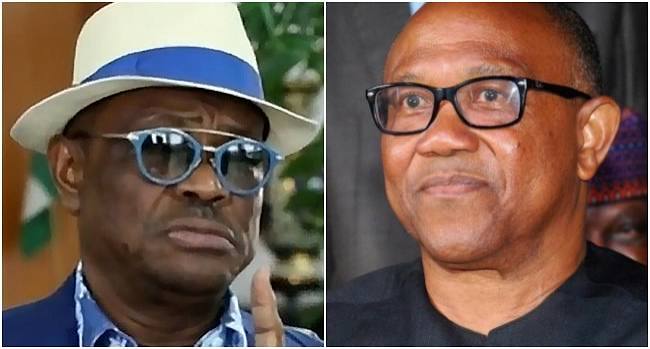
By Sunday Adelaja
My goal in this article is to go beyond promoting a particular candidate like I did in the past. This time I am trying to dissect the intricacies of political science in Nigeria.
I am trying to analyse and bring out nuggets that could benefit all political players in the future.Unfortunately, from the comments I have seen so far, most people tend to be quick to judge the articles from the perspective of partisanship.
Their view is often black and white. It is either the article is for their preferred candidate or they are against it. If you’re not for us, then you’re against us, they say.That is unfortunate. Because these articles are all about hidden truths; secrets that are hidden to those directly involved in the politicking process in Nigeria. It will take someone detached from the realities on the ground to be able to see and pinpoint these facts. If taken seriously, these articles could help shape a better political future, especially for the opposition politicians and the future aspirants to the highest political posts in our beloved country.
In this particular article I’ll like to encourage my Obidient followers not to be in a hurry to condemn this piece, but be careful in analysing the facts I present, perhaps they will be able to learn a few things that might help their political future.
Now, let the journey begin
What Obi Could Have Done After 2023
The most consequential question is what could have happened immediately after the 2023 election.
Rather than allowing the Obidient phenomenon to remain primarily centered on the personality of Peter Obi, it could have been converted into a permanent civic-political organisation.
For example:
A national structure
Six geopolitical zones, State organisations, Local government chapters, Ward organisations, Polling-unit volunteers, Professional associations, Diaspora chapters, Policy and research institutions, Candidate development.
The movement could have recruited people not merely to support Obi, but to build a political philosophy around: Productivity; education; infrastructure; security; healthcare; industrialisation; constitutional reform; anti-corruption; entrepreneurship; national unity.
That would have transformed personal popularity into institutional capital.
The distinction is important because political movements survive leaders only when the institution becomes larger than the individual.
Wike’s Real Political Lesson
The most interesting lesson from Wike is therefore not necessarily that his policies or political choices are superior. It is his understanding of leverage.
Wike has repeatedly demonstrated a willingness to operate outside conventional political alignments.
In 2023, he remained a PDP governor while refusing to support the PDP presidential candidate.
In the current political environment, he remains associated with the PDP while serving in Tinubu’s APC-led government and organising a coalition supporting Tinubu’s presidential re-election.
This demonstrates a particular political philosophy: Party membership is one source of power; relationships are another.
Wike appears to place considerable emphasis on the second.
And that is where the Obi comparison becomes powerful. Obi’s political capital was largely horizontal: Millions of people who felt connected to a national idea.
Wike’s capital has been more vertical: Political leaders connected to political structures.
Tinubu’s capital is both: vertical organisation + horizontal alliances.
The strongest political architecture generally requires both. That is why I am not going to focus on Tinubu in this article. From my calculations, the incumbent president is going to easily win the 2027 election. However I focus on Obi and Wike because they are for the future of Nigerian politics as individuals. What they do after the 2027 elections will determine their places in history of Nigerian politics.
A politician needs people who love the message and people who can organise the machinery.
The Critical Lesson from 2023
The 2023 election should therefore be studied not only as an election that Obi lost, but an extraordinary demonstration of political market demand.
INEC recorded more than six million votes for Obi.
The subsequent collapse of Labour Party’s electoral performance in many governorship contests showed that presidential popularity did not automatically translate into a durable statewide political organisation.
That gap between electoral enthusiasm and organisational infrastructure is perhaps the most important lesson.
What does this mean for Obi and Wike’s future?
Rather than predicting who will become Nigeria’s president, the more useful question is: What would each man have to demonstrate to become a viable national presidential contender?
For Obi, the critical question is whether his enormous personal following can become a durable national organisation capable of recruiting political leaders, winning legislative and governorship contests, building structures across the North and South, and maintaining unity beyond the presidential campaign.
Obi’s political trajectory has already changed significantly: he moved from the Labour Party into the broader opposition realignment.
For Wike, the question is different. His strength is political organisation and elite relationships. The unresolved question is whether the Rainbow Coalition can develop broad, durable popular legitimacy across Nigeria, rather than functioning primarily as a network of political actors supporting a particular presidential candidate.
Those are fundamentally different challenges.
The Real Contest in 2027 and Beyond: Popularity Versus Organisation
Nigeria’s political history suggests that neither mass popularity nor elite organisations alone are sufficient.
A candidate needs: Popular legitimacy grassroots organization elite alliances cross-regional acceptability financial resources credible candidates polling-unit machinery a compelling national message the ability to negotiate coalitions.
Tinubu’s political journey illustrates the importance of building these layers over a long period. Wike’s current Rainbow Coalition illustrates the power — and potential limits — of cross-party elite coordination. Obi’s 2023 campaign demonstrated how rapidly a candidate can mobilise millions of voters without initially possessing a comparable traditional party structure.
The historical question now is whether either model can acquire the missing pieces.
Conclusion: The Lesson is Bigger than Obi, Wike or Tinubu
The deepest lesson from these three political careers is that political capital has different forms.
Peter Obi demonstrated the extraordinary power of mass mobilisation.
Nyesom Wike has demonstrated the importance of political leverage, coalition-building and relationships across party boundaries.
Bola Tinubu demonstrated the value of long-term institution-building, succession planning and political alliances.
The most consequential political organisation would theoretically combine the strengths represented by all three models: Obi’s ability to inspire millions + Wike’s ability to negotiate across political structures + Tinubu’s long-term capacity to build and maintain a political machinery.
Whether Nigeria’s future political actors can create such a synthesis will be more consequential than the personality of any single politician.
And that may be the most important lesson of the 2023 election: Winning millions of votes is political capital; converting those votes into institutions, leaders, structures and enduring alliances is political power.
These articles are not for the masses, they are not for popularity contests. But like they say, a word is enough for the wise. If these four series articles helps some future generations of Nigerian politicians even if only one person, then it would have been worth the efforts.
Sunday Adelaja is a Nigerian born leader, transformation strategist, pastor and innovator. He was based in Ukraine.
Political Intimidation, Opposition Rights and the Battle for Nigeria’s Presidency In 2027
By Yasir Shehu Adam
The African Democratic Congress (ADC) presidential campaign flag-off in Sokoto State on Wednesday, November 4, 2026, was more than an ordinary political gathering. It was an event that exposed growing political tensions ahead of the 2027 general elections and raised important questions about political freedom, democratic participation and the treatment of opposition parties in Nigeria.
Led by former Vice-President Atiku Abubakar, the campaign attracted thousands of supporters, political leaders and party stakeholders. Among the prominent figures present were former Sokoto State Governor Aminu Waziri Tambuwal, former Minister of Transportation Rotimi Amaechi and other ADC leaders. The large crowd that welcomed Atiku reportedly turned his journey from the airport to the campaign venue into a three-hour movement through the city.
However, behind the political excitement was a series of controversies that nearly overshadowed the campaign. The ADC had initially scheduled the flag-off for October 31 but postponed it to November 4, citing planning and coordination considerations. The postponement came amid allegations that the Sokoto State Government was frustrating the party’s preparations, including claims that hotels were instructed to deny accommodation to visiting delegates. These allegations were disputed by an APC support group, which argued that hotel demand was influenced by a traditional title conferment ceremony scheduled in the state. The competing explanations deserve proper examination rather than political assumptions.
More seriously, the ADC raised concerns about alleged attacks on its members and restrictions on its political activities. The party also alleged that its governorship candidate, Manir Muhammad Dan’iya, was attacked by personnel of state-owned security outfits. The controversy extended to the sealing of a building previously used as the party’s office.
However, the Sokoto State Government defended its action, explaining that the property had ownership issues involving the defunct Savannah Bank and that intervention was necessary to prevent further violence. These explanations must be independently examined, because neither political accusations nor government statements should replace transparent investigations.
On November 3, Atiku Abubakar made another serious allegation, accusing the Department of State Services (DSS) of allegedly mobilising protesters to create disturbances capable of providing grounds for imposing a curfew and stopping the ADC campaign.
He claimed that some individuals were being assembled around Koko Road in Sokoto to cause disorder. However, these allegations had not been independently verified by the time of reporting. The DSS subsequently rejected the accusation and announced that its Director-General had ordered an investigation. The agency also maintained that its operatives had protected the ADC governorship candidate during an earlier incident in Sokoto, in which two DSS personnel were reportedly injured.
This development raises an important question: can Nigeria genuinely guarantee equal political rights for all parties, regardless of whether they belong to the ruling party or opposition? Democracy cannot survive where political participation depends on the approval of those in power.
The right to peaceful assembly, freedom of association and freedom of movement are fundamental constitutional rights. Security agencies must therefore remain professional, neutral and committed to protecting every Nigerian, irrespective of political affiliation. Equally, political parties must be prepared to provide credible evidence whenever they make serious allegations against public institutions.
Beyond the controversy, Atiku used the Sokoto campaign to present his political promises ahead of the 2027 presidential election. He pledged to tackle insecurity, address economic hardship, restore fuel subsidy and reopen the nation’s borders for legitimate business.
His running mate, Rotimi Amaechi, also criticised the Tinubu administration over the country’s economic situation. These promises may attract Nigerians who are dissatisfied with the current economic conditions, but the real question is whether the ADC has practical and sustainable plans to achieve them. Nigerians have heard several political promises before. What they need now are clear policies, realistic implementation strategies and measurable commitments.
The Sokoto campaign has therefore presented the ADC with both an opportunity and a responsibility. Atiku and his political associates must demonstrate that their proposed alternative is different from the political practices they criticise.
They must explain how they intend to address insecurity, unemployment, inflation, poverty and the growing cost of living. Restoring fuel subsidies, for instance, requires clear explanations about financing, implementation and long-term economic consequences. Political speeches alone cannot provide the answers Nigerians are looking for.
Similarly, the ruling APC and the Sokoto State Government must understand that opposition parties are not enemies of the state. A government that believes in democracy should have no reason to fear peaceful political competition.
If the ADC’s allegations are false, the appropriate response is to present evidence and allow independent investigations to establish the facts. If any public official or security personnel is found to have abused their authority, those responsible must be held accountable under the law.
Ultimately, the 2027 presidential election should not be a contest of intimidation, political propaganda, personality attacks or the mobilisation of crowds alone. It should be a contest of ideas, competence, credible leadership and workable solutions to the problems confronting Nigerians.
The people of Sokoto, like millions of Nigerians across the country, deserve the freedom to support any political party of their choice without fear, threats or harassment. Atiku Abubakar and the ADC must also understand that a successful campaign is not measured only by the size of the crowd but by the credibility of the promises made and the confidence they can build among voters.
As Nigeria moves towards another general election, one principle must remain unquestionable: democracy belongs to the people, not to the ruling party. No government should use public institutions to silence legitimate opposition, and no opposition party should use unverified allegations to undermine public confidence.
The real battle for 2027 should be about who can genuinely make Nigeria work for its people.
Yasir Shehu Adam (Dan Liman) Journalist and Writer, Bauchi State.



RMAFC Chairman Tasks Directors, Others on Accountability, Productivity
ShareBy Tony Obiechina, Abuja The Chairman of the Revenue Mobilisation, Allocation and Fiscal Commission (RMAFC), Dr. Mohammed Bello Shehu has...

NDLEA Secures 18 Convictions, Arrests 130 Suspects in Kaduna
ShareThe National Drug Law Enforcement Agency (NDLEA), Kaduna State Command, said it secured 18 convictions and arrested 130 suspects for...
Gen Z No Longer Think for Themselves, Ayra Starr’s Mother Blames Social Media
ShareNene Aderibigbe, mother of Nigerian singer Ayra Starr, has criticised the influence of social media on Gen Z, claiming that...


Davido, Chioma Arrive in Style for Zlatan, Davita’s Wedding in Morocco
ShareNigerian music star, Davido, and his wife, Chioma Adeleke, have arrived in style in Marrakesh, Morocco, for the wedding celebration...

Lessons from the 2023 Presidential Elections: Obi Vs Wike
ShareBy Sunday Adelaja My goal in this article is to go beyond promoting a particular candidate like I did in...
Certificates Without Jobs: The Uncomfortable Reality of Nigeria’s Education System
ShareBy Idris Rufai Welcome to Nigeria, where young people are highly educated, professionally qualified and, unfortunately, increasingly experienced in the...

FG Generates N33tn Revenue in 10 Months – Oyedele
ShareBy Tony Obiechina, Abuja The Federal Government generated N33tn in revenue between January and October 2026, while about 90 per...

Terrorists Flee Strongholds, Military Block New Bases – DHQ
ShareBy David Torough, Abuja The Defence Headquarters (DHQ) has dismissed reports and suggestions of a ceasefire with Boko Haram terrorists,...


Court Nullifies Mark-led ADC Leadership, Atiku’s 2027 Candidacy
ShareBy David Torough, Abuja The Federal High Court in Abuja has nullified the leadership of the African Democratic Congress (ADC)...

WAHO Advances Regional Health Integration Through Standardised Procedure Manuals
ShareBy David Torough, Abuja The West African Health Organization (WAHO) has commenced a regional workshop in Abuja to finalize procedural...