
NEWS
Tinubu Approves CVFF Disbursement as Oyetola Directs Faster Loan Processing

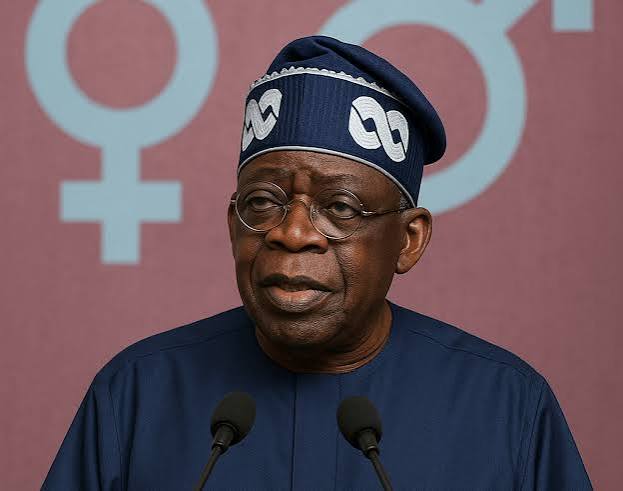
President Bola Tinubu has authorised the disbursement of the Cabotage Vessel Financing Fund (CVFF), with the Minister of Marine and Blue Economy, Dr. Adegboyega Oyetola, directing the Nigeria Maritime Administration and Safety Agency (NIMASA) and 12 Primary Lending Institutions (PLIs) to fast-track the process.
Oyetola said the directive was aimed at ending more than 20 years of delays in accessing the fund and unlocking investment, growth and job opportunities in Nigeria’s maritime sector.
The minister said this in a statement issued on Sunday by his Special Adviser, Dr Bolaji Akinola.
He said NIMASA had received 92 funding applications under the CVFF, adding that 20 had been submitted to the PLIs, while one had been reviewed and forwarded for final approval.
Oyetola said the move to operationalise the CVFF marked a major milestone in the Federal Government’s efforts to strengthen indigenous participation in coastal and offshore shipping.
He recalled that in April 2025, he directed NIMASA to begin the disbursement of the fund, ending years of administrative stagnation and paving the way for the repositioning of Nigeria’s indigenous shipping capacity.
He said the momentum continued with the launch of the CVFF Application Portal in Lagos on Jan. 22, to provide transparent and structured access to eligible shipowners.
According to him, the number of PLIs was subsequently increased from five to 12 to expand access and reduce bottlenecks in loan processing.
The minister said the CVFF had accumulated for more than two decades without being accessed and was designed to provide low-interest, long-term financing for vessel acquisition.
He said the fund would enable Nigerian shipowners to compete for coastal shipping contracts, reduce dependence on foreign vessels and retain more value within the Nigerian economy.
Oyetola projected that the initiative could generate more than 30,000 direct and indirect jobs in shipyards, marine engineering firms and maritime logistics companies across the country.
He said the disbursement followed President Tinubu’s authorisation to address long-standing financing challenges and unlock the economic potential of Nigeria’s blue economy.
Beyond financing, Oyetola said the ministry was also investing in seafarer development through NIMASA by expanding training, certification and welfare initiatives for maritime professionals.
He disclosed that 222 seafarers had received free training in basic and advanced courses, while 333 cadets had completed academic training and been awarded degrees.
“Under the Nigerian Seafarers Development Programme, 135 cadets successfully completed the programme and obtained Certificates of Competency,” he said.
Oyetola added that 7,059 Nigerian seafarers had been placed onboard vessels to gain the required sea-time experience for career progression.
He said the interventions reflected the government’s commitment to building a competitive maritime workforce and ensuring that Nigerians benefited directly from opportunities in the blue economy.(NAN)
By David Torough, Abuja
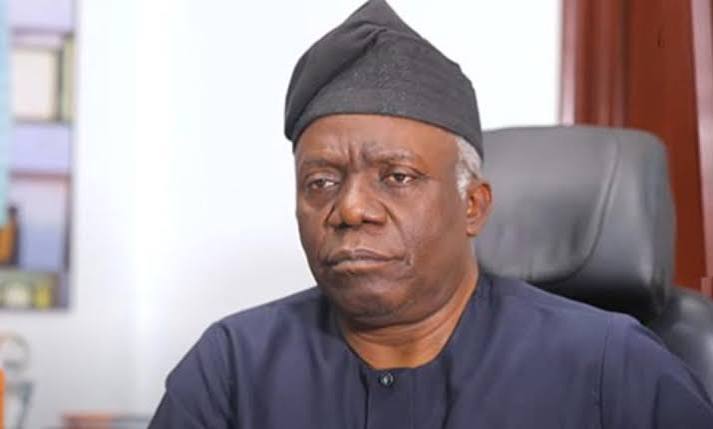
Human rights lawyer and Senior Advocate of Nigeria, Femi Falana, has called on the Economic and Financial Crimes Commission to investigate the alleged failure to account for N33.75 billion earmarked as cash transfers for millions of vulnerable Nigerians.
Falana, who chairs the Alliance on Surviving COVID-19 and Beyond (ASCAB), also urged the anti-graft agency to collaborate with the Auditor-General for the Federation to recover the funds if investigations confirm that they were diverted.
He made the call in a statement on Sunday, following concerns raised by the Auditor-General for the Federation, Shaakaa Kanyitor Chira, in his 2024 Annual Report on Non-Compliance/Internal Control Weaknesses in federal ministries, departments and agencies.
The report questioned the Federal Government’s inability to provide sufficient evidence showing that N33.75 billion in cash transfers reached genuine beneficiaries.
According to Falana, the money was meant for more than 3.29 million vulnerable households under the National Social Investment Programme.
He expressed concern that the alleged failure to account for the funds occurred despite measures introduced by the government to improve beneficiary tracking and prevent the inclusion of fictitious recipients.
The National Social Investment Programme Agency (NSIPA), established under the 2022 NSIPA Act, is responsible for implementing key social intervention schemes, including N-Power, the National Home-Grown School Feeding Programme, the National Cash Transfer Programme and the National Social Safety Net Programme.
Falana said the agency had nevertheless been dogged by allegations of financial impropriety involving some of its officials.
He recalled that former Minister of Humanitarian Affairs, Disaster Management and Social Development, Sadiya Umar Farouq, was investigated by the EFCC over alleged money laundering involving more than N37.1 billion.
He also cited the suspension of former Humanitarian Affairs Minister Betta Edu after a December 2023 memo sought the transfer of N585 million in public intervention funds to a private bank account.
The former NSIPA Chief Executive Officer, Halima Shehu, was similarly suspended and questioned over alleged suspicious movement of funds.
Falana urged the EFCC to conclude investigations into the various allegations and make its findings public.
“The Economic and Financial Crimes Commission should liaise with the Auditor-General of the Federation with a view to recovering the missing N33.75 billion,” he said.
He further called for the immediate investigation of what he described as a serious allegation involving the criminal diversion of funds meant for poor and vulnerable Nigerians.
“All the characters involved in the shameful conduct should be arrested and prosecuted without any delay,” Falana said.
The rights lawyer also expressed concern over the implementation of a $3.05 billion development package unveiled by President Bola Tinubu in July 2026.
The World Bank-supported programme is designed to deepen poverty reduction, strengthen human capital and expand economic opportunities across Nigeria.
Falana called on the Federal Government to strengthen accountability measures to ensure that funds allocated for poverty reduction reach their intended beneficiaries.
He also proposed the creation of an oversight body comprising credible civil society organisations to monitor the disbursement and implementation of the development funds.
Falana maintained that stronger transparency and accountability mechanisms were essential to prevent the diversion or abuse of public funds intended to support Nigeria’s poorest and most vulnerable citizens.
By Tony Obiechina, Abuja
The Federal Government has reaffirmed Nigeria’s commitment to strengthening bilateral relations with São Tomé and Príncipe, with focus on maritime security, the Nigeria-São Tomé and Príncipe Joint Development Zone (JDZ), trade and investment.
The Minister of State for Defence, Dr.
Bello Muhammad Matawalle, disclosed this while representing President Bola Ahmed Tinubu at the Presidential Inauguration of President Carlos Manuel Vila Nova for a second five-year term.Speaking on behalf of Mr.President, Matawalle commended the people of São Tomé and Príncipe for conducting a peaceful, credible and transparent election.
“Your victory reflects the confidence of the people in your leadership. Nigeria commends the Government, the National Electoral Commission, Political Parties, and the people of São Tomé and Príncipe for strengthening democratic institutions in your country,” he said.
President Tinubu added: “Nigeria values the longstanding friendship between our two countries. I therefore look forward to deepening cooperation in maritime security, the Nigeria-São Tomé and Príncipe JDZ, trade and investment, and other areas of mutual interest.”
The event, which was held at the country’s Parliament Building, was attended by several African and European leaders and other dignitaries. In addition to Minister Bello Matawalle, who represented President Bola Ahmed Tinubu, other leaders who graced the swearing-in ceremony included the President of the Republic of Congo, President Denis Sassou Nguesso, the President of the Gabonese Republic, Brice Oligui Nguema, the Prime Minister of Mozambique, Mrs. Maria Benvinda Levy, the representative of the Angolan Head of State and Angola’s Foreign Minister, Téte António, and the Prime Minister of Morocco, Aziz Akhannouch, among other dignitaries.
Dr. Matawalle said Nigeria remains committed to peace, security and development in the Gulf of Guinea region. He expressed Nigeria’s readiness to re-establish and strengthen closer ties with São Tomé and Príncipe for mutual benefit.
“His Excellency President Tinubu’s participation through representation reflects the historic ties of friendship, fraternity, solidarity and cooperation that continue to define relations between Nigeria and São Tomé and Príncipe,” the Minister said
By Tony Obiechina, Abuja
The National Insurance Commission (NAICOM) has officially launched the Insurance Sector Strengthening Programme (ISSP), a new national initiative aimed at transforming Nigeria’s insurance industry into a more inclusive, innovative, and trusted driver of economic growth.
Declaring the programme open in Abuja, the Commissioner for Insurance, Mr.
Ayo Omosehin, described the launch as a defining moment when reform must move “from intention to action.”Omosehin said the ISSP was designed in response to the sector’s persistent challenges, including low insurance penetration, limited public understanding of insurance products, and gaps in trust, capacity, and distribution.
“Despite Nigeria’s large and growing economy, insurance penetration remains significantly below its potential. Many citizens remain uninsured or underinsured,” he stated.
He added that opportunities among women, youth, and small businesses were “not yet fully harnessed,” noting that these gaps should be seen as a call for “innovative solutions, stronger industry coordination, and deeper stakeholder engagement.”
The Commissioner explained that the ISSP was built around six critical pillars: Advocacy and Policy, Awareness and Education, Capacity Building, Gender Inclusion, Youth Engagement, and MSME and Value Chain Development.
He said awareness and education would be central, because “insurance uptake is directly linked to public understanding and trust.”
Through targeted campaigns, the programme seeks to strengthen insurance culture and improve financial literacy nationwide.
On capacity, Omosehin stressed that the industry’s competitiveness depends on human capital, and that training initiatives under ISSP will strengthen technical expertise across the value chain.
He also highlighted the focus on gender and youth, noting that “women are a significant economic force, while young people represent the future of our nation and our industry.”
The programme also targets Micro, Small and Medium Enterprises, which he said drive employment but often operate without adequate risk protection.
Omosehin said the ISSP aligns with the Nigeria Insurance Industry Reform Agenda (NIIRA 2025) and key priorities such as deepening penetration, enhancing professionalism, and strengthening consumer protection.
While NAICOM will create an enabling environment for innovation, he warned that this would not come “at the expense of consumer protection, solvency, transparency, or public trust.”
“The next phase of insurance growth in Nigeria must be anchored on responsible underwriting, adequate capitalization, robust governance, transparent operations, prompt claims settlement, and measurable value to policyholders,” he said.
The Commissioner further noted that digital transformation and insurtech solutions would be integrated into the ISSP to make insurance products more convenient and personalized for Nigerians.
He called the future of insurance a “shared responsibility,” urging regulators, operators, professional bodies, development partners, educational institutions, and the media to play their roles.
“Through sustained commitment and strategic partnerships, we can transform insurance from an underutilized financial service into a powerful instrument for economic resilience, social protection, and national development,” Omosehin said.
He commended the promoters and partners of ISSP and assured stakeholders of NAICOM’s continued support in protecting policyholders and ensuring market stability.
The launch, he said, “marks the beginning of a new chapter for insurance in Nigeria, one defined by innovation, inclusion, collaboration, professionalism, trust, and regulatory discipline.”
The event drew industry operators, intermediaries, technology providers, and development partners



Tinubu Approves CVFF Disbursement as Oyetola Directs Faster Loan Processing
SharePresident Bola Tinubu has authorised the disbursement of the Cabotage Vessel Financing Fund (CVFF), with the Minister of Marine and...


NDLEA Seizes N1.1bn Drugs, Busts Traffickers in Nationwide Sweep
ShareBy David Torough, Abuja The National Drug Law Enforcement Agency (NDLEA) has intensified its nationwide crackdown on illicit drugs, intercepting...

Falana Raises the Alarm over Missing N33.75bn Meant for Poor Nigerians
ShareBy David Torough, Abuja Human rights lawyer and Senior Advocate of Nigeria, Femi Falana, has called on the Economic and...
Nigeria Pledges Stronger Ties with Sao Tome on Maritime Security
ShareBy Tony Obiechina, Abuja The Federal Government has reaffirmed Nigeria’s commitment to strengthening bilateral relations with São Tomé and Príncipe,...
NAICOM Launches Programme to Strengthen Insurance Sector
ShareBy Tony Obiechina, Abuja The National Insurance Commission (NAICOM) has officially launched the Insurance Sector Strengthening Programme (ISSP), a new...
NESG Convenes Pre-Summit Dialogue on Bridging the Gap from Learning to Earning
ShareBy Tony Obiechina, Abuja The Nigerian Economic Summit Group (NESG), in collaboration with the Federal Ministry of Budget and Economic...


Enugu Govt Names Henry Okeke to Polytechnic Iwollo Governing Council
ShareBy Raphael Atuu, Abuja The Enugu State Government has approved the immediate appointment of Barr. Henry Okeke as a member...
NCS, Niger Customs Team Up to Revive Kamba Border Economy
ShareBy Tambaya Julius, Abuja The Nigeria Customs Service (NCS), Kebbi Area Command, has commenced fresh efforts to revive legitimate cross-border...
Equipping Educators for Excellence: Preparing for a New Academic Session
ShareBy Tolulope Sobiye Ogunbowale A new academic session is knocking at the door. But before the first lesson is taught,...
NFF: Why Nigeria Must Follow the Rules, not Sentiments
ShareBy Ken Ekwueme On Tuesday, September 1, 2026, the world football governing body FIFA formally accepted the resignation of Nigeria...