
NEWS
NESG Convenes Pre-Summit Dialogue on Bridging the Gap from Learning to Earning

By Tony Obiechina, Abuja
The Nigerian Economic Summit Group (NESG), in collaboration with the Federal Ministry of Budget and Economic Planning has convened a pre-summit dialogue ahead of the 32nd Nigerian Economic Summit (NES#32), focusing on one of the critical challenges facing Nigeria’s young population: translating education and skills acquisition into meaningful economic opportunities.
The virtual dialogue, themed “The Missing Link: From Learning to Earning,” brought together stakeholders from the education, technology, philanthropy, entrepreneurship and youth development sectors to examine the gaps between learning, skills development and access to productive employment, while exploring practical pathways for connecting human capital development to economic opportunities.
In her remarks, Olapeju Ibekwe, Chief Executive Officer, Sterling One Foundation, noted that the engagement was designed to lay the groundwork for a focused and implementable agenda that moves Nigeria from diagnosis to delivery. She appreciated the panelists, discussants and participants for their contributions and encouraged stakeholders to register for NES#32 and join the broader conversation on building an economy that delivers jobs, productivity and shared prosperity.
In her special remarks, Mrs Obianuju Anigbogu, Director, Education Planning, Research and Development, Federal Ministry of Education, underscored the importance of strengthening education planning, research and development as foundations for building a productive and future-ready workforce. She stressed the need for stronger collaboration among government, the private sector and other stakeholders to ensure that education policies and interventions translate into meaningful outcomes for learners and the wider economy.
Delivering the keynote remarks, Mr Abubakar Sulaiman, Managing Director and Chief Executive Officer of Sterling Bank, emphasised that the capabilities required to drive productivity and economic growth must begin to be developed from the school system. He called for a shift from a pipeline focused primarily on certificates to an ecosystem that builds capability, productivity and opportunity, with transferable skills that enable graduates to contribute effectively across industries regardless of their fields of study.
Mr Sulaiman noted that a graduate of History, English or Physics, for instance, should leave the education system with a meaningful component of the skills required to function effectively in the workplace. He emphasised that building an adaptable workforce capable of responding to changing industry demands would be critical to strengthening the connection between education, employment and economic productivity.
During the panel discussion, Lawal Mohammed Faruk, Director, Research, Innovation and Information Technology, National Universities Commission (NUC), represented by Dr Ezinne Orisakwe, Assistant Director, Research, Planning and Administration, NUC, highlighted the need for effective systems to track graduates and out-of-school young people. She noted that reliable data on the transition from education to employment would help government and other stakeholders better understand the challenges facing young people and design more responsive interventions.
Dr Orisakwe also called for stronger policy coordination and urgent capital investment to address the growing pool of graduates and skilled manpower seeking employment. She stressed that closer alignment among government agencies and coordination units would help create the synergy required to translate skills and qualifications into productive economic opportunities.
Also contributing to the discussion, Oyindamola Egbeyemi, Director, Programmes and Coordination, Lagos State Employment Trust Fund (LSETF), emphasised the importance of ensuring that skills development programmes respond directly to labour-market demand. She noted that programme design and implementation should be guided by clear economic outcomes, with interventions going beyond training and certification to create measurable pathways to employment, enterprise development, productivity and improved livelihoods.
Other panellists, including Femi Taiwo, Managing Partner, FATE Africa, and Olapeju Ibekwe, CEO, Sterling One Foundation, shared perspectives on the structural and practical barriers preventing many young Nigerians from converting education and acquired skills into sustainable livelihoods. The discussion highlighted the need for stronger collaboration between educational institutions and industry, alongside greater opportunities for entrepreneurship, innovation and workforce development.
The dialogue underscored that bridging the gap from learning to earning requires more than expanding access to education. It requires an education and skills ecosystem that equips young Nigerians with relevant, adaptable and marketable capabilities, while creating clear pathways into employment, entrepreneurship and productive economic participation.
The pre-summit engagement forms part of the broader consultations leading to NES#32 and contributes to the Summit’s focus on building an economy that creates opportunities, improves productivity and delivers shared prosperity. It also reinforces the need to place young Nigerians and the development of human capital at the centre of conversations on Nigeria’s future of work and economic growth.
The 32nd Nigerian Economic Summit (NES#32) will be held under the theme “Growth that Works: Delivering Jobs, Productivity and Shared Prosperity” on 26–27 October 2026 at the Transcorp Hilton, Abuja. The Summit will bring together policymakers, private-sector leaders, development partners and other stakeholders to advance practical actions towards an economy that creates jobs, raises productivity and delivers shared prosperity.
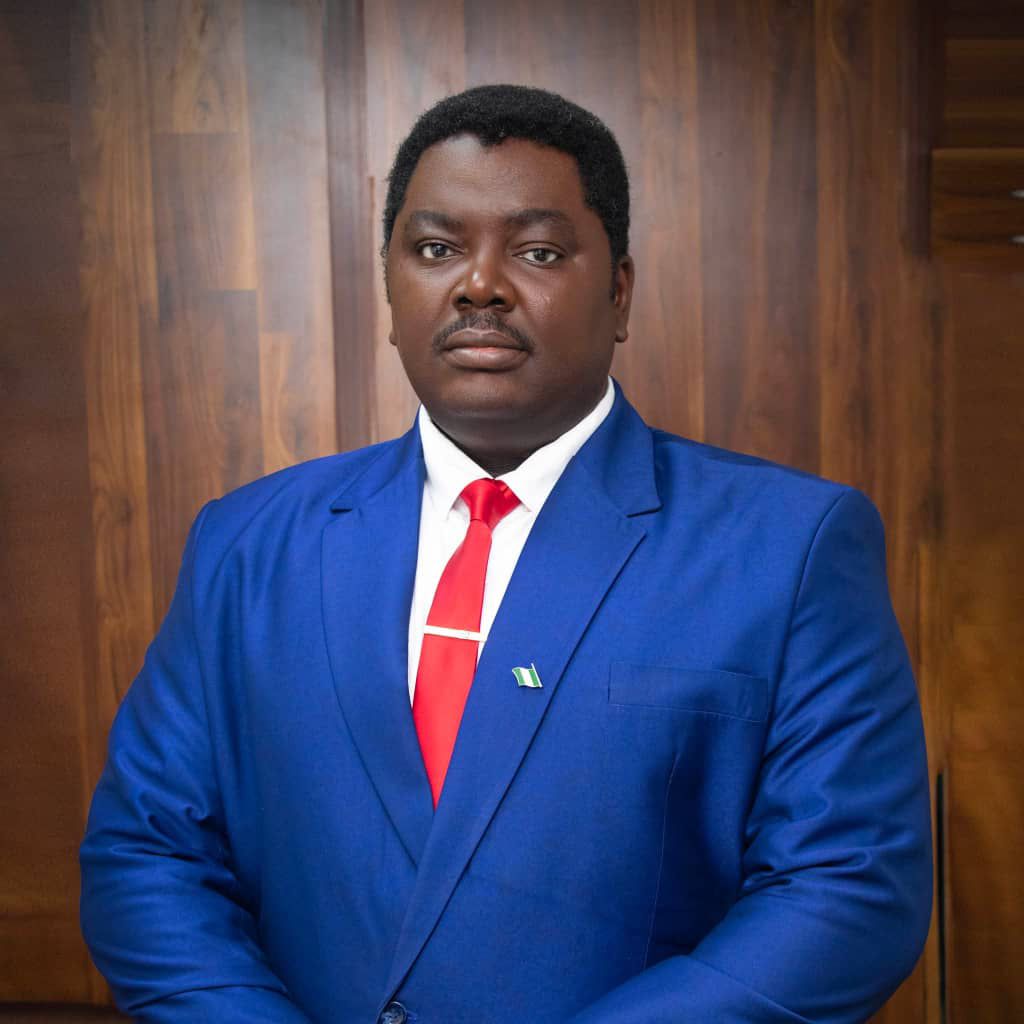
By Raphael Atuu, Abuja
The Enugu State Government has approved the immediate appointment of Barr. Henry Okeke as a member of the Governing Council of Enugu State Polytechnic, Iwollo.
Okeke’s appointment is part of the constitution of a new Governing Council for the institution, chaired by Deaconess Ifeoma Nwobodo.
The council also includes the institution’s Rector, Rev. Fr. Prof. Anthony Aniagboso Igwe, alongside other members, including Obinna Aleke and Emeka Abba.
The appointments were contained in a statement signed by the Secretary to the Enugu State Government, Prof.
Chidiebere Onyia, on Friday, September 4, 2026.According to the statement, all the appointments take effect immediately.
Okeke’s appointment is expected to strengthen the Governing Council’s oversight and policy responsibilities as the Polytechnic continues its drive toward academic and administrative development.
The newly constituted council is expected to provide strategic leadership and direction for the institution, with a focus on advancing its academic mandate and overall institutional growth.
By Tolulope Sobiye Ogunbowale
A new academic session is knocking at the door. But before the first lesson is taught, there is a question every educator should ask: Am I really prepared for the journey ahead?
In my last publication, I reflected on how learners could make use of their holidays through reading, learning new skills, helping at home and engaging in activities that support their growth.
As the holiday draws to a close, attention now shifts to the other side of the classroom. If learners are expected to return ready to learn, should teachers not also return ready to teach, guide and inspire?Preparing for resumption should go beyond arranging lesson notes, checking the timetable and organising teaching materials.
It is an opportunity to reflect on the previous session, identify areas for improvement and return with purpose. Every teacher should pause and ask: What worked last session? What challenged me? Which learner needed more support? And what can I do better this time?Every educator needs a teacher’s survival kit. It may not come in a box, but it should contain knowledge, patience, empathy, flexibility, good communication, resilience, creativity and humour. These qualities can help teachers navigate difficult days.
A good teacher must remain a learner. Before resumption, educators should revisit their subject areas, study the curriculum, refresh their knowledge and explore ways of presenting lessons. The world is changing rapidly, and learners are changing with it. A teacher who continues to learn is better prepared to teach and would be respected for what he teaches.
Hence, knowledge alone is not enough. The teacher must also prepare the heart. Every learner comes to school with a different story. Some return eager and confident; others may be carrying challenges that are not immediately visible. Some understand lessons quickly, while others need patience and encouragement. The prepared teacher looks beyond the struggle and sees potential.
The story of Adebanjo Samuel Oluolamide, LASU’s overall best graduating student for the 2025/2026 academic session, offers a reminder of the influence educators can have. Despite financial difficulties, he received support from people who believed in him, including teachers who reportedly assisted him during difficult periods. Such acts remind us that a small gesture can become significant in a learner’s journey.
This lesson aligns with the story of Rita Pierson, the renowned American educator who, in her popular talk, Every Kid Needs a Champion, emphasised the importance of teacher-learner relationships. Her message is simple but powerful: children need adults who believe in them. They need teachers who look beyond grades and see possibilities.
A struggling child today may become tomorrow’s outstanding graduate, professional or leader.
Flexibility is essential. Not every lesson will follow the plan. A learner may struggle with a topic, a teaching aid may fail, or an unexpected situation may change the programme. A prepared teacher knows when to adjust while keeping the learning objective.
Technology aids the teachers ‘research, yet no device can replace a teacher who listens, encourages, corrects and understands learners.
Communication matters just as much. In other words, words can make or mar. A careless statement can weaken confidence, while “I believe in you” can encourage a learner to try again. Teachers should correct without humiliating, discipline without degrading and encourage without unfair comparison.
Finally, teachers must remember that they are human. Teaching can be demanding, and constant giving without rest can lead to exhaustion. Rest, collaboration, support and healthy boundaries are necessary. Self-care is part of staying effective.
Let educators prepare more than their classrooms. Prepare the mind. Refresh the knowledge. Organise the materials. Strengthen the patience. Renew the purpose. Most importantly, prepare the heart.
The learners have had their season of holiday preparation. Now it is the teacher’s turn.
Let every educator return with a survival kit filled with knowledge to teach, patience to understand, empathy to care, courage to encourage, flexibility to adapt and resilience to continue.
Years from now, a learner may forget a lesson or test score, but may never forget the teacher who saw something in them and chose to believe.
From Reform to Prosperity: A Case for President Tinubu’s Re-election
By Fredrick Nwabufo
In the past three years, the hard work of scaffolding and foundation laying has been accomplished; the reforms have been sown, and now we are harvesting prosperity. With Renewed Hope Agenda 2, we will deliver today while building for tomorrow.
Suleiman sits in the examination hall. His palms are sweaty, and beads of despair are dropping on his lap. He has not paid his fees and is scraping by on odd jobs. It is the crucial second-semester examination. Suleiman faces a major challenge to his dream of getting a higher education: funding. But his determination is greater than his fear.
In his 200 level in 2024, word came to him about the Nigerian Education Loan Fund (NELFUND); he did not hesitate; he put his foot on the pedal, applied and got funding for tuition and upkeep. Today, Suleiman’s dream lives. Not aborted. In his immortal words, he says: “NELFUND helped me cross the finish line. It was a lifeline.”
We now have close to two million students like Suleiman to whom NELFUND has given a lifeline, a new passport to prosperity, and a reason to dream again; to believe again, and redouble their faith in the possibilities of our nation.
The challenge of funding higher education is a serious concern worldwide. In the US, 60 per cent of students who drop out of college cite financial strain, and in the 2023/2024 academic session alone, more than 10 million students received various forms of financial aid.
NELFUND is a historical novelty. It is a programme that the young beneficiaries of today will talk about and pass down to their children, just like our parents regaled us with tales about a time in Nigeria when
higher education was at its peak; when hostels were roomy, and a smorgasbord of full chicken and milk was served expressly at school cafeterias.
To address certain political contortions, NELFUND is a zero-interest facility open to all Nigerian students in tertiary institutions. It is only due for repayment two years after the completion of the NYSC. Critical programmes like NELFUND should not be fodder for populist politics. The programme’s essence must not be lost or minimised. It is principally to offer an opportunity for higher education and a better life for any Nigerian student, as well as to enrich the productive workforce and expand access to jobs and economic opportunities.
From yesterday’s challenges, Nigeria is transitioning today, undergirded by economic policy shifts—such as fiscal realignments and fuel subsidy removal—toward long-term stabilisation, infrastructure returns, expanded federal revenue distributions to states, job creation, and emerging microeconomic gains. Without eliminating the residual challenges, the gains from macroeconomic stability are already reaching critical segments of the population.
Today, states can pay workers’ salaries, a departure from the past when 27 states could not meet this obligation; there is an improvement in wages and income; there is CREDICORP, which is supporting workers to buy essential goods and assets; there is education financing, as well as direct financial grants to low-income households and small businesses, among others.
Essentially, the Tinubu administration has kept faith with the core pillars of its original manifesto. It has honoured foundational commitments, translating policy blueprints into tangible infrastructure and structural reforms. What it said it would do, it has done.
It has not been an easy road to tread, really, but it has been far from a Golgotha experience. Our economy has reached a sufficient recovery and is already on a stronger growth trajectory.
Our Gross Domestic Product (GDP) grew by 4.43% (year-on-year) in real terms in the second quarter of 2026, higher than the 4.23% recorded in the second quarter of 2025, driven by improvements in the oil, manufacturing, agricultural, and services sectors, according to data released by the National Bureau of Statistics (NBS). The NBS also reported inflation falling to 15.43% in July 2026 from 15.91%.
Days ago, Moody’s revised Nigeria’s outlook to positive and affirmed its B3 rating, citing stronger external buffers and sustained reform momentum. Global index provider FTSE Russell had also confirmed that Nigeria’s capital market would be reclassified from “Unclassified” to “Frontier Market” status, effective from the opening of trading on Monday, September 21, 2026, after nearly three years of exclusion.
Months ago, Nigeria’s stock market emerged as the world’s best-performing equity market in dollar terms, eclipsing South Korea, as investor confidence grew amid an improving macroeconomic outlook and ongoing economic reforms.
Today, our foreign reserves are over $53 billion, the highest in nearly two decades. In June, Nigeria was ranked as the best-performing African economy in the 2026 World Competitiveness Ranking released by the International Institute for Management Development (IMD).
In the past three years, the hard work of scaffolding and foundation laying has been accomplished; the reforms have been sown, and now we are harvesting prosperity. With Renewed Hope Agenda 2, we will deliver today while building for tomorrow.
Nwabufo is the Senior Special Assistant to the President on Public Engagement

The National Orientation Agency (NOA) in Bauchi State, says it will conduct a five-month voter education exercise to mobilise participation in the 2027 general elections.
The Director of the agency, Adamu Sarkinyara, said this in an interview on Wednesday in Bauchi.
Sarkinyara said that the exercise targeted about one million youths, to ensure conduct of free, fair and violence free elections in the state.
He said that the agency has mobilised about 500 civil society organisations, to facilitate smooth conduct of the exercise across the 20 local government areas of the state.
The director said that parts of the mandate of the agency was to sensitise Nigerians on good governance, democracy and civic participation.
“NOA is a key stakeholder on election matters, we have three mandates: pre- election campaigns, voter education, and peace building toward free and fair elections,” he said.
Sarkinyara said that the agency would monitor the conduct of the election, and report its findings to the public, government, and the Independent National Electoral Commission (INEC).
He said that the agency would also address political parties with grievances, to encourage compliance to the Electoral Act and relevant laws.
“As part of the post-election role, we train people on good governance, we will organise a workshop in collaboration with the Development Exchange Center (DEC), and other agencies towards building the capacity of the local structures on governance, transparency and accountability,” he said.
Sarkinyara said that the exercise was designed to build the capacity of the newly elected local council chairmen on open government partnership, transparent and inclusive governance.


NESG Convenes Pre-Summit Dialogue on Bridging the Gap from Learning to Earning
ShareBy Tony Obiechina, Abuja The Nigerian Economic Summit Group (NESG), in collaboration with the Federal Ministry of Budget and Economic...

Enugu Govt Names Henry Okeke to Polytechnic Iwollo Governing Council
ShareBy Raphael Atuu, Abuja The Enugu State Government has approved the immediate appointment of Barr. Henry Okeke as a member...

NCS, Niger Customs Team Up to Revive Kamba Border Economy
ShareBy Tambaya Julius, Abuja The Nigeria Customs Service (NCS), Kebbi Area Command, has commenced fresh efforts to revive legitimate cross-border...
Equipping Educators for Excellence: Preparing for a New Academic Session
ShareBy Tolulope Sobiye Ogunbowale A new academic session is knocking at the door. But before the first lesson is taught,...
NFF: Why Nigeria Must Follow the Rules, not Sentiments
ShareBy Ken Ekwueme On Tuesday, September 1, 2026, the world football governing body FIFA formally accepted the resignation of Nigeria...


NOA Initiates Five-month Voter Education Exercise in Bauchi
ShareThe National Orientation Agency (NOA) in Bauchi State, says it will conduct a five-month voter education exercise to mobilise participation...


Sanwo-Olu Urges Media to Combat Misinformation Ahead 2027 Elections
ShareLagos State Governor, Babajide Sanwo-Olu has urged the media to uphold professionalism, verify information and combat misinformation ahead of the...


I Think I’d Have Won BBNaija Season 11 – Neche Speaks on Exit
ShareFormer Big Brother Naija housemate Neche said she believes she could have won the show if she had stayed, citing...


Prophet Rolex Apologises to Alleged TMT Visa Scam Victims
ShareContent creator and comedian, Prophet Rolex, has broken his silence after being called out for previously promoting the visa services...


Why I Once Evicted My Son from Home – Patience Ozokwor
ShareVeteran Nollywood actress, Patience Ozokwor, aka Mama G, has said it is wrong for parents to completely shield their children...