
NEWS
Tinubu ‘ll Prove Doubters Wrong, Policies Making Impact – IMPI

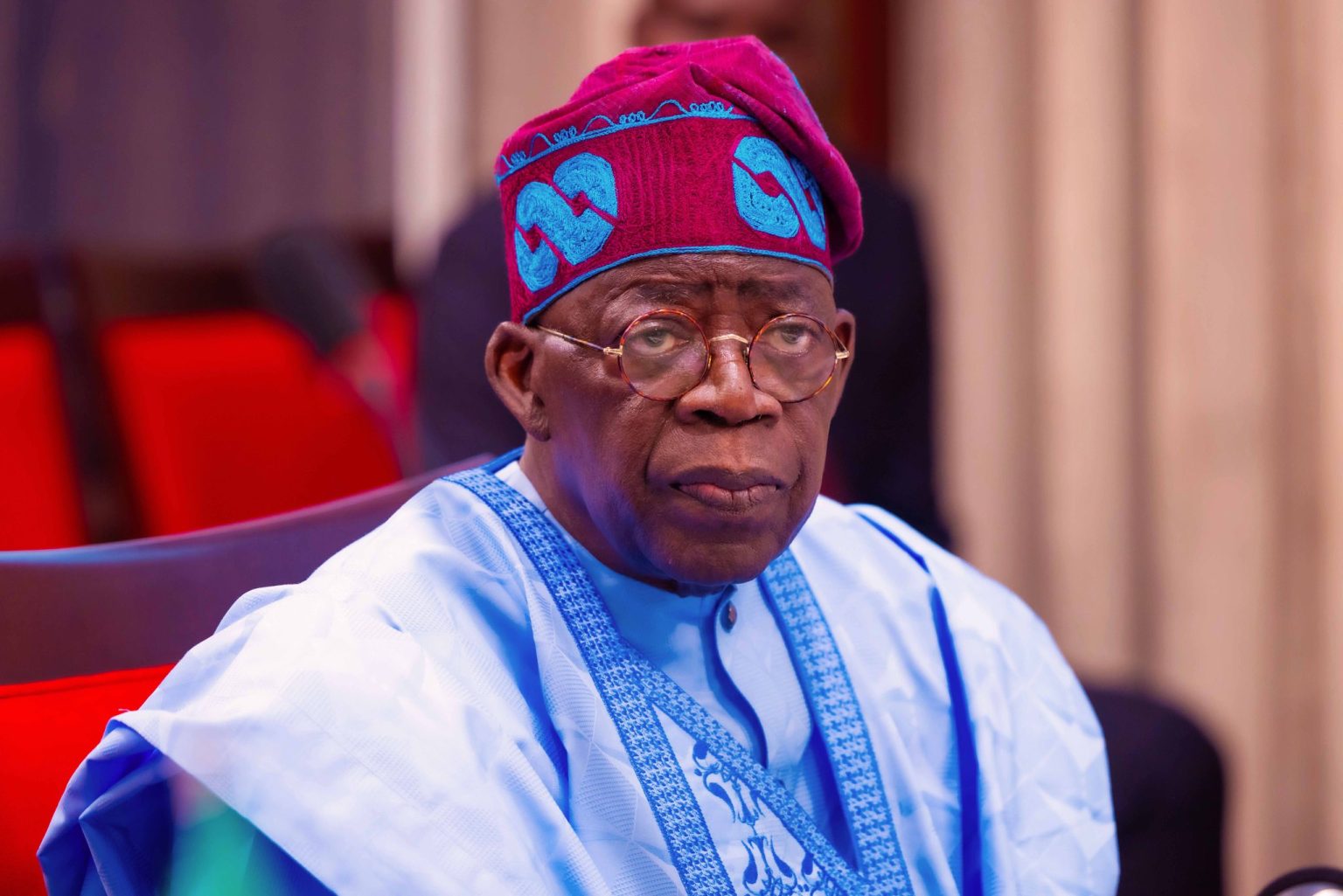
The Independent Media and Policy Initiative (IMPI) said President Bola Tinubu’s policies will have a positive impact on the Nigerian economy in spite of the short-term pains.
Chairman, IMPI, Niyi Akinsiju, made the assertion in a statement in Abuja on Wednesday.
He compared the Tinubu administration’s policy thrust to that of some former Western leaders, which was initially vilified but later hailed as successful.
He added that the IMPI policy think tank came to that conclusion after analysing the President’s nationwide broadcast in the aftermath of the Aug.
1 to Aug. 10 protest.“To illustrate this, we recall the vicious attack on the economic policies adopted and implemented by the administration of President Ronald Reagan in the United States of America between 1981 and 1989”.
He said that Reagan’s policies were described by opposition figures as “voodoo” economic policies.
He stated that the Reagan years were described afterwards as years of prosperity, with interest rates, the inflation rate, and unemployment falling faster than they did immediately before or after his presidency.
While dissecting Tinubu’s speech, the policy group outlined the pragmatic thinking behind many of the initiatives of his administration.
According to him, based on their findings, they established the relatively cheap cost of CNG compared to Premium Motor Spirit, otherwise known as petrol.
“Our independent investigation shows that 50 litres of PMS are equal to 30 kilogrammes of CNG.
“Whereas the average fuel economy for PMS is 10 to 15 km per litre for a typical passenger vehicle, the average fuel economy for CNG is 20 to 25 km per kilogramme.
“This, if mathematically captured, will be as follows: 50 litres of PMS at N650 per litre is N32,500, while 30 kg of CNG at N250 will amount to N7,500, with a difference of N25,000.
“This, to our mind, is pragmatic thinking”.
He said that the policy noted with interest the bouquet of ongoing implementation of programmes as highlighted by the President in his speech.
These, according to him, include the Consumer Credit Corporation, which has moved from the drawing board to disbursing credits to eligible beneficiaries for the first time in the history of this country.
“In tandem with this is the Nigeria Education Loan Fund (NELFUND), or the student loans scheme, another revolutionary initiative to support education.”
He said that based on IMPI findings, more than N2.5bn had been disbursed as loans to qualified beneficiaries out of the N150bn establishment fund in the first three weeks of the commencement of operations.
“Tinubu also revealed the Federal Government’s activation of the technology and innovation industry with $620 million under the Investment in Digital and Creative Enterprises (iDICE) programme”.
He said that the programme, whose objectives include empowering young people, would create millions of IT and technical jobs and produce millions of technical talents.
This, according to him, confirms the forward-looking capacity of the President, who determines that the national developmental trajectory will be pivoted on technology and innovation.
He said: “IMPI also acknowledged Tinubu’s assertion that his policies have paved the way for an increase in the nation’s earnings without a need to raise taxes or pile up more debts”.
He said that the president’s revelation of the reduction of revenue used in servicing national debt from 97 per cent to 68 per cent over a 13-month period is heartwarming.
He added that it was also suggestive of an economy that was distancing itself from the profligacy hallmarked by the fuel subsidy regime and multiple foreign exchange windows.

From Francis Sadhere, Delta
Former Governor of Delta State, Dr. Emmanuel Eweta Uduaghan, has died.
Uduaghan, who governed the state from 2007 to 2015, reportedly passed away in the morning of Monday, October 19, 2026.
His death was announced in a statement signed by Toju Anire Uduaghan on behalf of the family, which described his passing as a devastating loss to the family, Delta State and Nigeria.
The family said the former governor was a beloved father, brother, uncle and patriarch whose life and service touched many people across the state and the country.
“His passing has left us devastated. Words can hardly express the depth of our sorrow at the loss of a man who meant so much to our family and whose life and service touched countless others across Delta State and Nigeria,” the statement said.
Uduaghan held several key positions in the Delta State Government before becoming governor. He served as Commissioner for Health from 1999 to 2003 and Secretary to the State Government from 2003 to 2007.
He subsequently emerged as governor in 2007 and remained in office until 2015, during which the family said he demonstrated commitment to the human and infrastructural development of the state.
The family described his death as a profound loss, noting that he was a source of strength, a father figure and a respected elder whose memories and legacy would remain cherished.
“We are grateful to Almighty God for his life, his service, and the legacy he leaves behind,” the statement added.
The family prayed for the repose of his soul and divine comfort for relatives, friends, associates, former colleagues and others mourning his death.
“Your memory will forever remain in our hearts, and your legacy will endure in the lives of those you touched,” the family said in its farewell message.
Uduaghan’s death marks the loss of a former leader who occupied prominent positions in Delta State’s political and administrative history.
The family concluded its announcement with a prayer for his peaceful repose, saying, “May your gentle soul rest in perfect peace. Amen.”
The statement was signed by Toju Anire Uduaghan on behalf of the family.

By Tambaya Julius, Abuja
The Nigeria Customs Service (NCS) has opened a review process for applicants disqualified during its recent recruitment screening, following complaints from candidates who made the shortlist but were denied entry into the training college.
The Comptroller-General of Customs, Bashir Adewale Adeniyi, ordered a case-by-case review after meeting with some of the affected applicants, according to a statement by the Service.
The NCS disclosed that 397 applicants were flagged during the screening over issues relating to substance abuse, physical fitness, medical records, age and submitted documents.
It clarified that the substance-abuse category excluded cigarette and alcohol use. Some other applicants were disqualified over irregularities discovered in their selection process.
The Service explained that making the final shortlist did not guarantee enlistment, as candidates were required to pass several stages of screening, including document verification, physical fitness and endurance tests, medical examinations, age checks and drug screening.
Affected applicants have been asked to submit their details and complaints to helpdesk@customs.gov.ng for assessment. Those seeking a review will undergo fresh screening, the Service said.
It added that the review would not automatically qualify any applicant for admission into the training college, stressing that all candidates must meet the prescribed recruitment requirements.
The NCS also warned that applicants found to have engaged in criminal conduct, including certificate fraud, could be referred to the appropriate authorities for investigation and prosecution.
The Service urged aggrieved candidates to use the designated email address to submit their complaints, saying the review was intended to address genuine concerns while preserving the credibility of the recruitment exercise.
It maintained that recruitment standards would not be compromised, given the Customs Service’s responsibilities for border protection, revenue collection, national security and public safety.
By Tambaya Julius, Abuja
The World Bank has urged the Federal Government and state governments to establish a sustainable social protection system, warning that Nigeria’s N658.9bn cash transfer programme needs wider coverage, adequate payments and regular disbursements to provide meaningful relief to vulnerable households.
As of September 2026, the Federal Government had disbursed N658.
9bn to 10.46 million poor and vulnerable households through direct cash transfers, using biometric and digital verification to identify beneficiaries and deliver payments.The bank, however, said the programme must move beyond emergency interventions to a reliable system backed by regular government funding.
The recommendation was contained in its latest Nigeria Development Update, titled ‘Beyond the Federal Purse: How Higher Revenues Shaped State Priorities’.
According to the report, the effectiveness of cash transfers depends on the number of households reached, the value of payments and how consistently beneficiaries receive them.
The bank called for dedicated budget allocations at both federal and state levels, with increased funding from domestic resources to ensure continuity and reduce dependence on temporary interventions.
It also stressed the need for stronger coordination between the two tiers of government to improve the delivery and monitoring of social assistance programmes.
The report said a predictable, adequately funded social protection system would help vulnerable Nigerians cope with economic pressures and improve household welfare.
Mean while, President Bola Tinubu has received the United Nations’ proposed 2027 budget, valued at about $14 billion, from Nigeria’s Permanent Representative to the global body, Jimoh Ibrahim, who described the presentation as a historic milestone for the country, which is chairing the UN General Assembly’s Fifth Committee on Administrative and Budgetary Matters for the first time in 66 years.




Former Delta Governor Uduaghan Dies at 70
ShareFrom Francis Sadhere, Delta Former Governor of Delta State, Dr. Emmanuel Eweta Uduaghan, has died. Uduaghan, who governed the state...


Customs Opens Review for Disqualified Recruits, Flags 397 Applicants
ShareBy Tambaya Julius, Abuja The Nigeria Customs Service (NCS) has opened a review process for applicants disqualified during its recent...

World Bank Tasks FG, States on Sustainable Cash Transfers
ShareBy Tambaya Julius, Abuja The World Bank has urged the Federal Government and state governments to establish a sustainable social...


NDLEA Nabs 85-year-old Woman, Seizes 407kg Cannabis
ShareThe National Drug Law Enforcement Agency (NDLEA) has arrested an 85-year-old grandmother and five other suspected drug traffickers during coordinated...

Economy would’ve Collapsed without Tinubu’s Reforms, Says Shettima
ShareVice President Kashim Shettima has said Nigeria’s economy would have collapsed had President Bola Tinubu not taken what he called...


House of Reps Seeks 90-Day Fuel Reserve for Nigeria by 2027
ShareFrom Rabiu Sanusi, Kano The House of Representatives has backed plans to increase Nigeria’s strategic petroleum reserve from 20 days...

56,000 Candidates Register for 2026 Private WASSCE
ShareThe West African Examinations Council (WAEC) said no fewer than 56,000 candidates registered for the 2026 West African Senior School...


JAMB Warns Varsities Against Issuing Admission Letters
ShareThe Joint Admissions and Matriculation Board (JAMB) has warned universities against issuing admission letters to candidates, insisting that only admissions...
Beyond Survival: Building A Healthier Nigeria For A Longer Life
ShareBy Yussuf Mubaraq Damilare What does it mean to live a long life if access to basic medical care remains...


Jigawa to Increase Corps Members Allowance – Namadi
ShareThe Jigawa government has announced plans to increase monthly allowance for the National Youth Service Scheme (NYSC) members posted to...