
NEWS
Tinubu to Chair Africa Minerals Summit in New York

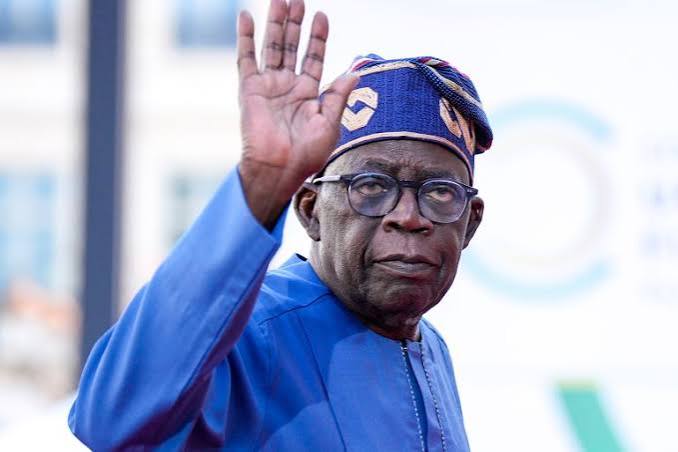
President Bola Tinubu is set to lead a fresh continental push to stop Africa’s mineral wealth from leaving the continent largely as raw materials, as he chairs a high-level summit on critical minerals in New York next month.
The meeting, convened by the Africa Minerals Strategy Group on September 21, 2026, will be held in Manhattan on the sidelines of the 81st session of the United Nations General Assembly.
Tinubu, who is the Chairman of the AMSG General Assembly, will chair the Third High-Level Roundtable on Critical Minerals Development in Africa, with the gathering expected to bring together African leaders and government representatives, ministers, global investors, development finance institutions, multilateral organisations, and executives from mining, technology and logistics companies.
A statement issued by AMSG on Sunday said the summit, themed “From Resources to Wealth: Continental Cooperation for Mineral Value Addition,” comes as major economies intensify the search for secure supplies of minerals required for electric vehicles, renewable energy, advanced manufacturing, artificial intelligence, digital infrastructure and defence technologies.
It read, “Africa is set to make a major push for greater control over its critical minerals future as the Africa Minerals Strategy Group convenes its Third High-Level Roundtable on Critical Minerals Development in Africa in Manhattan, New York, on September 21, 2026, on the sidelines of the 81st United Nations General Assembly.
“The Roundtable will be chaired by His Excellency Bola Tinubu, President of the Federal Republic of Nigeria and Chairperson of the AMSG General Assembly, underscoring Africa’s determination to place critical minerals at the centre of the continent’s industrial, economic and geopolitical agenda.”
Africa holds substantial deposits of several minerals at the centre of the global scramble, including lithium, copper, cobalt, graphite, manganese and rare earth elements.
However, the continent has historically exported much of its mineral resources in raw or minimally processed form, leaving other regions to capture a larger share of the value from refining, manufacturing and finished products built from the minerals.
The AMSG said the New York meeting would seek to change that pattern by moving African countries towards greater processing, manufacturing and integration of mineral value chains.
“The Roundtable will focus on how African countries can move beyond the traditional extract-and-export model to build integrated mineral value chains, attract transformative capital, strengthen continental cooperation and secure a greater share of the economic value generated from Africa’s mineral resources,” the group said.
The meeting will also mark the next phase of the Mutual Assured Development framework launched at the African Natural Resources and Energy Investment Summit held in Abuja earlier in 2026.
At the New York gathering, African leaders and policymakers are expected to unveil the proposed Continental Integration and Economic Assurance Declaration, which will provide a framework for cooperation on critical minerals.
The proposed declaration will cover policy coordination, investment mobilisation, local value addition, supply-chain security and efforts to strengthen Africa’s negotiating position in the global minerals economy.
A major component of the initiative is the proposed CIEAD Finance Window, designed to mobilise capital for mineral processing, infrastructure, technology and other segments required to build competitive value chains within Africa.
The AMSG said the initiative was intended to move beyond policy discussions towards concrete investment and implementation structures.
“Building on the Mutual Assured Development Framework, the New York gathering will mark a transition from strategic dialogue to structural execution,” the group said.
The meeting will be convened by the leadership of the AMSG, including the Minister of Solid Minerals Development, Dele Alake, who chairs the AMSG Ministerial Steering Committee, and the Secretary-General of the group, Moses Michael Engadu.
The Africa Finance Corporation, other development finance institutions, multilateral organisations and private-sector players in mining, technology, mineral traceability and logistics are also expected to participate.
Established in January 2024 by African governments, the AMSG is a continental intergovernmental organisation focused on coordinating critical minerals policy, investment alignment, minerals security and Africa’s engagement with global partners.
Its mission is to strengthen Africa’s control over its mineral resources and ensure that the continent captures more of the value created from the minerals increasingly shaping the future global economy.
Marcus Trescothick has insisted he wants to continue working with England’s Test team even though Mike Hussey has revealed an approach by incoming head coach Stephen Fleming to effectively replace him.
Trescothick has been a member of England’s backroom staff since 2021 and is currently leading the Test side on an interim basis ahead of Fleming’s arrival.
Former opening batsman Trescothick and returning captain Joe Root oversaw an innings and 103-run thrashing of Pakistan in the first Test at Headingley on Friday as the hosts went 1-0 up in a three-match series.
Former Australia international Hussey has said he is considering an offer to work as England’s Test batting coach, effectively Trescothick’s role, after being approached by Fleming, his former boss at Chennai Super Kings.
“I’d love to carry on, of course,” said Trescothick.
The 50-year-old, a member of England’s 2005 Ashes-winning team, added: “I’ve a huge amount of respect for Stephen and what he’s done in the game, he was a fantastic captain and leader, and has done a brilliant job doing what he’s done as a coach.
“It’s really not in my job (description) or position to judge that. We’ll wait until we get the tap on the shoulder.”
Iranian President Masoud Pezeshkian defended a recent memorandum of understanding as the best way for the country to move beyond what he described as a situation of “neither war nor peace.”
In a speech published by state-run IRNA early on Sunday, he said members of Iran’s Supreme National Security Council believed the memorandum represented the best possible agreement based on what he described as dignity, wisdom and the national interest.
“There is not a single provision in this agreement that amounts to capitulation,” Pezeshkian said. “The supreme leader sets the policies, and we will follow that path.
”The deal known as the Memorandum of Understanding that US President Donald Trump signed in June set an ambitious 60-day deadline for ending the war with Iran and reaching an accord on its nuclear program. That period ended last week, but the two sides remain far apart, with no signs of compromise on the crucial issue of reopening the Strait of Hormuz, vital to global shipping.
Pezeshkian also linked the agreement to Iran’s economic prospects, saying the country could not attract investment in this stalled phase.
“Capital and money are extremely sensitive to risk,” he said. “We have to remove this risk from the country.”
Nearly six months into the war with the United States and Israel, the Iranian economy is suffering under sanctions and a naval blockade.
Pezeshkian acknowledged that his country’s citizens face “many problems,” after the United States launched a new wave of sanctions seeking to further isolate its economy.
“I understand we have many problems in society right now. We are trying to prevent these as much as we can,” Pezeshkian said.
Pezeshkian said that, thanks to Trump, Iran was “in a full-scale economic, military and security war.”
“He says he is imposing the most crushing and terrifying sanctions on Iran,” Pezeshkian said.
Meanwhile, the hard-line new leader of Iran’s Supreme National Security Council warned Tehran’s neighbors against joining the new US effort to hurt Iran’s economy.
“If (Trump) wants to do something, we will retaliate in a seismic manner,” Mohsen Rezaei said in an interview with the state broadcaster that aired Saturday.
Rezaei was named this month as part of senior appointments widely seen as hardening Tehran’s political and military stance. His interview with IRIB is his most extensive public statement since then.
Rezaei said Iran would target oil-shipping routes out of the Persian Gulf — alternatives to the Strait of Hormuz — if neighbors join what he described as the economic war against Iran.
Trump in the past week has vowed to increase Iran’s pain by imposing an “unprecedented” level of economic warfare and isolation. Iran has lived under sanctions for years.
Foreign News
Iran FM, Pakistan Military Chief Discuss Regional Devts as US Eyes New Tehran Sanctions
Iran’s Foreign Minister Abbas Araghchi and Pakistan’s defense forces chief, Field Marshal Asim Munir, discussed regional developments and efforts to advance diplomatic solutions, Iranian state media reported on Sunday, as Washington plans to announce new sanctions targeting Tehran.
After nearly six months of war since the US and Israel launched airstrikes against Iran on February 28, the sides are not firing at each other but also showing no sign of pursuing peace talks.
Oil shipments are at a virtual standstill in the Strait of Hormuz, with Tehran threatening to strike any unauthorized oil tankers that try to transit the vital waterway, and Iran’s economy is already under immense pressure from sanctions.
Pakistan, which helped broker an interim US-Iran peace deal in June, has been engaged with the leaderships of the US and Iran in efforts to broker peace between the two countries since their conflict broke out in February this year.
“During the telephone conversation, both sides reviewed the latest regional developments and discussed various dimensions of the current situation,” Iran’s state-run IRNA new agency reported, following telephonic conversation between FM Araghchi and Field Marshal Munir.
“The two sides also exchanged views on diplomatic trends, ongoing efforts to advance political and diplomatic solutions, and ways to enhance bilateral consultations and cooperation.”
This is the second time Araghchi has spoken to Munir, who emerged as a key figure in US-Iran negotiations, about regional developments in less than a week.
The development comes after US Treasury Secretary Scott Bessent threatened “the toughest sanctions in history” on Iran. He has also urged cooperation with Washington by China, which buys more than 80 percent of Iran’s shipped oil, according to 2025 data from analytics firm Kpler. Beijing has urged diplomacy.
Iran’s Foreign Ministry spokesperson, Esmaeil Baghaei, said on Saturday the imminent US announcement of new economic sanctions was an “assertion of extraterritorial sovereignty over every independent member state of the United Nations.”
The US-Iran war has driven oil prices higher and created inflationary pressures, especially for countries like Pakistan who heavily depend on the Middle East for their fuel needs. Iran has frequently attacked its neighbors in its Gulf region since the war began, firing missiles and carrying out drone attacks the UAE, Saudi Arabia, Kuwait, Bahrain, Qatar and other countries.
Islamabad has repeatedly called for diplomacy to resolve the conflict and said last week it was making “all-out efforts” through direct and indirect channels to bring Washington and Tehran back to the negotiating table.


Kejelcha Breaks Men’s Half Marathon World Record by 29 Seconds
ShareEthiopia’s Yomif Kejelcha has broken the men’s half marathon world record, winning a World Athletics road race in Buenos Aires...


NSC Celebrates Nigeria Women’s Beach Volleyball Historic Olympic Qualification
ShareThe Director General of the National Sports Commission (NSC), Bukola Olopade, has announced that Nigeria’s Women’s Beach Volleyball team will...
Aiyedatiwa Appoints Chairman for Sports Council
ShareOndo State Governor, Lucky Aiyedatiwa has appointed Oladimeji Abimbola as the Chairman of the Ondo State Sports Council. This was...
Trescothick Eager to Keep England Job Despite Hussey Approach after Pakistan Win
ShareMarcus Trescothick has insisted he wants to continue working with England’s Test team even though Mike Hussey has revealed an...
Iran’s President Says US Memorandum Best Path Out of Stalled War
ShareIranian President Masoud Pezeshkian defended a recent memorandum of understanding as the best way for the country to move beyond...
Iran FM, Pakistan Military Chief Discuss Regional Devts as US Eyes New Tehran Sanctions
ShareIran’s Foreign Minister Abbas Araghchi and Pakistan’s defense forces chief, Field Marshal Asim Munir, discussed regional developments and efforts to...
UK MPs Urge Action against Israel over Journalist Killings
ShareBritish MPs have urged the government to take tougher action against Israel after an investigation by The Independent and Independent...
Carney Faces Crucial Test after Walking Away from Trump’s Deal
ShareThe United States and Canada have entered into uncharted territory. The longtime allies and economic partners, who have enjoyed free...
Dozens of Co-ordinated Arson Attacks Hit Southern Thailand
ShareMore than 50 co-ordinated arson and incendiary attacks “aimed at creating unrest” have been carried out across Thailand’s insurgency-hit south,...
Tanzania Moves to Curb HIV Infections Among Young People
ShareThe Tanzania Commission for AIDS (TACAIDS) has announced new measures to curb HIV infections among young people by expanding testing...