
NEWS
SEC Proposes N30m Registration Fee, N2bn Capital Requirement for Digital Asset Firms


By Tony Obiechina, Abuja
The Securities and Exchange Commission (SEC) has proposed a N30 million registration fee and a minimum capital requirement of N2 billion for digital asset exchanges and custodians operating in Nigeria.
The proposals are contained in the commission’s draft rules on “Digital and Virtual Asset Operations, Custody and Markets”, released on August 20.
Under the proposed framework, digital asset exchanges (DAXs), digital asset custodians (DACs), digital asset platform operators (DAPOs), digital asset offering platforms (DAOPs) and real-world asset tokenization platforms (RATOPs) would each pay a N30 million registration fee.
The SEC also proposed varying minimum capital requirements for operators. DAXs and DACs would each require N2 billion, while DAPOs, DAOPs and RATOPs would require N500 million each.
Virtual asset service providers (VASPs), meanwhile, would be required to maintain a minimum capital of N200 million, with applicants paying a N100,000 processing fee and a N300,000 application fee.
The commission also proposed that regulated entities maintain a fidelity insurance bond covering at least 25 per cent of their minimum paid-up capital.
For entities seeking to operate under the Accelerated Regulatory Incubation Programme (ARIP), the SEC proposed a N200,000 initial assessment fee and a N2 million application fee.
The draft framework further introduced ongoing supervisory charges linked to the turnover of regulated entities.
Under ARIP, a digital asset exchange would pay a supervisory fee of 0.015 per cent of adjusted turnover, while other entities would pay 0.0075 per cent.
Following full registration, the supervisory fee would rise to 0.025 per cent of adjusted turnover for DAXs and 0.015 per cent for other regulated entities.
According to the SEC, a fully registered digital asset exchange “shall pay a supervisory fee of 0.025% of adjusted turnover, payable quarterly or at such frequency as may be prescribed by the Commission”.
The commission added that other regulated entities under full registration would pay a supervisory fee of 0.015 per cent of adjusted turnover, payable quarterly or at such frequency as it prescribed.
The SEC also proposed limits on retail investors’ participation in digital asset offerings. Under the draft rules, a retail investor would not be allowed to invest more than N1 million per issuer or N10 million in aggregate across digital asset offerings within any 12-month period, unless the commission prescribes otherwise.
Where a retail investor seeks to invest more than N1 million or five per cent of the investor’s net worth, whichever is higher, in a digital asset offering, the platform would be required to meet additional investor-protection conditions before accepting the investment.
These include providing the investor with a prominent risk warning, obtaining the investor’s express consent to proceed and confirming that the investor understands the nature of the investment and the material risks involved.
The platform would also be required to assess whether the investment was appropriate for the investor, taking into account the investor’s knowledge, experience, financial circumstances and ability to bear potential losses.
The United States and Canada have entered into uncharted territory.
The longtime allies and economic partners, who have enjoyed free trade for decades, are now in an escalating trade war with no clear off ramp.
And for Prime Minister Mark Carney, the late night decision to suspend talks with President Donald Trump and to retaliate instead of agreeing to a deal that seemed in reach will be a significant political test.
He is one of the first world leaders to walk away from the negotiating table with the White House – and the outcome will be closely watched.
Both sides have blamed last-minute changes for torpedoing the tentative deal, with Carney saying the US “asked too much” and “offered too little”.
Carney’s decision will challenge the appetite among Canadians to accept some economic pain as Ottawa pushes for more US concessions.
After rejecting Trump’s high pressure tactics, and in choosing to hit back against the latest duties, Carney will need to convince Canadians that the economic pain is worth the cost of standing up to the Trump administration in search of a better agreement in the long run.
In remarks on Saturday, he said “we take this step confident this is in the best interest of Canada” and accused the US of a “power play” by seeking eleventh-hour changes.
Asked by a reporter whether the US and Canada were locked in a trade war, he replied: “You’re at war when you’re attacked – we got attacked.”
Switching to French, he said the spiralling trade dispute “wasn’t our choice”, adding: “Canada is strong, Canada is ready, Canada is united.”
There is no doubt this will cause pain on both sides of the border, with business facing more pressure from US duties and Canadian counter-tariffs.
Canada sends about 70% of its exports to the US, and the country is the top trading partner for a number of US states, with Michigan, Kentucky, Indiana and Ohio among the most exposed.
Carney came to power with a call for “elbows up” – an ice-hockey term for an aggressive approach – vowing to fight for Canada in the face of a Trump administration keen to exert economic pressure for its America First agenda.
Many Canadians have told pollsters that they are willing to fight.
A recent survey by Abacus Data suggested that around 36% of Canadians would support retaliating to US tariffs, while a Leger poll indicated that 56% of Canadians want the federal government to take a hard line and make no more concessions.
Canadians frustrated with the US tariffs have already chosen to avoid travelling there. The boycott has meant a loss of about C$3.3bn ($2.35bn; £1.75bn) in travel revenue for the US last year.
A decision by most provinces to remove US alcohol from store shelves has hammered that sector.
Based on US government trade data, US wine exports to Canada fell 78% year over year, a $357m loss in export value. The US distillers association reported similar numbers – saying provincial bans have caused exports of American spirits to drop by more than 70%.
The ban quickly became a point of frustration for the Trump administration.
Canada’s prime minister will also need to convince the provinces who have been less affected by the US trade dispute so far that walking away is a risk worth taking.
He briefed them on Saturday on the current state of affairs, and for now, they are showing a united front.
British Columbia Premier David Eby said he was committed to the “national project we are on”, while Ontario Premier Doug Ford said “we didn’t start this fight, but I can assure you, we’re going to win this fight.”
It’s still unclear exactly how the talks fell apart in the final hours, but by all accounts it came down to the wire.
Carney said that late US proposed terms “were unfair, uneconomic, and called into question the reliability of any deal”.
He added on Saturday those terms included demands on the automobile sector and “unacceptable” restrictions on trade deals with other countries.
In one biting line, he said of the Trump administration: “We recognise sometimes its signature is written in pencil.”
US trade representative Jamieson Greer, meanwhile, pointed to “new demands and walk backs of other commitments by Canada”.
In a statement on Friday, the Distilled Spirits Council of the United States suggested “Canadian provinces’ continued refusal to return US spirits products to store shelves has led to this outcome”.
There were also reports by Canadian media that US Commerce Secretary Howard Lutnick was unhappy with the deal.
And as details on an interim trade agreement with the US trickled out over last week, some provincial leaders, industry groups and political opponents raised concerns that the prime minister had not delivered on the fight he promised – though Carney denied that swayed his thinking.
Ford, usually one of the most vocal Canadian politicians on US tariffs, had been silent on the tentative deal all week. But in a letter sent to Carney, he raised concerns that an agreement under pressure would “embolden the United States to seek concession after concession”.
The province, which has a large manufacturing and vehicle sector, has been among the hardest hit regions in this trade dispute.
Conservative opposition leader Pierre Poilievre said that any agreement that included “one-sided” tariffs on Canadian industry would be “a bad deal”.
On Saturday, he backed Carney’s decision to walk away for now, saying: “Canada cannot accept one-sided tariffs that will de-industrialise our country.”
The collapse of this agreement calls into question the future of such talks, including an ongoing review of the US-Mexico-Canada free trade pact.
Now Carney – and Canada – must wait to see how Trump responds.
More than 50 co-ordinated arson and incendiary attacks “aimed at creating unrest” have been carried out across Thailand’s insurgency-hit south, the Thai military has said.
At least two people were injured, with a local government office building, a convenience store, and a stolen vehicle among the targets set on fire.
The incidents took place across the country’s southern border provinces between 20:00 local time (13:00 GMT) and midnight on Saturday, the military’s Internal Security Operations Command said in a statement.
Most were reported in Narathiwat province, with others occurring in neighbouring Yala and Pattani.
According to the Bangkok Post, two women were injured when a bomb exploded in Muang district in Narathiwat province.
Telecommunication towers were set on fire in several locations, and security officials warned residents not to touch suspicious objects.
Authorities imposed an overnight curfew in the Narathiwat province that was lifted on Sunday morning. No further attacks had been reported on Sunday.
No group has claimed responsibility for the arson attacks.
Since 2004, a low-level conflict has simmered in the southernmost provinces of Buddhist-majority Thailand, as rebels in the Muslim-majority region battle for greater autonomy. More than 7,000 people have been killed in the violence so far.
The insurgency is mainly led by the Barisan Revolusi Nasional.
Since talks facilitated by Malaysia began in 2013, the peace process has repeatedly stalled amid changing governments in Bangkok, with internal divisions on both sides.
In July, five soldiers were killed in a gun and bomb attack at a checkpoint in Narathiwat prompting the authorities to postpone a planned dialogue process.
Thai media report insurgents often target security officials and government buildings, sometimes ahead of visits by officials to the region.
Thai Prime Minister Anutin Charnvirakul and members of his cabinet are scheduled to make a two-day visit to the city of Hat Yai in southern Songkhla province next week to discuss investment projects, flooding prevention and security issues
The Tanzania Commission for AIDS (TACAIDS) has announced new measures to curb HIV infections among young people by expanding testing services, strengthening prevention education and increasing the use of technology.
TACAIDS Executive Director, Adam Mrisho, made the announcement during a meeting of the Parliamentary Standing Committee on Health and HIV/AIDS in Dodoma, the capital.
Mrisho said about 90,000 community health workers would receive training to provide HIV prevention and self-testing services, particularly to people living in rural areas.
He said the initiative was part of government efforts to reduce new HIV infections and achieve the goal of ending AIDS as a public health threat by 2030.
“The commission is committed to ensuring that education reaches communities to encourage people to test and promote the use of medication among those diagnosed with HIV,” Mrisho said.
He added that TACAIDS would strengthen cooperation with the private sector and improve 32 knowledge centres that provide HIV prevention education, testing and antiretroviral services.
Mrisho said the centres would also target young people, including long-distance truck drivers, who required greater access to HIV information, prevention services and treatment.
Palamagamba Kabudi, Minister of State in the Prime Minister’s Office responsible for Policy, Parliament, Coordination and Persons with Disabilities, called for stronger multisectoral cooperation and increased domestic financing for the HIV response.
He urged authorities to bring HIV services closer to communities and strengthen technology-based interventions, particularly those targeting young people and women.
Johannes Lukumay, Chairperson of the parliamentary committee, urged the government to intensify voluntary HIV testing and education in workplaces, transport corridors and regions with high infection rates.


Carney Faces Crucial Test after Walking Away from Trump’s Deal
ShareThe United States and Canada have entered into uncharted territory. The longtime allies and economic partners, who have enjoyed free...
Dozens of Co-ordinated Arson Attacks Hit Southern Thailand
ShareMore than 50 co-ordinated arson and incendiary attacks “aimed at creating unrest” have been carried out across Thailand’s insurgency-hit south,...
Tanzania Moves to Curb HIV Infections Among Young People
ShareThe Tanzania Commission for AIDS (TACAIDS) has announced new measures to curb HIV infections among young people by expanding testing...
DR Congo, M23 Rebels Agree Roadmap for Peace Talks
ShareThe Democratic Republic of Congo government and the Rwanda-backed M23 rebel group have agreed on a roadmap for peace talks....
Ethiopia’s Digital ID System to Boost GDP by 7 Per Cent — PM
ShareEthiopian Prime Minister Abiy Ahmed has said the country’s national digital identification system (Fayda) has the potential to increase gross...
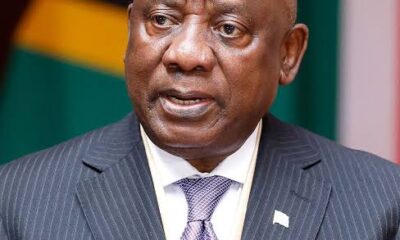

South Africa Unveils Gov’t-business Partnership to Boost Jobs, Growth
ShareSouth African President Cyril Ramaphosa has launched the third phase of the government-business partnership, aimed at creating one million jobs...

China, UN Agree to Strengthen Cooperation for Sierra Leone’s Development
ShareChina and the United Nations (UN) have discussed strengthening cooperation to support Sierra Leone’s development priorities, with emphasis on agriculture,...
Iran Develops Plant-based Alternatives to Chemical Pesticides
ShareIranian researchers have developed a plant-based biological treatment targeting the Mediterranean fruit fly. The development offers a potential alternative to...
Beyond Kano Mass Wedding: What Should Governments Truly be Funding?
ShareBy Ebuka Ukoh Blurb: While acknowledging that marriage is a legitimate social goal, this piece ultimately calls for a shift...


APC Sweeps Ebonyi LG Polls, Wins 13 Chairmanship Seats
ShareThe All Progressives Congress (APC) has won all the 13 chairmanship and 171 councillorship seats in the Aug. 22 Local...