
Foreign News
South Africa Unveils Gov’t-business Partnership to Boost Jobs, Growth

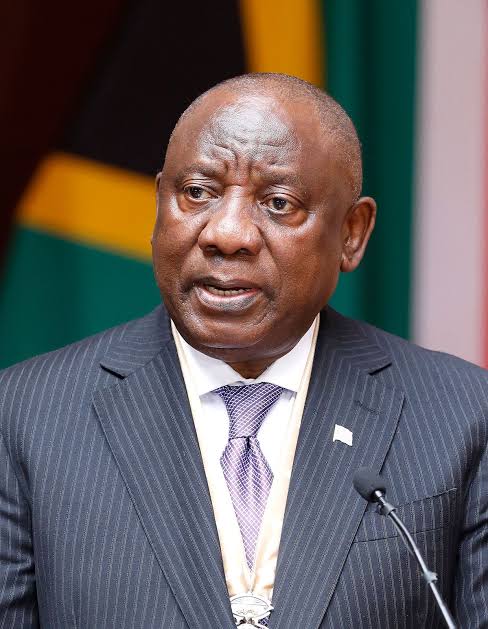
South African President Cyril Ramaphosa has launched the third phase of the government-business partnership, aimed at creating one million jobs and raising annual economic growth in the country.
Speaking at the launch in Johannesburg, Ramaphosa said the move would create jobs and raise annual economic growth to more than three per cent by 2030.
He said the government would provide policy certainty, efficient regulation, capable institutions and reliable public infrastructure, while improving the ease of doing business.
He added that the partnership would establish work streams across sectors in cooperation with business, with clear objectives, measurable targets, firm timelines, and accountable leaders.
“Where implementation falls behind, we must intervene rapidly. Where policies or regulations are holding back investment without serving a legitimate public purpose, they must be reviewed.
“Where institutional capacity is weak, it must be strengthened. And where corruption or vested interests obstruct progress, they must be confronted,” Ramaphosa said.
Ramaphosa said businesses have an important role to play in investing, expanding production, opening new markets, developing local suppliers, and creating jobs.
He called on businesses to invest in skills, support small businesses, and pay suppliers on time, while stressing that the partnership should operate transparently and within the law without weakening the state’s regulatory responsibilities.
China and the United Nations (UN) have discussed strengthening cooperation to support Sierra Leone’s development priorities, with emphasis on agriculture, health, education, peacebuilding, and evidence-based policymaking.
The discussions took place during a courtesy call by UN Resident Coordinator Seraphine Wakana on Chinese Ambassador to Sierra Leone Zhao Yong in the capital Freetown.
Wakana congratulated Zhao on his appointment and commended China’s support to Sierra Leone, including during the country’s tenure as a non-permanent member of the UN Security Council from 2024 to 2025.
She stressed the need for coordinated partnerships to advance Sierra Leone’s national development agenda, while highlighting constitutional reform, inclusive elections, youth and women’s empowerment and security, cross-border challenges.
Wakana also underscored the importance of strengthening national data systems to support evidence-based policymaking and development planning.
She presented the UN Sustainable Development Cooperation Framework 2025-2030, aligned with Sierra Leone’s Medium-Term National Development Plan 2024-2030, and called for stronger collaboration with China, particularly in agriculture.
Zhao reaffirmed China’s commitment to supporting Sierra Leone in partnership with the government and the UN, highlighting more than five decades of friendship between the two countries.
He said China’s development cooperation focuses on priorities under Sierra Leone’s “Big Five Game Changers,” particularly agriculture, health and education.
Zhao announced that the 15th batch of Chinese agricultural experts would soon arrive in Sierra Leone to support agricultural development and food security.
He also highlighted China’s deployment of three medical teams to Sierra Leone and its support for human capital development through training opportunities.
Both sides emphasised the value of closer coordination among Sierra Leone, the UN and China in advancing sustainable development, peace and national prosperity.
Iranian researchers have developed a plant-based biological treatment targeting the Mediterranean fruit fly.
The development offers a potential alternative to conventional chemical pesticides in the country’s agricultural sector.
It is part of a broader effort in Iran to expand biological pest-control technologies and reduce reliance on chemical treatments.
The researchers are focusing on solutions that can be deployed against economically important agricultural pests while supporting more sustainable crop protection.
The newly developed product has progressed from laboratory research towards practical agricultural applications.
The aim is to provide farmers with a locally produced tool for controlling Mediterranean fruit fly populations.
The initiative highlights the growing role of biotechnology in Iran’s efforts to strengthen food security.
Biological pest-control methods can complement conventional crop protection by targeting specific pests and potentially reducing the environmental burden associated with widespread pesticide use.
The Mediterranean fruit fly is particularly significant because it attacks a wide range of fruit and horticultural crops.
Controlling its spread is therefore important for protecting agricultural yields and limiting economic losses for producers.
Iranian efforts to develop domestic biological treatments also form part of a wider push to build technological capacity within the country’s agricultural sector.
Researchers are increasingly examining biological agents, plant-derived compounds and other non-chemical approaches as alternatives to traditional pest-control methods.
The development could provide a foundation for further research into locally adapted biological pesticides and integrated pest-management strategies.
This is particularly as agriculture faces additional pressures from climate change, water scarcity and the spread of crop pests.
South Korean and US troops will begin their annual exercises next week to beef up readiness against North Korean threats, the allies announced Monday, days after North Korea resumed ballistic missile testing activities that are banned by the UN
The Ulchi Freedom Shield is to begin next Monday for a 11-day run and its scale will be similar to previous years with about 18,000 South Korean soldiers participating in it, South Korean military spokesperson Jang Do-young told reporters.
Speaking at the same news conference, US military spokesperson Ryan Donald said by incorporating realistic threats including “lessons from recent conflicts,” the exercise will serve as an opportunity to further strengthen the alliance’s readiness and capabilities through combined, joint, all-domain operations.
He cited North Korea’s dispatch of troops to support Russia’s war against Ukraine in recent years.
“DPRK soldiers have been deployed and fought in Ukraine and they’ve taken those lessons they learned there and brought them back to North Korea,” Donald said, using the abbreviation for North Korea’s full name. “That changes the DPRK capability and our training accounts for that threat.”
The upcoming summertime drill is one of the two main combined exercises conducted by South Korea and US militaries annually, along with their springtime training. The US military said the Ulchi Freedom Shield features “live, virtual, constructive and field-based training.”
North Korea had no immediate comments. But it has steadfastly described any major US-South Korean military drills as a practice to invade North Korea and responded with provocative weapons tests and fiery rhetoric. South Korean and US officials have said their joint exercises are defensive in nature.
On Thursday, South Korea, the US and Japan detected the launch of a short-range ballistic missile from North Korea in what was the North’s first ballistic weapons testing activity since late June. The missile landed in the waters of North Korea’s east coast.
South Korea and Japan condemned the launch as a provocation or a threat because multiple UN Security Council resolutions ban North Korea from engaging in any ballistic activities. The US Pacific Command said the US remains committed to the defense of the US homeland and its allies in the region.
North Korea has been pushing hard to enlarge its nuclear and missile arsenals since leader Kim Jong Un’s high-stakes diplomacy with US President Donald Trump collapsed in 2019. Experts say Kim likely believes a bigger weapons arsenal would increase his chances for wresting more concessions from the US in future negotiations.
North Korea’s supply of troops and ammunition to Russia has raised concerns among South Korea, the US and others that Russia might have transferred North Korea sensitive technologies that can increase the danger of its nuclear and missile programs. Experts have assessed North Korea’s troop dispatch has given it crucial battlefield experience as well.



South Africa Unveils Gov’t-business Partnership to Boost Jobs, Growth
ShareSouth African President Cyril Ramaphosa has launched the third phase of the government-business partnership, aimed at creating one million jobs...

China, UN Agree to Strengthen Cooperation for Sierra Leone’s Development
ShareChina and the United Nations (UN) have discussed strengthening cooperation to support Sierra Leone’s development priorities, with emphasis on agriculture,...
Iran Develops Plant-based Alternatives to Chemical Pesticides
ShareIranian researchers have developed a plant-based biological treatment targeting the Mediterranean fruit fly. The development offers a potential alternative to...
Beyond Kano Mass Wedding: What Should Governments Truly be Funding?
ShareBy Ebuka Ukoh Blurb: While acknowledging that marriage is a legitimate social goal, this piece ultimately calls for a shift...


APC Sweeps Ebonyi LG Polls, Wins 13 Chairmanship Seats
ShareThe All Progressives Congress (APC) has won all the 13 chairmanship and 171 councillorship seats in the Aug. 22 Local...

Capacity Movement Hails Tinubu, Uba Sani over Shettima’s Appointment
ShareThe Capacity Movement Project 2027 has commended the Presidency and Kaduna State Governor, Senator Uba Sani, for the appointment of...
Bayelsa Receives Twon-Brass Draft Constitution
ShareFrom Mike Tayese, Yenagoa The Bayelsa State Government has received the final draft copy of the constitution of Twon-Brass Kingdom...

Oborevwori Pledges Infrastructure, Power Support to Boost Delta’s Agricultural Investments
ShareFrom Francis Sadhere, Delta Delta State Governor, Rt. Hon. Sheriff Oborevwori, has pledged stronger government support for genuine farmers and...

Tinubu to Chair Africa Minerals Summit in New York
SharePresident Bola Tinubu is set to lead a fresh continental push to stop Africa’s mineral wealth from leaving the continent...


SEC Proposes N30m Registration Fee, N2bn Capital Requirement for Digital Asset Firms
ShareBy Tony Obiechina, Abuja The Securities and Exchange Commission (SEC) has proposed a N30 million registration fee and a minimum...