
NEWS
Troops Neutralise Notorious Terrorist Auta, others in Zamfara

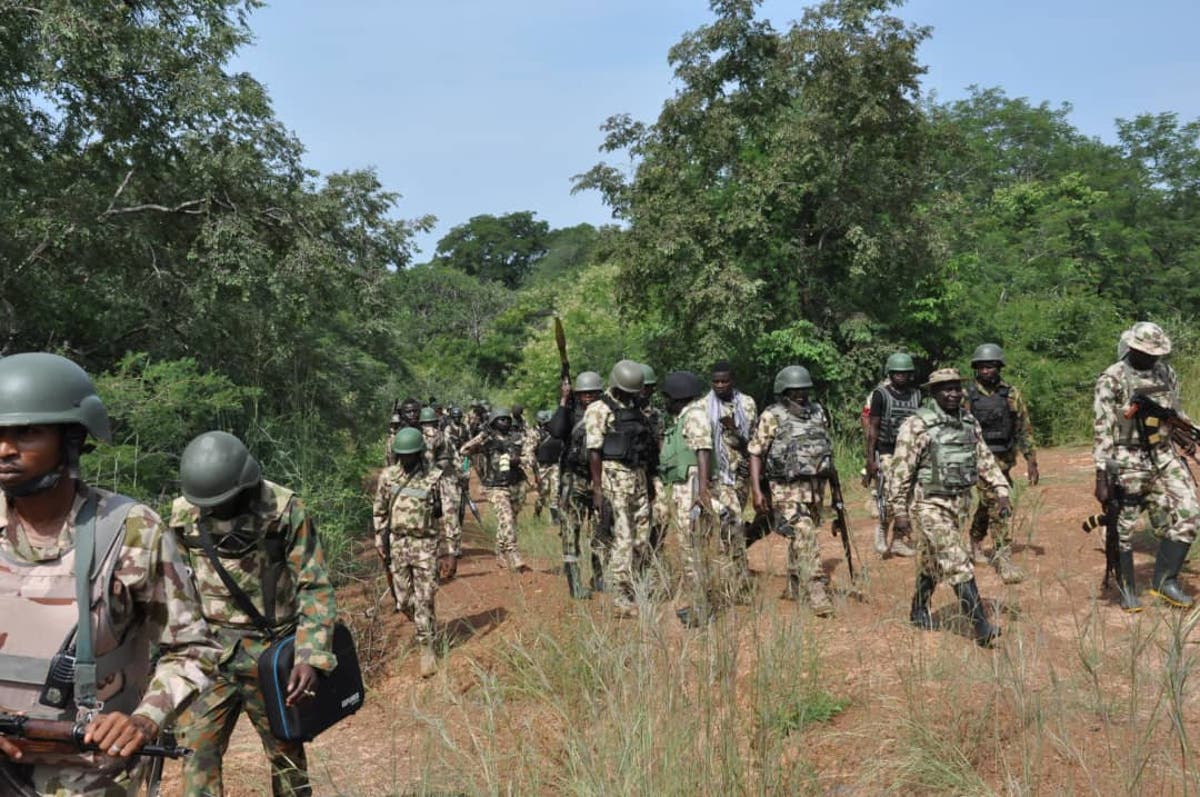
Troops of Mobile Strike Team, under Operation Fasan Yamma (OPFY), say they have killed scores of terrorists in a decisive operation around Ƙunchin Kalgo in Tsafe Local Government of Zamfara.The Director, Defence Media Operations, Maj.-Gen. Markus Kangye, made this known on Thursday in Abuja.
Kangye said that a notorious terrorist, known as Auta, alongside his associates Abdul Jamilu and one Salisu, were among those killed in the encounter. According to him, these terrorists were linked to multiple acts of violence and terrorism within the general area.“The operation marks a significant blow to criminal elements, destabilizing peace and security in the area.“Preliminary intelligence indicates that two additional terrorist kingpins, including one identified as Babayé were eliminated during the operation.“In a separate incident, Sale Ado Madele (alias Sarki), the eldest son of known bandit leader Ado Alieru, was also reportedly killed,” he said.Kangye said the troops had in another encounter, killed additional 10 terrorists who congregated near a filling station in Danjibga.He said the terrorist were believed to be part of a syndicate brought together by Dogo Sule for a planned attack.“The Nigerian Armed Forces remain committed to safeguarding lives and restoring lasting peace across Zamfara and the wider North-West region.“This operation underscores our resolve to dismantle terrorist networks and bring perpetrators of violence to justice,” he said. (NAN)The Nigerian Insurers Association (NIA) has commended the National Insurance Commission (NAICOM) for its fair, transparent and structured implementation of the industry’s recapitalisation exercise.
The Chairman of NIA, Ebelechukwu Nwachukwu, gave the commendation in a statement on Thursday in Lagos.
She said that the minimum capital requirements’ review was carried out under the Nigerian Insurance Industry Reform Act (NIIRA) 2025.
Nwachukwu noted that the clear regulatory guidelines, systematic verification, defined timelines, and rigorous supervisory oversight provided operators with a credible framework to navigate the recapitalisation exercise successfully.
“The exercise underscores NAICOM’s commitment to regulatory fairness and orderly market development.
“This marks a pivotal milestone in bolstering the financial capacity, stability, and global competitiveness of the Nigerian insurance sector,” she said.
Nwachukwu assured the Apex regulator of the association’s unwavering support in leveraging the gains of the recapitalisation process.
She said this was to drive sustainable industry growth, enforce high market conduct and standards, elevate consumer trust and expand the sector’s contribution to the national economy.
The NIA chairman extended warm congratulations to the 43 insurance and reinsurance companies that had successfully met the prescribed Minimum Capital Requirements.
She commended their resilience, professional discipline, and proactive alignment with evolving regulatory standards.
“The successful outcome of this recapitalisation exercise is a major win not just for regulators and operators, but for policyholders, investors, and the wider Nigerian economy.
“A well-capitalised insurance sector is better equipped to honour obligations promptly, underwrite complex and large-scale risks and serve as a reliable pillar of national economic growth,” she said.
Nwachukwu expressed the association’s solidarity with the eight insurance companies currently undergoing final verification and regulatory review.
She encouraged them to remain confident as NAICOM concluded the exercise within the stipulated 14-day window.
Reaffirming the association’s commitment to its entire membership, Nwachukwu emphasised that the NIA would continue to serve as a robust platform for advocacy, collaboration and constructive engagement with regulatory authorities throughout the transition period.
She reassured the insuring public and business community that the Nigerian insurance industry would emerge from this exercise significantly stronger, more resilient, and fully prepared to drive financial stability across the country.

By Tony Obiechina, Abuja
The Central Bank of Nigeria (CBN) has reaffirmed its commitment to maintaining monetary and financial system stability, pledging to sustain policies aimed at curbing inflation, ensuring price stability and fostering long-term economic growth.
The assurance was given during a one-day stakeholders’ fair held in Bauchi, where the apex bank engaged the public on its policies, promoted financial inclusion and encouraged greater awareness of its services.
The Acting Director of Corporate Communications and Investor Relations, Hakama Sidi-Ali, represented by the CBN Branch Controller in Bauchi, Michael Dalyop, said recent reforms introduced by the bank were beginning to deliver positive results.
According to her, the reforms have contributed to improved macroeconomic stability, easing inflation and stronger confidence in the foreign exchange market.
She disclosed that Nigeria’s external reserves climbed above $52.5 billion as of July 17, 2026, marking the highest level in 17 years and surpassing the CBN’s annual target. The increase, she said, was driven by stronger foreign exchange inflows, renewed investor confidence and increased participation across asset classes.
Sidi-Ali also noted that inflation continued to moderate, with headline inflation falling from 15.93 per cent in May to 15.91 per cent in June 2026. Food and core inflation also declined, a trend she attributed to disciplined monetary tightening, exchange rate reforms and improved market transparency.
She added that the naira had continued to strengthen, with the gap between the official exchange rate and Bureau De Change rates narrowing to below two per cent, reflecting increased stability in the foreign exchange market.
The CBN highlighted several reforms implemented over the past 34 months, including the unification of the foreign exchange market, banking sector recapitalisation, the introduction of the Non-Resident Bank Verification Number, the B-Match foreign exchange trading platform, the Nigeria Payments System Vision 2028 and a 75 per cent Cash Reserve Ratio on non-Treasury Single Account public sector deposits to improve liquidity management and reduce inflationary pressure.
The bank also announced its collaboration with the Financial Markets Dealers Association to introduce the Nigerian Overnight Financing Rate, a transparent benchmark for short-term funding transactions aligned with international best practices.
Sidi-Ali said the stakeholders’ fair was designed to deepen financial inclusion, promote alternative payment channels and strengthen public engagement with the CBN. She encouraged participants to seek information on financial consumer protection, payment system innovations, microfinance, monetary policy and currency management.
She also reiterated the bank’s warning against the abuse of the naira, urging Nigerians to avoid spraying, hawking, mutilating or counterfeiting the national currency, while advising the public to rely only on verified CBN platforms for information.
Also speaking, Bauchi CBN Branch Controller Michael Dalyop, represented by Assistant Director Salahu Bello Mohammed, said the bank’s 2024–2028 strategy was focused on achieving monetary, price and financial system stability to drive inclusive economic growth.
He said reforms in the foreign exchange market had improved transparency, strengthened investor confidence and helped boost the country’s foreign reserves beyond $50 billion. He added that inflation was on a downward trend and that the successful recapitalisation of banks had strengthened the financial sector’s capacity to support businesses and economic development.
Dalyop urged Nigerians to take advantage of formal financial services by keeping their money in banks instead of at home and called on citizens to treat the naira with dignity and respect.
CBN Reaffirms Commitment to Monetary Stability, Economic Growth
By Tony Obiechina, Abuja
The Central Bank of Nigeria (CBN) has reaffirmed its commitment to maintaining monetary and financial system stability, pledging to sustain policies aimed at curbing inflation, ensuring price stability and fostering long-term economic growth.
The assurance was given during a one-day stakeholders’ fair held in Bauchi, where the apex bank engaged the public on its policies, promoted financial inclusion and encouraged greater awareness of its services.
The Acting Director of Corporate Communications and Investor Relations, Hakama Sidi-Ali, represented by the CBN Branch Controller in Bauchi, Michael Dalyop, said recent reforms introduced by the bank were beginning to deliver positive results.
According to her, the reforms have contributed to improved macroeconomic stability, easing inflation and stronger confidence in the foreign exchange market.
She disclosed that Nigeria’s external reserves climbed above $52.5 billion as of July 17, 2026, marking the highest level in 17 years and surpassing the CBN’s annual target. The increase, she said, was driven by stronger foreign exchange inflows, renewed investor confidence and increased participation across asset classes.
Sidi-Ali also noted that inflation continued to moderate, with headline inflation falling from 15.93 per cent in May to 15.91 per cent in June 2026. Food and core inflation also declined, a trend she attributed to disciplined monetary tightening, exchange rate reforms and improved market transparency.
She added that the naira had continued to strengthen, with the gap between the official exchange rate and Bureau De Change rates narrowing to below two per cent, reflecting increased stability in the foreign exchange market.
The CBN highlighted several reforms implemented over the past 34 months, including the unification of the foreign exchange market, banking sector recapitalisation, the introduction of the Non-Resident Bank Verification Number, the B-Match foreign exchange trading platform, the Nigeria Payments System Vision 2028 and a 75 per cent Cash Reserve Ratio on non-Treasury Single Account public sector deposits to improve liquidity management and reduce inflationary pressure.
The bank also announced its collaboration with the Financial Markets Dealers Association to introduce the Nigerian Overnight Financing Rate, a transparent benchmark for short-term funding transactions aligned with international best practices.
Sidi-Ali said the stakeholders’ fair was designed to deepen financial inclusion, promote alternative payment channels and strengthen public engagement with the CBN. She encouraged participants to seek information on financial consumer protection, payment system innovations, microfinance, monetary policy and currency management.
She also reiterated the bank’s warning against the abuse of the naira, urging Nigerians to avoid spraying, hawking, mutilating or counterfeiting the national currency, while advising the public to rely only on verified CBN platforms for information.
Also speaking, Bauchi CBN Branch Controller Michael Dalyop, represented by Assistant Director Salahu Bello Mohammed, said the bank’s 2024–2028 strategy was focused on achieving monetary, price and financial system stability to drive inclusive economic growth.
He said reforms in the foreign exchange market had improved transparency, strengthened investor confidence and helped boost the country’s foreign reserves beyond $50 billion. He added that inflation was on a downward trend and that the successful recapitalisation of banks had strengthened the financial sector’s capacity to support businesses and economic development.
Dalyop urged Nigerians to take advantage of formal financial services by keeping their money in banks instead of at home and called on citizens to treat the naira with dignity and respect.
By David Torough, Abuja
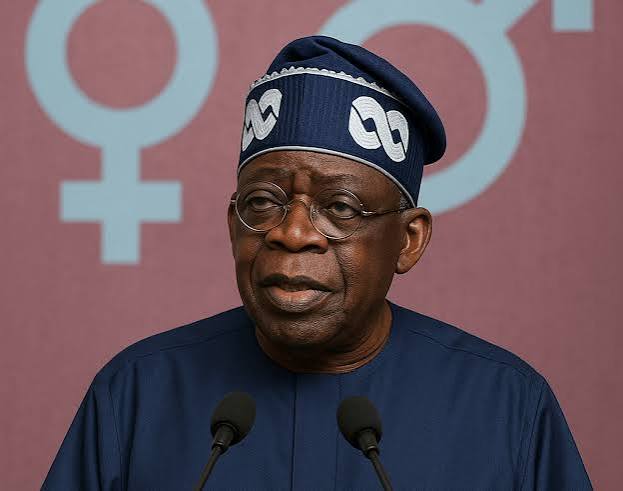
President Bola Tinubu on Thursday ordered the Economic and Financial Crimes Commission (EFCC) to immediately return to court and vacate the order freezing the bank accounts of the Osun State Government, describing the timing of the action as embarrassing and capable of undermining public confidence in the democratic process.
The President, in a statement issued by the State House, stressed that while he remained committed to the operational independence of anti-corruption agencies, the decision to freeze the state’s accounts just days before the Osun governorship election created an unfortunate perception that federal institutions could be influencing the electoral process.
Tinubu said he was not questioning the EFCC’s statutory powers or the legality of its investigation but was compelled to intervene because every action of a federal institution is ultimately attributed to the Presidency.
“I feel deeply embarrassed not by the EFCC’s exercise of its mandate backed by a court order, but by the timing of the agency’s action,” the President said, adding that he had not been fully briefed on the circumstances leading to the commission’s decision.
He reiterated that since assuming office, he had deliberately refrained from interfering in the operations of the EFCC and other law enforcement agencies, insisting that independent institutions are essential to the rule of law and democratic governance.
However, Tinubu said the proximity of the Osun governorship election made it imperative to avoid any action capable of creating the impression that the Federal Government was using the EFCC to influence the outcome of the poll.
“Nothing ought to be done to give an impression that the EFCC or any other agency of the Federal Government is being used to interfere with the election,” he said.
Consequently, the President directed the anti-graft agency to immediately return to court to vacate the freeze order and discontinue the action against the Osun State Government in the overriding public interest.
The EFCC had secured the court order as part of an ongoing investigation into the alleged diversion of about N11 billion in public funds by the Osun State Government.
The commission maintained that its action was lawful and unrelated to the forthcoming governorship election, arguing that investigators uncovered suspicious transfers from government accounts into several corporate entities and had to act swiftly to prevent further movement of funds.
EFCC spokesman and Director of Public Affairs, Wilson Uwujaren, also defended the commission’s powers, insisting that under the law, the agency could place temporary restrictions on suspicious accounts before obtaining judicial approval for an extended freeze.
The commission further rejected allegations that its intervention was politically motivated.
The account freeze, however, drew widespread criticism from the Osun State Government, opposition parties, the Nigerian Bar Association and legal practitioners, who questioned both the timing and legality of the action.
Governor Ademola Adeleke denied allegations of financial misconduct, dismissed claims that his administration diverted public funds and directed the state’s Attorney-General to challenge the freeze order in court.
Tinubu’s intervention is expected to ease political tensions ahead of the governorship election, while renewing debate over the balance between anti-corruption enforcement and the need to safeguard public confidence in the electoral process.




FG Backs Miss Nigeria for 75th Miss World Pageant
ShareThe Federal Government has rallied support for Miss Nigeria, Miss Tamunosoye Karibi-George, as the country’s official representative to the 75th...


Charlie Boy Addresses Fans who Call Him Gay
ShareVeteran Nigerian musician Charles Oputa, popularly known as Charlie Boy, has addressed fans who have openly questioned his sexuality and...


Why I Quit Legal Practice for Music – Falz
SharePopular Nigerian rapper and actor, Folarin Falana, has explained why he stepped away from active legal practice, citing the growing...
I’d Rather Chew Grass than Bite Portable, Charles Okocha Breaks Silence
ShareNollywood actor, Charles Okocha, has denied the allegation by singer, Habeeb Okikiola, popularly known as Portable, that he bit him...
FG Expands Renewable Power with 60.82MW Mini-grid Rollout
ShareThe Federal Government, through the Rural Electrification Agency, is set to inject a cumulative 60.82 megawatts of renewable power into...
NIA Commends NAICOM’s Transparency, Reassures Insurers of Continued Support
ShareThe Nigerian Insurers Association (NIA) has commended the National Insurance Commission (NAICOM) for its fair, transparent and structured implementation of...


SEC Moves to Curb Unclaimed Funds, Strengthen Investor Protection
ShareBy Tony Obiechina, Abuja The Securities and Exchange Commission (SEC) has intensified efforts to reduce unclaimed funds and other dormant...
Crime Has No Nationality: Beyond Stereotypes
ShareBy Ukertor Gabriel Moti The recent resurgence and continued anti-immigrant campaigns in South Africa, spearheaded by groups such as March...


BBNaija: But What Are We Showing The Society?
ShareBy Idris Rufai Big Brother Naija, popularly known as BBNaija, has become one of Nigeria’s most watched and discussed reality...
FG Spends N1.16trn on Fuel Subsidy as Crude, Products Losses Account for N16.20b
ShareBy Eze Okechukwu, Abuja The Federal Government of Nigeria spent a whopping N1.16trillion on fuel subsidy, losing N16.20billion to crude...