
BUSINESS
Troops Recover 2.8M Litres of Stolen Crude Oil, Arrest 25 Criminals in Niger-Delta


By Gom Mirian, Abuja
The Military High Command on Thursday said troops of Operation Delta Safe have in the last two weeks made a recovery of two Million Eight Hundred and Fifty-Two Thousand, Nine Hundred (2,852,900) litres of stolen crude oil as well as three Million Eight Hundred and Sixty-Two Thousand (3,862,000) litres of Automotive Gas Oil (AGO).
The Director, Defence Media Operations, Maj. Gen. Bernard Onyeuko who expressed satisfaction with brilliant performance of the nation’s troops at the various theatres of operations against criminal elements within the period under review, said its troops also destroyed 30 illegal refining sites while 25 of the economic saboteurs associated with pipeline vandalism were arrested.
Onyeuko while acquainting the general pupulace of the Armed Forces of Nigeria and other security agencies operational engagements against security challenges nationwide in Abuja, said that 29 cooking ovens, 9 receivers, 12 coolants, 73 storage metal tanks, 248 polythene bags, 16 boilers, 8 pumping machines, 14 wooden boats, 29 dugout pits, 2 speed boats, 4 trucks, 1 bus, 44 drums of AGO as well as 3 outboard engines were recovered from the refining sites.
He added that 1 Barretta pistol, 3 locally made pistol as well as 8 explosive devices evacuated 57 galvanized pipes were also seized during the encounter.
According to him, the recovered items and apprehended criminals have been handed over to the appropriate authorities for further actions.
He explained that operations were conducted in different locations in creeks, villages, towns and communities in Rivers, Bayelsa,Delta and Abia states.
Speaking further on the operations, Onyeuko said troops of OPERATION HADIN KAI within the period under review sustained aggressive posture by conducting clearance operations in the fight against Boko Haram Terrorist/Islam State West Africa Province Terrorists and other criminal element in the theatre of operations.
He said the troops operational efforts yielded significant results in some locations in the North East which led to the surrendering of 174 terrorists and their families comprising 43 adult males, 58 females and 73 children from villages around Bama and Dikwa local government area of Borno State.
He further explained that, “own troops during a robust clearance operation engaged Islamic State West Africa Province terrorist at Mandara Mountain in Gwoza Local Government Area and Timbuktu triangle in Damboa Local Government Area Borno State.During the encounter 10 terrorists were neutralized.
“Troops also recovered 4 AA-guns, 2,000 rounds of 12.7mm ammunition, 10 bicycles, 1 unexploded Improvised Explosive Device, 1 MOWAG APC, 1 truck mounted with 122 artillery gun, 1 machine gun, 4 AK 47 rifles, 1 60mm motar tube with 5 bombs.
” Similarly, troops had an encounter with Islamic State West Africa Province terrorists along Debiro-Shaffa Village in Hawul Local Government Area 2 terrorists were neutralized and recovered 1 AK 47 rifle, 3 magazines, 143 rounds of 7.62mm special, 1 dane gun, 1 pump action rifle and 6 cartridges, ” Onyeuko explained.

By Tony Obiechina, Abuja
The African Tax Administration Forum (ATAF) ATAF-supported audit interventions in member countries generated USD 907.8 million in tax assessments, of which USD 685.8 million was successfully collected.
The revenue gains included $47.
1 million from transfer pricing audits, $3. 57 million from digital services tax and $142.96 million from cross-border Value Added Tax compliance measures.Throughout the year, ATAF provided technical assistance to 35 countries, trained 2,433 tax officials from 43 countries, including Nigeria, and supported legislative and administrative reforms across the continent.
This is contained in the recently released 2025 Annual Report of ATAF, highlighting the organisation’s growing contribution to strengthening tax systems, advancing domestic revenue mobilisation and amplifying Africa’s voice in global tax policy discussions.
The organisation said the additional revenue is helping governments strengthen public finances and improve their capacity to fund infrastructure, healthcare, education and other development priorities without excessive dependence on borrowing.
The report reflects a year of significant progress across ATAF’s strategic priorities, including capacity building, technical assistance, research, digital transformation, international tax cooperation, and institutional strengthening. In 2025 alone.
The report also highlights ATAF’s expanding role in shaping global tax discourse and ensuring African perspectives are reflected in international tax policy processes, including engagements with the United Nations Framework Convention on International Tax Cooperation and broader discussions on illicit financial flows, digital taxation, and tax transparency.
Speaking on the release of the report, ATAF Executive Secretary, Mary Baine, said the report demonstrates the growing urgency and importance of domestic resource mobilisation in Africa’s development agenda.
She added that ATAF stands ready, working with members, partners, and all stakeholders committed to strengthening development financing through DRM, to support reforms that deliver real impact in the lives of Africa’s people.
The African Tax Administration Forum (ATAF) has said its growing technical assistance programmes across the continent are helping African countries strengthen tax administration, improve revenue collection and reduce opportunities for tax avoidance by multinational companies and wealthy individuals.
According to ATAF’s 2025 Annual Report, the organisation has expanded its technical support to member countries through specialised programmes aimed at improving domestic resource mobilisation at a time many African governments are facing rising debt burdens, weak revenue generation and growing development financing needs.
The report explained that ATAF’s interventions have supported the revision of transfer pricing laws in several African countries to ensure multinational corporations pay fair taxes in jurisdictions where economic activities take place.
It stated that the organisation also assisted tax authorities in introducing anti-tax avoidance measures designed to block aggressive tax planning schemes that often deprive governments of badly needed revenue.
ATAF said part of its support included the establishment of dedicated transfer pricing units within tax administrations to improve the monitoring of multinational companies and strengthen the ability of African tax authorities to detect profit shifting and tax base erosion.
The report added that the organisation also helped countries create exchange-of-information units to improve cooperation among tax authorities and support access to cross-border financial information needed to investigate tax evasion and illicit financial flows.
ATAF also said it is strengthening its internal systems to improve governance, financial sustainability and operational efficiency as the organisation expands its activities across the continent.
The report stated that efforts are ongoing to improve internal governance structures, financial management systems and debt management processes in order to ensure transparency, accountability and long-term institutional stability.
It added that ATAF is also reviewing its membership fee systems while deepening partnerships with donor organisations and development partners to secure additional funding for capacity building, research and technical assistance programmes.
The organisation noted that maintaining financial sustainability has become increasingly important as African countries demand more technical support on complex international tax matters and emerging areas of taxation.
ATAF further disclosed that it is increasing attention on emerging policy areas that are expected to shape the future of taxation globally and across Africa.
Among the major policy areas identified in the report are carbon taxation and climate-related tax measures aimed at helping governments respond to environmental challenges while generating additional revenue.
The report explained that the organisation is also studying the implications of Carbon Border Adjustment Mechanisms (CBAM), which are trade-related climate policies being introduced by some advanced economies and which could affect African exports.
ATAF said it is equally focusing on the taxation of the digital economy as more commercial activities move online, making it increasingly difficult for traditional tax systems to capture revenue from cross-border digital transactions.
The organisation added that attention is also being placed on gender-inclusive tax systems to ensure tax policies do not disproportionately affect vulnerable groups and to promote fairness in revenue administration.
According to the report, ATAF is also supporting African countries in developing better frameworks for the taxation of high-net-worth individuals as governments seek to widen the tax base and improve equity in taxation.
The organisation further stated that it is encouraging the use of artificial intelligence-driven compliance systems to improve taxpayer monitoring, risk assessment and revenue collection efficiency.
ATAF said its long-term strategic objectives remain focused on achieving financial sustainability, deepening regional cooperation and building stronger tax institutions across Africa.
The report explained that the organisation intends to continue training future African tax professionals through specialised programmes aimed at improving technical expertise and strengthening local capacity in tax administration.
It added that ATAF is working toward stronger tax administration systems, better African tax data and improved research capabilities to support evidence-based policymaking across member countries.
The organisation also said one of its major priorities is ensuring that Africa has a stronger voice and greater influence in global tax governance discussions, especially on issues affecting developing economies.
According to ATAF, stronger tax systems are critical for reducing Africa’s dependence on foreign borrowing and external financial support.
The report stressed that efficient and transparent tax administration would help governments mobilise domestic revenue needed to fund national development priorities, improve governance and support inclusive economic growth across the continent.
ATAF maintained that improving tax collection efficiency and strengthening fiscal institutions remain essential for building resilient African economies capable of addressing poverty, unemployment, infrastructure deficits and rising social demands.
Immediate past Customs Area Controller, Nigeria Customs Service (NCS), Tin-Can Island Port Command, Assistant Comptroller-General Frank Onyeka, has handed over leadership of the command after recording revenue collection of N1.609 trillion in 2025.
The Public Relations Officer of the command, Oscar Ivara, confirmed this in a statement on Saturday in Lagos, following Onyeka’s elevation to the rank of Assistant Comptroller-General of Customs.
Onyeka said the command exceeded its 2025 revenue target of N1.524 trillion, describing his tenure as one of the most fulfilling periods of his career in the service.
He formally handed over to Comptroller Joe Anani, who previously served as Customs Area Controller at Ports and Terminal Multiservices Ltd.
“This moment is both emotional and historic for me. Serving as the Customs Area Controller of this great command has been one of the greatest honours of my career,” Onyeka said.
He disclosed that under his leadership, the command generated N1.60 trillion in 2025, surpassing its target, and also recorded N401.01 billion in the first quarter of 2026.
Onyeka attributed the performance to discipline, intelligence-driven operations, improved compliance measures, stakeholder engagement, and the deployment of modern trade facilitation tools.
Beyond revenue, he said the command recorded significant anti-smuggling successes, including seizures of illicit drugs and prohibited goods valued at over N35 billion.
“These seizures underscore our collective resolve to protect the nation from criminal networks and safeguard public health and security,” he said.
He also noted strengthened collaboration with port stakeholders, including freight forwarders, terminal operators, shipping companies, importers and exporters, aimed at improving efficiency and compliance.
According to him, staff capacity development was prioritised through training, workshops and professional development programmes to enhance operational effectiveness.
“I believe that the strength of any institution lies in the quality and preparedness of its personnel,” he said.
Onyeka further acknowledged support for the Customs Officers’ Wives Association (COWA), noting their humanitarian contributions to families and surrounding communities.
He commended the Comptroller-General of Customs, Dr. Bashir Adeniyi, for his leadership and support, and thanked the media and stakeholders for their cooperation during his tenure.
He urged continued collaboration with the incoming management, stressing that unity and continuity were key to sustaining the command’s performance.
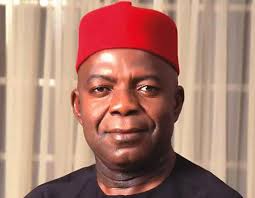
The former Senate President, Adolphus Wabara, has commended Gov. Alex Otti for his transformative agenda, including the ongoing remodeling of the Ariaria International Market, Aba.
In a statement in Umuahia on Saturday, Wabara stated that the market now compared with markets in London and other developed economies
According to the statement, the former senate president made the commendation after a recent visit to the market.
He said the level of transformation at the market “reflected deliberate efforts to revive Aba’s economic glory.
He noted that what he saw went beyond a facelift, describing it as a deliberate economic renaissance, capable of restoring Aba’s pride as the industrial and commercial hub of the South-East
He urged Otti not to relent until the entire remodeling was completed, stressing that no section of the market should be left out.
He added that the comprehensive modernisation of Ariaria should be treated as one of the signature projects of Otti’s administration.
Wabara added that the completion of the market would leave a lasting legacy and further reposition Aba as a leading commercial hub in Africa.
He also applauded Otti’s proposed seaport project at Azumini Blue River in Ukwa.
Wabara, who hails from Ukwa, further said that the seaport would fast-track infrastructure development, improve logistics, create jobs, and strengthen the economy of the South-East.
He urged the governor to remain focused on developmental policies that improve the business environment and uplift the living conditions of the people.



Tinubu To Commission Fruit Juice Factories, BIPC Motorcycle Assembly Plant In Benue
ShareFrom Attah Ede, Makurdi President Ahmed Bola Tinubu is set to visit Benue State to commission the newly built ultra modern Bensono Concentrate Plant, Benva Juice Factory, and the Motorcycle Assembly...


Dangote Refinery Surpasses Capacity Target, Eyes 1.4m bpd Expansion
ShareBy David Torough, Abuja Dangote Petroleum Refinery and Petrochemicals has achieved a major operational milestone by increasing its crude oil processing capacity to 700,000 barrels...


Alia Appoints New Acting Head of Service in Benue
ShareFrom Attah Ede, Makurdi Benue State Governor, Rev Fr .Hyacinth Alia has approved the appointment of Dr. Ihu Eunice Ogbenyi as new Acting Head of Service (HoS)...
Oshonaike Hails Steady Progress of Nigerian Table Tennis Players
ShareSeven-time Olympian Olufunke Oshonaike said Nigerian table tennis players are making steady progress in spite of the challenges they face in competing...

Poland Bans Smartphones in Primary Schools
SharePoland plans to ban mobile phones in all primary schools from next academic year under draft legislation approved by the government on Tuesday. The...
Reps Minority Picks Ugochinyere as New Leader
ShareBy Ubong Ukpong, Abuja Following the defection of the former minority Leader of the House of Representatives, Kingsley Chinda, the minority caucus has nominated Hon. Ikenga...
Kano Revokes Private School Licences over Sexual Abuse
ShareFrom Aliyu Askira, Kano The Ungogo Local Government Area of Kano State has withdrawn the licences of all private schools within its jurisdiction following allegations that...


CBN Approves Regular Commercial Operations for Abbey Mortgage Bank
ShareBy Tony Obiechina, Abuja Abbey Mortgage Bank Plc, one of Nigeria’s longest‑standing primary mortgage banks, has secured regulatory approval from...


Owo Church Massacre: Court Sentences Four to Death for Terrorism
ShareBy David Torough, Abuja More than three years after the gruesome attack on St. Francis Xavier Catholic Church, Owo, Ondo...

Terrorists Abduct Adelabu’s Sister, Twin Sons, kidnap Six Students in Zamfara
ShareBy Eze Okechukwu, Abuja and Ifeanyichukwu Nwannah, Gusau The nation’s worsening insecurity came into sharp focus on Wednesday, as separate incidents of...