
view point
Turning Local Talent into Solutions for Africa’s Energy Future

By Yusuf Yunus
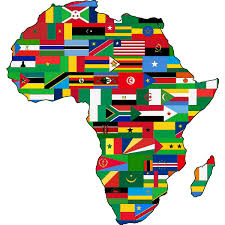
Africa is no longer waiting for foreign expertise to drive its energy growth.
Across the continent, local companies and skilled professionals are stepping up, turning homegrown talent into a force that keeps jobs, knowledge, and investment within Africa.
At the heart of this shift is the Petroleum Technology Association of Nigeria (PETAN), which is strengthening indigenous competence, deepening collaboration and positioning African expertise at the centre of the continent’s energy future.
Meanwhile, at the 10th Sub-Saharan Africa International Petroleum Exhibition and Conference (SAIPEC) in Lagos, industry leaders said the association was helping Africa move from dependence to confidence in its own capabilities.
Minister of State for Petroleum Resources (Oil), Mr Heineken Lokpobiri, said PETAN is a strategic partner in retaining value within the continent and strengthening energy security.
“We cannot afford to remain perpetual middlemen. Africa has grown capacity, and we must deploy it efficiently,” he said.
Lokpobiri urged African countries to adopt a pragmatic and inclusive energy mix that reflected development realities, noting that Africa spends more than 120 billion dollars annually importing oil and gas goods and services.
He said retaining even a fraction of that value within the continent would be transformative.
He commended PETAN for convening stakeholders across Africa and expanding indigenous capacity beyond the nation’s borders.
Chief Executive of the Nigerian Upstream Petroleum Regulatory Commission, Mr Oritsemeyiwa Eyesan, said PETAN aligned with regulatory reforms aimed at improving transparency, efficiency and technical compliance in upstream operations.
She described PETAN members as “critical enablers of Nigeria’s upstream renaissance,” noting that their technical depth and adherence to global standards were reinforcing investor confidence and operational sustainability.
She added that structured capacity building supports Nigeria’s local content framework by ensuring measurable indigenous participation across the energy value chain.
Also, Group Chief Executive Officer of Nigerian National Petroleum Company Ltd., Mr Bayo Ojulari, reaffirmed the company’s commitment to partnerships that strengthen indigenous capacity and advance gas development as a driver of industrialisation.
“In just ten years, SAIPEC has grown beyond the confines of a conference.
“It has become a powerful statement of African capability, proof that our continent can convene, collaborate and compete at the highest global standards,” he said.
Ojulari described the partnership between NNPC Ltd. and PETAN as a reflection of a shared conviction.
He explained that Africa’s energy future must be shaped by Africans and anchored on credible policies, strong institutions and capable indigenous companies.
PETAN Chairman, Mr Wole Ogunsanya, said the conference reflected a decade of progress in policy dialogue and project delivery.
“This decade of progress reflects the resilience, innovation and determination of African industry players.
“Africa’s energy future must be defined by Africans, for Africans,” Ogunsanya said.
He stressed that although the global energy transition continues to evolve, Africa’s priorities remain access, affordability and reliability, noting that more than 600 million Africans still lack electricity.
“For Africa, energy transition is not about abandoning hydrocarbons. It is about leveraging our resources responsibly while gradually integrating cleaner solutions,” he added.
Ogunsanya said indigenous firms now deliver complex drilling, engineering, fabrication and technology projects to international standards but noted that sustained progress required regulatory clarity, contract sanctity, access to financing and disciplined project execution.
“The next decade must be defined by investment and execution,” he said.
Quadri Fatai, Chief Executive Officer of Alfa Designs Nigeria Ltd., said PETAN’s investment in training, knowledge exchange and global exposure had built a pipeline of skilled professionals and competitive firms.
According to him, the association’s focus on human capital development.
This, he stressed, had bridged critical skills gaps, encouraged technology transfer and repositioned indigenous companies as reliable operators capable of delivering world class services.
He noted that PETAN’s partnerships across Ghana, Angola and Senegal were strengthening Africa to Africa service delivery and expanding indigenous participation across emerging energy markets.
Industry observers also pointed to PETAN’s growing sustainability focus, noting that member companies were aligning with global environmental, social and governance standards, adopting responsible practices and investing in host communities.
They said this shift demonstrated that profitability and environmental stewardship could coexist while strengthening community trust.
An industry expert, Mr Tijani Dawudu, said PETAN had evolved beyond an industry association into a movement redefining ownership, participation and leadership in Africa’s energy story.
He added that with sustained regulatory backing, institutional partnerships and private sector confidence, the continent’s energy future will increasingly be built by African expertise competently, collaboratively and sustainably. (NAN)
By Tochukwu Jimo Obi
Nigeria’s political environment is gradually heating up as preparations for the 2027 general elections gather momentum. While political competition is an essential component of democracy, the recent spate of inflammatory and threatening statements by some political actors is deeply disturbing.
Statements suggesting that citizens could be punished, intimidated or forced to support a particular political party represent a dangerous departure from the principles of democratic participation. If left unchecked, such rhetoric could create an atmosphere of fear ahead of an election in which every Nigerian must be free to exercise his or her franchise without intimidation.Of particular concern are the recent comments attributed to the Chairman of Kuje Area Council in the Federal Capital Territory, Samuel Danjuma Shekwolo. In a widely circulated video, the council chairman appeared to tell residents that they should support the All Progressives Congress or leave the area council. He linked his position to development projects attributed to the Federal Government and the FCT administration. Although Shekwolo subsequently denied that he intended to threaten or disenfranchise residents and argued that his comments had been taken out of context, the controversy itself should not be dismissed.
Even more disturbing are the recent comments attributed to Borno State Commissioner for Youth and Sports Development, Sainna Buba. Speaking at a political event in Maiduguri, Buba reportedly warned that those who refused to support the APC would be flogged and used language suggesting that opponents could have their fingers broken. Coming from a serving government official, such language is unacceptable in a democracy. Political persuasion is legitimate; threats of physical punishment are not. The comments have already attracted condemnation and calls for an investigation.
These incidents must also be viewed against the backdrop of the recent controversy involving Senator Francis Fadahunsi of Osun East. Fadahunsi was criticised over comments concerning members of the Accord Party ahead of the August 15 Osun governorship election. The remarks were interpreted by some as an incitement to violence, although the senator subsequently denied advocating physical violence, insisting that he meant his supporters should politically defeat the opposition through their votes. The Osun State Police Command subsequently invited him for questioning.
The pattern should concern every Nigerian, regardless of political affiliation. At a time when the National Peace Committee is making deliberate efforts to prevent violence and encourage issue based campaigns, some politicians and public officials appear determined to undermine that effort through reckless utterances. On August 18, presidential candidates and political parties signed the first National Peace Accord ahead of the 2027 elections, committing themselves to peaceful and issue based campaigns and rejecting violence, intimidation, hate speech and inflammatory rhetoric.
The National Peace Committee deserves commendation for its continuing intervention in Nigeria’s electoral process. Its stated objective is to promote peaceful, credible elections and ensure that citizens can participate freely in the democratic process. But peace accords cannot succeed merely because political leaders sign documents. They must be backed by responsible conduct and, where necessary, firm enforcement by state institutions.
This is where the security agencies must rise to the occasion. Threats against voters, political opponents or any group of citizens should not be treated as ordinary political rhetoric simply because they emanate from influential politicians or government officials. Every credible allegation should be investigated promptly, impartially and transparently. Where an investigation establishes criminal conduct, the appropriate legal consequences should follow. Selective enforcement will only deepen public suspicion and reinforce the perception that politically connected individuals are above the law.
Election is not a do or die affair. It is a contest in which candidates and parties seek the consent of the people. Nigerians have the constitutional and democratic right to support the APC, NDC, PDP, Labour Party, ADC or any other political platform of their choice. They equally have the right to reject every one of them. No politician owns a community, local government, state or constituency simply because he or she occupies public office. Government projects are funded with public resources and cannot legitimately be presented as a political debt that citizens must repay with their votes.
There is therefore a need for political leaders, particularly those holding public office, to understand the enormous influence of their words. The recent action of Edo State Governor Monday Okpebholo over the controversial remarks of his aide, Apostle Kassy Chukwu, provides an important example of how political leadership should respond when an appointee crosses the line. Chukwu had warned that singer David Adeleke, popularly known as Davido, should not return to Edo State, prompting the state government to distance itself from the statement and subsequent reports that the governor terminated his appointment.
Other governors, ministers, lawmakers and political leaders should take note. Nigeria cannot afford another electoral season in which careless words become catalysts for violence. The security agencies must investigate threatening statements without fear or favour, while political parties must discipline members who endanger the peace. The responsibility for a peaceful 2027 election belongs to everyone, but those entrusted with public office bear an even greater responsibility. Democracy thrives when citizens are persuaded, not threatened; when opponents are challenged with ideas, not intimidation; and when every voter is allowed to walk into the polling booth and freely choose who should govern them.
Tochukwu Jimo Obi, Obosi Anambra State.
By Idris Rufai
Big Brother Naija, popularly known as BBNaija, has become one of Nigeria’s most watched and discussed reality television programmes. Over the years, the show has attracted millions of viewers with its entertainment, competitions, relationships, parties and large cash prizes.
However, as the programme enters another season under the theme “Show Ya Sef”(Show Yourself), season 11, one question continues to bother me: What exactly are we showing ourselves, and more importantly, what are we showing the next generation?As a young Nigerian and a student of Mass Communication, I believe entertainment should not be separated completely from responsibility.
The media has enormous power to influence the way people think, behave and perceive society. Therefore, programmes with millions of viewers should be examined not only from the perspective of entertainment but also from the perspective of their possible influence on society.I first took time to watch BBNaija in 2020. When Olamilekan “Laycon” Agbeleshe emerged as the winner.At the time, I was curious about what attracted so many people to the programme. I initially expected a reality show that would combine entertainment with education, character development, talent discovery and positive contributions to society. However, after watching the programme on several occasions, I found myself asking what lasting values some aspects of the show were passing to viewers, particularly young people.
My concern is not that entertainment itself is wrong. People need entertainment, relaxation and programmes that allow them to escape from the pressures of everyday life. My concern is the type of entertainment being presented and the values that may be communicated through it.
One of the areas that raises concern for me is the manner in which some housemates present themselves during night and pool parties. Certain forms of dressing, dancing and other displays may be considered normal entertainment by some viewers, but others may see them as inconsistent with the moral and cultural standards expected in many Nigerian communities.
Nigeria is a country with diverse cultures, traditions and moral values. We are Africans, and our cultural heritage has historically placed importance on values such as dignity, respect, modesty and responsible behaviour. Therefore, while our media industry should evolve with changing times, it should also consider the cultural environment in which its programmes are being consumed.
The issue becomes even more important when we consider children and teenagers. Today, children can easily access smartphones, laptops and social media platforms from their homes. They do not necessarily need to sit in front of a television to encounter content from programmes such as BBNaija. Clips from reality shows can quickly circulate across social media platforms and reach children who may not even be old enough to understand the context surrounding what they are watching.
Young people are impressionable. What they repeatedly see can influence what they eventually consider normal, acceptable or desirable. This is why media regulatory bodies have a responsibility to consider the possible consequences of the content they put before the public.
Some viewers may argue that BBNaija is simply entertainment and that nobody is forced to watch it. That argument deserves consideration. Adults have the right to choose the programmes they watch. However, when a programme has such a large influence on popular culture, its producers should also recognise that its impact can extend beyond the individual viewer.
There is also the question of what happens after the show. The winner receives a substantial financial reward and other prizes, while contestants gain popularity and social media influence. But beyond the money, fame and entertainment, what positive legacy does the programme leave for society?
Could reality television in Nigeria do more to promote entrepreneurship, education, creativity, leadership, talent development, community service and responsible citizenship? Could contestants be challenged to develop businesses, solve community problems, promote Nigerian culture or participate in educational and social initiatives while still providing the entertainment audiences enjoy?
I believe it is possible.This is not a call for the complete cancellation of BBNaija or other reality television programmes. Rather, it is a call for responsible entertainment. The Nigerian entertainment industry is capable of producing programmes that are exciting and commercially successful while still promoting values that contribute positively to society.
Regulatory bodies also have an important role to play. They should continue to ensure that broadcast content complies with established broadcasting standards and protects vulnerable audiences, particularly children, also have a role in guiding children on what they watch and helping them understand the difference between entertainment and acceptable real life behaviour.
As we embrace modern entertainment, we should not allow the pursuit of ratings, popularity, money and fame to completely overshadow our cultural and moral responsibilities.
The theme “Show Yourself” therefore gives us an opportunity to ask a deeper question: What kind of self are we encouraging young Nigerians to show?
Are we showing creativity, intelligence, entrepreneurship, leadership, talent and cultural pride? Or are we increasingly celebrating behaviour simply because it attracts attention?
BBNaija has the platform and influence to do more. Its millions of viewers represent an enormous opportunity to entertain while also inspiring, educating and empowering young people.
We should not reject entertainment, but we should demand better entertainment.
We should not reject modern culture, but we should preserve the values that define us.
And above all, as we tell young people to “show yourself,” we must also ask them, and those who create the content they consume, what exactly are we showing the next generation?.
From one policy flip-flop to another, the Federal Government of Nigeria has scrapped the 6-3-3-4 system of education, which it introduced with fanfare over four decades ago. In its place is now a linear 12-year schooling from primary to the end of secondary education.
Under the old arrangement, six years were for primary schooling, three years for junior secondary school, another three years for senior secondary schooling, and a minimum of four years of university education.
The Minister of Education, Tunji Alausa, on 1 July, said the transition from JSS 3 to SSS 1 presented a quagmire to the country.
“We have 20 million dropouts from primary school to Junior Secondary School. Where are the students? We found out that we have 80,000 public primaries and about 15,000 Junior Secondary schools. That is a ratio of one-to-eight,” he stated.Education is a public asset, whose overhaul – when it becomes imperative – requires a broad and rigorous debate in the best interest of society. But the Nigerian government failed to do so; just as it recently did in the restructuring of the National Youth Service Corps (NYSC) scheme, which sparked strong public criticism.
Education is still on the Concurrent Legislative List in the 1999 Constitution, as amended, depicting the shared responsibility of the federal and state governments for it. Besides, the private sector is heavily involved in all its levels.
The discarded 6-3-3-4 arrangement was introduced in 1982, following its formulation in 1977, after a serious national discourse. The school curriculum was changed and tailored to pre-career paths and labour demands. This was evident in the introduction of technical and business subjects like Technical Drawing, Computer Science, Fishery and Animal Husbandry.
Also, Marketing, Horticulture, Introductory Technology, Creative Arts, Entrepreneurship, Data Processing and Interior Decoration, which competed for students’ interests alongside the core subjects of Mathematics, Physics, Chemistry, Biology, Geography, Fine Arts, Agricultural science, Government, English language and English Literature.
In 2025, the Federal Ministry of Education and the Nigerian Educational Research and Development Council (NERDC) sensed an overload of the classroom with subjects and decided on reducing them. Therefore, the JSS classes had their subjects reduced to 12, from 18; while subjects in the SSS classes were slashed from 20 to 9.
The idea behind Junior and Senior Secondary Schools was for the system to fish out pupils with less cognitive abilities in academics.
These set of pupils, unable to continue with senior secondary schooling, were to be guided through counselling towards the acquisition of vocational skills, according to their abilities. Passing the JSS level was a prerequisite for transiting to the SSS level.
For Mr Alausa to lay the blame for Nigeria’s 20 million out-of-school students at the feet of the failure of the 6-3-3-4 system is to be disingenuous and economical with the truth. The fact is that the high level of insecurity, especially in the northern part of the country, dearth of teachers, dilapidated school infrastructure, poverty and cultural practices that encourage the early marriages of girls before the age of 18, significantly contribute to and sustain the anomaly.
Data published by the ICIR recently showed that 26 schools were attacked by insurgents and kidnappers between April 2024 and May 2026, resulting in the kidnap of 2,416 students for ransom. Inside the Internally Displaced Persons (IDP) camps in Borno, Benue, Plateau and other states, are children of school age. Some traumatised Chibok school girls, abducted in 2014, vowed after their rescue never to go back to school. Other victims with the same harrowing experience in other places, have developed a similar aversion to schooling mindset.
It is not surprising “that three out of four children at the basic education level cannot read or understand an age-appropriate text by the age of 10”, as the minister lamented. Many states in Nigeria also don’t accord education the priority it deserves.
This is evident in the ₦97.88 billion Universal Basic Education Commission (UBEC) funds laying idle, as of 18 March, 2026, as states refused to apply for them towards revamping their basic education systems. This would require the states to provide their own 50 per cent counterpart funding to qualify for the funds. Only 21 states have been able to access these funds till date.
As a result, UNESCO warns that “Nigeria risks a “generational catastrophe” if foundational investments are not made in education in the country. This is the core of the problem. Many state governments have refused to invest sufficiently in the educational sector.
The former Executive Secretary of UBEC, Hamid Bobboyi, during a 2024 workshop with the Private Sector Advisory Group, said that out of 694,078 teachers required, only 499,202 were available, thus leaving a deficit of 194,876 teachers in our basic schools across the country. To save the schools from total closure, Parents Teachers Association (PTA) in most host communities now resort to hiring and paying teachers.
In some cases, classes One and Two are merged for a teacher to handle. Many of the pupils try to learn sitting on the bare floor, while the teachers themselves have no writing tables. These absurdities are not acceptable, amid thousands of jobless NCE holders and graduates across the country.
According to a stakeholder, “Right now, the problem of primary and post-primary education in Nigeria is not restructuring, it is the provision of a better learning environment, laboratories, infrastructure, and qualified teachers, among others.”
The minister needs to be told in simple terms that the 6-3-3-4 system, in itself, did not fail. Only the government did with its inadequate financing and implementation of the system. With the absence of technical equipment, workshops, electricity, and trained teachers/other personnel required for its implementation, it could be argued that the system never really took off.
A policy somersault like this was why History was removed as a subject from the school curriculum, until recently when the public clamour for its return became impossible to ignore.
Also, the government almost fell into a considerable blunder with last week’s increase of WASC and NECO registration fees to ₦50,000, without consultations. Political expediency must have informed the quick retraction of that decision, at least for now.
All matters educational are apparently too sensitive to be left in the hands of politicians alone. Government should desist from policies that have not been properly thought through, which have the capacity to set the country back in a major way, particularly in terms of powering its future. In order to attain the desired outcomes, education requires serious, sustained investments, not cosmetic restructuring.



10 Years. N1.2bn. 40+ Tertiary Institutions by 2026. OPay Is Here to Stay
ShareFor a Nigerian student, a scholarship can mean more than money. It can mean staying in school when a family...

NCS Sets Physical Screening for 2024/2025 Recruitment, Warns Candidates Against Absence
ShareBy Tambaya Julius, Abuja The Nigeria Customs Service (NCS) has fixed physical screening and documentation for successful candidates shortlisted in...
A leadership Lesson for Nigeria from Dolly Parton
ShareBy Dakuku Peterside Dolly Parton has never governed a state, controlled a public budget, or commanded the machinery of government....
NSIA’s Healthcare Journey: From Vision to Measurable Impact
ShareBy Tony Obiechina At the Nigeria Sovereign Investment Authority NSIA), the mandate to deploy patient capital is anchored in a...


Messi Legacy will Live Forever, Says Beckham
ShareDavid Beckham said Lionel Messi’s “legacy will live forever” after the Argentina legend announced his retirement from international football. Messi...


Katsina, UNICEF Inaugurate Campaign against Diphtheria, Malnutrition
ShareThe Katsina State Government, in collaboration with the United Nations Children’s Fund (UNICEF), has intensified sensitisation on diphtheria prevention and...

JAMB, WAEC Clarify N4,000 One-off O’Level Result Verification
ShareThe Joint Admissions and Matriculation Board (JAMB) and the West African Examinations Council (WAEC) have clarified that candidates seeking admission...

NYSC Commends Security Agencies for Rescue of 16 Abducted Corps Members
ShareThe National Youth Service Corps (NYSC) has commended security agencies and other groups for the successful rescue of 16 corps...

NAPTIP Urges CSOs to Expose Criminal Elements
ShareThe Director-General of the National Agency for the Prohibition of Trafficking in Persons (NAPTIP), Hajia Binta Adamu-Bello, has charged the...

NEMA, FRSC, Fire Service Step up Early-warning, Preventive Safety Measures
ShareThe National Emergency Management Agency (NEMA), Federal Road Safety Corps (FRSC) and Federal Fire Service (FFS) have intensified preventive measures...