
Foreign News
U.S. Seeks Rwandan Forces’ Withdrawal from Occupied DRC Territory


The U.S. Government has called for the withdrawal of Rwandan forces from the Democratic Republic of Congo’s (DRC) occupied territory, and urged the alleged Rwandan-backed M23 rebels to declare a ceasefire.
U.S.
Department of State’s Senior Advisor for Africa, Massad Boulos, made the appeal at a digital news conference following a four-nation East-African trip to DRC, Kenya, Uganda, and Rwanda.According to him, the withdrawal of Rwandan forces from DRC, and laying down of arms by the M23 rebels are crucial to ending the war in the war-ravaged DRC.
Report says that Boulos’ visit aimed at supporting efforts to achieve durable peace in eastern DRC, exploring and preserving U.
S. private sector investment in the subregion.DRC has been plagued by conflict for decades, with over 120 armed groups active in North Kivu, South Kivu, and Ituri provinces, including the M23, which has killed and displaced thousands.
The East African Community (EAC) and the Southern African Development Community (SADC), which deployed forces to curb the escalating conflict, recently withdrew them, raising concerns about a deepening security vacuum.
Responding to questions on the way out of the deteriorating situation in the Congo, Boulos insisted that war was not the solution to the conflict but dialogue and peace.
The U.S. envoy said that at the moment, an opportunity for peace presented itself, like never before, and urged all parties involved to take bolder steps to make that a reality.
“The U.S. position is that the M23 must lay down their arms, and Rwandan forces must withdraw from the DRC.
“I will also reiterate our position that Rwanda should cease all military support for M23 and withdraw all Rwandan troops from DRC territory.
“We all know that this can only be resolved peacefully. This is not and cannot be won and cannot be concluded with force. This has to be resolved through dialogue and peacefully,” he said.
Boulos disclosed that negotiations between the DRC government and M23 toward achieving a broader peace process had already begun, and expressed optimism that the outcome would be positive.
He appreciated the recent dialogue held by DRC’s President Felix Tshisekedi and the M-23 for the first time, saying it was a good step that was successful and fruitful by all counts.
Boulos lauded the EAC, SADC, AU and ECOWAS for their mediation efforts, while also expressing optimism about an AU-led peace process.
“With regards to the EAC and SADC, ECOWAS and the African Union, we highly appreciate their efforts. They’ve been trying and doing their best for a very long time, for many years.
“We are looking forward to building on this towards achieving a final peace and a lasting peace and full stability in the DRC and in the region.
“I must say that ECOWAS, although it’s West Africa, has been a major and key player in the continent, especially with regard to peacekeeping missions and many other things,” he said.
Boulos also reaffirmed Washington’s commitment to long-term economic partnerships in Africa, adding that U.S. involvement in the region was not aimed at countering other competing powers like China.
He emphasised that the U.S.’ recent mineral supply chain agreements in DRC were not exclusive to the country but also included neighbouring countries like Angola, Zambia.
These, he explained, were part of broader efforts to diversify critical mineral sources and counter over-reliance on single markets, which would mutually serve U.S. and DRC’s national strategic interests.(NAN)
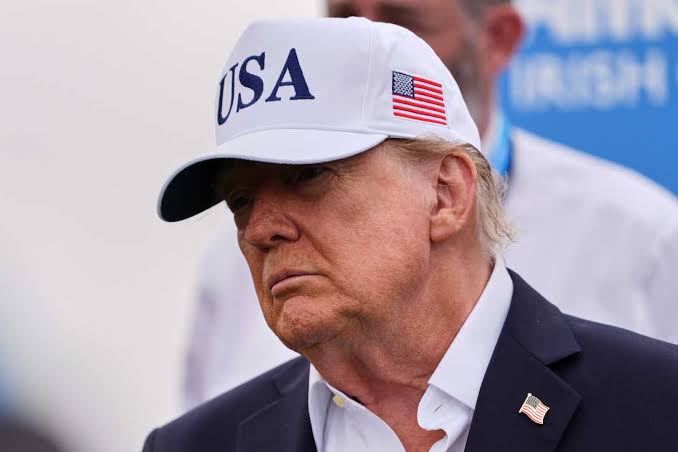
President Donald Trump has infused his ongoing feud with the White House press with a new level of acrimony.
Journalists from three major media outlets – CNN, Politico and MS Now – were denied access and had their press credentials confiscated on Saturday morning as they attempted to enter the White House grounds for work.
As media watchdog organisations and the White House Correspondents Association cry foul, Trump appears set to press ahead with a sweeping effort to punish these outlets.
In his Truth Social post announcing his decision on Friday, he said he was “banning” the organisations because “of their constant ‘reporting’ of fake news”.
In remarks later that day, he complained that “something is wrong with a country that can allow people to write purposely negative stories”.“If they want to write them, that’s fine,” he continued. “I don’t have to let them into the people’s house”, he said, referring to the White House.
The president’s frustration at the media, however, came after a week of setbacks in which major institutions handed him a series of losses across his agenda.
First, the Supreme Court blocked his plan to restrict mail-in voting ahead of the midterms. This prompted Trump to lash out at the court’s justices including those he had appointed. “These are not the people I interviewed to serve on the United States Supreme Court,” he said.
The Federal Reserve, the US central bank, then raised interest rates after Trump had spent months arguing they should be cut. This was followed by a judge ordering his administration to give 30 days’ notice before making any changes to the Kennedy Center arts venue in Washington DC after the president warned it could be “ripped down”.
These headlines, combined with approval ratings that recently sunk to record lows for his second term, suggest Trump is facing challenging political headwinds.
His latest attack on the press, however, raises clear legal questions.
The First Amendment to the US Constitution forbids Congress from “abridging” the freedom of the press. It is language that courts have long interpreted as preventing the government from discriminating against the media based on the content of their coverage.
All three targeted news outlets have promised to file lawsuits challenging Trump’s decision.
Although the breadth of this move is unprecedented, it is far from the first time the Trump administration has attempted to limit or deny access to the White House to members of mainstream media outlets.
In his first term, the administration revoked CNN correspondent Jim Acosta’s press credentials, setting off a legal battle that was ultimately resolved in the journalist’s favour. It also temporarily suspended the pass of a reporter who had a heated argument with White House adviser Sebastian Gorka – a move that also was subsequently blocked by the courts.
Last year, the White House banned reporters for the Associated Press from participating in the president’s press pool – which allows media outlets access to smaller in-town and travelling presidential appearances – because the newswire service would not follow Trump’s move to rename the Gulf of Mexico as the Gulf of America.
That dispute also led to a protracted – and yet to be fully resolved – legal battle, prompting the White House to change press pool rules to drop the guaranteed spot for all wire services.
The White House bans, however, represent a dramatic escalation.
The restrictions include access to the entirety of the White House grounds, not just the press pool. And they target entire news organisations, not just a single disfavoured correspondent.
While Trump has been clear about the motives behind his decision, he has shed little light on why he has acted now. He has regularly criticised his press coverage since he first entered national politics more than a decade ago, but he said on Friday there was no specific incident that prompted his announcement.
At the moment, however, the president is embattled.
Even beyond the week of clear setbacks, he is in the midst of an unpopular and difficult-to-resolve war of choice in Iran, which has led to a surge in energy and other consumer prices, deflating his standing with the American public.
Polls also suggest his party faces an uphill battle to retain control of the House of Representatives and perhaps the Senate in November’s crucial midterm congressional elections.
His attempts to improve the public’s mood by touting his accomplishments in campaign events and at his Republican Party’s convention earlier this month in Texas have, at least so far, proven ineffective.
There may be more behind Trump’s decision to lash out at the media this weekend. But it could also simply be an indication of presidential frustration in the face of events and circumstances, some of his own making, that are turning against him.
A fire at a nursing home in Chile has killed 16 people, authorities said Saturday.
The blaze began on Friday night at the nursing home in the Araucania region, 640 kilometers (400 miles) south of the capital Santiago, and was extinguished in the early hours of Saturday.
Images shared on social media showed massive flames rising above the building in the darkness.
“We express our sorrow and dismay at the deaths of 16 elderly people in this tragedy,” authorities in the municipality of Pitrufquen said in a statement.
A total of 26 elderly residents were in the nursing home.
Ten of them survived and were taken to the local hospital, the statement said.Local mayor Jacqueline Romero said that municipal health and public safety teams, firefighters and police were deployed in response to the blaze.
“It is a situation that fills our souls with great sorrow and pain. We have been… providing support to the families,” she said.
The cause of the fire remained unclear.
“We are currently carrying out investigative procedures, including examining the scene and conducting inquiries, to determine the origin and cause of the fire, as well as to rule out third-party involvement,” Jorge Granada, the prosecutor assigned to the case, told local media.
Oil prices rose past $100 (£74) a barrel on Wednesday after further strikes in the conflict between the US and Iran and continuing Houthi attacks in Saudi Arabia.
In back and forth attacks, the US hit five Iranian tankers in reprisal strikes after Tehran targeted one of its warships.
Brent crude – which is the global benchmark for prices – has not been as expensive since the end of July, when a ceasefire between Iran and the US collapsed.
Yemen’s Iran-backed Houthi movement also attacked oil facilities in Saudi Arabia on Tuesday and have been targeting tankers in the Red Sea.
Brent crude did dip back down to $99.90 a barrel, but any fresh flare-ups in the Middle East could see it pushed higher again.
Tit-for-tat strikes between Iran and the US have escalated in the past week, more than six months after conflict broke out when the US and Israel launched attacks on Iran on 28 February.
Oil prices have fluctuated wildly since the war began, and pressure on the industry has been exacerbated by wider regional instability.
Before the conflict Brent crude had been priced at about $70 (£52) a barrel.
But the war has seen the effective closure of the Strait of Hormuz, which carries 20% of the world’s oil and liquefied natural gas (LNG).
The rising costs have sparked huge price leaps in petrol around the world for motorists at the pumps.
The US strikes on the five Iranian tankers saw four in the Gulf of Oman linked to Iran’s Revolutionary Guards Corps (IRGC) hit as well as another near Kharg Island.
Tehran responded by launching missiles at a US base in Jordan – most of which were shot down – and said it attacked two US vessels and eight oil tankers in the Strait of Hormuz.
The Houthis and Saudi Arabia have also been exchanging strikes since July after their own informal ceasefire unravelled.
On Monday the Houthis accused Saudi Arabia of bombing a prison in al-Hazm and killing 11 people.
Then on Tuesday the Saudi authorities said Houthis had struck civilian and economic sites in the cities of Abha, Khamis Mushait, Jazan and Najran.
The latest round of escalation comes after Iran targeted a US warship with ballistic missiles, which Centcom said were “successfully evaded”. It added that no American troops were harmed during the attacks.
In response, the US said that the five Iranian oil tankers it targeted were “part of a multi-billion-dollar shadow network that funds the IRGC and its regional proxies”.
One of the ships it had struck, the M/T Riesco, sunk in the Gulf of Oman, Centcom later said, posting a video on X of the damaged vessel.
Kharg Island – where one Iranian tanker was attacked in the latest round of US strikes – hosts Iran’s main terminal for exporting oil.
Some 90% of the country’s crude oil passes through the island in the Gulf, transported through pipes from the mainland.
Also on Tuesday, Yemen’s Iran-backed Houthi movement attacked energy facilities and civilian infrastructure in Saudi Arabia, injuring 73 people, according to Saudi authorities.
The drone and missile attack caused fires at oil facilities and installations that led to a temporary halt in operations, Saudi Arabia’s military and energy ministry said.
When asked by reporters about the latest tit-for-tat strikes between the US and Iran, US Secretary of State Marco Rubio on Tuesday said the situation was “pretty straightforward”.
“Iran continues to try to hit US naval ships. And, for every time they do that or try to do that, they’re going to lose tankers. And I think you’ll see that again today,” Rubio told reporters during a trip in Colombia.
The US strikes on Tuesday came hours after Iran’s Navy claimed it had seized an uncrewed US submarine in the Strait of Hormuz.
US Navy Capt Tim Hawkins, a spokesperson for Centcom, said that the “underwater drone operated by US forces malfunctioned more than a day ago” and was used to survey regional waters “in support of ongoing operations”.
The defective drone was “an older model that neither collected sensitive data nor carried any classified sonar or radar equipment”, he said, adding that US operations in regional waters were ongoing.



Trump Escalates Media Fight after Week of Setbacks
SharePresident Donald Trump has infused his ongoing feud with the White House press with a new level of acrimony. Journalists...
Nigeria; a Gen Z Will Soon Be President
ShareBy Prince Charles Dickson Two of my dogs fought with a bitterness I had never seen. The older one carried...


Wike, Performance and the Politics of Cross-Party Influence
ShareBy Raphael Atuu, Abuja Since assuming office as Minister of the Federal Capital Territory in August 2023, former Rivers State...
Niger 37 Tragedy: NSCDC Boss Must Go
ShareThe death of 37 detainees in the Nigeria Security and Civil Defence Corps (NSCDC) detention facility in Minna, Niger State,...

Shettima to Declare Editors’ Conference Open in Enugu Thursday
ShareVice President Kashim Shettima will on Thursday, September 24, 2026, declare open the 22nd All Nigeria Editors Conference (ANEC) of...


Police Raid FCT Crime Hotspots, Arrest 300 Suspects
ShareOperatives of the Federal Capital Territory Police Command have arrested approximately 300 persons, following a raid on identified crime flashpoints,...


Fidelity Bank Deepens Partnership with DAILY ASSET
ShareBy David Torough, Abuja Fidelity Bank Plc has reaffirmed its commitment to strengthening its partnership with DAILY ASSET Newspaper following...


DAILY ASSET Loses Deputy Editor-in-Chief, Danusa Ocholi
ShareBy David Torough, Abuja The Management of Asset Newspapers Limited, Publishers of DAILY ASSET, has announced the passage of the...


Fidelity Bank Deepens Partnership with DAILY ASSET
ShareBy David Torough, Abuja Fidelity Bank Plc has reaffirmed its commitment to strengthening its partnership with DAILY ASSET Newspaper following...


Niger 37: Bago Vows Full Probe as NSCDC Detains 24 Personnel
ShareFrom Dan Amasingha, Minna Niger State Governor, Umaru Bago, has vowed to uncover the circumstances surrounding the deaths of 37...