
Foreign News
Ukraine War: Fighting Set to Slow for Winter Months, Says US Intelligence

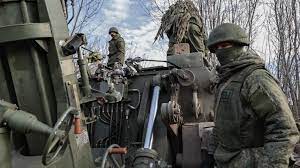
The fighting in Ukraine has been slowing down and this will likely continue in the coming winter months, US intelligence agencies believe.
However, there has been no evidence of fading resistance on the part of Ukrainian forces, US director of intelligence Avril Haines said.
She said both sides would try to “refit, resupply and reconstitute” for any counter-offensive in the spring.
It follows Russian attacks on Ukraine’s critical energy infrastructure.
The war in Ukraine is now in its ninth month but Russia has lost more than half the land it seized.
Ms Haines told a defence forum in California that most of the fighting is currently around the Bakhmut and Donetsk region of eastern Ukraine.
She said fighting had slowed down following Russia’s withdrawal of troops from the west of the Kherson region last month.
“We’re seeing a kind of a reduced tempo already of the conflict… and we expect that’s likely to be what we see in the coming months,” she said.
She said both Ukraine and Russian militaries would be looking to prepare for any counter-offensive after the winter.
“But we actually have a fair amount of scepticism as to whether or not the Russians will be, in fact, prepared to do that,” she said.
“I think more optimistically for the Ukrainians in that time frame.”
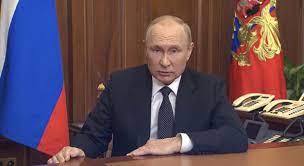
Ms Haines said US intelligence believes Russian President Vladimir Putin does not have a full picture at this stage of just how challenged his military are.
“We see shortages of ammunition, for morale, supply issues, logistics, a whole series of concerns that they’re facing.”
However, analysts at the Institute for the Study of War (ISW) painted a different picture in a daily review, questioning whether the freezing conditions could permit “a higher pace of operations as winter sets in”.
The institute cited comments by Serhiy Haidai, Ukraine’s regional governor in Luhansk, who observed that the weather in the eastern Donbas region was changing as winter conditions set in.
Previously, the ISW had asserted that operations in the Donbas were unlikely to slow down as freezing conditions created “the most optimal times of year for mechanised manoeuvre warfare”.
Meanwhile, on Saturday, Ukraine President Volodymyr Zelensky described a price cap set by his Western allies on Russian oil exports as “weak” and said it was not “serious” enough to damage the Russian economy.
The cap, due to come into force on today is aimed at stopping countries paying more than $60 (£48) for a barrel of seaborne Russian crude oil.
Kremlin spokesman Dmitry Peskov said that Moscow had prepared for the move but would not sell its oil under the cap.
At a virtual meeting on Sunday, a group of the world’s top oil-producing countries is expected to stick to its oil output targets.
At their last ministerial session in October, the Opec+ group – made up of countries including Russia and the United Arab Emirates – agreed to reduce output by two million barrels per day from November in a bid to help boost oil prices.
The move angered the United States and other Western nations with Washington accusing the group of siding with Russia.
Since October, oil prices have declined due to slower global growth and higher interest rates. Opec sources say the group is likely to approve a policy rollover.
Meanwhile, Ukraine’s security service said the government in Kyiv is imposing sanctions against 10 senior Orthodox Church figures it accuses of having supported Russia’s invasion.
The sanctions, which will freeze their assets for five years, are the latest moves by the Ukrainian government against religious groups seen as potentially subversive.



By Eze Okechukwu, Abuja
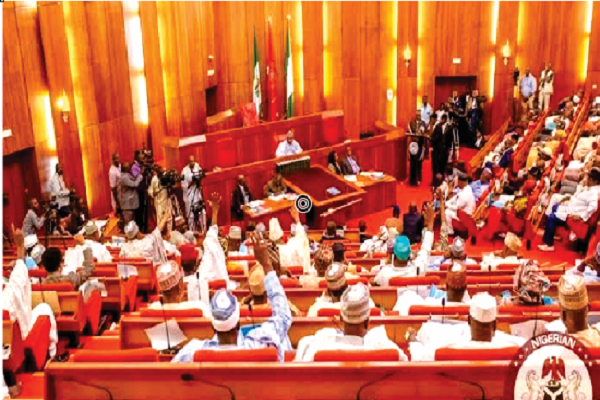
The Senate yesterday ordered mandatory health screening for every international passenger arriving Nigeria airports, seaports, land borders as Ebola resurfaces in the Democratic Republic of Congo with a scare case reported in the FCT.
The resolution followed an urgent motion by Senator Francis Fadahunsi, who warned that with Lassa fever already ravaging states, Nigeria cannot afford another outbreak.
“Protecting our entry points is far cheaper than managing Ebola,” Fadahunsi told the chamber.
Lawmakers insisted screening must be total and indiscriminate — no exemptions based on nationality or departure country because infected travellers can transit through safe-listed nations.
Senator Diket Plang raised the stakes further, demanding immediate funding for NCDC and Port Health Services, including release of withheld funds and emergency budget.
Senate President Godswill Akpabio said the Federal Government has started releasing Ebola response funds but ordered relevant committees to track every kobo.
“Ascertain whether the funds were released and judiciously utilised. Any outstanding debt must be released by the Finance Ministry without delay,” Akpabio directed.
At least 72 civilians who had been prospecting for gold in a border region of Sudan have been killed in air strikes, a regional rights group said.
Emergency Lawyers, based in the Sudanese capital, Khartoum, said jets targeted the so-called artisanal miners at a popular gold mining site on Saturday.
Neither the Egyptian government nor the de facto Sudanese authorities have so far commented.
Cairo has previously faced accusations of deadly strikes on gold prospectors as part of a crackdown on illicit activity along its southern border.
Emergency Lawyers noted the previous alleged attacks and said they represented not only a violation of Sudan’s sovereign territory but demonstrated the government’s lack of control over the region.
“The deliberate targeting of unarmed civilians violates international humanitarian law and the right to life,” it said in a statement on Sunday. “These acts may constitute war crimes.”
It noted that its death toll was provisional and could rise.
The Paris-based Sudan Tribune reported that the death toll could far exceed the number reported by Emergency Lawyers, citing a survivor of Saturday’s attack who said many more people had been injured.
Eyewitnesses said the attack began around 06:00 local time (04:00 GMT), with the aircraft firing more than five missiles directly at the miners’ camps, destroying them and excavation pits with people still inside, the newspaper wrote.
The Sudan Tribune reported claims in June that Egyptian forces had used drones and artillery to target artisanal mining sites in the same region, killing several, after sporadic incidents of Egyptian border guards of burning equipment, torching temporary shelters, and firing live ammunition to disperse mine workers.
Days later, Egypt’s border agency announced that it and the military had begun a sweeping security campaign along the border to foil illegal migration, drug smuggling and illegal mining.
At the same time, Sudan’s de facto leader announced an investigation into the alleged strikes, which were said to have killed dozens.
Gold lies at the core of the border tensions.
Sudan’s ongoing civil war has led to a surge in artisanal mining – and often risky practice conducted by civilians with rudimentary tools and without official permission – particularly in remote areas near its borders.
Gold-rich areas lie along porous borders in terrain historically associated with cross-border smuggling routes, with artisanally mined gold potentially feeding into those channels.
Egypt’s border force said in June that it had seized 86 tonnes of gold ore along with amateur prospecting equipment.
Artisanal mining has also reportedly continued in Sudan’s conflict zones and smuggled gold may be a source of income for armed insurgent groups.
This has raised concerns of illicit Sudanese gold undermining the legitimate Egyptian gold market.
Several German fighter jets will take part in the Northern Atlantic Treaty Organisation (NATO) annual nuclear defence exercise this week as troops from 17 countries take part in the Steadfast Noon drill.
The German Air Force said three Tornado jets will take part in the exercise hosted by Italy, which starts Tuesday and runs for about a week and a half.
The jets are normally stationed in Büchel in the German state of Rhineland-Palatinate.
NATO has not revealed the exercise scenario but said its scale would be comparable to last year’s drill, which involved around 2,000 personnel and more than 70 aircraft.
Last week, NATO’s head of nuclear policy, Nassima Barrows, said the exercise was designed to demonstrate the alliance’s readiness and ability to defend its territory.
No real nuclear weapons will be used, she added.
NATO said the exercise was not linked to current events or directed at any specific country.
Military experts say the drills, held regularly in October, include practising the safe transport of weapons from underground storage facilities to aircraft and mounting them on fighter jets.
Only practice bombs without real nuclear warheads are used during the drills.




Motorists Storm Minna NNPC Mega Station, Threaten Mass Protest Over CNG Scarcity
Share From Dan Amasingha, Minna. Angry vehicle owners on Sunday staged a peaceful protest at the NNPC Mega Station along...

Lokoja CMD Seeks More Investments in Healthcare Delivery
ShareFrom Joseph Amedu, Lokoja The Chief Medical Director of the Federal Teaching Hospital, Lokoja, Professor Abdulrahman Shehu, has called for...


Enugu CP Orders investigation into Man’s Death During Police Operation
ShareFrom Sylvia Udegbunam Enugu The Commissioner of Police, Enugu State Command, CP Mamman Bitrus Giwa, has ordered a thorough investigation...


Police Officer Shoots Female Colleague to Death, Kills Self in Kogi
ShareFrom Joseph Amedu, Lokoja Kogi State Police Command has confirmed a tragic incident that claimed the lives of two police...


2027: Benue People Are Not ‘Shenanigans’, Alia Owes You No Apology, Ex-Ambassador Tells Ortom
ShareFrom Attah Ede, Makurdi A former Nigerian Ambassador to Namibia, Terhemen Tarzoor, has criticized former Benue State Governor Samuel Ortom...


JPMorgan’s Entry into Nigeria: Turning Global Finance into a National Development Opportunity
ShareBy Uche Joe Uwaleke The proposed establishment of JPMorgan Merchant Bank Nigeria Limited presents Nigeria with an important opportunity to...


WAHO Steps Up Regional Health Surveillance After Ebola Case Confirmed in Abuja
ShareBy David Torough, Abuja The West African Health Organisation (WAHO) has intensified regional health surveillance following the confirmation of an...


2027: Don’t Call Benue People Shenanigans, Alia not answerable to you- Ex- Amb, Tarzoor Tells Ortom, Wike.
ShareFrom Attah Ede, Makurdi Ex -Nigeria’s Ambassador to Namibia, Terhemen Tarzoor, has warned the immediate past Governor of Benue State...

DBN Signs $61m Credit Deal With AfDB, Unveils Support Initiative Report
ShareBy Tony Obiechina, Abuja The Development Bank of Nigeria Plc (DBN) has launched DAWN: DBN Action for Women in Nigeria,...


NLC Threatens Nationwide Action as Talks With FG Collapse
ShareBy Tambaya Julius, Abuja The Nigeria Labour Congress (NLC) has threatened possible nationwide industrial action following the failure of talks...