
Foreign News
UN Political Mission in Sudan to End on Sunday

A United Nations political mission in war-torn Sudan will end on Sunday after the UN Security Council voted on Friday to shut it down following a request from the country’s acting foreign minister last month.
A war erupted on April 15 between the Sudanese army and paramilitary Rapid Support Forces after weeks of rising tension between the two sides over a plan to integrate forces as part of a transition from military rule to civilian democracy.
The British-drafted resolution terminates the mandate of the UN mission, known as UNITAMS, on Dec. 3 and requires it to wind down over the next three months.
UNITAMS was established by the 15-member council in June 2020 to provide support to Sudan during its political transition to democratic rule.“We reiterate that the Sudanese authorities remain responsible for the safety and security of UNITAMS staff and assets during this transition and call for their full cooperation in allowing an orderly withdrawal,” deputy British UN Ambassador James Kariuki told the council.
Violence against civilians in Sudan is “verging on pure evil”, a senior United Nations official warned last month, as a humanitarian crisis in the country worsens and ethnic violence escalates in the western region of Darfur.
A UN country team providing humanitarian and development aid will remain in the country, where the UN says nearly 25 million people – half the population – need help.
“We affirm the government’s readiness to continue constructive engagement with the UN by strengthening cooperation with a country team,” Dafallah Alhaj, an envoy to Sudan’s army chief Abdel-Fattah al-Burhan, told the council.
He said the delivery of humanitarian aid was a top priority.
The UN special envoy to Sudan announced in September that he was stepping down, more than three months after Sudan declared him unwelcome.
Last week UN Secretary-General Antonio Guterres appointed veteran Algerian diplomat Ramtane Lamamra as his personal envoy for Sudan.
The Security Council resolution encourages all parties to cooperate with the envoy. (Reuters/NAN)
South Korean and US troops will begin their annual exercises next week to beef up readiness against North Korean threats, the allies announced Monday, days after North Korea resumed ballistic missile testing activities that are banned by the UN
The Ulchi Freedom Shield is to begin next Monday for a 11-day run and its scale will be similar to previous years with about 18,000 South Korean soldiers participating in it, South Korean military spokesperson Jang Do-young told reporters.
Speaking at the same news conference, US military spokesperson Ryan Donald said by incorporating realistic threats including “lessons from recent conflicts,” the exercise will serve as an opportunity to further strengthen the alliance’s readiness and capabilities through combined, joint, all-domain operations.
He cited North Korea’s dispatch of troops to support Russia’s war against Ukraine in recent years.
“DPRK soldiers have been deployed and fought in Ukraine and they’ve taken those lessons they learned there and brought them back to North Korea,” Donald said, using the abbreviation for North Korea’s full name. “That changes the DPRK capability and our training accounts for that threat.”
The upcoming summertime drill is one of the two main combined exercises conducted by South Korea and US militaries annually, along with their springtime training. The US military said the Ulchi Freedom Shield features “live, virtual, constructive and field-based training.”
North Korea had no immediate comments. But it has steadfastly described any major US-South Korean military drills as a practice to invade North Korea and responded with provocative weapons tests and fiery rhetoric. South Korean and US officials have said their joint exercises are defensive in nature.
On Thursday, South Korea, the US and Japan detected the launch of a short-range ballistic missile from North Korea in what was the North’s first ballistic weapons testing activity since late June. The missile landed in the waters of North Korea’s east coast.
South Korea and Japan condemned the launch as a provocation or a threat because multiple UN Security Council resolutions ban North Korea from engaging in any ballistic activities. The US Pacific Command said the US remains committed to the defense of the US homeland and its allies in the region.
North Korea has been pushing hard to enlarge its nuclear and missile arsenals since leader Kim Jong Un’s high-stakes diplomacy with US President Donald Trump collapsed in 2019. Experts say Kim likely believes a bigger weapons arsenal would increase his chances for wresting more concessions from the US in future negotiations.
North Korea’s supply of troops and ammunition to Russia has raised concerns among South Korea, the US and others that Russia might have transferred North Korea sensitive technologies that can increase the danger of its nuclear and missile programs. Experts have assessed North Korea’s troop dispatch has given it crucial battlefield experience as well.
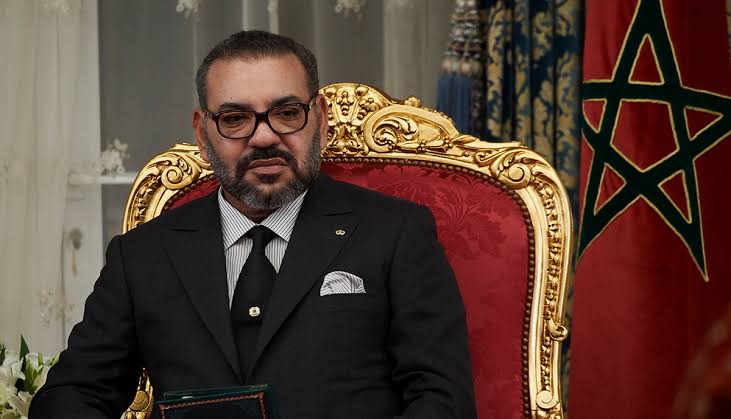
A letter from Morocco’s King Mohammed VI has confirmed that the country has named a major highway after US President Donald Trump.
Last week, in a social media post, Trump thanked the king for the honour, but there was not a parallel announcement from the Moroccan authorities.
But Morocco’s state press agency has published a letter the king wrote to the president telling him that the name-change was taking place as “a personal expression of my high regard”.
Formerly the Tiznit-Dakhla highway, the road enters Western Sahara, most of which Morocco occupies and claims sovereignty over.
But part is controlled by the Polisario Front, an armed group seeking independence for the local Sahrawi people.In 2020, during the first Trump administration, the US recognised Morocco’s claim over the disputed region as part of a deal whereby Morocco agreed to normalise relations with Israel.
In his letter, dated 2 July but published over the weekend, King Mohammed highlighted what he called the US president’s “historic recognition… of Morocco’s sovereignty over its Sahara” saying that it would “forever be etched in the memory of Moroccans, from generation to generation”.
“Although our relations have always been rooted in close friendship and constant loyalty, they have never been as vigorous and fruitful as during your two presidential terms,” the king added.
The monarch called the 1,055km (655 mile) highway a “strategic axis” linking “north and south of Morocco”. Morocco calls Western Sahara its “southern provinces”.
A former Spanish colony, Western Sahara – which is considered a “non-self-governing territory” by the UN – has been fought over for five decades in one of Africa’s longest conflicts.
The UN has consistently pushed for a solution to the dispute, including a referendum, but the indigenous people of the area have never been able to vote for their own future.
The African Union recognises Western Sahara’s independence.
European governments have until recently avoided taking sides. But some, including the UK and Spain have backed Morocco’s plan to grant Western Sahara autonomy but deny it independence.
Trump’s Truth Social post on the renaming last week also included a video about the road saying that it cost nearly $1bn (£740m) to build.
“I look forward to traveling the entire length of this great highway someday, hopefully soon!” the president wrote.
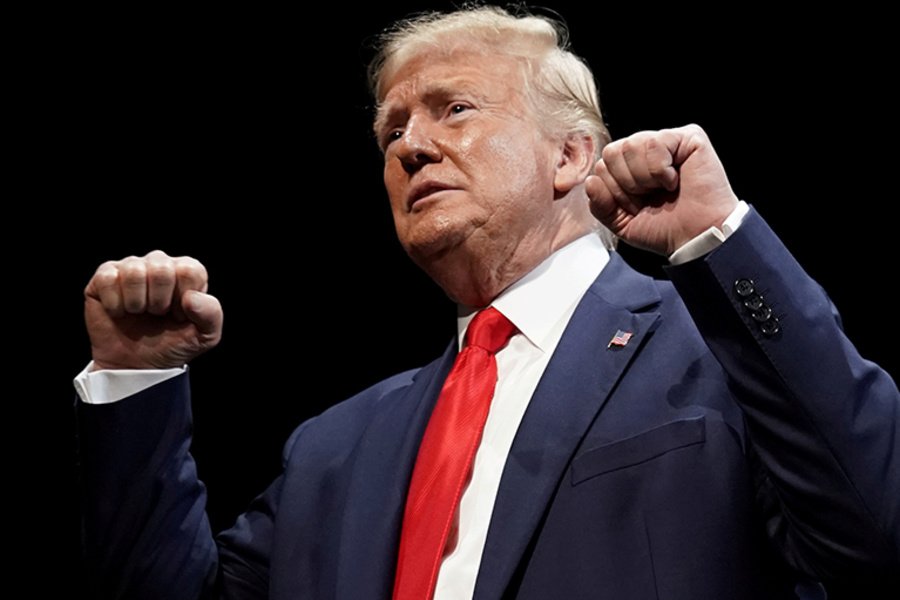
Acting US Attorney General Todd Blanche has formally withdrawn President Donald Trump’s plan for a fund that could have been used to compensate people prosecuted over the US Capitol riot by Trump’s supporters in 2021.
The move clears the way for Blanche to be confirmed by US senators to his job on a permanent basis.
Trump’s Republican Party previously lacked the votes for this to happen because a pair of senators were not sufficiently satisfied by verbal assurances from Blanche that the planned fund was dead.
In a post on X late on Sunday, Blanche said he had “met with committee members and Senators over the past several weeks and addressed any concerns or outstanding questions”.
Attached to Blanche’s post was a copy of the written order signed by Blanche. The text says: “This Order establishes, beyond any doubt, that there is no Fund.”
The proposed $1.8bn “anti-weaponisation” fund was announced earlier this year to settle a lawsuit by Trump against the Internal Revenue Service (IRS) over the leak of his tax returns.
It would have allowed Trump allies to claim compensation for what they say were politically motivated prosecutions by previous administrations.
A second concern held by the two holdout senators was that the deal also shielded the president, his family and their businesses from IRS audits of their past tax returns. They wanted the scope of that to be narrowed.
Attached to Blanche’s post on X was an unsigned memo in which he said the IRS immunity would be limited to the “named parties in the lawsuit”. The plaintiffs in the lawsuit were Trump, his two sons Donald Jr and Eric, and the Trump Organization.
The fund plan and the tax audit provision prompted alarm among Democrats – and some Republicans – who argued it could result in payment to people who were prosecuted over the US Capitol riot on 6 January 2021, including those convicted of assaulting police officers.
Following the backlash, Blanche abandoned the plan. A federal judge also blocked the fund and expressed concerns that it breached ethical guidelines.
Prior to Blanche’s two posts on Sunday, Trump himself gave conflicting statements on the future of both the fund and his nomination of Blanche to be America’s top law enforcement official.
On Friday, he said the fund was “dead”, but he subsequently threatened over the weekend to put the plan back on the table if members of his party did not move to approve Blanche.
In recent days, he also said he was considering withdrawing Blanche’s nomination to be attorney general because the process was stalled.
The US Senate judiciary committee has a meeting scheduled for Tuesday, which could include a vote on Blanche’s nomination.
But Blanche’s public statements to senators that the proposal had been scrapped were not enough to satisfy the Republican holdouts.
The two senators who went on to stall Blanche’s confirmation were John Cornyn and Thom Tillis, whose terms both expire in January.
A Cornyn spokesperson said that the senator had “reached an agreement with the Department of Justice” about the fund.
Tillis has not yet commented. But in his most recent comments on the issue, which responded to Trump’s threat to revive the plan, Tillis expressed concern that the president was still harbouring a plan to set up a “payout pot for punks”.
He said the political impasse was “unfortunate” because he did consider Blanche, who is Trump’s former personal lawyer, to be qualified for the attorney general job.


Dangote Cement Ibese, FRSC Strengthen Strategic Partnership to Advance Road Safety in Ogun
ShareEfforts aimed at further enhancing road safety in Ogun State has received a boost following fresh collaborative engagement between the...


Sustained Military Pressure Drives 213 Per Cent Rise in Terrorist Surrenders in North-East
ShareBy David Torough, Abuja Troops of Operation Hadin Kai (OPHK) have recorded a 213 per cent increase in the number...
Nigeria’s Oil Production Drops 4 Per Cent in July – NUPRC
ShareNigeria’s crude oil production fell by four per cent month-on-month in July, but the country still met its Organisation of...


CBN Reverses OMO Restriction, Opens Market to Local Investors
ShareBy Tony Obiechina, Abuja The Central Bank of Nigeria (CBN), has reversed its seven-year restriction on local investors’ participation in...
Northern Senators Seek Enduring Solution to Flooding in Niger
ShareBy Dan Amasingha, Minna The Niger State Government and Northern Senators’ Forum have called for lasting measures to tackle the...
Osun Election Tension Deepens as Accord Petitions EU over Alleged Killings
ShareFrom Ayinde Akintade, Osogbo Tension has heightened in Osun State ahead of Saturday’s governorship election, with the Accord Party alleging...

Rethinking the CBN’s Mandate: Lessons from Malaysia for Nigeria
ShareBy Uche Uwaleke During a recent academic study tour of key financial institutions in Malaysia with some of my PhD...

Tinubu, Shettima not Elected by Muslims Alone, Northern Christian Chair Slams Cleric
ShareChairman of the Northern Christian Association, NCA, Rev. Joseph Hayab, has said President Bola Tinubu and Vice President Kashim Shettima...
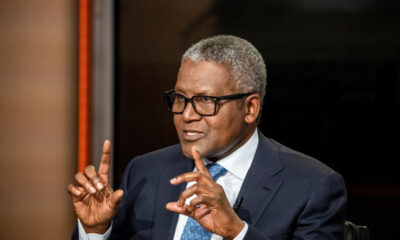

Dangote Confident on Group’s Projected $100bn Revenue Target By 2030
ShareAliko Dangote, has expressed confidence in his company meeting estimated revenue growth in the next four years. He said detailed...
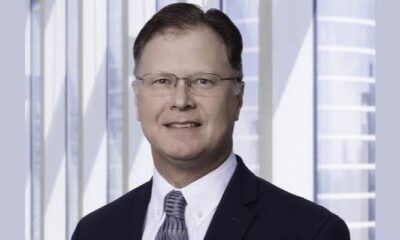

Chevron Says Competitive Local Capacity Devt to Define Nigeria’s Energy Future
ShareThe Managing Director of Chevron Nigeria Limited, Jim Swartz, has highlighted key areas that would sustain Nigeria’s energy transition growth...