
EDITORIAL
Urgent Need to Overhaul Nigeria’s Ailing Education Sector

It was the late elder statesman and former President of the rainbow nation of South Africa, Nelson Mandela, who rightly posited that, “Education is the most powerful weapon which you can use to change the world.” In other words no serious nation can truly achieve meaningful and inclusive development without adequate investment in education – from basic to advanced level.
In deed, accessible, affordable and quality education go a long way in addressing rising inequality and poverty, particularly in a developing country like Nigeria. Nigeria or rather its leadership seems to have taken lightly the disastrous repercussions of having a substandard educational system amidst threatening signs of disunity, insecurity and economic downturn. Even with obvious signs that all is not well in the nation’s education sector, the political leadership continues to play politics and pay lip-service to the much needed investment in education. A case in point is the lingering crisis in our tertiary education system, exacerbated by the inconsistency in policy formulation, poor funding, maladministration and incessant strikes. This has given rise to an array of frustrated lecturers, a good number of whom now seek greener pastures abroad.With a population of more than 200 million people made up of over 60% youth, the majority of who would need quality education to live a life of productivity and dignity, the present condition of Nigeria’s education sector is no doubt a ticking time bomb. This is considering the fact that many of the institutions are churning out half-baked graduates who are unemployable, underemployed and unemployed. In the end these idle graduates take to immorality and criminality out of frustration. Juxtapose the aforementioned concerns with the embarrassing number of out of school children in the country – estimated at 18.3 million, the true picture of the crisis in the education sector rears its ugly head.The many approvals of new private universities in the country before it was recently suspended by the current administration, have not helped matters. Critical stakeholders in education have continued to express concern about the neglect of this critical sector, in spite of the large number of tertiary institutions in the country. As of late 2024 and early 2025, Nigeria has approximately 274 universities – 149 private, 62 federal, while 63 are state-owned universities. It is fair to state that most of these institutions really need critical infrastructure.The critical question is, what happens to citizens who cannot afford the cost of sending their children to private universities? It seems that the private university is increasingly becoming the exclusive preserve of children of the rich and mighty. The institutionalization of such practice and process would only further widen the inequality gap, as children of the rich go to private higher institutions and graduate within the required time; while those from poor backgrounds spend twice as many years, thereby depleting their meagre household income.Unfortunately lecturers have taken advantage of problems militating against the tertiary institutions and busied themselves making money as consultants and visiting lecturers in private universities, leaving their students at the receiving end. Poor funding of the education system no doubt has been a major stumbling block. One can just but imagine that in the current 2025 budget, Nigeria allocated N3.5 trillion to the education sector representing approximately 7.08% of total budget. This is intended to support infrastructure and Universal Basic Education as well as the establishment of new universities. This falls short of the recommended 15-20% by the United Nations, making it extremely difficult to meet the sustainable development goals for quality education as the case may be. If one removes allocations to basic education, very little is left for the tertiary institutions, thereby deepening the crisis in the sector.It should not surprise anyone that the number one Nigerian University is ranked fifth alongside five other universities in Africa, with the first four coming from South Africa. The University of Ibadan, which is the first in the country, is ranked 401st out of 500 universities in the world, this is according to the Times Higher Education’s World University Rankings 2021. It is a shame that Nigeria has degenerated to this level.It is even more worrisome as the quality of education keeps falling, with too much rhetorics and little action by stakeholders to salvage especially our tertiary institutions from imminent collapse. The setback has also resulted in some lecturers in public universities serving as visiting lecturers to many private universities even outside of the NUC regulation, which allows a lecturer to visit not more than one other university at a time, which must not be more than 200km from the lecturers’ original university.The rising youth restiveness and pervasive insecurity should be enough warning for stakeholders to look into the public education crisis in the country. There is the urgent need for the federal government to make university education qualitative and accessible to every Nigerian youth by equipping public universities and averting incessant strike actions by university lecturers and workers.DAILY ASSET suggests that the entire education sector should engage in a genuine conversation on the best and sustainable financing mechanism for education in Nigeria. Additionally, the federal government needs to consider the option of granting university autonomy, if that would prevent the dwindling trend in the sector and improve the quality of education not only in primary and post primary schools, but in all the tertiary institutions in Nigeria. Interestingly, Nigerian academics in other universities of the world have continued to make Nigeria proud. This shows that if the enabling environment is provided in the country, Nigerian institutions can actually rank among the best in the world.The people of Kano State have for ages defined themselves with public morality and decency. To uphold and project these moral fabrics, the State Government established the Hisbah Board; enshrined Sharia-compliant codes, and positioned itself as a guardian of cultural and religious values in Northern Nigeria.
That reputation is now being dragged through the mud by a political campaign so debased that it insults the very women it claims to empower.A viral social media post has shown what purports to be branded underwear distributed to women by state actors under the guise of an “empowerment programme.” But truly, this is not about women empowerment.
It is a moral and political abomination. And if false, the fact that it is believable enough to trend reveals how far the state’s political culture has sunk.True empowerment should lift women out of poverty through skills, capital, education, and access to markets. It should build businesses, pay school fees, and provide healthcare. Reducing “women empowerment” to the distribution of underwear emblazoned with political slogans is not only demeaning, it is a betrayal of every mother, wife, sister daughter, market woman, farmer and student the government claims to serve. It treats adult citizens as objects of ridicule rather than partners in development. The dignity of not just Kano women but all women in Nigeria is not a campaign poster. Their needs are not lingerie.
Kano cannot claim to police public morality through Hisbah raids on dress codes, alcohol and public conduct, while its political class engages in stunts that violate the very standards it imposes on the citizens of the state. Hisbah was created to uphold Islamic values of modesty, privacy, and decency. A government that purportedly brands and shares underwear for political gain makes a mockery of those values. It tells the world that morality in Kano is a tool to control the weak, not a principle that binds the powerful. That double standard corrodes the moral authority of the state and breeds cynicism among the youth.
This episode exposes the rot in campaign culture: the shift from policy to spectacle, from substance to stunts. When politicians cannot articulate a plan for jobs, security, or education, they resort to cheap tokenism. When they cannot defend their record, they distract with scandal. Distributing intimate items with party insignia is not grassroots outreach. It is political grooming disguised as charity. It sexualizes poverty and monetizes shame. No society that respects itself should tolerate this sordid campaign.
Kano is the commercial nerve centre of the North, home to scholars, traders, and industrialists. Its women run major markets, lead cooperatives, and educate the next generation. They deserve policies that expand credit for small businesses, protect girls’ education, and improve maternal health. They do not deserve to be campaign props. The state’s moral identity is not preserved by Hisbah patrols alone. It is preserved when leaders act with the same modesty and restraint they demand from citizens.
DAILY ASSET’s position on this setback is that if the state government sanctioned this distribution, it must apologize, bring those responsible to book and redirect funds to genuine empowerment schemes. The entire saga must be investigated to expose the culprits, and prosecute those using the state’s name to score cheap political points. Silence in this disturbing development amounts to complicity.
Kano cannot preach morality in the morning and practice indecency by noon. The Hisbah Board, religious leaders, women’s groups, and every citizen who believes in the state’s values must denounce this act unequivocally. Politics without ethics is just manipulation. And a state that loses its moral compass will soon lose everything else.
We equally urged organisations like the International Federation of Women Lawyers (FIDA), Federation of Muslim Women’s Association of Nigeria (FOMWAN), Kano League of Senior Lawyers, et al, to rise up and challenge this retrogressive and negative campaign targeted at women. They should swiftly investigate and unearth those behind such an act and initiate a court action to bring them to book.
Public interest litigation must be initiated by the Kano League of Senior Lawyers to enforce Section 34 of the Constitution of Nigeria (as amended) and seek declaratory judgment that such “empowerment” violates constitutional dignity.
The moral grounds on which Kano stands should not be eroded by a few miscreants by negative political campaigns.
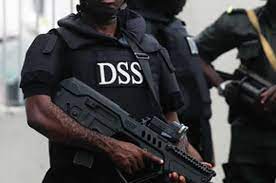
On Wednesday, February 28, 2026, the Department of Security Service (DSS) released Walida Abdulhadi, an indigene of Hadija in Jigawa state reportedly involved in a controversial relationship with an operative of the agency with whom she has a baby, to the Jigawa State Government.
She was handed over to Governor Umar Namadi and several top officials of the state government in Abuja, along with her baby. The release followed intense public debate over the relationship between the young woman and the DSS operative, Ifeanyi Onyewuenyi. All along, the debate had centred on the circumstances surrounding her alleged disappearance in 2023.The governor was accompanied to the SSS headquarters in Abuja by the Speaker of the State House of Assembly, Haruna Aliyu; the Attorney General and Commissioner of Justice, Bello Fanini; the Commissioner of Women Affairs, Hadiza Abdulwahab; and her counterpart in the Ministry of Environment, Nura Ibrahim, among others.
The Director General of the DSS, Adeola Ajayi, alongside principal officers of the Service, handed over Walida to Governor Namadi. The Nigerian Supreme Council of Islamic Affairs (NSCIA) was represented by the Deputy National Legal Adviser, Haroun Muhammad, and a member of the Expanded General Purpose Committee, Najib Jimoh.
The birth of a baby to the DSS operative and Walida’s alleged conversion to Christianity has dominated public discourse reminiscent of Ese Oruru saga who was kidnapped at the age 13 from her mother’s food shop in Yenagoa, Bayelsa, to Kano, where she was forcefully converted to Islam and married off to a commercial tricycle driver in 2015. After a prolonged legal tussle Oruru regained freedom and went to school. Interestingly, she has since graduated from the University of Ilorin with a Second Class Upper Division in Education Technology.
And today we are witnessing something similar to the case of Oruru, leading to the intervention of Jigawa state governor and other stakeholders all of whom are insisting on an independent investigation of the matter for a quick judicial process to determine who and what went wrong. That is the way to go because doing otherwise could be detrimental to religious harmony between Muslims and Christians in the country.
Furthermore, releasing Walida to her home state of Jigawa was a right step in the right direction, more so as the state government has assured of her safety and full recovery from whatever trauma she might have passed through.
Again, the move to keep her under the custody of the state government, pending the resolution of all the contentious issues surrounding the controversial relationship is commendable because it would give enough room for the controversy to be tabled before a law court for a snappy adjudication; so that peace can prevail in due course.
Aside individuals, other bodies that have publicly expressed divergent views on the Walida case include; National Supreme Council for Islamic Affairs (NCIA), Federation of Women Lawyers (FiDA), Muslim Rights Concern (MURIC), Federation of Muslim Women’s Associations in Nigeria (FOMWAN), Muslim Students’ Organisation of Nigeria (MSO), Women in Da’awa, International Human Rights Commission Relief Fund Trust (IHRC-RFT), Arewa Youth Assembly (AYA), Women Voices and Accountability, and Gamji Lawchain. This is a clear demonstration of the intensity the Walida case has generated with palpable tension built up through the prism of divergent views.
DAILY ASSET believes that the controversy over Walida’s age, the circumstances surrounding her alleged abduction, and other contending issues would best be resolved by a competent court of law.
Considering the painfully slow process of Nigeria’s justice system and situating the plural society already struggling with mistrust and sectarian tension, there is a need for absolute urgency in resolving the matter. To this end, the judiciary should quickly swing into action. Mindful of time, it must set aside all forms of technicalities and delve headlong into the substance of the matter. This is the sure way to diffuse tension and permanently resolve the impasse, rather than subjecting the sensitive issue to linger on.
By and large, it is important for all aggrieved individuals, stakeholders, family members and other interested parties in the case to exercise restraint and wait for the final verdict of the court, as was the case during the Ese Oruru saga over a decade ago.
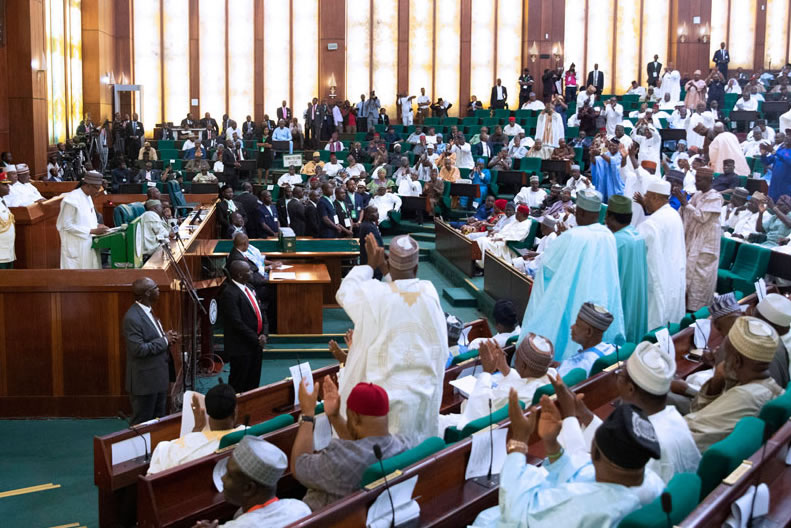
The recent controversy surrounding the voice vote in the House of Representatives highlights the need for the National Assembly to adopt an electronic voting system. The incident, which generated unnecessary tension and mistrust, could have been avoided if a more transparent and reliable method was deployed.
The two chambers of the National Assembly – the Senate and House of Representatives, are governed by specific rules.
In the Senate, Order 72 of the Senate Standing Rules outline three modes of voting; Voice Vote, Signing of Register in a division, or using an Electronic Voting device. The lower chamber too has provisions for voting after exhaustive debate on a motion. The chambers are both fitted with electronic voting devices with myriad benefits, which includes; transparency as votes are recorded, and verifiable, leaving no room for disputes.Also, the use of the electronic voting system erases human error and ensures accuracy. Again, it fosters faster voting processes and instant results. Above all, there will be accountability as lawmakers’ votes shall be on record for their constituents and the entire world to know their stance, thus promoting accountability.
In spite of enumerated advantages of using the electronic scoreboard, installed with millions of Naira of taxpayers money for resolution of heated debates, principal officers of the bi-camera Assembly, have totally abandoned the digital platform alternative for resolving thorny and critical issues confronting the country. Instead, they have continued to deploy crooked uncivilized voice votes that often create confusion. This is exactly what the Speaker of the House of Representatives, Tajudeen Abbas, did on February 17, 2026, during the heated debate raging across the country on real-time transmission of election results. The action of the Speaker led to a very rowdy session in the green chamber, prompting some members to stage a walk-out in protest over the controversial bill for the Electoral Amendment Act.
It started after a motion for the House to reverse its decision on the Electoral Act bill, passed on December 23, 2025. After a rigorous debate, the Speaker then put the motion to a voice vote. While the “nays” were louder than the “ayes”, he controversially ruled that the ayes had it, a development which triggered protests. The action of the Speaker amounts to total disrespect and disregard for millions of Nigerians, within and outside who were watching the event live on television.
There have been past instances where the none use of electronic scoreboard generated tension. For instance, during the debate for the declaration of State of Emergency proclaimed by President Bola Ahmed Tinubu, in Rivers State, controversy erupted when the Speaker’s decision on the voice vote was hotly disputed, highlighting concerns about manipulation and lack of transparency. These incidents underscore the need for transparent voting methods, like electronic voting, to ensure accountability and credibility in Nigeria’s legislative process.
Given that the National Assembly has acquired and installed an electronic voting and results transmission device, it raises concern why it is not being utilized to boost public trust, transparency, and accountability.
The action of the Speaker, who glaringly turned down popular voices in favour of real time transmission of electronic votes in the Green Chamber, signals the unwillingness of the few who cling tightly unto power and would not allow popular voices in line with democratic tenants.
Such a unilateral decision from the Speaker might further embolden those peaceful protesters (some of whom have been camping at the entrance gate of the National Assembly) and indeed across the country to continue to escalate their agitation. Already, a coalition of Civil Society Organisations (CSOs) are insisting on Real-Time Transmission 0f Election Results or nothing. The CSOs have teamed up with other pro-democracy activists in Abuja, to keep their agitation live. They are demanding mandatory electronic transmission, which they believe is essential to strengthening electoral integrity and reducing malpractices.
DAILY ASSET is hereby urging the National Assembly to embrace technology and adopt total electronic voting for transparency and accountability.
The parliament is the bastion of democracy. It is the only arm that stands out to defend the masses. Therefore, members of the National Assembly who constantly gauge the mood of their constituents and vote in line with aspirations of their constituencies should not be blacked out through a nebulous voice vote. Their stance on topical issues confronting the country should not be buried. It is the fundamental right of every Nigerian to track the views of elected representatives in order to hold them to account.




WPRF Delegates Leaving Nigeria with Positive Impressions, Says Customs CG
ShareBy Tambaya Julius, Abuja The Comptroller-General of the Nigeria Customs Service (NCS), Adewale Adeniyi, has said delegates attending the World...
Customs Suspends Training at Two Colleges over Recruitment Concerns
ShareBy Tambaya Julius, Abuja The Nigeria Customs Service (NCS) has temporarily suspended training activities at its two training colleges to...

INEC Shelves Comprehensive Voters’ Register Clean-Up
ShareBy Orjime Moses, Abuja The Independent National Electoral Commission (INEC) has said it will no longer conduct a comprehensive clean-up...
Protect The President, But Do Not Punish the People
ShareNo one disputes it: the security of the President of the Federal Republic of Nigeria cannot be compromised. Not for...
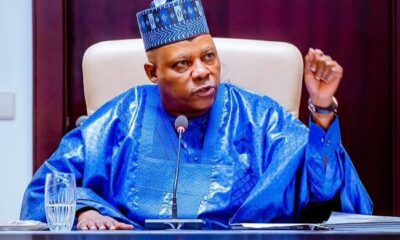

Shettima to Moniepoint: Provide Affordable Loans for Businesses
ShareBy Tony Obiechina, Abuja Vice-President Kashim Shettima has tasked Moniepoint Microfinance Bank to expand access to affordable loans for farmers,...

NDC Expresses Deep Sorrow over Bayelsa Boat Mishap
ShareFrom Mike Tayese, Yenagoa The Bayelsa State Chapter of the Nigeria Democratic Congress (NDC) has expressed deep sorrow over the...

INEC Releases 86,931 New PVCs for Collection in Kogi
ShareFrom Joseph Amedu, Lokoja A total of 86,931 PVCs for eligible registrants during the second phase registration exercise by the...
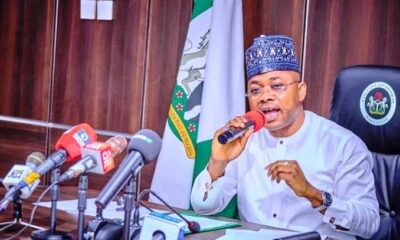

Ododo Approves Extension of Retirement Age for Health Professionals
ShareFrom Joseph Amedu, Lokoja Kogi state Governor, Ahmed Ododo has approved extension of the retirement age for eligible skilled clinical...
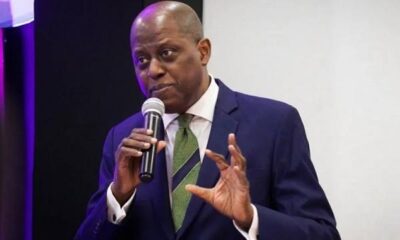

CBN Seeks Fair Representation in ECOWAS Monetary Union
ShareBy Tony Obiechina, Abuja The Governor of the Central Bank of Nigeria (CBN), Olayemi Cardoso, has called for equity, fairness...
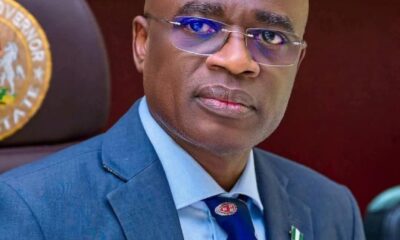

DAILY ASSET 10TH Annual Awards: Alia, Baze Varsity, Iornem Others Confirm Attendance
ShareBy Donald Andoor, Abuja Governor of Benue State, Rev Fr Hyacinth Iormem Alia, has confirmed attendance and participation at DAILY...