
Foreign News
US Indicts FG, Security Agencies in Latest HR Report

By Orkular Shaagee, Abuja
The United States Government has released its reports on Human Rights Practices and again indicted Nigeria of abuses.
The 46-paged report, signed by the US Secretary of State, Mike Pompeo, covered year 2019, comprised seven sections and dozens of sub-sections, which include: “Respect for the Integrity of Persons; Respect for Civil Liberties; Freedom to participate in the Political Process”.
Others are: “Corruption and Lack of Transparency in Government; Governmental attitude regarding NGOs’ Investigation of Human Rights Abuses; Discrimination, Societal Abuses and Trafficking in Persons; Worker Rights.
The dossier, which compiled atrocities by the government and its agents, seemed to give more insight into why the Trump administration slammed repeated sanctions on Nigeria in the last one year.
Its detailed accounts of President Muhammadu Buhari government and its agents’ arbitrary, unlawful, or extrajudicial killings. The Nigeria Police, the Nigerian Military, the Department of State Services (DSS) and state organs were accused of using lethal force to disperse protesters, apprehend criminals and suspects.
Noting that authorities did not hold security agencies accountable for the use of deadly force, the report lamented that Federal and States’ panels of inquiry reports are never made public.
It recalled that in 2017, Vice President Yemi Osinbajo, while in acting capacity, convened a presidential investigative panel to review security agencies’ compliance with human rights obligations, rules of engagement, and submitted its findings in February 2018. “As of September (2019), no portions of the report had been made public”.
On attack on Shiites, the statement said as of September 2019, the federal government was silent on further investigating or holding individuals accountable for the 2015 killing and mass burial of members of the Islamic Movement of Nigeria (IMN), and other civilians by the Army in Zaria, Kaduna State.
The US wondered why the report on the 2017 Air Force erroneous bombing of an Internally Displaced Persons (IDP) camp in Rann, Borno State, which killed and injured more than 100 civilians, humanitarian workers and Nigerian Army personnel, has not been released.
On disappearances, the world power mentioned that the publisher of Bayelsa State-based tabloid the Weekly Source, Jones Abiri, was held for more than two years in incommunicado detention by the DSS without trial, access to counsel, or family visitation.
The US also referred to the arrest and harassment of Stephen Kefas, Agba Jalingo and the missing Abubakar Idris, aka Dadiyata. The blogger and critic of the federal and Kano State governments was abducted from his home in Kaduna State in August 2019.
Nothing has been heard about him since and the DSS, the state agency notorious for secretly holding Nigerians, has denied taking Idris.
The case of citizen Abdullahi Ahmadu. He had been in DSS custody since 2013 without access to the court or family members before his situation leaked.
Another Nigerian, Anthony Okolie, was arrested and detained by the DSS for nearly three months for ownership of a phone number recycled after it became dormant.
Okolie legally purchased the line from MTN but was secretly kept because the number earlier belonged to Buhari’s daughter, Hanan. The matter is in court.
The United States expressed concern over Human Rights Watch (HRW) report on arrests and detentions of journalists and activists, saying such indicated a growing intolerance of dissent.
The country reiterated concern about the security situation in Nigeria, the murder of innocent citizens, deadly communal/ethnic clashes, bandits’ attacks, among others.
It said abductions for ransom were still going on and observed that on May 1, 2019, armed assailants kidnapped the nephew of President Buhari and held him for more than two months before he was rescued.
The report confirmed that torture and other cruel, inhuman, or degrading treatment were carried out by security agencies. It decried the activities of Special Anti-Robbery Squad (SARS) of the Nigeria Police and remarked the #EndSARS campaign on social media.
It included findings by groups such as Amnesty International (AI) on illegal detention, inhuman treatment, and torture of criminal suspects, militants, detainees and prisoners.
“According to reports, security services committed rape and other forms of violence against women and girls, usually with impunity. In April, AI reported at least 10 soldiers in Giwa Barracks sexually exploited female detainees, demanding sex in exchange for food, soap, other basic necessities, and the promise of freedom.
“As of September the government had not held any responsible officials to account for reported incidents of torture in detention facilities in the Northeast, including Giwa Barracks.”
The US denounced the “parading of arrestees in public spaces and subjecting them to public ridicule and abuse. Bystanders often taunted and hurled food and other objects at arrestees.”
The report criticised the Justice System in Nigeria, condition of prisons and that authorities sometimes held female and male prisoners together, especially in rural areas. “Prison authorities often held juvenile suspects with adults….Most of the 240 prisons were 70 to 80 years old and lacked basic facilities”, it said.
It slammed arrests without prosecution and referred to reports of thousands of deaths in custody. The US said the military continued to indefinitely hold women and children alleged to have links with Boko Haram and ISIS-WA (ISWAP).
The US expressed concern over threats to journalists and referred to HRW exposition on arrests and detentions of journalists and activists indicated a growing intolerance of dissent.
The country deplored onslaught against freedom of movement, protests and expressions; intimidation over use of internet, the legislation being used by Federal and State governments to arrest opponents and critics for alleged hate speech.
The US cited the 2019 elections conducted by the Independent National Electoral Commission (INEC). It said there was evidence that military and security services intimidated voters, electoral officials, and election observers.
It noted that many Nigerians believe the Army is a tool of the ruling party in many parts of the country and regretted that several INEC Resident Electoral Commissioners (RECs) reported DSS operatives intimidated them when they attempted to protect voting materials.
“There were reports that corruption, including vote buying were historically high during the 2018-19 electoral season. Examples of vote buying were apparent in the re-run of the Osun gubernatorial election in September 2018, and during the Kano gubernatorial election on March 9.”
“Although the law provides criminal penalties for conviction of official corruption, the government did not implement the law effectively, and government officials frequently engaged in corrupt practices with impunity. Massive, widespread, and pervasive corruption affected all levels of government, including the judiciary and the security services.
“The constitution provides immunity from civil and criminal prosecution for the president, vice president, governors, and deputy governors while in office. There were numerous reports of government corruption during the year”, it read.
The US echoed complaints by the Independent Corrupt Practices Commission (ICPC) and the Economic and Financial Crimes Commission (EFCC) on delays in convictions on lack of judges and the widespread practice of filing for and granting multiple adjournments.
“EFCC arrests and indictments of politicians continued throughout the year, implicating a significant number of opposition political figures and leading to allegations of partisan motivations on the part of the EFCC.”
The US added that in April 2019, Supreme Court Chief Justice Walter Onnoghen was convicted of falsely declaring his assets for failing to reveal money held in five foreign bank accounts.
“President Buhari had suspended Onnoghen over the charges of failing to disclose assets in January several weeks before the presidential election.”
The US recorded that Buhari removed Onnoghen unilaterally without endorsement by the Senate or from the National Judicial Council (NJC) as the law requires.
“The timing and process of Onnoghen’s suspension led many opposition candidates, lawyers, and civil society leaders to accuse President Buhari of meddling with the independence of the judiciary.”
The report further condemned forced labour, sexual discrimination, religious intolerance, early forced marriage, baby factories, violence against children and women, domestic violence and Female Genital Mutilation/Cutting (FGM/C).
It called for effective and timely prosecution of rape and other cases, recognition of ethnic minorities, better welfare for workers in the private and public sectors, improved attention to senior citizens, displaced people and persons with disabilities.


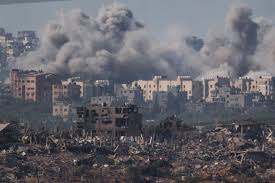



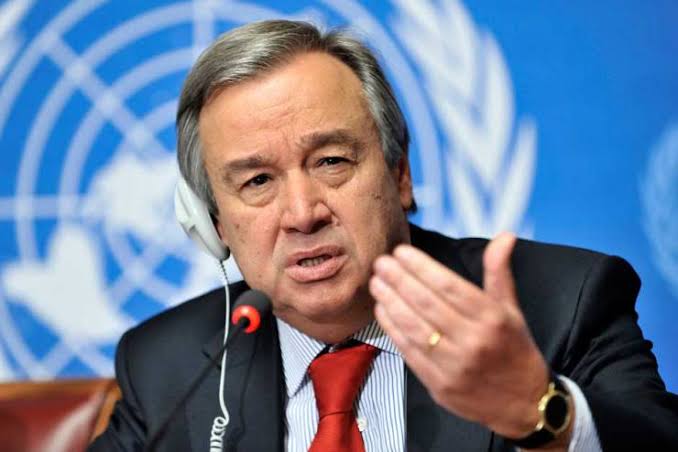
UN Secretary General António Guterres on Monday called for a peaceful future for Israelis and Palestinians ahead of the third anniversary of the Oct. 7 attacks by the militant organisation Hamas on Israel.
“Let this anniversary mark not only another year of mourning, but also a renewed determination to build a different future,” Guterres said in New York.
He said Israelis and Palestinians should be able to “live side by side in peace and security, with their rights, dignity, and aspirations fulfilled. “These horrors must never be repeated, “He added.On October 7, 2023, Hamas and other armed groups killed more than 1,200 Israelis and foreign nationals and abducted 251 people to Gaza.The attacks triggered the Gaza war, in which more than 74,000 Palestinians have since been killed, according to the Hamas-controlled health authority in Gaza.
A ceasefire has been in place since October 2025, although deadly attacks have continued.
Relations between the Israeli government and the United Nations remain deeply strained, with Israel accusing Guterres of bias and the UN chief repeatedly criticising Israel’s conduct in Gaza.
Guterres also paid tribute to the victims of the Oct. 7 attacks.
“Nothing can justify these atrocities,” he said.
“Their suffering, and the enduring grief of their families, must never be forgotten.”
The UN chief also highlighted the suffering of Palestinians in Gaza following the war.
“Their suffering, too, demands an end, now,” he said.
Guterres said the ceasefire had brought some relief but had yet to deliver security, adequate humanitarian assistance or a credible path to recovery and peace.
He urged all sides to fully implement their commitments and move to the next phase of the ceasefire.
“It is time for the ceasefire to become permanent. It is time to allow humanitarian assistance at scale.
“And it is time to respect international law,” he said.
“We must build the political path to lasting peace across the whole region.”
Kenya has confirmed its first case of Ebola, a Kenyan citizen who has been living in the Democratic Republic of Congo for the past seven years.
Health Minister Aden Duale said the patient, who fell ill a month ago, and was treated in several hospitals in DR Congo, died days after arriving in Nairobi.
Duale said the patient boarded a flight on Saturday and underwent normal public screening at the main airport in Nairobi before he was transferred by a relative to a hospital in the city.
More than 4,000 people have died from Ebola in DR Congo this year, in what is the second most deadly known outbreak of the disease.
Shortly after DR Congo declared an outbreak of Ebola in May, it was also reported in Uganda, where two people have died. However, the World Health Organization (WHO) declared the county free of the disease in August.
Since then, all cases of the disease have been declared in DR Congo.
The current outbreak has been caused by the Bundibugyo species of Ebola, which is relatively rare, with no known vaccine.
Duale confirmed that the Kenyan national had tested positive for the Bundibugyo species.
According to the minister, the patient first travelled by road from DR Congo to the Ugandan capital Kampala, where he boarded a flight to Nairobi
Duale said that after being taken to the Nairobi Hospital, the patient was transferred to an isolation facility which was built during the Covid-19.
It was there that the patient “developed fever, chills, intense fatigue and weakness, painful swallowing, muscle pain and bleeding under the skin”.
The patient died at 23:30 (20:30 GMT) on Monday and his burial is planned for later on Tuesday in line with public health safety protocols.
At least 28 contacts, including family members and healthcare workers, have been identified, while health authorities are tracing a further 23 passengers and four crew members who travelled on the same flight.
So far, WHO has recorded 4,082 deaths out of 8,463 cases since the emergence of the Bundibugyo species of the virus.
There are currently no approved vaccines or treatments for the species, which is highly infectious.
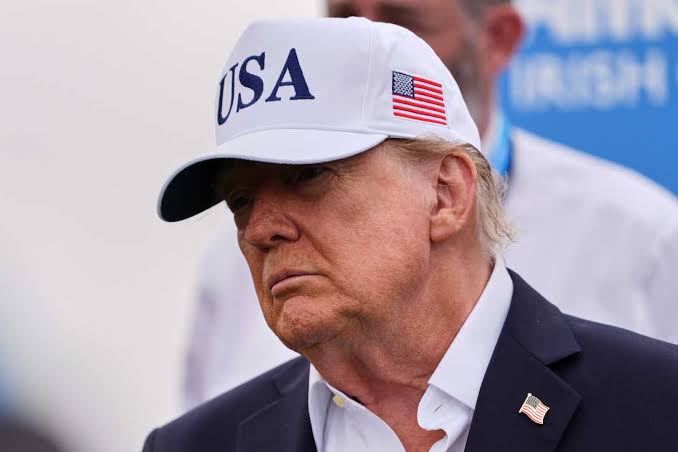
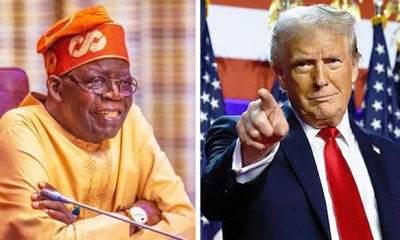
President Donald Trump has infused his ongoing feud with the White House press with a new level of acrimony.
Journalists from three major media outlets – CNN, Politico and MS Now – were denied access and had their press credentials confiscated on Saturday morning as they attempted to enter the White House grounds for work.
As media watchdog organisations and the White House Correspondents Association cry foul, Trump appears set to press ahead with a sweeping effort to punish these outlets.
In his Truth Social post announcing his decision on Friday, he said he was “banning” the organisations because “of their constant ‘reporting’ of fake news”.
In remarks later that day, he complained that “something is wrong with a country that can allow people to write purposely negative stories”.“If they want to write them, that’s fine,” he continued. “I don’t have to let them into the people’s house”, he said, referring to the White House.
The president’s frustration at the media, however, came after a week of setbacks in which major institutions handed him a series of losses across his agenda.
First, the Supreme Court blocked his plan to restrict mail-in voting ahead of the midterms. This prompted Trump to lash out at the court’s justices including those he had appointed. “These are not the people I interviewed to serve on the United States Supreme Court,” he said.
The Federal Reserve, the US central bank, then raised interest rates after Trump had spent months arguing they should be cut. This was followed by a judge ordering his administration to give 30 days’ notice before making any changes to the Kennedy Center arts venue in Washington DC after the president warned it could be “ripped down”.
These headlines, combined with approval ratings that recently sunk to record lows for his second term, suggest Trump is facing challenging political headwinds.
His latest attack on the press, however, raises clear legal questions.
The First Amendment to the US Constitution forbids Congress from “abridging” the freedom of the press. It is language that courts have long interpreted as preventing the government from discriminating against the media based on the content of their coverage.
All three targeted news outlets have promised to file lawsuits challenging Trump’s decision.
Although the breadth of this move is unprecedented, it is far from the first time the Trump administration has attempted to limit or deny access to the White House to members of mainstream media outlets.
In his first term, the administration revoked CNN correspondent Jim Acosta’s press credentials, setting off a legal battle that was ultimately resolved in the journalist’s favour. It also temporarily suspended the pass of a reporter who had a heated argument with White House adviser Sebastian Gorka – a move that also was subsequently blocked by the courts.
Last year, the White House banned reporters for the Associated Press from participating in the president’s press pool – which allows media outlets access to smaller in-town and travelling presidential appearances – because the newswire service would not follow Trump’s move to rename the Gulf of Mexico as the Gulf of America.
That dispute also led to a protracted – and yet to be fully resolved – legal battle, prompting the White House to change press pool rules to drop the guaranteed spot for all wire services.
The White House bans, however, represent a dramatic escalation.
The restrictions include access to the entirety of the White House grounds, not just the press pool. And they target entire news organisations, not just a single disfavoured correspondent.
While Trump has been clear about the motives behind his decision, he has shed little light on why he has acted now. He has regularly criticised his press coverage since he first entered national politics more than a decade ago, but he said on Friday there was no specific incident that prompted his announcement.
At the moment, however, the president is embattled.
Even beyond the week of clear setbacks, he is in the midst of an unpopular and difficult-to-resolve war of choice in Iran, which has led to a surge in energy and other consumer prices, deflating his standing with the American public.
Polls also suggest his party faces an uphill battle to retain control of the House of Representatives and perhaps the Senate in November’s crucial midterm congressional elections.
His attempts to improve the public’s mood by touting his accomplishments in campaign events and at his Republican Party’s convention earlier this month in Texas have, at least so far, proven ineffective.
There may be more behind Trump’s decision to lash out at the media this weekend. But it could also simply be an indication of presidential frustration in the face of events and circumstances, some of his own making, that are turning against him.



Nigeria’s Oil Reforms will Unlock $50bn Deep Offshore Investments – Tinubu
SharePresident Bola Tinubu said recent reforms in Nigeria’s oil and gas sector are designed to unlock up to 50 billion...
Ododo Condoles Families of NAF Personnel, Armed Forces Over Ondo Crash
ShareFrom Joseph Amedu, Lokoja Kogi State Governor, Ahmed Ododo has commiserated with the families of the Nigerian Air Force personnel...
WUEDA Tasks Journalists on Verification, Development Reporting
ShareFrom Francis Sadhere, Delta The Warri, Uvwie and Environs Special Area Development Agency (WUEDA) has urged journalists to strengthen investigative...
Dauda Joins FG’s Delegation for Nigeria- Ethiopia Leadership Exchange, Learning Visit
ShareFrom Ifeanyichukwu Nwannah, Gusau President Bola Tinubu has approved a high-level Nigerian delegation to Addis Ababa for a leadership exchange...
Civic Education Vital for Future Leaders – Ekiti Commissioner
ShareThe Ekiti State Government said on Tuesday that exposing students to civic education played a vital role in preparing them...
DSIRS Threatens Prosecution of Fake Tax Collectors, Warns Taxpayers
ShareFrom Francis Sadhere, Delta The Delta State Internal Revenue Service (DSIRS) has warned individuals and groups issuing fake tax demand...
Alabere Urges Corps Members to Preserve Yoruba Culture, Uphold Good Character
ShareFrom Ayinde Akintade, Osogbo A revered traditional ruler in Osun State, the Alabere of Abereland, Oba Obafemi Adelakin Mutalib Abiade...
Nigeria Since 1999: When will the Years Begin to Count?
ShareBy Dakuku Peterside Think of a Nigerian born in 1999, the year civilian rule came back. That person is twenty-seven...

Tinubu’s Return: An Update
ShareBy Reuben Abati Exactly a week ago, President Bola Ahmed Tinubu, now jokingly renamed a citizen of Kano with a...

NDLEA Seizes over 10 Tonnes of Illicit Drugs, Recover Firearms in Kogi
ShareBy Elijah Oguche, Abuja The National Drug Law Enforcement Agency (NDLEA) in Kogi said it has seized more than 10...