
NEWS
USCG Lifts 12-year Security Restriction on Nigerian Vessels

The Minister of Marine and Blue Economy, Dr Adegboyega Oyetola says the United States Coast Guard (USCG) has lifted the 12-year Condition of Entry (CoE) imposed on vessels arriving in the United States from Nigeria.Oyetola made the disclosure in a statement issued by Edward Osagie, Head, Public Relations, Nigeria Maritime Administration and Safety Agency (NIMASA) on Tuesday in Lagos.
He said the decision ended enhanced security requirements imposed on vessels calling at designated Nigerian ports before accessing U.
S. waters since June 25, 2014.According to the minister, the development serves as a major breakthrough for the maritime sector and a recognition of the country’s progress in strengthening maritime security.
He said the CoE had subjected vessels that called at designated Nigerian ports within their previous five port calls to additional security scrutiny before entering U.S. waters.
Oyetola said the lifting of the restriction affirmed Nigeria’s progress in implementing the International Ship and Port Facility Security (ISPS) Code across its ports and maritime facilities.
He attributed the achievement to sustained efforts by the Federal Ministry of Marine and Blue Economy, through NIMASA, in collaboration with relevant agencies, port operators and shipping stakeholders.
According to him, the coordinated efforts focused on addressing security gaps and demonstrating sustained compliance with internationally accepted maritime security standards and protocols.
“Over the past two years, the USCG conducted four assessments of Nigeria’s maritime security framework and port facilities in March 2024, April 2024, March 2025 and April 2026.
“The assessments showed significant progress in Nigeria’s implementation of the ISPS Code and overall maritime security performance, paving the way for the restriction’s removal,” he said.
Oyetola described the development as a significant achievement that reflected sustained regulatory oversight, institutional collaboration and the commitment of NIMASA to maritime security.
“The lifting is a major milestone. It affirms our progress in maritime security and ISPS Code implementation,” he said, pledging to sustain the momentum toward safe and competitive shipping.
He commended NIMASA Director-General, Dr Dayo Mobereola, and his team, saying the feat demonstrated the impact of effective regulation and stakeholder collaboration.
The minister said the benefits of the development extended beyond security to improved port competitiveness, operational efficiency and stronger positioning for Nigeria in the global maritime economy.
He said the lifting of the restriction was expected to facilitate faster vessel turnaround, improve schedule reliability and reduce costs associated with additional documentation, inspections and entry-related delays.
Oyetola added that the development could attract more shipping lines to Nigerian ports, boost trade and investment, create jobs and increase port revenues.
He explained that for more than a decade, the CoE had imposed additional security costs, inspections, delays and insurance burdens on vessels calling at Nigerian ports, raising concerns over the competitiveness of the country’s ports.
The minister said that with the restriction lifted, vessels departing Nigerian ports for the United States would no longer face the additional USCG security requirements

The Nigeria Customs Service (NCS), Zone ‘A’, has unveiled its inaugural Inter-Command Games to promote fitness, teamwork and camaraderie among officers across its commands.
The Zonal Coordinator, Assistant Comptroller-General of Customs (ACG), Mohammed Babandede, disclosed this at the opening ceremony of the games on Tuesday at the Customs Training College in Lagos.
The competition was declared open by Comptroller Chidi Nwokorie, Chairman, Zone ‘A’ Sports Committee, who represented Babandede.
Babandede said the initiative was founded on the conviction that a healthy workforce would guarantee improved performance and greater productivity in the service.
He thanked the Comptroller-General of Customs, Dr Bashir Adeniyi, for approving the games and urged participating officers to compete fairly while upholding the spirit of sportsmanship.
“Winning must never become more important than the reason we are gathered here,” he told participants at the opening ceremony.
The zonal coordinator reminded the officers that despite representing different commands, they remained part of one service.
“We all wear one greater uniform, the uniform of the Nigeria Customs Service,” he said.
Babandede urged the participants to “compete hard, compete fairly, stay safe and enjoy the games,” ahead of the grand finale scheduled for Sept. 5.
Meanwhile, the Customs Area Controller, Apapa Customs Command, Comptroller Emmanuel Oshoba, said sports remained indispensable to paramilitary organisations and essential to officers’ professional development and wellbeing.
Oshoba said sports instilled discipline, enhanced physical and mental fitness and promoted bonding and social interaction among personnel across commands.
The Comptroller, Post Clearance Audit, Zone ‘A’, Florence Madu, described the games as a landmark initiative that would unite officers and strengthen relationships among commands.
Similarly, the Acting Controller, Port and Terminal Multi-Services Ltd. (PTML), Deputy Comptroller Nura Miko, said the programme aligned with the Comptroller-General’s work-life balance initiative aimed at boosting cohesion and morale among officers.
The Zone ‘A’ Public Relations Officer, Edeminam Akaninyene, said the opening football matches saw Tincan Island Command defeat Western Marine Command 1-0, while Apapa Command edged Lilypond Command by the same scoreline.
Akaninyene said the competition would continue with participation from commands and units across Zone ‘A’, culminating in the grand finale on Sept. 5.
From Abel zwanke, Lafia
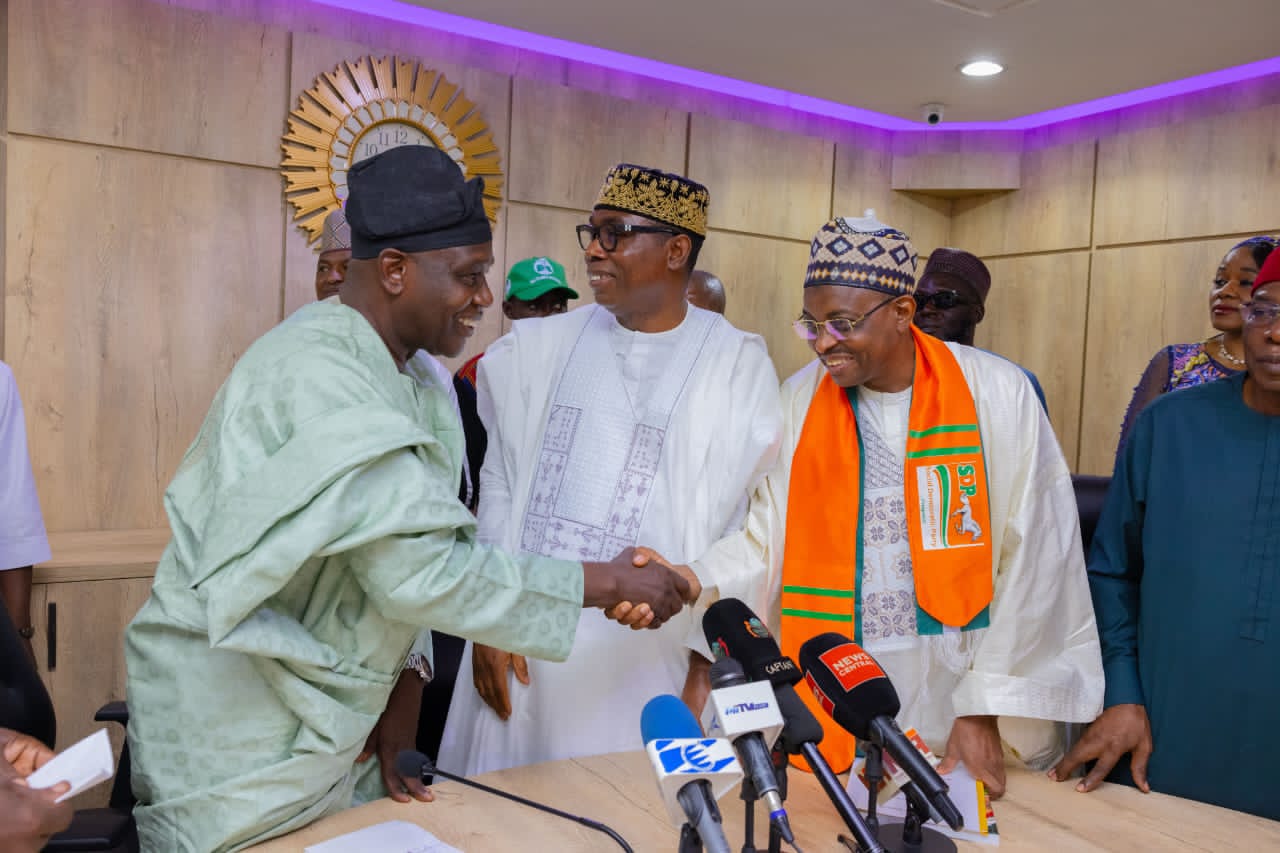
The Middle Belt Forum has said it will support a southern presidential candidate in 2027 who demonstrates competence and commitment to peace, inclusion, restructuring and the socio-economic advancement of the region.
A member of the Forum, Akor-Abagi, who spoke on behalf of the coordinator in an interview yesterday said the Middle Belt would not approach the 2027 election merely as an electoral bloc, but would demand concrete commitments from presidential candidates.
He said the recent engagement with Adebayo presidential Candidate of the SDP was not an endorsement but a consultation to understand the challenges and potentials of the region.
“His message centered on restructuring, state policing, and treating the Middle Belt as a national security priority, not just an election bloc,” he said.
According to him, Adebayo’s emphasis on understanding the challenges of the region was important because “any leaders who don’t understand the challenges and opportunities of the Middle Belt region cannot be result oriented.”
He, however, said the Forum would judge candidates by their policies and actions rather than rhetoric.
“The key test will be concrete policy and appointments, not just rhetoric,” he said.
On insecurity, Akor-Abagi said the Forum expects any serious presidential candidate to prioritise state and community policing, justice for victims and the protection of farmlands.
“The issue is not simply about making promises. There must be concrete policy, funding plans and timelines. There must also be a clear approach to dealing with illegal armed groups and land-grabbing networks,” he said.
He identified justice, equity, inclusion and land protection as major areas candidates must address, including prosecution of perpetrators, compensation for victim,
Fair federal appointments, constitutional reforms for true federalism, state police and legal protection of ancestral lands.
On power rotation, Akor-Abagi said the Middle Belt still believed in fairness and rotation but would prioritise competence and commitment to restructuring in 2027.
“Yes, the principle of rotation and fairness still matters to us. But in 2027, the focus is shifting to competence plus commitment to restructuring. The region will back whoever guarantees it safety and inclusion,” he said.
He added: “To be precise, the power should still be with the South. However, in 2031, the presidential candidature should return to the Middle Belt.”
He said the three urgent issues for the next Federal Government were insecurity, displacement and development, including the resettlement of IDPs, protection of farms and provision of roads, water, healthcare and education.
“The Forum’s tradition is to set benchmarks first. If a candidate meets them, collective endorsement is possible,” he said.
Akor-Abagi said candidates seeking the confidence of the Middle Belt must publish policies with budgets and timelines, appoint competent people from the region to key security and economic positions and engage affected communities beyond election periods.
“The key test will be concrete policy and appointments, not just rhetoric,” he said.
By David Torough, Abuja
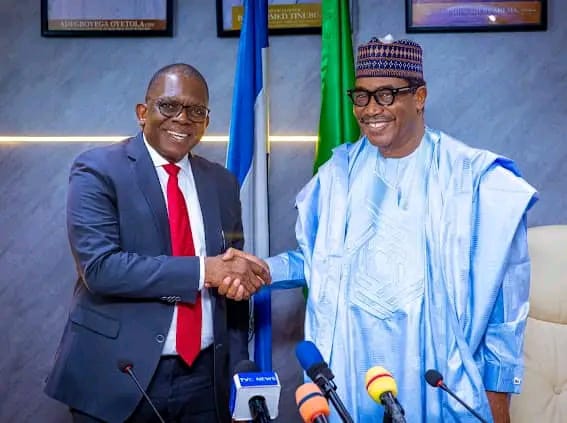
Nigeria’s port sector has entered a new regulatory era, with the Nigerian Shippers’ Council formally transitioning into the Nigeria Ports Economic Regulatory Agency (NPERA).
The transition follows President Bola Ahmed Tinubu’s (GCFR) assent to Nigerian Ports Economic Regulatory Agency Act, 2026, establishing the Agency as the statutory authority responsible for the economic regulation of the ports in the country.
Speaking at a press briefing in Lagos, Chairman of the NPERA Governing Board, Dr. Ibrahim Shema, CON, described the development as a major institutional reform that is aimed at creating a more transparent, predictable, and competitive port environment.
He added that NPERA will be responsible for the economic regulation of port services and related activities, including tariffs and charges, licensing, service standards, fair competition, commercial dispute resolution, trade facilitation and protection of port users.
Dr. Shema said the new framework is expected to provide greater regulatory certainty for Shipping Lines and Terminal Operators, while offering Importers, Exporters, Freight Forwarders and Clearing Agents more predictable procedures, fairer charges and improved mechanisms for resolving disputes.
He also clarified that the establishment of NPERA does not create a competing authority with the Nigerian Ports Authority. While the Nigerian Ports Authority will retain responsibility for port infrastructure and its landlord functions, NPERA will provide independent economic oversight within its statutory mandate.
The Board Chairman said the Agency’s regulatory approach will be anchored on five principles: transparency, fairness, predictability, efficiency, and accountability.
He added that NPERA would deploy technology and data to strengthen licensing, tariff administration, monitoring, compliance, reporting, and stakeholder engagement.
The agency also plans to work with key maritime institutions, including the Nigerian Ports Authority, NIMASA and the Nigeria Customs Service, as well as terminal operators, shipping lines, freight forwarders, manufacturers, investors and other industry stakeholders.
Dr. Shema said the immediate priority is to ensure an orderly transition from the Nigerian Shippers’ Council to NPERA, while maintaining continuity in essential regulatory functions and preserving institutional knowledge.
He stressed that the success of the new agency would ultimately be measured by its impact on port users and the wider economy.
According to him, effective implementation of the Act should translate into better services, greater efficiency, lower uncertainty, fair competition, and stronger trade facilitation.
The Executive Secretary and Chief Executive Officer of NPERA, Dr. Akutah Pius (MON), speaking at the event, expressed optimism that the new law would significantly clarify the regulatory environment governing Nigeria’s ports within the next one or two years.
He stated that the NPERA act will give the agency stronger powers to improve commercial dispute resolution and protect the interests and welfare of the port users and other stakeholders
He added that with the new regulatory framework, the agency will deliver a more efficient, transparent, and competitive Nigerian port system.
The transition marks the culmination of years of efforts to establish a permanent statutory economic regulator for Nigeria’s ports.
With NPERA now taking the helm, attention shifts from the passage of the law to its implementation.


Customs Zone A Unveils Inaugural Inter-command Games
ShareThe Nigeria Customs Service (NCS), Zone ‘A’, has unveiled its inaugural Inter-Command Games to promote fitness, teamwork and camaraderie among...
USCG Lifts 12-year Security Restriction on Nigerian Vessels
ShareThe Minister of Marine and Blue Economy, Dr Adegboyega Oyetola says the United States Coast Guard (USCG) has lifted the...
FG Demands Equal Access for Women in Green Economy
ShareThe Federal Government has called for the removal of structural barriers limiting women’s leadership in the green economy, while calling...


Ododo Extols Ex-presidential Aide, Akanmode on 76th Birthday Anniversary
ShareKogi State Governor, Ahmed Ododo has felicitated former Secretary to the State Government, Prince Olusola Akanmode, on his 76th birthday...

Jonathan Seeks Urgent Intervention in High-profile Interference in Off-cycle Elections
ShareFormer President Goodluck Jonathan has called for an urgent national stakeholders’ engagement to address the emerging trend of serving governors,...

Flood: Wike Orders Demolition of Houses Built on Waterways in Abuja
ShareThe Minister of the Federal Capital Territory (FCT), Nyesom Wike has directed the FCT Department of Development Control to immediately...


FAAC Shares N3.007trn July Revenue to FG, States, LGA
ShareBy Tony Obiechina, Abuja Federation Account Allocation Committee (FAAC) has approved the disbursement of a total of ₦3.007 trillion to...

Fresh Attack on Plateau Community Kills 24, Injures Scores
ShareFrom Jude Dangwam, Jos At least 24 people have reportedly been killed and several others injured after gunmen attacked Bin-Per...
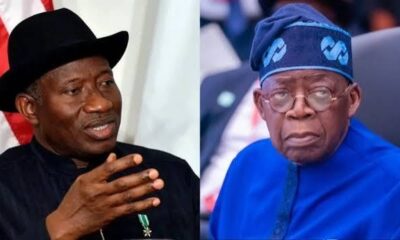

2027: Tinubu, Jonathan Seek New Rules for Peaceful Elections
ShareBy David Torough, Abuja President Bola Tinubu and former President Goodluck Jonathan have called for restraint and responsible political conduct...


2031 Presidency Should Return to Middle Belt, Forum Insists
ShareFrom Abel zwanke, Lafia The Middle Belt Forum has said it will support a southern presidential candidate in 2027 who...