
COVER
VAT: Understanding the Origin, Journey, Issues

By Joseph Chibueze, Abuja
But for the intervention of the Appeal Court which ordered the warring parties to maintain status quo, the Rivers and Lagos state governments would have by now be collecting value added tax (VAT) in their states.
However, that order by the court is only postponing the dooms day for
the Federal Inland Revenue Service (FIRS) which had earlier lost two court cases as it tries to maintain control over the collection of VAT across the country.
As at the time of filing this report more states including Benue, Akwa
Ibom, Ogun and Edo are already dusting their papers preparatory to
enacting their own value added tax laws.
It all started when the Rivers State government approached a Federal
High Court in Port Harcourt asking the court to determine if it was
constitutional for federal government through FIRS to be collecting
VAT in the state.
Based on the prayers of Rivers State, the presiding judge, Justice
Stephen Pam declared that the Federal Inland Revenue Service (FIRS)
“has no constitutional authority to enforce and administer taxes not
expressly stipulated under Items 58 and 59, Part I, Second Schedule to
the 1999 Constitution of the Federal Republic of Nigeria.”
Following that court decision, Rivers State House of Assembly passed a
bill to enact the State Value Added Tax (VAT) Law No. 4 of 2021. The
state governor, Mr. Nyesom Wike signed it into law on August 20, to
end the authority of the FIRS to administer, collect and enforce the
Value Added Tax Act, 2007 in Rivers State.
That singular act by the Rivers State Governor has also motivated
Lagos State government to enact and sign its own value added tax (VAT)
law.
The major argument is that there is gross injustice in the
distribution of VAT proceeds by the federal government.
According to Rivers State Governor, Nyesom Wike, in the month of June
2021, over N15 billion was collected as VAT from the state, but its
share of it was a little over N4 billion whereas a state like Kano
which within the same month generated N2.8 billion, got exactly the
same amount as its own share of VAT proceeds.
On several occasions, people have argued that it was wrong for states
that prohibit the consumption of some goods to share in the VAT
revenue accruing from the same goods they have prohibited.
On August 24, 1993, precisely three days to the end of his regime, the
Federal Military Government under Gen. Ibrahim Babangida (rtd)
promulgated the Value Added Tax Decree No. 102 of 1993. But the decree
did not become effective until December 1, 1993 under the late Gen. Sani Abacha.
At the time of its promulgation, the Babangida regime recognised that the VAT enforcement authority lied solely with the federating units.
But the regime, by fiat, designated the FIRS as the enforcement authority on the grounds that the federating units lacked the capacity to collect VAT within their defined jurisdictions.
With the advent of the 1999 Constitution, consistent with Section 315 of the Constitution, all the decrees, which fall directly within the purview of the federal government, became the Acts of the National Assembly.
In specific terms, the section states: “Subject to the provisions of this Constitution, an existing law shall have effect with such modifications as may be necessary to bring it into conformity with the provisions of this Constitution and shall be deemed to be an Act of the National Assembly to the extent that it is a law with respect to any matter on which the National Assembly is empowered by this Constitution to make laws …”
On this ground, the Value Added Tax Decree No. 102 of 1993 became Value Added Tax Act, 1993, retaining five per cent as the chargeable rate in 1996 under the Federal Military Government.
Under the Obasanjo administration, however, the VAT Act, 1993 was amended twice, first in
2004 and also at the twilight of the administration in 2007.
Like Babangida, Obasanjo assented to the VAT Act, 2007 about four days to the expiration of his administration. Under the VAT Act, 2007, the chargeable rate of VAT was increased from five per cent to 10 per cent.
However, the amendment stoked public disapproval, which compelled the late President Umaru Musa Yar’Adua’s administration to reverse it to five per cent on September 25, 2007.
The Federal High Court in Port Harcourt was to determine whether the Value Added Tax Decree No. 102 of 1993 be an Act of National Assembly?
Or should the National Assembly legislate on value added tax or consumption related taxes with emphasis on which level of government has the power to collect VAT within the ambit of the constitution.
Section 4 of the 1999 Constitution has defined the legislative powers of the National Assembly and States’ Houses of Assembly. Under Part I,
Second Schedule, the constitution recognises 68 items, on which the National Assembly can make laws for the purpose of good governance at the federal level.
Specifically, Items 58 and 59 on the Second Schedule further defined the taxing authority of the federal government. As these provisions suggest, the National Assembly cannot exercise its powers beyond legislating on matters on relating to stamp duties as shown on Item 58; taxation of incomes, profits and capital gains as indicated on
Item 59.
Also, under Part II, Second Schedule, the 1999 Constitution lists 30 items on which the state Houses of Assembly can legislate. Likewise, the National Assembly can as well legislate on any item or matter
under the Concurrent Legislative List. It is on these grounds that the
Federal High Court declared that there “is no constitutional provision
which grants the National Assembly power to make the VAT Act.”
Beyond this issue of who collects VAT and who does not, is the fact
that Nigeria is gradually inching towards true federalism, a state
many Nigerians have been yearning for.
The fact remains that time has come when politicians and particularly,
state governments should begin to stand up and challenge legislations
they do not feel comfortable with.
The debate over restructuring of the Nigerian federation to make it a
truly federal state has been persisted since the return to democratic
rule in 1999. The arguments had culminated in three different attempts
to restructure the country’s federal structure.
In 2005, Obasanjo convened the National Political Reforms Conference
in response to popular demands then. Also, former President Goodluck
Jonathan convoked National Conference in 2014 under the late Justice
Idris Kutigi to address imbalance and injustice that characterised the
federal system.
In keeping with its campaign promises, the ruling All Progressives
Congress (APC), in 2018, set up a Committee on True Federalism to
devolve more powers to the federating units. The committee was chaired
by the Kaduna State Governor, Nasir el-Rufai.
None of these attempts made any significant change in the country’s
governance structure. Since 1999 some states of the federation,
especially Lagos State and recently Rivers State, have successfully
challenged the constitutional powers of the federal government in
areas of conflicting interest.
With the current VAT imbroglio, and the recent court action instituted
by the 36 states of the federation through their Attorneys-General
asking the Supreme Court to compel the federal government to remit
funds generated from stamp duties into state accounts, it appears the
states are waking up to their responsibilities.
Commenting on the latest development in the match towards true
federalism, an economist and former Director General Lagos Chamber of
Commerce and Industry, Dr. Muda Yusuf, said all arms and levels of
government have a responsibility to uphold the constitution.
“This is what they have all sworn to do,” he said. “It is interesting
that the sub nationals are getting bolder and more assertive. We are
beginning to see some flavour of federalism in governance. It is a
good development.”
The Yoruba socio-cultural group, Afenifere, in a statement by its
National Publicity Secretary, Jare Ajayi, noted that the rulings by
Justice Stephen Dalyop Pam of the Federal High Court, Port Harcourt on
August 9 and on September 6, have earned the judiciary in Nigeria
respect as an institution that is not only capable of ensuring justice
but is actually working on deepening federalism in the country.
The group urged state governments to use the opportunity provided by
the landmark judgments on VAT to explore other areas that the
Constitution empowered them to assert themselves as federalists.
“In other words, they should step up actions that will liberate the
states from the stronghold of the federal government that has turned
Nigeria into a Unitary State – in contradistinction to the federal
spirit prescribes by the Constitution,” the statement said.
“They should rest assured of Afenifere support as they give vent to
power devolution and entrenchment of true federalism in Nigeria.
“Areas in which the states need to assert themselves include
agriculture, health, education, electricity, physical planning, title
registration, registration and production of vehicle number plates and
casino licensing etc as Lagos State Government did in the past.
For President of the Institute of Chartered Secretaries and
Administrators of Nigeria (ICSAN), Gbenga Owokalade, “It is beyond the
fact of winning a court case. It is a function of what is the import
of that judgement on the Nigerian nation. Several times people have
talked about physical federalism and all of those things and there
have been arguments here and there but the judgement is speaking to
the heart of some of these issues. Why will you collect resources from
an area and that area does not enjoy the bulk of that thing and then
you share out? The states need to sustain the push towards true
federalism.”





By Laide Akinboade, Abuja
As part of efforts to reposition the newspaper for optimum corporate performance, the management of Asset Newspapers Limited, Publishers of DAILY ASSET, has announced the appointment of David Torough as the Editor of the Abuja-based national daily.
A statement by the management said the appointments were part of the company’s new strategy to further penetrate the various states in the country and raise its readership and patronage.
“DAILY ASSET is widely acceptable across the country and to maintain our leadership position, we need to increase management presence, hence the need to create new Bureau offices in some locations outside Abuja and Lagos,” the statement quoted the Publisher/ Editor-in-Chief, Dr Cletus Akwaya to have said.
In a statement yesterday, Publisher and Editor-in-Chief of the fast-growing daily, Dr. Cletus Akwaya said the appointment was part of the new strategy to properly situate the paper for better productivity.
“DAILY ASSET has a commitment with the Nigerian people. We are determined to weather the storm and give Nigerian readers a Newspaper that satisfies their yearnings and reading pleasure and we can only do that with the right set of professionals,” the statement said.
Akwaya, a former Commissioner of Information from Benue State said the difficult times being faced by Nigerians posed a great challenge to the media as the people deserved credible information with which to make choices.
“We have a bond with the people, to offer credible information at all times in the best tradition of the Nigerian Press and on this scale of objectivity, truth and fairness, we pledge to remain steadfast no matter the challenges,” Akwaya was quoted to have said.
He said the newspaper will maiantin its daily print run and circulation to all states of the federation and urged advertisers to take advantage of the deep penetration of the Daily Asset brand to send their messages.
Torough, the new Editor has had a steady rise in the Newspaper in the last five years.
A graduate of Mass communication of the Benue State University, Makurdi, Torough joined the company in 2022 as Benue State Correspondent. He was spotted for his brilliance and redeployed to Abuja the following year and promoted to Deputy News Editor. He was subswuently named Deputy Editor of the paper, a position he held until the recent appointment.
Torough has attended several journalistic workshops and trainings to properly equip himself for the task ahead.
The statement also said the Management named Eze Okechukwu as Deputy Editor.
Before his elevation as Deputy Editor, Eze has been Deputy Politics Editor and DAILY ASSET Newspaper correspondent covering the Senate, having joined the organization in 2021.
Born on March 10, 1975, Eze holds a Masters Degree in Mass Communication from the Enugu State University of Science and Technology.
Eze began his journalism career with Daily Star, Enugu and later worked with Daily Trust Newspaper, Abuja as sports reporter.
Aside from his journalistic excellence, he has a great deal of passion for sports.

From Ngutor Dekera, Kaduna and Aliyu Askira, Kano
Northern governors and traditional rulers yesterday called for the suspension of mining activities across the region for six months, blaming illegal mining for worsening insecurity in many states.The resolution was contained in a communiqué issued after a joint meeting of the Northern States Governors’ Forum and the Northern Traditional Rulers’ Council held at the Sir Kashim Ibrahim House, Kaduna.
The meeting, chaired by the Gombe State Governor and NSGF Chairman, Muhammadu Yahaya, had in attendance the 19 northern governors and chairmen of the 19 states’ traditional councils. The Forum expressed concern over the escalating violence in parts of the North, including the killings and abductions recently recorded in Kebbi, Kwara, Kogi, Niger, Sokoto, Jigawa and Kano states, as well as renewed Boko Haram attacks in Borno and Yobe.“The Forum extends its deepest condolences and solidarity to the governments and good people of the affected states,” the communiqué said, noting that the attacks on schoolchildren and other citizens had become “unacceptable tragedies” that required urgent collective action.It commended President Bola Tinubu for what it described as the Federal Government’s “firm response” to recent abductions and insurgency threats, especially the rescue of some abducted pupils.The governors also saluted security agencies for their sacrifices on the frontlines.“We resolved to renew our support for every step taken by the President and Commander-in-Chief to take the fight to insurgents’ enclaves in order to end the criminality,” the Forum stated.A major highlight of the meeting was the North’s renewed push for the establishment of state police, with governors and traditional rulers insisting that decentralised policing had become inevitable.“The Forum reaffirms its wholehearted support and commitment to the establishment of state police,” the communiqué added, urging federal and state lawmakers from the region to “expedite action for its actualisation.”On illegal mining, the governors said criminal mining networks were fuelling violence and providing resources for armed groups.As a corrective measure, they asked Tinubu to direct the Minister of Solid Minerals to impose a six-month suspension of mining activities in order to allow for a full audit and revalidation of licences.“The Forum observed that illegal mining has become a major contributory factor to the security crises in Northern Nigeria. “We strongly recommend a suspension of mining exploration for six months to allow proper audit and to arrest the menace of artisanal illegal mining,” it said.To strengthen the fight against insecurity, the governors also announced the creation of a regional Security Trust Fund.Under the proposed arrangement, each state and its local governments will contribute ₦1bn monthly, to be deducted at source under an agreed framework.They said the fund would help provide sustainable financing for joint operations, intelligence-driven interventions and coordinated security responses across the region.At the end of the meeting, the Forum reaffirmed its commitment to unity and collective responsibility.“Only through unity, peer review and cooperation can we overcome the pressing challenges before us,” it declared.The Forum agreed to reconvene on a date to be announced.Meanwhile, Nigeria’s worsening security crisis took a grim turn on Monday as bandits launched fresh attacks in Kano State, abducting 25 villagers, even as the Federal Government raced to secure the release of more than 300 Catholic school children kidnapped in Niger State.In the early hours of Monday, armed bandits invaded Unguwar Tsamiya—popularly called Dabawa—in Shanono Local Government Area of Kano State, whisking away nine men and two women after shooting into the air and assaulting residents. The attackers also rustled two cows.A resident lamented the community’s helplessness: “We cannot do otherwise; most of us cannot leave because we have nowhere to go. This is our place, our land and everything is here.”The assault came less than 24 hours after a similar attack on Yan Kamaye in Tsanyawa LGA, a community along the volatile Katsina border.In Niger State, National Security Adviser Nuhu Ribadu has assured distraught families of St. Mary’s Co-Education School, Kontagora that the more than 300 students and staff abducted on November 21 will return home “soon.” Ribadu, who led a high-level federal delegation to the school on Monday, said the abductees are safe, though he offered no specifics on their location or the status of rescue operations.According to Daniel Atori, spokesman for the Catholic bishop overseeing the school, the NSA reassured officials: “The children are where they are and will come back safely.”The St. Mary’s attack is part of a worrying resurgence of mass kidnappings reminiscent of the 2014 Chibok schoolgirls’ abduction. Security analysts warn that banditry has evolved into a “structured, profit-seeking industry,” with hundreds of Nigerians abducted in November alone.The Kontagora school abduction occurred the same week 25 girls were kidnapped in Kebbi State—victims who authorities say have since been rescued through “non-kinetic” means. About 50 of the St. Mary’s hostages have also managed to escape.Ribadu’s delegation, which included the Minister of Humanitarian Affairs and the Director-General of the Department of State Services (DSS), reaffirmed the government’s commitment to securing the freedom of all abducted citizens.As communities from Kano to Niger continue to bear the brunt of these violent incursions, the escalating spate of kidnappings underscores the urgent national demand for a more decisive and coordinated security response.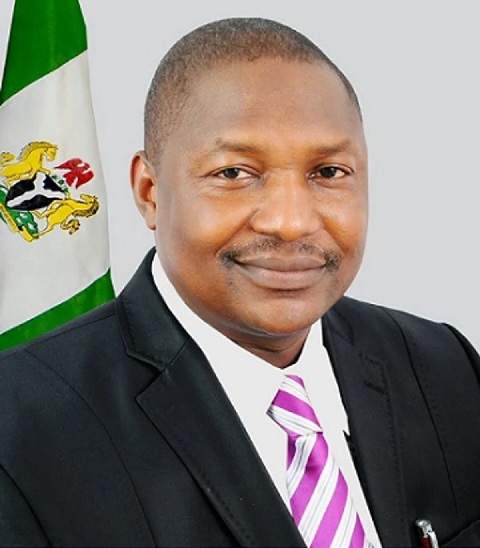
By David Torough, Abuja
The Economic and Financial Crimes Commission (EFCC) said former Attorney‑General of the Federation and Minister of Justice, Abubakar Malami, will face a team of interrogators at its office daily throughout December.A credible source in the EFCC said on Monday that the daily appearance was part of an ongoing investigation into the whereabouts of an alleged 490 million dollars Abacha loot secured through a Mutual Legal Assistance (MLAT) request.
The source said that Malami, who was summoned for interrogation by the EFCC on Saturday, was barred from leaving Nigeria for the next one month.According to the source, one of the conditions for his release on Saturday was that he should report daily to the EFCC Headquarters in Abuja for further interrogation.The source said Malami would have to appear daily at the anti-graft office due to the volume of the investigation and the seriousness of the charges against him.”We seized his passport, it is the normal routine during investigation, but he has to report at the EFCC headquarters in Abuja every day for the next month.”He will be reporting for further investigation throughout December.”He will be reporting every day, starting from Dec. 1st to Dec. 31st.He will appear before the team of investigators for the entire month of December.”He will be reporting to EFCC for investigation for the period because of the volume of the investigation and the seriousness of the charges against him,” the source added.According to the source, a fact sheet on the former minister revealed that Malami had several issues to clarify with the EFCC within the coming weeks.“We have asked him to explain the whereabouts of the $490 million Abacha loot secured through MLAT.“We didn’t say he stole money, but he should account for the loot. This is one of the issues he will clarify to our investigators.”The commission cited the large volume of documents he must review and the need for extensive interviews as reasons for seizing his passport.The source said EFCC would not engage in a war of words but would release its findings after a thorough investigation.Malami, in a statement by his media aide, Mohammed Doka, on Monday in Abuja, however, described the EFCC investigation as a political witch‑hunt.He confirmed he honored an EFCC invitation on Nov. 28, describing the engagement as fruitful and expressing confidence that the probe would vindicate him.Malami described the EFCC’s allegations as baseless, illogical and devoid of substance, insisting they collapse under factual scrutiny.
Benue Security Trust Fund Bill Passes Second Reading
ShareThe Benue State Security Trust Fund Bill, 2026, passes second reading on Thursday at the Benue State House of Assembly. Leading the debate, Thomas Dugeri, the Majority Leader, emphasised that the bill sought...
Over 20 Schools Set for Third Athletics School Games in Lagos
ShareNo fewer than 20 schools are set to participate in the third edition of the Athletics School Games (TASG), a grassroots athletics competition for school children scheduled to be held in Lagos. The...


Senegal Approves Tougher Anti-gay Law as Rights Groups Raise Concerns
ShareSenegal’s parliament has approved a new law doubling to 10 years the maximum prison term for sexual acts by same-sex couples and criminalising the...

Have Children Out of Wedlock, Marriage Doesn’t Work – Timaya
ShareNigerian singer, Timaya has shared his opinion on having children out of wedlock and marriage. The Dem Mama crooner sparked...


Ayra Starr Picks Wizkid, Tiwa Savage, Rema as Goats of Afrobeats
ShareNigerian singer, Ayra Starr has named her greatest Afrobeats artistes of all time, otherwise called “Afrobeats Big 3.” In a...


Leprosy Mission Boosts Patient Care in Niger with 25 Electronic Beds
ShareFrom Daniel Amasingha, Minna. As part of efforts to improve the treatment and welfare of leprosy patients, the Leprosy Mission Nigeria (TLMN) has...


NNPCL Cuts Petrol Pump Price by N100 in Lagos, N95 in Abuja
ShareThe Nigerian National Petroleum Company Limited has reduced the pump price of petrol at its retail outlets to N1,130 per...
Abaribe, Umeh, Kingibe, Six Others Dump Parties, Boost ADC Rank in Senate
ShareBy Eze Okechukwu, Abuja Amid Opposition turmoil, no fewer than nine senators from different political parties formally announced their defection...


Meningitis: Sokoto, Zamfara, Kebbi, Eight Others High-risk States
ShareBy David Torough, Abuja Nigeria’s public health sector is confronting a dual challenge as authorities warn of a potential meningitis...
Peculiarity and Dangers of Nigeria’s Politics of Fear
ShareBy Richard Ikiebe Some politicians depend on massive turnout to win, while others thrive when citizens are too afraid to...