
OPINION
Western Powers: On the Prowl to Neutralise Ibrahim Traore

By Ahmed Aminu-Ramatu Yusuf
Africans and progressive activists in the continent and the diaspora, including the United States (US), Canada, the Caribbean, Western Europe, and Russia, took to the streets on 30 April.The marches were in support and solidarity with the President of Burkina Faso, Captain Ibrahim Traore, his government and the people.
They were joined by democratic, anti-imperialist, and peace-loving peoples of other races. The protest was triggered by the continuous destabilisation of Burkina Faso by Western powers, especially France, which has been financing and arming some extremely retrograde and deadly terrorist elements of the Boko Haram type.But, why are France and Western powers so desperate to eliminate Traore and overthrow his government?What are French military warships, carrying hundreds of troops, helicopters, and military vehicles doing in neighbouring but hostile Cote d’Ivoire, three months after the latter claim to have expelled French forces?Why did the U.S African-American General, Michael Langley, tell a U.S. Senate Hearing that Burkina Faso’s gold reserve goes for Traore’s personal security rather than the nation’s benefit? So the US said of Muammar Gaddafi before destroying Libya and killing Gaddafi.The first reason is that Burkina Faso is a largely driven agriculture and mining country. It produces gold zinc, copper, manganese, phosphate and limestone. But it has significant reserves of diamonds, bauxite, vanadium and nickel, etc., which are presently unexploited.These materials, hitherto exploited by Western multinationals, have been nationalized by Traore’s government. An act generally seen by the Western powers as dangerous to their interests.Secondly, Traore is widely seen as the political reincarnation of a predecessor, Captain Thomas Sankara, assassinated by a French marionette, Blaise Compaore, in 1987. Like Sankara, he rode to power, as a Captain, through military coup d’état, in his early thirties. Sankara at the age of thirty-three, Traore at thirty-four.Both fought commendably against Western-backed terrorists operating and destabilizing Burkina Faso. Like Sankara, Traore is a nationalist, patriot, and professional but politically conscious military officer.Both are people-oriented leaders, passionately committed to the defence of the homeland, and the all-round development of Burkina Faso.To Western powers, a Sankara born-again must not be allowed to shine, flower and flourish, as it will fertilize the grounds for the reincarnation of African leaders like Patrice Lumumba of Congo, Sylvanus Olympio of Togo, Kwame Nkrumah of Ghana, Amilcar Cabral of Guinea Bissau & Cape Verde, Augustino Neto of Angola, Samora Machel of Mozambique, Gadhafi of Libya, Robert Mugabe of Zimbabwe and, Steve Biko, Robert Sobukwe, and Chris Hani of South Africa.Thirdly, Western powers are opposed to Traore because he is a strong believer and practitioner of development. Like Cabral, Traore sees development as greatly involving but radically transcending modernisation. Development, to them, means improving their citizens’ material, spiritual, welfare, and security conditions; continuously ensuring peace and progress; increasingly humanizing their citizens’ lives and conditions and, guaranteeing the future of their children.From the Western powers perspective, such development will negatively affect their economic interests, and counter their political domination.To Traore, pursuing development means simultaneously continuing the independence struggle to its logical conclusion. This informs his stand that, “[w]e are not in a democracy, we are in a revolution”, as the struggle involves breaking “every tie that kept us in slavery.”Fourthly, the reality, however, is that Traore believes in democracy. But democracy, to him, is more than the principles, ingredients, and rituals of liberal democracy. By his words and actions, he is out to create the basis for practicing popular democracy.After all, as Cabral said, “the people are not fighting for ideas, for the things in anyone’s head. They are fighting for material benefits, to live better and in peace,… ” Fredrick Engels had earlier said the same thing, that, “[m]ankind must first of all eat, have shelter and clothing before he can pursue politics.. . ”Popular democracy is a democracy that involves the masses in the administration of the state, the society and the economy; meets their ever-expanding material, spiritual and cultural requirements and, addresses the contradictions within the people.It is equally directed towards restricting the powers of the ruling and governing classes; confronting the dominance of Western imperialist forces in the country; consolidating national independence; transforming the neo-colonial economy; and enthroning the working people in the affairs of the political economy.Popular democracy, therefore, is a democracy in which the masses of people are dominant, and in which their interests and well-being supersedes, and overrides, the powerful interests of externally forces. As Traore said, “We have been receiving French aid for 63 years, yet our country has not developed, so cutting it off from us now will not kill us, but motivate us to work and rely on ourselves.”Fifthly, Traore is a Pan-Africanist. Like Nkrumah, he believes in the unity of Africans. But he is equally conscious that Pan-Africanism can never be attained if the African masses are relegated to the background. Therefore, the major task of Pan-Africanist leaders is to create the favourable conditions for the attainment of the ideals of Pan-Africanism.Traore believes that while Burkina Faso comes first, its development and liberation is dialectically connected with Africa’s development and liberation.Together with General Abdourahamane Tchiani of Niger Republic, and General d’Armee Goita of Mali, Traore established the Alliance of Sahel States (AES), to counter the hostilities of the pro-West Economic Community of West African States (ECOWAS).AES is confronting Western sponsored terrorism and economic sanctions. Members have adopted concrete measures to neutralise France control over their natural resources, political and diplomatic affairs, as well as economic and trade relations. They have withdrawn from the International Organisations of Francophone States, and downgraded French language in their countries.AES members have stopped French military operations in, and expelled French military forces from, their countries. They have renamed their streets after their national heroes and heroines, as against the names of racist and fascist colonial rulers.Sixth, Traore embarked on projects that undermine the interests of French and Western forces in Burkina Faso. Within two years, local and foreign debts, including those of IMF and World Bank, have been paid. He has embarked on agricultural mechanisation, and the industrialisation of the country. All these, amongst others, are economically injurious to Western interests, as they drastically cut their monopolistic capital accumulation.But these progressive actions equally endanger Traore. Alhaji Waziri Ibrahim, Nigeria’s Minister of Economic Planning, warned Africa as far back as November 1961, that: “…if we want to go very quickly in our economic changes, we cannot easily do it without creating a certain amount of trouble … The imperialists have got various means to defending their monopoly. They have got their newspapers and televisions and they can go to any extent to tell lies. If we want to set about improving the economy of our country in a particular way, they may say we are Communists. They can make our countrymen suspect our every move. If they do not succeed by false propaganda, by calling us all sorts of names, if they fail to make us unpopular in order to win their case, they can arrange assassination. They can go to any extent without discrimination.”
Ride on Traore. But, just as Samora Machel said, “[t]he day you hear the Whites speak of me in good terms, … I have betrayed you already” So Traore, please, know the day France and other Western powers speak good of you, that day, we, Africans in Africa and in the Diaspora, will know you have sold out to Western imperialist forces.Ahmed Aminu-Ramatu Yusuf worked as deputy director, Cabinet Affairs Office, The Presidency, and retired as General Manager (Administration), Nigerian Meteorological Agency, (NiMet). Email: aaramatuyusuf@yahoo.com
By Tochukwu Jimo Obi
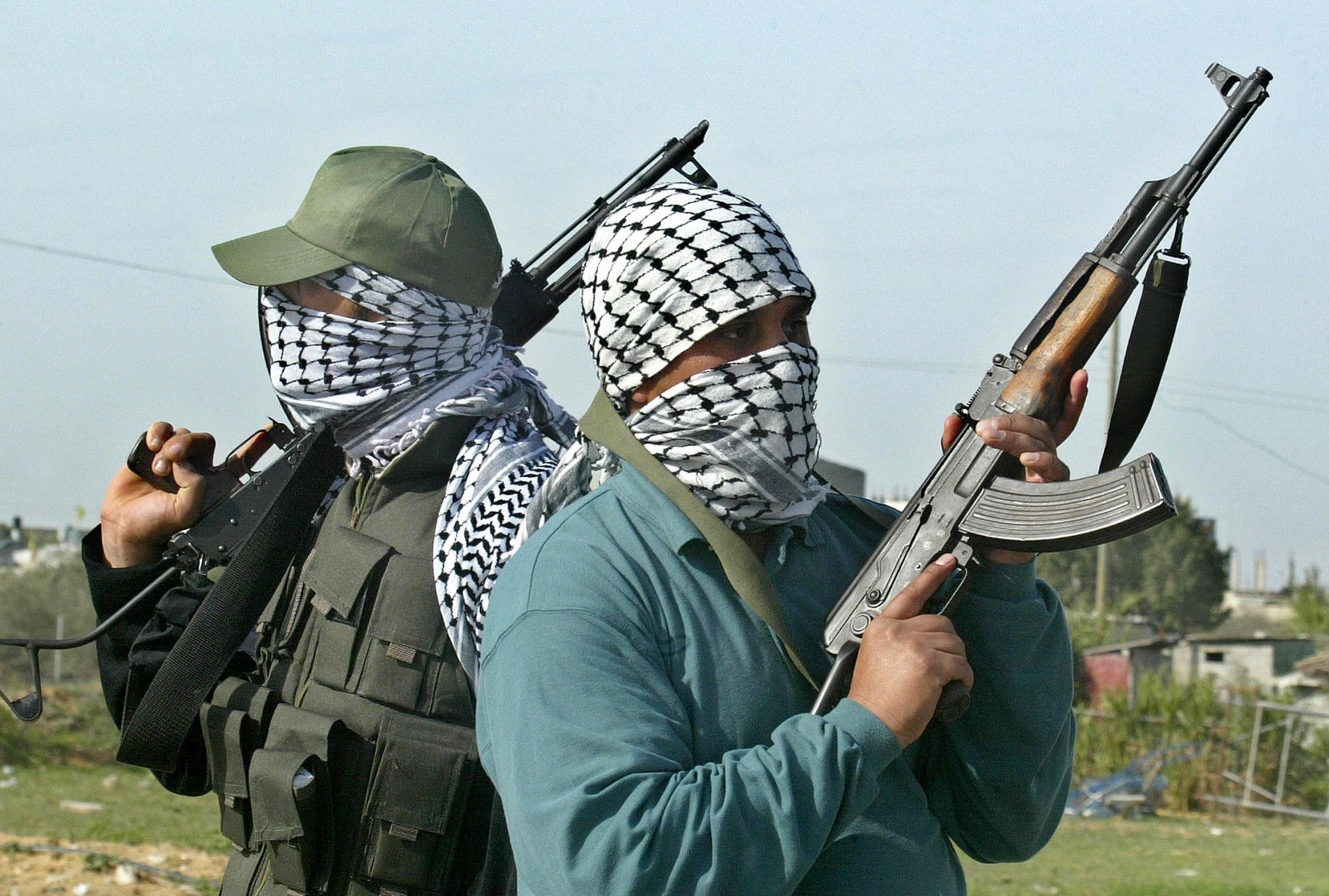
The recent kidnapping of students and teachers in Oriire Local Government Area of Oyo State has once again exposed the frightening state of insecurity confronting Nigeria. Condemnations have continued to trail Friday’s bandits’ attack on three schools in the area, where an unspecified number of students and teachers were abducted, while two persons were reportedly killed.
The tragedy has left families devastated and communities gripped by fear, as another painful chapter is added to the growing list of violent attacks across the country.The attack, which occurred on May 16, saw armed bandits storm the community and abduct staff, students, and pupils from three schools; Community Grammar School, Baptist Nursery and Primary School, and L.
A. Primary School. Eyewitness accounts revealed that the attackers operated for hours without resistance, moving freely through the area while terrified residents watched helplessly. The incident has raised serious concerns about the safety of schools and the preparedness of security agencies to respond swiftly to emergencies.Worst of all, one of the teachers kidnapped during the attack was reportedly beheaded by the terrorists, a horrifying development that has deepened public outrage. Such brutality underscores the dangerous evolution of criminal activities in Nigeria, where terrorists and bandits now operate with alarming boldness and cruelty. The gruesome killing has further strengthened calls for urgent and decisive action from government authorities at all levels.
This unfortunate incident of school attacks is happening yet again despite repeated assurances from security agencies that schools across the country are safe. Nigerians have continued to hear promises of improved intelligence gathering, stronger patrols, and enhanced protection for vulnerable communities, yet attacks persist with devastating consequences. The contradiction between official assurances and the reality on the ground has weakened public confidence in the nation’s security architecture.
Another disturbing trend is that insecurity is rapidly spreading into the South-West region, an area once considered relatively safer compared to other parts of the country. Reports of Lakurawa terrorists and other armed groups establishing footholds in parts of the region have heightened fears that criminal networks are expanding their operations unchecked. The Oyo school kidnapping has therefore become more than a local tragedy; it is a warning sign that no region in Nigeria can afford to feel immune from terrorism and banditry.
Every now and then, government officials continue to assure citizens that security agencies are on top of the situation, yet many innocent people are still being killed and abducted with little or no arrests made afterward. More troubling is the fact that these attacks reportedly lasted for over two hours without any intervention from security operatives. This glaring security failure leaves Nigerians asking difficult but necessary questions about the nation’s emergency response capabilities.
How could terrorists, moving in large numbers on motorbikes, invade communities, abduct many people, and still escape without being tracked, stopped, or pursued effectively? What then are the military aircraft and advanced security equipment acquired with public funds meant for if they cannot be quickly deployed during emergencies? These are questions that citizens deserve answers to, especially as insecurity continues to consume lives and livelihoods across the country.
The Oyo incident has once again strengthened arguments for the establishment of state police across Nigeria. It is now obvious and evidently clear that the country’s centralized security structure requires urgent decentralization, similar to what operates in many secure nations around the world. State policing, if properly regulated and managed, could improve intelligence gathering, rapid response, and community-based security operations, particularly in rural areas that are often neglected under the current system.
It is no longer enough for leaders to merely condemn these attacks without taking concrete and sustained actions to secure the nation. President Bola Tinubu, as Commander-in-Chief of the Armed Forces, must urgently engage all stakeholders in the security sector, including international partners where necessary, to ensure that these terrorists are decisively defeated.
Government must also ensure that budgeted funds meant for security agencies, especially for the purchase of military hardware and equipment, are fully released and properly utilized. Beyond military action, authorities must intensify efforts to prevent the recruitment of vulnerable youths into criminal and terrorist groups. Nigerians are tired of mourning innocent victims. These killings must stop.
Tochukwu Jimo Obi, a concerned Nigerian writes from Obosi Anambra state.
By Fortune Abang
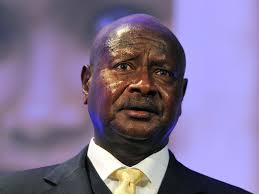
Uganda’s President Yoweri Museveni, 81, sworn in for a seventh term after nearly four decades in power, has once again intensified debate over gerontocracy and political succession in Africa.
Museveni, who first assumed office in 1986, has now extended his rule into a fifth decade, making him one of the world’s longest-serving heads of state.
His latest mandate, expected to run until 2031, follows the January 2026 election in which he secured about 71.65 per cent of the vote, according to official results, defeating opposition leader Robert Kyagulanyi, popularly known as Bobi Wine.
His continued stay in power has been enabled by key constitutional changes over time, including the removal of presidential term limits in 2005 and the abolition of the presidential age ceiling in 2017, reforms that effectively removed legal restrictions on tenure.
Across Africa, analysts say Uganda reflects a broader governance pattern in which long-serving leaders consolidate authority over extended periods.
Comparable examples often cited include Cameroon’s Paul Biya, in power since 1982, and Congo-Brazzaville’s Denis Sassou Nguesso, who first assumed office in 1979, both of whom have also presided over decades of uninterrupted or repeatedly renewed rule.
While Museveni’s supporters argue that his leadership has provided continuity and relative stability in a region frequently affected by conflict, critics say prolonged incumbency has gradually narrowed political competition and weakened institutional independence.
Uganda has maintained a degree of internal stability and played active roles in regional diplomacy and security operations in East and Central Africa.
Supporters point to these outcomes as evidence that long-term leadership can deliver policy continuity and state cohesion.
However, opposition voices and analysts argue that stability has come at a democratic cost, pointing to declining electoral competitiveness, constrained civic space and increasing centralisation of power around the executive.
The debate intensified after the removal of presidential term limits in 2005, followed by the scrapping of the age ceiling in 2017, which together removed two major constitutional barriers to leadership rotation.
These changes have been widely cited by governance analysts as pivotal in reshaping Uganda’s democratic structure.
In the January 2026 election, Museveni again defeated Bobi Wine, who garnered roughly 24.7 per cent of the vote, amid allegations from the opposition of irregularities and political repression during the electoral process.
Supporters of Museveni argue that his long rule has enabled economic transformation, infrastructure development and strengthened Uganda’s role in regional diplomacy.
Some regional leaders, including Burundi’s President Évariste Ndayishimiye, have previously described him as a stabilising figure in East Africa, crediting Uganda with supporting peace processes and regional cooperation.
Yet, critics argue that prolonged rule risks institutional stagnation, where governance structures become overly dependent on individual leadership rather than strong, independent institutions.
Analysts warn that this can weaken succession systems and limit democratic renewal.
A foreign policy analyst, speaking anonymously, said prolonged leadership can normalise “institutional dependence on individuals rather than systems,” arguing that such conditions undermine long-term democratic consolidation.
“No nation can sustainably develop when power remains concentrated in the same hands for decades while institutions fail to mature independently,” he said.
Beyond Uganda, Africa continues to record some of the world’s longest-serving leaders, reinforcing concerns about generational turnover in governance.
In several of these systems, electoral competition remains limited and constitutional reforms have often coincided with extended presidential tenure.
Foreign affairs commentator Collins Nweke argues that the central issue is not age itself, but accountability and leadership renewal, noting that political systems weaken when succession is delayed or constrained.
Other analysts emphasise the importance of civic awareness and institutional safeguards, particularly term limits, which they describe as critical tools for preventing excessive concentration of power.
A diplomat, also speaking on condition of anonymity, called for stronger electoral transparency mechanisms, including credible voter registration systems, independent election management bodies, and robust domestic and international observation frameworks.
An academic, who spoke on condition of anonymity, said stronger civic awareness could help societies resist unconstitutional tenure elongation.
“When citizens are politically informed and organised, sit-tight ambitions lose legitimacy and public support,” he said.
Museveni’s seventh term therefore reflects a wider continental tension between political continuity and democratic renewal, raising questions about whether African democracies are evolving toward stronger institutions or settling into prolonged cycles of personalised rule.
For supporters, his leadership represents stability in a volatile region.
For critics, it signals the entrenchment of gerontocracy and weakening democratic competition.
Between these positions lies a structural challenge that extends beyond Uganda; whether institutions in African states are strong enough to outlast individuals and guarantee orderly political succession. (NAN)
By Bart Nnaji
Africa’s energy journey is often portrayed as a stark choice between climate responsibility and development. In reality, the continent faces a more nuanced challenge: finding a fair, gradual energy transition that matches its unique needs and ambitions.
Technology and innovation can drive this change, helping secure affordable and sustainable energy for all.In the coming decades, Africa’s population is expected to soar to nearly 2.5 billion. Cities will grow. Industries will expand. Digital connections will multiply. The demand for energy will increase significantly.
Right now, expecting Africa to abandon fossil fuels overnight is neither realistic nor fair. In the near future, fossil fuels remain crucial for base power that is reliable, and affordable. In particular, natural gas is key transition fuel that will remain the base power solution for the next decade. Africa must not embrace renewable energy primarily when they have abundance of fossil fuel for their industrialization as other emerging and emerged nations have done. A just energy transition recognises these realities and seeks ways to build cleaner, more resilient systems over time.Technology as the Enabler of Africa’s Energy Future
Exciting new technologies are already reshaping Africa’s energy landscape:
Decentralised solutions, like mini-grids, off-grid solar, and batteries, bring electricity to places traditional grids can’t reach. By 2030, these distributed renewables could provide most new connections in underserved communities.
Smart grids and AI-driven management can reduce waste. They help utilities serve people better.
Modern batteries ensure that solar and wind energy can be delivered steadily, even when the sun isn’t shining or the wind isn’t blowing.
Decentralised approaches are essential to Africa’s path toward universal energy access. While technology is not a fix-all solution, it is a crucial enabler of efficiency, resilience, and affordability, shaping Africa’s energy future.
African entrepreneurs are leading much of this change. They’re developing solutions that meet local needs, such as pay-as-you-go solar, community-run mini-grids, and mobile payment platforms. These innovations don’t just bring power; they create jobs, build skills, and reap economic benefits for the continent.
But innovation alone isn’t enough. Investment is critical. According to the International Energy Agency, Africa needs about $90 billion annually to achieve a successful energy transition, but current funding falls short. Governments can help by setting clear, supportive policies that attract investment and make projects more affordable. Organisations like the African Development Bank say grid investment must rise dramatically, and clean energy spending should double by 2030 to keep up with growing demand.
From Energy Access to Economic and Human Impact
Reliable energy is more than just a technical necessity – it’s what fuels industrial growth. Picture the continent’s factories buzzing with activity, transport networks connecting people and goods, and data centres powering a vibrant digital economy.
Expanding decentralised solutions brings light to places that have been left in the dark for too long. It’s about giving children a place to study at night, helping clinics store vaccines safely, and empowering entrepreneurs to launch new businesses.
Of course, none of this works in isolation. Supportive policies, strong regulations, and partnerships between governments and private companies are essential. When African countries harmonise their rules and work together, they can create bigger markets. This draws even more investment and innovation.
Ultimately, Africa’s energy transition must be shaped by Africans themselves. The path forward is about collaboration, pragmatism, and investing in homegrown solutions. Africa’s mobile phone revolution showed the world how quickly the continent can leapfrog old systems. The same can happen with energy; by embracing flexible, tech-driven models that serve today’s and tomorrow’s needs.
Now is the time to come together to act boldly and invest in Africa’s energy future. By uniting efforts, we can turn potential into progress, ensuring resilient, inclusive, and sustainable energy for generations to come. Let’s power Africa’s future, together.
Prof. Bart O. Nnaji FAS, FA Eng. CON, NNOM – Founder/Chairman, Geometric Power Limited and former Nigerian Minister of Power




Bayelsa state is for APC, says Lokpobiri
Share“As he delivered 13,591 votes to president Tinubu in his Ward 8” From Mike Tayese, Yenagoa As the 2027 political...

Tinubu Polls 277,192 Votes In APC Presidential Primaries in Bayelsa*A Restructured Nigeria Possible, Says Gov Diri
ShareFrom Mike Tayese, Yenagoa President Bola Tinubu, on Saturday, polled 277,192 votes in the direct primaries of the All Progressives...

Udende Leads Massive Tinubu Endorsement in Benue APC Primaries
ShareBy David Torough, Abuja The Senator representing Benue North East Senatorial District, Senator Emmanuel Memga Udende, on Saturday led party...


Flood: NEMA Lists 11 Niger LGAs as High-risk Areas
ShareThe National Emergency Management Agency (NEMA) has identified 11 Local Government Areas (LGAs) in Niger as high flood-risk zones ahead of the 2026 rainy season. Director-General of NEMA,...


DR Congo Cancels World Cup Training Camp over Ebola Outbreak
ShareThe Democratic Republic of Congo has cancelled its pre-World Cup training camp in the capital, Kinshasa, because of an Ebola outbreak in the east...
Gonorrhoea, Syphilis Hit Record Levels in Europe
ShareSexually transmitted infections (STIs) including gonorrhoea and syphilis have hit record levels in Europe, according to new data. The European Centre for Disease Prevention and Control (ECDC)...

Tinubu Appoints Aina as JAMB Registrar
SharePresident Bola Tinubu has appointed Prof. Segun Aina as the new Registrar of the Joint Admissions and Matriculation Board (JAMB), succeeding Prof. Is-haq Oloyede. Oloyede’s tenure expires on...
Nursing Council Inducts First 57 Benue Varsity Graduates
ShareFrom Attah Ede, Makurdi Nursing and Midwifery Council of Nigeria (N&MCN), on Thursday, inducted 57 maiden graduates of the Department of Nursing Science of the Rev. Fr....
DisCos Meter 241,590 Customers in Two Months –NERC
ShareThe Nigerian Electricity Regulatory Commission (NERC) on Thursday said that Electricity Distribution Companies (DisCos) metered a total of 241,590 customers...

No Plan to Rename Nigeria, Abolish Shariah Law — Presidency
ShareBy David Torough, Abuja The Presidency has dismissed as false and misleading reports claiming that President Bola Tinubu plans to...