
Metro
Why FCTA is borrowing N200bn – Minister

By Laide Akinboade, Abuja
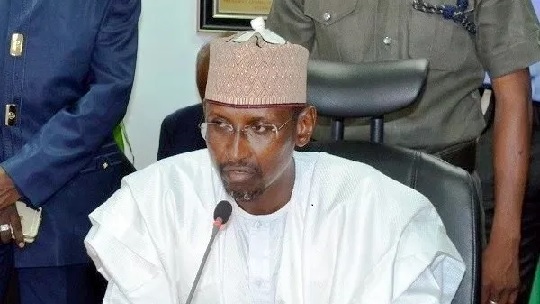
The Minister of Federal Capital Territory, FCT, Malam Muhammad Bello, on Tuesday said his administration was borrowing N200 billion to finance the provision of road infrastructure and water projects across the Territory.
FCT Minister, made this disclosure during inauguration of a Technical Committee on the Proposed FCT Issuance of SUKUK of N200 billion for the FCT 2022 Statutory Budget, in his office on Tuesday.
According to Bello, the loan facility was needed to enable the FCTA achieve its desired objective of rehabilitating and expanding some existing roads in the city and open up more roads to arrest traffic gridlocked on major roads in the city.
Attributing the congestion and traffic situation of the city centre to “unprecedented influx of people to the FCT” since return to democracy in 1999, Bello opined that an alternative funding outside statutory funding to finance completion of projects in the FCT was inevitable.
He noted that the population upsurge in the FCT has overstretched Abuja’s infrastructure and social amenities, while resources for development became more and more scarce and unavailable, this threatening the dreams of the capital’s founding fathers.
Expreasing gratitude to the Debt Management Office (DMO) and National Assembly for their continued support, Bello stated that the proposed N150 billion loan would complement the N29 billion loan earlier received from the Federal Ministry of Finance through SUKUK funding.
Some of the terms of targets given to the seven-man technical committee include to develop a framework for accessing SUKUK fund by the FCTA in the domestic capital Arreton for financing of infrastructure projects in the FCT; review and advise on the procedure and options for obtaining sovereign guarantee for the issuance of SUKUK by the FCTA and prepare the budget estimates for the issuance of sukuk by the FCT and present same for approval.
Others include, to advise on the appointment of transaction parties and methodologies and advise on the eligibility and packaging of projects identified for funding with the proceeds of SUKUK, among others.
Earlier, Director-General, DMO, Ms Patience Oniha, while assuring the FCTA support in obtaining the loan facility, warned that it should be judiciously used for the purposes it was sought.
She stated that one could hardly drive around Nigeria without noticing the good works of Sukuk, adding that Sukuk has attracted a lot of good will and buy-in from Nigerians because they were witnessing work done with monies borrowed.
Senator, representing FCT and Senate Minority Whip, Senator Philip Aduda; Chairman, Senate Committee on FCT, Senator Abubakar Kyari, and Chairman, House Committee on FCT, Abdullahi Idris Garba, who was represented by Hon. Igariwe Iduma, all pledged the support of the lawmakers to the FCT Administration and promised to continue to work together to archives its goals.





By Orjime Moses, Abuja
The Independent National Electoral Commission (INEC) has urged youths in the South-South to shun electoral violence, hate speech, misinformation and political manipulation ahead of the 2027 general elections.
The commission made the call in a post on its official Facebook page, saying it had intensified engagement with youth organisations across the six geopolitical zones to promote peaceful participation, electoral integrity and credible elections.
The South-South zonal engagement, which followed an earlier meeting in the South-West, brought together representatives of youth organisations and other stakeholders to discuss strategies for promoting peaceful participation and credible elections.
In his address, the Resident Electoral Commissioner (REC) in Akwa Ibom State, Prof. Anugbum Onuacha, urged young people and other stakeholders to take ownership of the electoral process by participating actively in election planning and implementation.
He stressed the need for professionalism, transparency and stakeholder inclusion, noting that public confidence in elections could be strengthened when critical stakeholders were carried along.
Onuacha reaffirmed the commission’s neutrality, declaring that INEC had no political party or candidates. He also said the commission remained committed to improving its electoral processes, adding that lessons from previous elections would guide subsequent exercises.
In his goodwill message, the Akwa Ibom State Director of the National Orientation Agency (NOA), Mkpoutom Noa, commended INEC for organising the engagement, describing it as an important platform for addressing youth involvement in electoral violence.
He urged participants to understand the consequences of electoral offences and avoid being used as instruments of political violence.
Similarly, the National Youth Service Corps (NYSC), through its Akwa Ibom State Coordinator, conveyed a goodwill message from its Director-General, Brigadier-General U. O. Ahmed, urging young Nigerians to embrace peace, demonstrate political maturity and take collective responsibility for protecting democracy.
The message cautioned youths against allowing political differences, personal interests and financial inducements to turn them into agents of intimidation and electoral violence.
It also encouraged young people to use social media responsibly, promote voter education and participate peacefully in the democratic process.
Speaking, the Deputy Director, Inclusivity, INEC Headquarters, Abuja, Mrs Habiba A. Jatto, said the engagement was designed to strengthen collaboration between the commission and youth organisations ahead of the 2027 general elections.
She described young people as a critical national resource whose energy, creativity, resilience and digital capabilities could contribute significantly to democratic development.
Jatto, however, expressed concern that despite constituting more than 60 per cent of Nigeria’s population, young people were often exploited by political actors for negative electoral activities.
She said the engagement was aimed at repositioning youths as responsible stakeholders and partners in promoting peaceful elections rather than tools for advancing anti-democratic interests.
According to her, the objectives included strengthening partnerships between INEC and youth groups, promoting civic responsibility and democratic values, sensitising young people on electoral integrity and political tolerance, and encouraging issue-based political engagement.
The engagement featured presentations by INEC officials on the commission’s preparations for the 2027 general elections, electoral offences and penalties, the Bimodal Voter Accreditation System (BVAS) and the use of technology in elections.
The Head of Department, Voter Education and Publicity, INEC Akwa Ibom State, Geraldine Ekelemu, spoke on the commission’s state of preparedness for the 2027 elections, highlighting the importance of voter education and public awareness.
Also, the Head of Department, Legal Services, INEC Akwa Ibom State, Emeka Owabie, addressed electoral offences and penalties, while Tope Fakiyesi, who represented the Head of Department, Information and Communication Technology, Edidong Ekam, spoke on BVAS and new technology in elections.
The Assistant Director, Youth, INEC Headquarters, Bukar Maikwada, urged young people to use their digital skills to promote accurate information, counter misinformation and strengthen democratic participation.

The National Identity Management Commission (NIMC) has reiterated its commitment to strengthening Nigerians’ digital identity, cybersecurity and privacy safeguards under the 2026 NIMC Act.
The commission also pledged to expand access to essential services across Nigeria through an improved digital identity system.
NIMC Director of Operations, NIMC, Uche Chigbo, said this on Thursday in Abuja on the sidelines of the Digital Nigeria Conference organised by the National Information Technology Development Agency (NITDA).
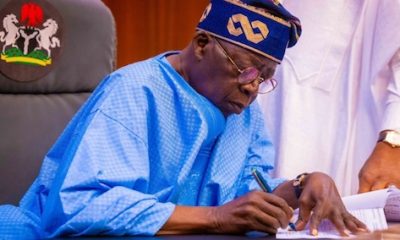
Recall that President Bola Tinubu signed the NIMC Act (2026) into law on June 26, 2026.
Chigbo explained that the repealed NIMC Act No. 23 of 2007 had become obsolete over the past 19 years before its replacement by the new law.
She said the new legislation would reposition NIMC and strengthen its role in Nigeria’s digital identity ecosystem.
According to her, the commission had shifted its focus beyond enrolment figures to maximising the value of digital identity.
She said that NIMC was working towards achieving universal identity coverage while ensuring that the National Identification Number (NIN) unlocked economic and social opportunities.
Chigbo said the new Act would expand the commission’s mandate to strengthen its technology architecture, particularly cybersecurity, and position it as the certification authority for public key infrastructure.
She added that the legislation would empower NIMC to play a leading role in developing Nigeria’s Digital Public Infrastructure.
She said that the Act introduced stricter sanctions for identity-related violations, particularly through collaboration with the Nigerian Data Protection Commission (NDPC).
The director said that the commission was developing identity-proofing mechanisms for people without conventional identity documents.
According to her, community chiefs or relatives could identify such individuals to facilitate their identity registration.
Chigbo added that the Act would also address challenges faced by Nigerians without permanent residential addresses to prevent their exclusion from identity registration.
Head of Legal, Enforcement and Regulations at the NDPC, Babatunde Bamigboye, said that it was imperative to protect personal information under the new Act.
Bamigboye said NIMC’s expanded mandate did not override individuals’ privacy rights, stressing that the law recognised the need to protect personal data.
He said possession of citizens’ identity and personal data did not give NIMC or any government agency unrestricted access to the database without a lawful basis.
According to him, access to personal information must be supported by lawful grounds, including consent, public interest and other provisions recognised under the Nigeria Data Protection Act.
He added that individuals had the right to access their personal data, correct inaccurate information and object to unauthorised access.
Bamigboye also stressed the need to protect individuals from decisions made solely through automated systems, particularly as artificial intelligence becomes increasingly integrated into public services.
He urged digital stakeholders to adopt proactive measures to ensure compliance with privacy, accountability and data protection standards.
“We want to see that such an operation is proactive. We don’t have to wait until things happen before we react,” he said. (NAN)

Nollywood actress and filmmaker, Bimbo Ademoye, has rejected an apology from a man who filed a copyright claim against her YouTube movie, My 30th Wedding, insisting that she remains angry over the incident.
The actress had earlier offered a ₦1m reward for information about the individual, identified as Mazi Enemuo, after a copyright claim temporarily affected the monetisation of the movie, which has reportedly garnered about 29 million views.
The film was released on October 1, 2026, on her YouTube channel.
On Monday, Ademoye took to Instagram to express her frustration, alleging that Enemuo had uploaded a song from the movie and used it to claim earnings from the project.
She said the soundtrack, titled “We Can Take It (My 30th Wedding)”, was specially produced for the film by musician Progress and that she owned the rights to it.
Ademoye also urged her followers to report the individual across social media platforms and called on YouTube and YouTube Africa to intervene.
She later announced that monetisation on the movie had been restored, thanking her team for their intervention.
However, she maintained that her ₦1m bounty on Enemuo remained in place.
Enemuo subsequently apologised, saying he had uploaded the song to help promote the movie’s soundtrack and reach a wider audience, rather than infringe on Ademoye’s rights.
In a public apology, he said, “Unfortunately, the distribution platform has laid a YouTube Content ID claim on the content. I take full responsibility for the situation and have since taken down the song from all streaming platforms.”
He added that the song would be removed from all platforms within 24 to 48 hours and that he would contact the distributor to ensure that no residual claim remained.
But responding to the apology on Instagram on Tuesday, Ademoye described it as insincere and questioned his explanation that he had intended to help her reach a wider audience.
“Mr Enemuo, while I see your apology, I call it complete bullshit! I took multiple breaths and I’ve counted 1-10 multiple times to ensure I calm down and not say anything out of pocket but guess what, I’m still very angry!
“You claimed you wanted to help me reach a wider audience, I’m not sure you thought that statement through, you wanted to use your 250 subscribes to help me reach a wider audience with my almost 2 million subscribers?” she asked.
Questioning why Enemuo uploaded the particular soundtrack rather than another song from the movie, she said, “You specifically took the song I didn’t properly copyright of all the songs in the movie. Why didn’t you take hammerboi’s song? If anything, that’s the viral one I’d have loved to go even more viral song.”
She also questioned why he attempted to claim earnings from the movie after allegedly uploading the song to promote it.
“After you ‘helped me reach a wider audience’ why did you try to claim my earnings? Why did you monetise it and have me demonitised?” she asked.
The actress further warned that she would pursue the matter, writing, “But I’d make an example out of you. Don’t ever take my silence for weakness, believe me when I tell you I AM NOT THAT NICE AT ALL! ESPECIALLY WHEN IT COMES TO MY WORK.”
In a postscript to her response, Ademoye also dismissed suggestions that she was using the controversy for publicity or had failed to protect her work through copyright registration.
She shared screenshots of messages from people who, according to her, had contacted her after their channels were taken down following copyright enforcement on her projects.




Nigerian Military Rescues 47 Kidnap Victims, Arrests Suspects in Nationwide Operations
ShareBy David Torough, Abuja The Armed Forces of Nigeria (AFN) have rescued 47 kidnapped persons, including 29 children, neutralised several...


Nigerian Army Inducts 6,419 New Soldiers as Force Expands to 12 Divisions
ShareBy David Torough, Abuja The Chief of Army Staff (COAS), Lieutenant General Waidi Shaibu, has inducted 6,419 newly trained soldiers...


Troops Rescue 14 Kidnap Victims in Kaduna, Hunt for Others
ShareBy David Torough, Abuja Troops of the Nigerian Army have rescued 14 passengers abducted by kidnappers at Kurmin Goro in...


A Year Never to be Forgotten in My Lineage — Pastor Komaiya
ShareBy David Torough, Abuja The Senior Pastor of Masters Place International Church, Pastor Korede Komaiya, has described 2026 as an...


PAP Phase Two Chairman Hails Otuaro over Aberdeen University Engagement
ShareFrom Seyi Tayese, Yenagoa The National Chairman of the Presidential Amnesty Programme (PAP) Phase Two, Ibena Rufus Salvation, has commended...

Henry Okeke Welcomes Tinubu to Enugu, Hails Mbah’s Development Efforts
ShareBy Raphael Atuu The Convener of New Enugu Group Barrister Henry Okeke, has welcomed President Bola Ahmed Tinubu to Enugu...


COAS Sharpens Combat Edge of Expanding Nigerian Army, Graduates 91 RRI CTCOIN Recruits
ShareBy David Torough, Abuja The Chief of Army Staff (COAS), Lieutenant General Waidi Shaibu, has highlighted the importance of specialised...


FOOG Women Support Group for Tinubu Commends Babangida, Abdulsalami Over Tinubu’s 2027 Endorsement
ShareBy Francis Sadhere, Delta The FOOG Women Support Group for Tinumbu has commended former Nigerian military Heads of State, Generals...


COAS Strengthens Troops Welfare, Commissions Training Infrastructure atDepot Nigerian Army Zaria
ShareBy David Torough, Abuja The Chief of Army Staff (COAS), Lieutenant General Waidi Shaibu, has strengthened the Nigerian Army’s drive...

Benue IDPs Praise UNICEF over Provision of Facilities
ShareFrom Attah Ede, Makurdi Internally Displaced Persons (IDPs) in Benue State have poured praises on the United Nations Children’s Fund...