
Uncategorized
Why Nigeria Needs National Coast Guard—Minister

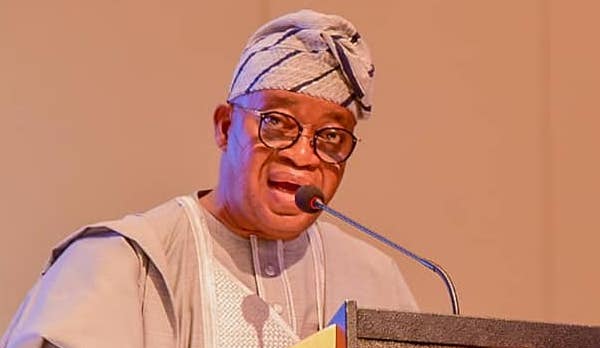
The Minister of Marine and Blue Economy, Adegboyega Oyetola, says there is need to strengthen the collaboration between the ministry and the Nigerian navy in safeguarding Nigerian maritime space as it is done in other climes.
Oyetola made this submission on Thursday in Abuja at the Senate public hearing on the Nigerian Coast Guard Establishment Bill 2024.
Report says that a bill to establish Nigerian Coast Guard recently scaled second reading in the Senate.
The minister said it was important to give credit to the Nigerian Navy for its achievements in safeguarding the Nigerian maritime space and giving Nigeria a good image worldwide.
Oyetola said the collaborative effort between with the ministry and its agency–the Nigerian Maritime Administration and Safety Agency (NIMASA) in the Deep Blue Project had shown great result with zero piracy in Nigeria territorial water in the last three years.
“However, there is a need to further complement the efforts of our Navy as it is done in other climes.
“According to a 2009 publication by the Africa Centre for Strategic Studies, 15 out of the 21 independent maritime nations in sub-Saharan Africa have dedicated coast guards, that identify themselves as such and none has our population and many of these countries do not have the length of our inland waterways or coastline.
“Also, a 2015 publication by the Institute for Security Studies of the National Defence College of Nigeria highlighted the impact of activities such as illegal, unregulated and unreported fishing in the inland waters, coastal and marine fishing zone in sub-Saharan Africa.
“These illegal activities are estimated to cost the region approximately between 3 billion dollars to 5 billion dollars a year in lost revenue.
“The Lagos – Calabar Coastal Highway development is a major game changer for the entire coastline of the country.
“The project is expected to unlock the regions blue economy potential– hotels, beach resorts, water parks, eco-parks, ferry services, hospitality industries, industrial parks and more are soon to spring up along the coastline.’’
The minister said that such increase in economic activities would require a dedicated institution that would be responsible for ensuring maritime safety, search and rescue, environmental protection and the enforcement of civil maritime laws.
According to him, the spate of boats mishap within the nation’s inland waterways is also a strong justification for the need to strengthen our maritime safety and the enforcement of maritime laws and regulations in the inland waterways.
“This is necessary to boost maritime trade and trans-shipment in Nigeria.
“Also, considering Nigeria’s critical position in the maritime domain on the continent and globally, the establishment of a National Coast Guard will further increase our standing in the comity of maritime nations. This will no doubt attract foreign support and assistance.”
Oyetola said that the establishment of the Coast Guard was aimed at maritime safety–by establishing clear protocols, enforcing safety regulations, and overseeing navigation routes in our inland water ways.
He said the Coast Guard would play a critical role in safeguarding lives, property and trade within Nigeria’s coastal and inland waterways.
The minister said that the Coast Guard would respond rapidly to maritime emergencies, conducting timely and efficient search and rescue operations.
“The Coast Guard will actively work in collaboration with other relevant government agencies to prevent pollution and enforce environmental regulations within Nigeria’s waters.
“Through initiatives focused on conservation and the protection of marine ecosystems, the Coast Guard will support Nigeria’s commitment to environmental stewardship, safeguarding marine biodiversity for future generations.
“Enforcement of Civil Maritime Laws–tasked with upholding laws that govern civil maritime activities, the Coast Guard will enforce fishing laws and regulations, conventions on pollution and other civil maritime offences.
“This function will support sustainable resource management, protect Nigeria’s waters from illegal exploitation and align with international best practices for civil maritime governance.’’
He also spoke on inter-agency collaboration with military/paramilitary agencies
According to him, the ministry is cognisant of the traditional but important roles being played, especially by the Nigerian Navy and the armed forces to protect our waterways and maritime assets through their operations.
He said that National Coast Guard would ensure effective collaboration with other military and paramilitary agencies.
“To this end, we advocate the setting up of effective and coordinated machinery for seamless collaboration with the Nigerian Navy and other armed forces, as well as key agencies in the country, to further enhance the protection of our maritime resources.
“This will include technology and resource sharing, joint maritime exercises, missions and training to enhance maritime safety and foster cooperation.’’
Oyetola urged the Senate and the National Assembly to lend their full support to the bill.
He said that Nigerian Coast Guard would act as a vital complement to the Navy, fostering a safe and sustainable maritime environment that was aligned with international best practices.
According to him, the initiative will strengthen Nigeria’s blue economy, protect Nigeria’s natural resources and ensure prosperity for future generations.
“A flexible, adaptive implementation strategy should be evolved to midwife its establishment.
“We also encourage those with reservations to see the pressing need for this institution and rally in support of this historic endeavour,’’ he said.(NAN)






By David Torough, Abuja
The Chief of Army Staff (COAS), Lieutenant General Waidi Shaibu (NAM), has charged 3,439 newly trained recruits of the Nigerian Army to uphold the highest standards of loyalty, discipline and professionalism as they formally joined the service.
The recruits, drawn from the 89 Regular Intake of the Nigerian Army, passed out on Saturday after completing six months of intensive military training at Depot Nigerian Army, Zaria.
Their formal induction was marked by a colourful Passing Out Parade, which showcased the skills, discipline and esprit de corps instilled during the training period.Addressing the recruits as the Special Guest of Honour and Reviewing Officer, Lieutenant General Shaibu described the parade as a testament to their dedication, perseverance and commitment to duty.
He said their successful completion of training reflected hard work, discipline and readiness to serve the nation.The COAS said the injection of additional manpower would further strengthen the Nigerian Army’s operational capacity at a time it continues to confront evolving domestic and transnational security threats. He noted that the new soldiers would play a critical role in sustaining the Army’s combat readiness across the country.
He reminded the recruits that they had been entrusted with the sacred responsibility of safeguarding Nigeria’s territorial integrity, urging them to serve with honour, courage and professionalism. According to him, their induction underscored the Army’s resolve to ensure the safety and security of all Nigerians.
Lieutenant General Shaibu commended Depot Nigerian Army for its historic role in producing professional soldiers since its establishment in 1924, describing the institution as the backbone of the Army’s training system. He assured that the depot would continue to receive strong support in logistics, training infrastructure and personnel welfare to maintain its high standards.
The COAS further urged the new soldiers to uphold discipline, integrity and respect for human rights in all their operations, stressing that these values form the foundation of professional soldiering. He reminded them of the Oath of Allegiance they took, warning against any conduct that could tarnish the image of the Nigerian Army or the nation.
He expressed gratitude to President Bola Ahmed Tinubu, the Emir of Zazzau, Mallam Ahmad Nuhu Bamalli, Kaduna State Governor, Senator Uba Sani, and other security agencies for their support to the Nigerian Army. He also praised the Commandant, instructors and staff of Depot Nigerian Army for their dedication in training the recruits.
Lieutenant General Shaibu congratulated the newly inducted soldiers, their parents and guardians, and wished them safe, exemplary and fulfilling careers as they are deployed to various Army formations across the country.
The Federal Road Safety Corps (FRSC) on Thursday, announced the deployment of Corps Commander (CC) Kehinde Dahunsi as new commander for the Benue Sector Command.
The announcement is contained in a statement by the Corps’ Public Relations Officer (PRO) SRC Ngozi Ahula, in Makurdi.
According to the statement, Dahunsi takes over from CC Steve Ayodele, who recently retired in line with the Corps’ administrative posting procedures.
She said that the formal handover ceremony took place on Dec. 10, at the sector’s command headquarters in Makurdi.
According to her, shortly after assuming duty, Dahunsi expressed gratitude to the Corps Marshal, for what he described as a significant vote of confidence.
She said that the new commander has pledged to prioritise enhanced operational efficiency, strengthen stakeholder collaboration, and intensify public enlightenment.
He reaffirmed the corps’ commitment to continuous sensitisation on safe road use, strict enforcement of traffic regulations, and sustained efforts to curb road traffic crashes within the state.
According to the PRO, the outgoing sector commander also thanked officers, Special Marshals, stakeholders, and the public for their cooperation throughout his tenure.
She said that Ayodele urged them to extend the same level of support given to him, to his successor to ensure continuity and improved service delivery.
She called on transport unions, sister security agencies, the media, and the general public to work closely with the new commander to promote safer road practices in the state.


By Tony Obiechina, Abuja
The Nigeria National Petroleum Corporation Limited (NNPCL) has set its targeted crude oil production for 2026 at over two million barrels per day.
Head Field Operations, Eastern Corridor, Project Monitoring Office (PMO NNPCL), Akponime Omojevwhe, made the disclosure at the monthly stakeholders meeting with host communities of the Trans Niger Pipeline (TNP) organised by Pipeline Infrastructure Nigeria Limited (PINL) in Port Harcourt.
He also said the budget for 2026 is targeted at 2.80mbpd.
Omojevwe, who noted that currently the TNP is producing optimally, credited it to communities and stakeholders’ collaboration with PINL.
He said: “I want to sincerely appreciate all our stakeholders on this corridor because right now we can see that the TNP is green and what that means is that the products are flowing uninterrupted.
“Secondly, I want to say that our budget for 2026 is targeted at 2.80mbpd and the budget begins from 1.84mbpd while our targeted projection is 2.06mbpd. So we want to say that even as we draw closer to next year 2026, as we have come together to ensure that the projection is going up, we want to crave your indulgence, please don’t relent”.
Highlighting the importance of stakeholders and communities in securing the pipelines, the NNPCL official noted that no private security company can achieve success without their collaboration.
“The communities are a vital part of this job. So anytime we find ourselves, we must always appreciate them because the community leaders such as the chiefs, CDCs, youth presidents, women leaders, if they don’t carry out our messages to the community people, there will be nothing like green as far as the pipeline is concerned. So our message is clear, we appreciate you and always assist PINL efforts just as you have been doing,” he pleaded.
In his remark, Edi Julius, who represented the Minister of State (Oil), Heineken Lokpobiri at the meeting appreciated the collaboration between the communities and PINL, stressing its impact on oil production output in the country.
“Sincerely the minister of petroleum resources appreciates what the communities are doing because without the peace from your domain, I believe production will not be up.
“Today, all of us can testify to the production level and it’s so ambitious for 2026 that we are going to hit the target of 2 million plus barrels per day production. Those things which will bring more money to the government and also, more money to PINL to be able to reach out to you,” he stated.
In his address, Dr. Akpos Mezeh, General Manager, Community and Stakeholders Relations, PINL, said the meeting gives the company the opportunity to review its progress in the fight against pipeline vandalism and crude oil theft, and also celebrate, fellowship, and appreciate critical stakeholders, especially leaders of host communities for their support and commitment, which he said have sustained the economic stability of the country.
He gave a highlight of its achievements in the outgoing year to include deepening of security operations to include all oil and gas infrastructures in proximity to the TNP, expanded community and stakeholders’ inclusion, human empowerment with focus on women and students and strengthened grassroots communication with introduction the Town Crier Initiative (TCI).
He also listed sustained consistent stakeholder engagements, zero illegal bunkering and building of greater trust between PINL and host communities as other successes.
Dr. Mezeh called for increased collaboration with the host communities even as they look ahead to 2026.
“Let us continue to protect national assets, empower our people, and strengthen the prosperity of our region and nation. As we step into 2026, may our collaboration deepen, our unity strengthened, and our shared commitment to peace and progress remain unshakable,” he appealed.
The PINL official also used the medium to announce Christmas palliatives for the 215 TNP host communities.
Meanwhile, one of the host community leaders, His Majesty, King Philip Osaro Obele, called on the Federal Government to carry out more developments in the communities now that they are benefitting by way of increased revenue output from oil production.
He also commended PINL for regularly meeting with them to update the communities on its operations.


COAS Urges NMS Students to Uphold Discipline, Excellence, Promises Better Learning Environment
ShareBy David Torough, Abuja The Chief of Army Staff (COAS), Lieutenant General Waidi Shaibu, has charged students of the Nigerian...


Gov Adeleke Didn’t Join APC Because Osun People Already Hated the Party – Jackson Ojo
Share…Says Defectors to Ruling Party Will Regret By Mike Odiakose, Abuja A former chieftain of the All Progressives Congress (APC),...


COAS Charges 3,439 New Army Recruits on Loyalty, Discipline
ShareBy David Torough, Abuja The Chief of Army Staff (COAS), Lieutenant General Waidi Shaibu (NAM), has charged 3,439 newly trained...


CBN Revamps Agric Guarantee Scheme, Targets Smallholder Farmers
Share The Central Bank of Nigeria (CBN) has launched a major overhaul of the Agricultural Credit Guarantee Scheme Fund (ACGSF),...


Okonjo-Iweala, Others Urge Youths to Drive Reforms, Strengthen Civic Action
ShareNational leaders have challenged youths to lead Nigeria’s renewal, warning that meaningful change now depends on young citizens organizing, demanding...


Eight Students Die, Three Injure in Jos Road Crash
ShareFrom Jude Dangwam, Jos The Vice Chancellor of the University of Jos, Prof. Ishaya Tanko has confirmed the sad death...


ShareUNICEF Hails Bayelsa as Champion of Primary Healthcare Devt in Nigeria From Mike Tayese, Yenagoa The United Nations Children’s Fund...


EFCC Seeks Stronger Alliance with CSOs, Media in Anti-corruption Fight
ShareThe Economic and Financial Crimes Commission (EFCC) has called for deeper collaboration with Civil Society Organisations (CSOs) and the media...

ShareMutfwang Pledges Support for Minister of Defence in Fight against Insecurity From Jude Dangwam, Jos Plateau State Governor, Caleb Mutfwang,...


FRSC Deploys New Sector Commander to Benue
ShareThe Federal Road Safety Corps (FRSC) on Thursday, announced the deployment of Corps Commander (CC) Kehinde Dahunsi as new commander...