
Analysis
Why Nigerian Democracy is Still Held Down

By John Tine
Americans define Democracy as a government of the people, by the people, and for the people. But if you are a discerning Nigerian, you must have realised by now that this borrowed progressive concept has since been distorted to imply “government of opportunists, by the opportunists and for the opportunists, and their cronies”– a system of rent seeking bosses, firmly entrenched in Nigeria’s democratic and political firmaments, otherwise known as cronyism.
Watching Prof Kingsley Moghalu, a former Dep Governor of the CBN, and erstwhile presidential candidate, on Arise TV’s “News Prime” with Charles Aniagolu; and Prof Muhammad Kabir Isa of ABU Zaria on NTA Network News’ “Metrofile,” with Cyrils Stober, respectively, yesterday evening: 24/12/2022; my insights and convictions were reinforced as to why Nigerian Politics and Democracy have been held down for decades on end.
Indeed, watching these two gentlemen asseverate dispassionately in their articulation of the undercurrents that have consistently undermined and threaten Nigeria’s nascent democracy and progress, stirred in me an indomitable spirit of hope for Nigeria’s future.
At the same time, I was miffed that the nation’s odious political system would compel a world class intellectual and technocrat in the mould of Prof Moghalu to abandon the patriotic struggle he had commenced, only to recede into his comfort zone in the USA.
But I also understand that not too many international citizens will be willing to operate in the ever mischievous, highly monetised, complacent and toxic Nigerian democratic system.
Be that as it may, i also completely align with the postulation of Prof Kabir Isa, that the Nigerian Democracy and its processes have evolved into a cash and carry power game that thrills and benefits only the opportunistic Godfathers and their cronies, instead of advancing the systematic building of enduring democratic institutions and ethos that promote the welbeing of the masses.
On the other hand, and like the cerebral Prof, I also belong to the school of thought that the history of Nigeria’s underdevelopment is traceable to the nation’s post colonial political foundations that were bereft of ideological underpinnings that usually promote the spirit of nationalism, patriotism and development; but were hinged instead on regional tripods with their centrifugal tendencies. Thus, the inability to evolve a political system that was based on enduring sociocultural, political and economic ideologies of the people, undergirded by pragmatic and strong global leadership models; successive Nigerian leaders and their cheerleaders have continued to define performance in terms of brick and mortal, otherwise known as physical infrastructure. Truth is: without a well equipped and nationalist type of leadership, infrastructures will depreciate and become eyesores for inability to maintain if leadership is not adequately prepared and lacks foresight. Until recently, there were innumerable dilapidated roads across the nation.
As I write, the road to my village on Gboko/Katsina Ala axis; the Makurdi/ Otukpo among so many others are glaring examples of leadership failure on the part of successive Nigerian governments.
Unfortunately, after decades of democratic dispensation, the Nigerian political elite is yet to realise the dire need of arresting this dangerous retrogressive trend through aggressive educational programmes, as well as reforms that enhance democratic tenets, processes and sustainable development. Why ?
The reasons are not farfetched:
So many Nigerian politicians, after successfully expropriating the common wealth of the people through official chicanery and subterfuge, and in their bid to perpetually entrench themselves in their vain vainglorious status, seek to sustain the exploitation of their ignorant, hungry, and weak followers to acquire more power.
Ironically, this deprived class of the Nigerian society are the ones who are often recruited to fight the political battles of attrition for their so-called political leaders.
Our democratic experience has clearly shown that these opportunists with native intelligence of their local folks, have continued to amplify the socio cultural fault lines of the people in order to sustain themselves in power for their own selfish gains, whereas many of them don’t even have an inkling into the essence and uses of power. They simply think that after the initial opportunistic acquisition of power and influence, they will always be in the position to purchase the votes of the poor, without advancing the cause of humanity. Unfortunately, many of them are eventually ousted in the process. Yet others come into public office with the initial positive intents, but their political will is overcome and adumbrated by the lack of knowledge of the nuanced workings of democracy; coupled with the base, animalistic, and vainglorious predatory instincts of uncivilized demagogues that they are.
That is why today, both the thoroughly undermined, hungry and ignorant scrum of the Nigerian polity and their mercenary intellectual counterparts, have been systematically subdued, emasculated and conscripted to continually defend and justify why these unprepared, weak and selfish leaders must continue to be rewarded with public office, despite their lack of character and patriotism in previous official assignments.
In 2015, having been backed by a very powerful capitalist interests, the APC came into power basically through the exploitation of primordial sentiments, smartly harnessing and coordinating media propaganda that poignantly and chillingly exposed the frailties of the then PDP Federal Government; just as the party of the broom feasted on the unpreparedness of its predecessor and its inability to arrest the then adverse prevailing insecurity challenges in the land that had caused ubiquitous fear and pandemonium.
But in the twilight of its incumbency, despite the personal integrity record of President Buhari; and the accompanying unprecedented infrastructural development to butt; many have argued that if the APC Federal Government was as altruistic and well equipped as it portended before ascending power, the APC government at the centre would have substantially accomplished the fundamental existential task of nation building which could have engendered the desperately needed Nigerian nationalism.
But like I had alluded earlier, political thinkers have opined that, it is one thing to have the political will, it is another altogether if that will is effectuated, because it is oftentimes overshadowed by vested interests of countervailing forces, operating on the same political power chessboard which often initiate seeming noble and patriotic programmes that end up being a distraction to the possibly well intentioned leader in the long run.
It is rather regrettable that after almost 24 years of power sharing between the PDP and the APC and the numerous other than lip service and pretensions; democratic institutions have not been adequately strengthened through drastic legal, judicial and other relevant reforms, in order to curtail the inherent corrupt practices that permeate our institutions and democratic system of government. For instance, the Nigerian leadership recruitment system from top to bottom has been flawed and cannot be described as probono publico. Indeed, it has become a game of the highest bidder. Character, experience, competence, physical and mental fitness have become secondary; and intellectual mercenaries are procured to defend the indefensible, without any iota of chagrin, and some courts still deliver controversial judgments, despising the express provisions of the Electoral Act; and, since the electoral process is bound to run the whole hug, the unpredictability of the indispensable variables in the political and judicial systems portend grave danger to our nascent democracy.
This is because, effective leadership that has been universally identified as pivotal in all human endeavours over the ages, has been consistently advocated that it should be anchored on the principles of transparency, competence and experience rather than impunity, pecuniary or any other consideration.
Therefore, should our leadership recruitment system is compromised at the governance level, how do we counsel some of our students who have become inured to cheating in exams, including those that seek to be admitted into higher institutions of learning?
In the circumstances, if the primary elections which is the foundation of leadership recruitment system in any democratic setting is skewed to favour the super rich, how can the election proper will be safeguarded from the same trajectory.
The good news is that Nigerians now have alternative platforms of like minds that are professing and who, by their antecedents, and presently demonstrating zero tolerance for corruption both in democratic leadership recruitment processes and in governance with promises to overhaul not only the foundations of the Nigerian State, but also its superstructure with intent to erecting a new order of the Nigerian Society that is beneficial to all citizens, at all levels and within the context of an enduring democracy; irrespective of creed, ethnic, gender, demographic or any other considerations.
Finally, the entire world is keenly watching to see the choice the Nigerian electorates will make in the 2023 elections: Whether they will subscribe to the universal principles of advanced democracies by choosing credible leaders based on their proven Character and Competence or they will continue to allow Primordial Sentiments to influence their choices.
It is now left to the ordinary Nigerian suffering masses who are clearly in the overwhelming majority, to take their destiny into their hands. It will however, be abominable, if the Nigerian suffering masses will still consciously go ahead to sell their birthrights and those of generations yet unborn to their oppressors — God forbid.
For the hierarchy and rank and file in the oppressive Nigerian system of cronyism and Godfatherism, they will conjure all kinds of rationalisations to justify their warped democratic choices.
I’m aware that the prayers of the children of God across sundry denominations in this country are ongoing for the Almighty to help exorcise in our nation, the insatiable spirit of mammon, materialism, selfishness, greed and in His infinite mercy; and enthrone the noble, glorious and pius spirit of love and truth, tolerance, benevolence and honest leadership in our beloved nation at all levels, and the best choices for the Nigerian masses at this critical juncture of Nigeria’s political history are no doubt Engr (Dr) Rabiu Musa Kwankwaso, National Leader and Presidential Candidate of the New Nigeria Peoples Party (NNPP), and his running mate, Bishop Isaac Idahosa; and Professor Bem Angwe, a renowned Human Rights Lawyer and Gubernatorial Candidate of the NNPP in Benue State; and his Deputy, Lady Comfort Ogbaji.
John Tine Writes from Gboko, Benue State.








By Catherine Agbo
In the unfolding drama of Nigerian political discourse, few things excite the commentary circuit quite like a prominent figure stepping decisively into the political arena.
The recent media frenzy surrounding the activities of the High Chief Government Ekpemupolo-led PBAT Door-to-Door Movement is a classic study in selective outrage.
Ekpemupolo, popularly known as Tompolo, is the Grand Patron of the movement.
From editorial columns in national dailies to online commentary, critics have been relentless in dishing out opinions about the group’s activities targeted at mobilising support for President Bola Tinubu’s re-election campaign.
Yet, beneath the righteous indignation lies a fundamental misinterpretation of constitutional rights and democratic principles.
The narratives being spun across several opinion pieces, such as those asking why Tompolo should be actively involved in partisan politics or phoney groups labelling his endorsement as “deceptive,” are all built on shaky foundation.
Critics point to his role as a major security stakeholder in the Niger Delta and argue that a person of his background should remain politically passive or detached from party politics. Others question the deployment of operational vehicles and logistics to coordinators of the movement across states for the campaign, framing legitimate political mobilisation as an overreach.
However, this wave of criticism ignores a fundamental truth, that Nigeria is a constitutional democracy governed by the rule of law.
Section 39 and 40 of the 1999 Constitution of the Federal Republic of Nigeria (as amended) guarantee every citizen the right to freedom of expression and the right to peaceful assembly and association.
These rights are not reserved exclusively for career politicians, armchair intellectuals, or media commentators, they belong to every Nigerian citizen in equal measure.
Critics who have raised the alarm over campaign spending have also conveniently ignored the provisions of Nigeria’s statutory electoral framework.
The way I see it, High Chief Ekpemupolo has not gone against the Electoral Act 2026 in any way.
The Electoral Act 2026 sets clear financial caps on direct spending by individual candidates and limits on direct monetary donations to political parties or candidates’ accounts.
It also limits the amount a donor can make to a candidate or political party to N500 million.
The Electoral Act 2026 does not, however, specify, mandate, or place any financial spending ceiling for independent third-party support groups, non-governmental movements, or citizen-led mobilisation platforms.
Because the law contains no statutory cap on what an independent group can spend to mobilise voters, logistically equip its coordinators, or advocate for a candidate, Tompolo’s support group operates entirely within the legal limits of the Nigerian electoral law.
To invent non-existent legal infractions simply to tar a political support group is a disingenuous exercise in bad faith.
Tompolo has not been indicted by any court of competent jurisdiction, nor has he violated any law of the land by supporting a presidential candidate of his choice.
He has not been found wanting in any legal measure whatsoever for exercising his democratic suffrage and organising a political support group.
To, therefore, suggest that he should sit on the sidelines while other private citizens and influencers exercise their constitutionally guaranteed right to endorse and fund candidates is to demand a double standard that borders on hypocrisy.
Political association in a democratic society is rooted in choice, conviction, and interest.
If Tompolo believes that the current administration’s policies, particularly in stabilised oil production, maritime security, infrastructure, increased allocation to states, security, especially the State Police bill which 25 state Houses of Assembly have already approved, among others, align with the long-term prosperity of his constituency and the nation, he is within his full constitutional rights to persuade others to share that vision.
Mobilising grassroots support at the ward, household, and polling-unit levels through peaceful door-to-door engagement is the very essence of citizen participation in governance. It is political organising at its most fundamental level.
Those rushing to judge him prematurely are mistaking political enthusiasm for wrongdoing.
A citizen’s choice to donate campaign vehicles, set up organisational structures, and hold political rallies across different geopolitical zones is standard practice in presidential politics globally. In democratic climates, such actions are celebrated as evidence of civic investment and grassroots empowerment. Why should a different standard be constructed when the participant happens to be an influential opinion leader like Tompolo?
The online backlash and critical editorials reveal a deeper prejudice.
Nigeria’s democracy matures when citizens participate freely without fear of unwarranted public trial by the media.
The PBAT Door-to-Door Movement is operating entirely within the boundaries of civil political engagement and statutory electoral law. Rather than attacking the messenger, critics would do well to focus their energy on robust policy debates, engaging the electorate on ideas rather than seeking to curtail the lawful rights of individuals.
Tompolo has broken no law, breached no electoral act provision, and violated no constitutional mandate. He is simply exercising his fundamental right as a free citizen of Nigeria to associate, express his preference, and campaign for the candidate he trusts to lead the country. The misplaced outrage and hasty judgments filling opinion pages ought to be laid to rest.
In a free nation, the right to choose belongs to everyone and Tompolo is no exception.
Agbo, a strategic and development communication expert writes from Abuja.
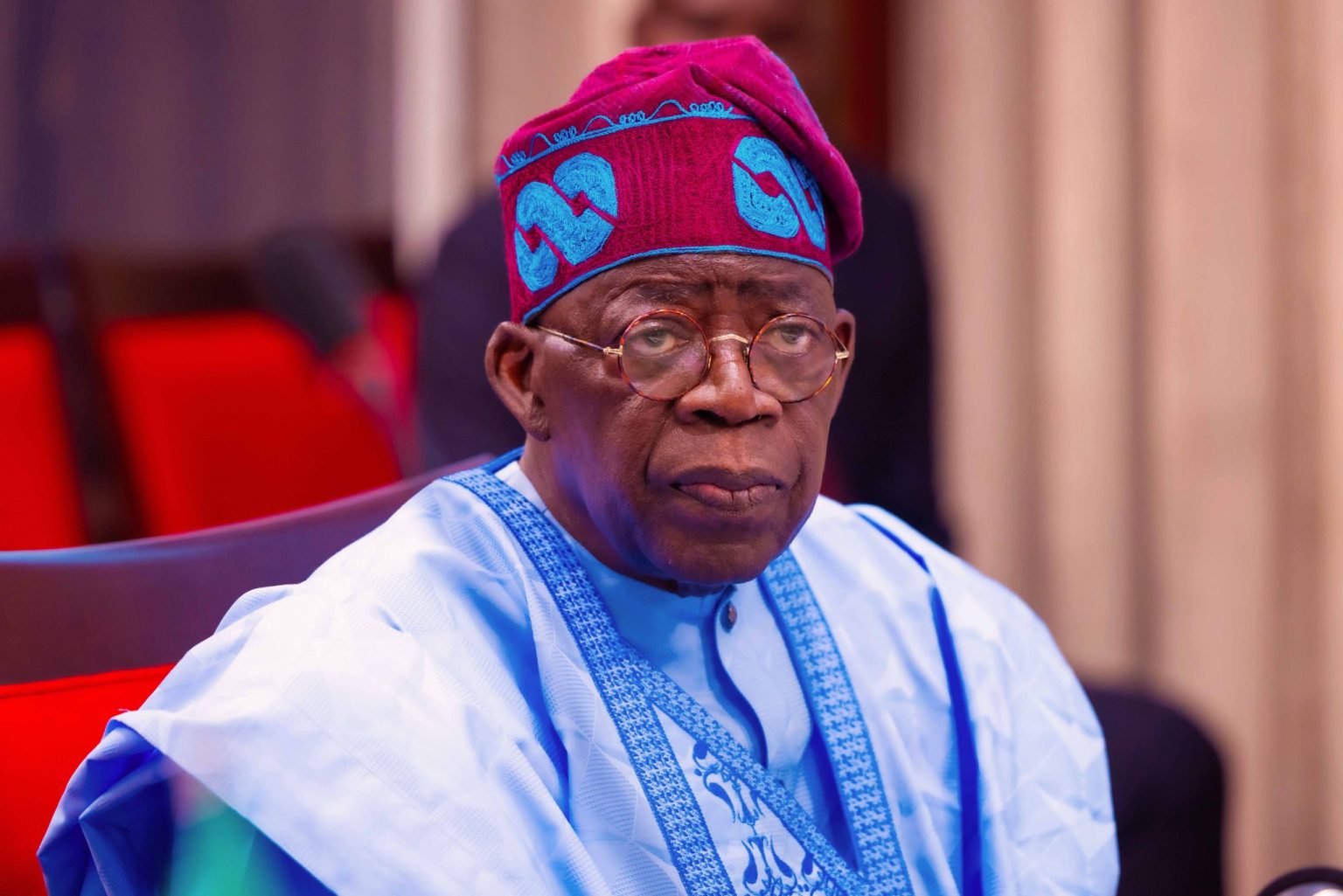
By Eddy Ochigbo
Between 1999 and 2015, the then ruling party – People’s Democratic Party (PDP) in the euphoria of victory, had boasted of ruling Nigeria for more than 60 years. The leaders of PDP were particularly buoyed by the favorable results of the 2003 general elections when it almost obliterated the Alliance for Democracy (AD) in the South-west, with the exception of Lagos state.
President Bola Tinubu then the Governor of Lagos state stood his ground and defended PDP’s raging fire of turning Nigeria into a one-party state.About two decades down the line fate has now placed Tinubu on the saddle and the same refrain of one party-state has resurfaced.
Little wonder then that the political permutations presently is that if Tinubu as an individual could wheather the storm as governor and worm his way into Aso Rock, why would it be difficult for the current coalition of political heavy weights to repeat the same feat of capturing power from the All Progressives Congress (APC) in 2027.That is a story for another day which takes us to President Tinubu’s recent tacit endorsement of a one-party state in the country. But he denied it, following widespread outcry by Nigerians against the proposal. And this serves a pointer to Nigeria’s ever-changing political climate.
Despite the president’s denial, the one-party state kite flown, described by many as an ill wind, has continued to dominate public discourse across the country. A cross-section of citizens who rejected the idea of making Nigeria a one-party state, said it would amount to monumental corruption in the polity. However, given the unprecedented number of politicians decamping from opposition parties to the APC, Nigeria may be in for a de facto one-party state, where opposition could become totally nonexistent, should the opposition surrender to APC.
Consequently, as clouds of uncertainty hang over the nation’s political scene, 2027 would indeed be a watershed as political gladiators are currently sharpening their arsenals to do what they know how to do best – capturing power by all means, while members of the electorate watch with suspicion. The political horizon is pregnant and no one knows what it would give birth to in 2027.
Why were people alarmed when the president hinted at a one-party state? A one-party state is a governance structure in which only a single political party takes full control of government and governance. In a one-party state, all opposition parties are either outlawed or enjoy limited recognition and controlled participation in the electoral process.
Even in a de facto one-party state, sometimes used to describe a dominant-party system – as is being canvassed by the president, APC is increasingly becoming a strong force that it could easily prevent the opposition from winning power, if care is not taken. Such an arrangement or platform undermines the norms and ethos of democracy.
Is Nigeria ready for a one-party state? A party state can do and undo without recourse to the electorate. Nigeria cannot afford a skewed system where there are no checks and balances. In a system where the bridge between the rich and the poor has already been widened beyond imagination, it would be suicidal for autocracy and dictatorship take the centre stage. For emphasis sake, a one-party state prohibits opposition parties and seldom allows a few independent candidates to stand for election to compete with party candidates who enjoy the full support of the party machinery. In the end, it is winner takes all with the party placing party members and sympathetic candidates in key political positions without caring about the needs of members of the electorate to whom power should belong.
For instance, the Chinese and Cuban Communist parties which derive their authority from the ‘communist manifesto’ – popularized by renowned philosophers – Karl Marx and Friedrich, contrary to participatory democracy. But then such system is sympathetic to the dictatorship of the proletariat. But how do one explain the dictatorship of the previleged few in a participatory democracy? That is exactly the snag with a one-party system in capitalist country like Nigeria.
The communists are of the view that the opposition is needed only in capitalist countries because of the existence of diverse interests there. In order to represent those diverse interests, different parties are formed and organized. But in the countries where capitalism has been abolished, and where only the labour class exists, there is no need for different parties and only the communist party is sufficient to look after the interests of the workers. But Nigeria is not a communist country; it is a capitalist economy of which Tinubu remains a great beneficiary.
A one-party state recognizes the trade-off between election victory and gathering valuable data. To account for this, such a state places local nobility in easy-to-win races as encapsulated by its principles or ideological bent. One-party states bend the rules of democracy and insist that only the most popular members of the party are given the mandate as may be reviewed by the party leadership from time to time.
They also gather data from elections to indicate if a local official is performing poorly in the eyes of residents. This gives locals the opportunity to monitor local officials and communicate their satisfaction to the government. Throughout the country, members of the one party hold key political positions.
In doing so, the party avoids committing outright fraud and rather sustains their power at the national, sub national and local levels with strategic appointments of members going to loyal party members. The one-sided nature of one-party regimes makes it difficult for a level playing field due to lack of transparency and fairness.
Ironically, President Tinubu, who sees nothing wrong with a one-party system, represents a perfect example of a politician who in the not too distant past resisted the idea of a one-party state. As earlier stated, President Obasanjo’s Peoples Democratic Party (PDP) won nearly all of the South-west from his Alliance for Democracy (AD) in 2003, Tinubu, then the only surviving opposition governor in the region, refused to give in.
It took him two decades of struggle to rebuild and work his way to the pinnacle of power. And now that the president seems to be angling for a one-party state, he must be reminded of his stance in the past. He must be reminded that a one-party system often leads to dictatorships which discourages democratic representation, concentrates power in the hands of money bags and makes corruption more likely. A one-party state does not represent the diversity of public aspirations and while it may provide some form stability, it tends to be undemocratic and lack oversight of government actions.
At the APC Renewed Hope Agenda Summit held at the State House recently, Tinubu, while reacting to the gale of defections from other parties into the APC, asked his fellow members of the party to “wipe them clean.” APC, he insisted was “one party ruling and carrying on with the aspirations of Nigerians. You don’t expect people to remain in a sinking ship without a life jacket. I am happy with what we have accomplished and expecting more people to come; that’s the game.”
Perhaps the accomplishments Tinubu is referring to, is the destruction of Nigeria’s middle class which has sent more than 70% of the citizens into multi-dimensional poverty. Perhaps the accomplishments the president is talking about is the astronomical jump in the price of petroleum products which has caused prices of food stuffs, transport fares, electricity, healthcare and what have you, to hit the roof, to the chagrin of Nigeria’s urban and rural poor. Perhaps, the accomplishments the president is alluding to is the deep devaluation of the naira which has rendered the naira a slave to other currencies.
Again, could the worsening insecurity ravaging the country be part of the president’s accomplishments? One can go on and on to reveal the worst economic crisis in decades in Nigeria, making citizens to sacrifice almost everything just to survive. Yet, the president is glaringly insisting that his ‘bold economic reforms are necessary because they will be fruitful in the future.” Which future? What future?
During the state house event, in what appeared to be an account of his two years in office, the president reflected on what he called his government’s economic reforms. “Nothing good comes easy”, he said, justifying the people’s suffering under his government. He maintained that, “sometimes, only hard decisions can make things easy in the future.” Leading an administration which, while campaigning for Nigerians’ votes in 2023, carried the heftiest baggage of anticipated elasticity of corruption, Tinubu’s testimony of fighting corruption is neither here nor there, “You could see EFCC recover over seven hundred and fifty-something houses from one person”, he volunteered, claiming that life had become better and the future assured for the people of Nigeria. How assured is the future of Nigeria and Nigerians when starvation has become the order of the day. One is not a prophet of doom but that is the stark reality facing helpless Nigerians.
Sensing the threat posed by the ruling party to turn Nigeria into a one-party state, a coalition of leading politicians opposed to the Tinubu-led administration has formally applied to the Independent National Electoral Commission (INEC) to register a new political party – the All Democratic Alliance (ADA). The application, dated June 19, 2025, was received by INEC on June 20, 2025, with “Justice for All” as its slogan.
The coalition is in pursuit of a new party due to what it described as the infiltration of existing political parties by government-backed elements. Recall that Nigeria National Coalition Group (NNCG), led by former Senate President, David Mark along with prominent political figures like Rotimi Amaechi, have been working assiduously towards forming a new party to challenge President Tinubu in 2027 general elections. The proposed party, has Chief Akin A. Rickets and Alhaji Musa Elayo as Protem Chairman and Protem National Secretary, respectively. The coalition’s decision to register a new party is coming amidst increasing dissatisfaction with the Tinubu administration.
Whereas governance is rapidly taking a much wider meaning and no longer restricted to rule or administration, Nigerian politicians place little or no premium on what constitutes governance, let alone good governance. Since political power is ultimately exercised in the manner that politicians desire, certain principles must be followed, in order to gauge certain standards and norms. Such judgment should be based on several criteria viz: participation of citizens, upholding the rule of law, transparency of the system, responsiveness of the authority, consensus oriented policy, equity and inclusiveness, accountability and strategic vision of the authority, as the case may be.
It is very sad that after 26 years of democratic rule, participatory democracy is still in doldrums, manipulated by self-seeking politicians.
Whose interest would a one-party system serve? What is the essence of democratic governance? Is it not government of the people by the people for the people? Out of desperate quest for power, vested interests in the power game are ready to compromise any institution to realize their inordinate ambition of capturing and remaining in power. Nigeria’s uninterrupted democracy for almost three decades should be jealously guarded and regarded as an elixir to strengthen and promote democratic ideals. This is fulcrum of democracy. The game should be about a level playing field for all.
Nigeria’s uninterrupted democratic journey must not be taken for granted; it should engender growth and survival of globally accepted ideals of freedom of speech, freedom of assembly, voter enfranchisement and political participation. There must be room for old and new breed politicians. The political space must not be dominated by only the rich and mighty who want to remain in the political turf permanently.
Even though in politics we are told that there are no permanent friends but permanent interests, such interests should be geared towards the collective aspirations and full participation of the citizenry in the electoral process; to avoid a situation where politicians get richer and richer by the day while the masses continue to wallow in abject poverty and want.
So any move to render opposition powerless is not in the interest of the people because the opposition has a very significant role to play in the governance and government. Any well-meaning authentic government that means well for the people must recognize the concerns of the opposition, otherwise the essence of democracy would be totally defeated. By and large, Nigerians must embrace the on-going campaign to make politics at every level less attractive. It should be about service, not primitive accumulation of wealth.

The APC was birthed out of Mr. Buhari’s resilient appetite for presidential power. Its victory in the 2015 presidential election satisfied that hunger and lavishly fed it for eight years. His victory then was a product of both his northern regional cultic followership and a nationwide rejection of Mr.
Jonathan’s bumbling presidency. Eight years afterwards, Buhari’s appetite for apex power has been fulfilled, richly rewarded and arguably squandered in terms of a credible legacy. His pet nativist hegemony project came full cycle and even overreached itself. With a largely expired national relevance, Buhari has since gathered his belongings and returned to the pastoral anonymity of his native Daura.Looking back, the coalition of parties that gave birth to the APC was an inconvenient marriage of political convenience. There was nothing in common among them. There was a pseudo social democratic CAN. There was an ultra conservative CPC literally owned by Buhari himself. There was also a nationalist right wing ANPP, and an ethno nationalist APGA. To complete the picture was a renegade and opportunistic centrist NPDP made up of a faction of governors who broke off from Jonathan’s PDP .
The cardinal objective was to cobble together a workable electoral coalition to wrest power from the PDP after 16 monotonous years. The idea of a multiparty coalition eventually gave way to the even better idea of a single opposition party. A unified party was required to win an election if the hegemony of the PDP was to be toppled. The nation was hungry for a change from the PDP whatever the name of a viable and credible opposition.
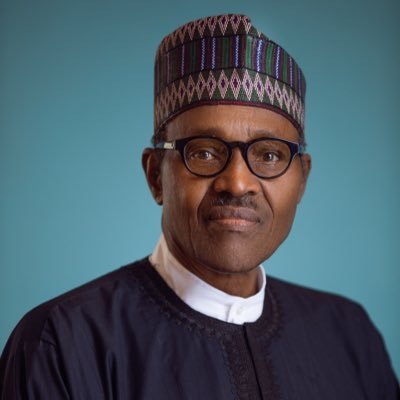
Mr. Buhari facilitated and galvanized the marriage. He provided the amalgamation with a presidential mascot albeit one with a national name recognition and leadership mythology. He also came dressed in an untested mythic garb of leadership prowess, governance prudence, barrack discipline and a reasonable level of personal integrity and austerity. Above all, he had managed over the years to build up a huge cultic following among the northern mob of rough uneducated and unemployed youth and regional power fanatics. Part of the motor park fable around Mr. Buhari was the infantile notion that once elected president, he would jail all the corrupt former government officials, recover the ill- gotten wealth and redistribute same among the poor masses. His political salesmen required no better set of unique selling points.
Thus was born the APC, a party tailored more towards wresting power from an effete incumbent than for the effective governance of a country in desperate need for responsible leadership. Given the tenacity of African power incumbents, the APC was more honed for the task of contesting the outcome of the 2015 presidential election possibly up to the Supreme Court. It spared little time rehearsing a governance nad leadership model for the nation. “Anything but Jonathan” was the slogan in town!
But when the results tumbled in mostly in favour of the APC and Mr. Jonathan conceded defeat to Mr. Buhari, it was an overrated and unprepared APC that had to set up a government and ascend the pinnacle of national power. Victory came as a rude surprise with power as an unanticipated burden. Time has passed. Buhari has fulfilled his long standing ambition of wearing the toga of President and gone home after completing two terms of eight wasted years . It is now time for the party to take stock of its stewardship and contemplate its future as a ruling party.
With the benefit of hindsight, the emergence of the APC reinforced Nigeria’s historic tendency towards a credible two party architecture as previously recognized by the military administration of General Ibrahim Babangida. To that extent, the emergence and electoral victory of the APC as and when they occurred was a positive political outcome, one which promised a great dividend for Nigeria’s democracy and future political party architecture. The new party came to power on the wave of expectations greater than its capacity and preparedness. Even then, having successfully hounded the PDP out of power at the national level, the APC had two tasks. First, it had to develop into a party with a national membership spread, credible internal democratic structure and a definable ideology to anchor its policies on. It had a mandate to rule and to govern more creditably than the party it ousted. But beyond its logo and Buhari as electoral mascot, there was nothing substantial about the APC.
Regrettably, however, the APC has not grown beyond the logic of its incoherent origins. It has turned out to be just merely a ballot paper alternative to the PDP. After close to a decade in existence, it has no ideological identity, no policy coherence, no record of sensible governance at the federal level and state levels. Admittedly, an isolated number of APC ruled states (Kaduna and Lagos especially) have managed to show signs of some progressive policy direction and arguably a bit of good governance. But the party has hardly tried to galvanize an effective grassroots membership to consolidate over eight years of power dominance at the center.
From the very top, the APC remains an embarrassing ideological proposition and oddity. I doubt that from Mr. Tinubu to the most mundane foot soldiers out there, that word ideology ever comes up even in casual conversations. I doubt that most of the party faithful have ever bothered about the meaning of the word “ideology”! But as a political organization, we need to dress up the APC and its leading lights in some ideological garb in order to make sense of their quarrels or at least give the party a reason to exist. As my friend George F. Will would insist, “We can dignify …disputes among small persons of little learning by connecting them with great debates about fundamental things.”
Let us therefore confront the ideological curiosity of the APC. Here is a so- called ‘progressive’ party led by an unabashed arch- conservative in the person of former president Buhari and now a bucaneer social democrat in the person of Mr. Bola Tinubu. This is one of the greatest ironies of recent political theory and history. Ordinarily, progressivism indicates a bias for social democracy in its dynamic context. It should signal a commitment to continuous social and economic democracy and change along progressive lines. Progressivism is decidedly partisan on the side of the masses while acknowledging the entrepreneurial class as an engine of growth and wealth creation. Instead, Nigeria’s “progressives” are a loose collection of free wheeling brief case capitalists, commission agents, primitive accumulators and racketeers in every imaginable merchandize.
The party previously led by the diehard conservative Buhari is now under the wings of Bola Tinubu. He may be sympathetic towards the plight of the masses in whose name he is mouthing incoherent policies while they bear the early brunt of his IMF-style policies. Buahri was a confused advocate of Medieval economic fundamentalism of controls and over regulation of nearly everything from domiciliation of government bank accounts to the distribution of fertilizers to peasants.
In spite of its abysmal performance in government for over eight years, the APC predictably “captured” power in the still contentious February 2023 presidential elections. Mr. Bola Tinubu, Buhari’s effective political ‘God Father’ is now incumbent president. He has accordingly, moved to rejig the leadership of the party to serve his own power ends. He has quickly hand picked a new party Chairman in the person of the former dollar-hugging Kano governor, Mr. Ganduje . He has also ousted Mr. Omisore as party Secretary.
A preliminary view of the political calculus of the party going forward indicates an entrenchment of interest in the basic regional and sectarian equations that handed power to Mr. Tinubu. The initial changes in the leadership architecture of the party indicate a reinforcement of the South-West, North East and North Western power base of the party. There also seems to be an incremental confidence in the effectiveness of a predominantly Muslim orientation of the party leadership. This much can be gleaned from the initial skirmishes around the party headquarters .
In spite of its victory and electoral majority in the number of governorships and a clear parliamentary majority after the 2023 elections, however, Mr. Tinubu now recognizes that he cannot take the pre eminence of the APC for granted. He needs to strengthen the party in order to govern and also maintain a basic continuity of political authority. He cannot easily forget so easily that the pre-eminence of the party in the present political spectacle remains tenuous. The party was substantially challenged at the February 2023 election as may become more evident when the tribunal and court challenges of the outcome are concluded. A 36% voter score of less than 8 million votes out of less than 20 million total votes cast at the presidential election out of a registered voter population of 80 million plus cannot give a ruling party comfort.
In addition, between the two opposition parties – the PDP and the Labour Party- there is enough groundswell of popular support especially Mr. Peter Obi’s Obidients to keep the APC awake for the foreseeable future. As things stand, the APC still has an existential challenge: how does it survive in and of itself as a political party? How will it persist as a ruling party in and of itself given its regional incoherence? Above all, how will it survive as a strategic national institution of democratic stability if its existence is dogged by far reaching but latent regional and sectarian under currents?
Even now on the eve of Mr. Tinubu’s first 100 days in office, there is a palpable fear that the future of the party is headed into turbulent clouds. A few prominent party faithful have resigned in protest to the recent leadership changes. Of course, the party could somehow tinker its way through this initial immediate post election patronage and pork barrel stretch of the new administration. Mr. Tinubu can expect to enjoy some party solidarity and superficial unity in these honeymoon days of anticipation of patronage and appointments by party people.
Beyond the appointment of ministers, there are still numerous boards of federal parastatals, ambassadorial positions and sundry sweetheart contracts to be dispensed. But when that is over, it will be clear that the majority of party members will have been left out in the cold. They may go shopping for other party umbrellas well ahead of the next election season.
In spite of the present appearance of camaraderie, the APC cannot hide its many headaches and underlying troubles. But in whichever direction we look, the party is threatened by internal contradictions and gaping cracks that lie deep in its very found The APC was born out of a private political ambition. It prevailed for 8 years only because it won the presidential election in 2015 against a leaderless former ruling party. Having repeated that feat in 2023 in spite of its dismal performance in government under Mr. Buhari, it is only likely to survive in power if it can transform itself from an African “Big Man” party to a broad based grassroots party. Otherwise, the future political landscape of Nigeria belongs squarely to youth based populist movements like Peter Obi’s Labour Party and its Obidients or others in that mould. The real terminal danger for the APC is in the future fights among its many ambitious contenders for Mr. Tinubu’s throne if he falters. The even greater danger to the hegemony of the APC lies in the massive discontent of the youth followership of its opponent parties.



Bayelsa Deputy Gov Tasks Nigerians on Effective Service
ShareFrom Mike Tayese, Yenagoa The Deputy Governor of Bayelsa State, Dr. Peter Akpe, has urged Nigerians to make selfless service...
CIPPON Urges FG to Protect Nigerian Printing Industry
ShareBy David Torough, Abuja The Chartered Institute of Professional Printers of Nigeria (CIPPON) has renewed its call on the Federal...

Mbah Declares Emergency on Nsukka-Adani Road
ShareFrom Sylvia Udegbunam Enugu Enugu State Governor, Peter Mbah has declared an emergency on the Nsukka-Adani Road, describing it as...


Oborevwori Mobilises Support for Tinubu, APC 2027 Victory
ShareFrom Francis Sadhere, Delta Delta State Governor, Rt. Hon. Sheriff Oborevwori, has called for massive support for President Bola Ahmed...
Growing Threat to Opposition Politics and Democracy
ShareBy Pius Mordi Democracy thrives on competition, tolerance, freedom of expression and the willingness of those in power to accommodate...

NCDMB, NLNG Commit $9m to Endowment of Professorial Research Chairs in Six Varsities
ShareFrom Mike Tayese, Yenagoa The Nigerian Content Development and Monitoring Board (NCDMB) and the Nigeria LNG Limited (NLNG) have launched...

2027: Obi Visits Benue, Vow to Unite Nigeria if Elected
ShareFrom Attah Ede, Makurdi The presidential candidate of the Nigeria Democratic Congress (NDC), Peter Obi, has vowed to unite Nigeria,...

Wike Targets Tourist Destination Status for Apo-Karshi Road
ShareBy Laide Akinboade, Abuja The Minister of the Federal Capital Territory (FCT), Nyesom Wike, has announced plans to transform the...


Alt Bank Appoints Gul Khan as Managing Director
ShareThe Alternative Bank Ltd (Alt Bank) has appointed Gul Khan as its new Managing Director, following approval by the Central...


2027: APC Restricts Campaign Spokespersons to Yari, Alake, Idris
ShareBy David Torough, Abuja The All Progressives Congress (APC) Presidential Campaign Council has overhauled its Directorate of Media and Strategic...