
NEWS
Why Tax Reform Bills May not be Recalled – Tinubu

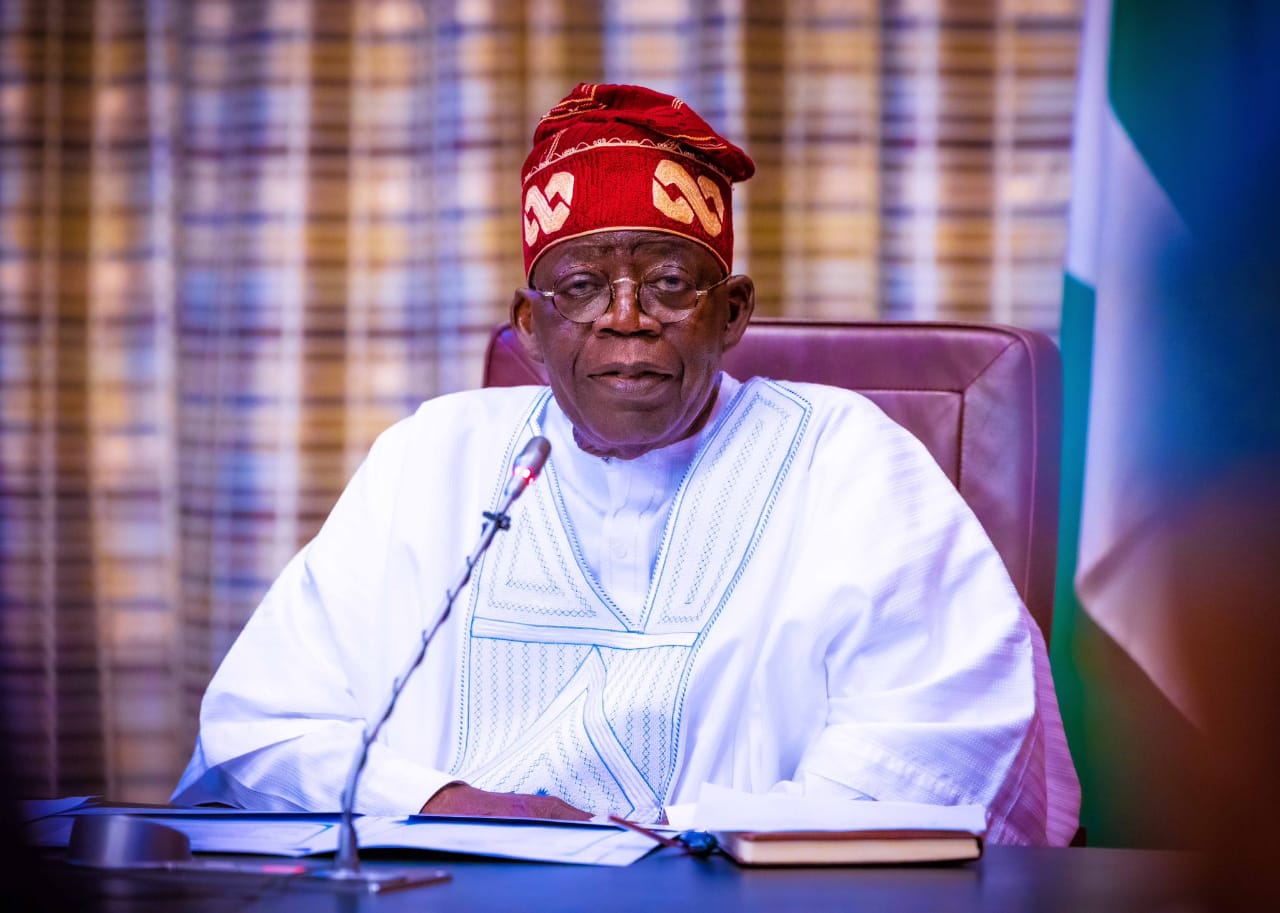
Proposed tax reform bills at the National Assembly will not be withdrawn, says President Bola Tinubu.
The National Economic Council (NEC) on Thursday called for the bills’ withdrawal for further consultations.
The President, in a statement on Friday by Mr Bayo Onanuga, his Special Adviser, Information and Strategy, however, urged that the legislative process be allowed to take its course.
Tinubu said the legislative process, which had already begun, provided an opportunity for inputs and necessary changes without withdrawing the bills from the National Assembly.
He welcomed further consultations and engagement with key stakeholders to address any reservations about the bills while the National Assembly considered them for passage.
The statement read: “When President Tinubu set up the Presidential Committee on Tax and Fiscal Policy Reform in August 2023, he had only one objective.
“This is to reposition the economy for better productivity and efficiency and make the operating environment for investment and businesses more conducive.
“This objective remains more critical even today than ever before.”
The committee worked for over a year and received inputs from various segments of society across the geopolitical zones.
Inputs were received from trade associations, professional bodies, various MDAs, governors, traders, students, business owners and the organised private sector.
“The tax reform bills that emerged were distilled from the extensive work of the Presidential Committee.
“The tax bills before the National Assembly aim to streamline Nigeria’s tax administration processes, completely overhaul the nation’s tax operations, and align them with global best practices,” the statement read in part.
The tax reform bills include the Nigeria Tax Bill, which seeks to eliminate multiple taxation and make Nigeria’s economy more competitive by simplifying tax obligations for businesses and individuals nationwide.
The Nigeria Tax Administration Bill (NTAB) proposes new rules governing the administration of all taxes in the country.
Its objective is to harmonise tax administrative processes across federal, state and local jurisdictions to ease taxpayers’ compliance and enhance the revenue for all tiers of government.
The Nigeria Revenue Service (Establishment) seeks to re-establish the Federal Inland Revenue Service (FIRS) as the Nigeria Revenue Service (NRS) to better reflect its mandate as the revenue agency for the entire federation, not just the Federal Government.
The Joint Revenue Board Establishment proposes creating a Joint Revenue Board to replace the Joint Tax Board, covering federal and all state tax authorities.
The fourth bill will also establish the Office of Tax Ombudsman under the Joint Revenue Board, protecting taxpayers’ interests and facilitating dispute resolution.
The statement read: “The bills’ overarching objective is to effectively coordinate federal, state, and local tax authorities, thereby eliminating the overlapping responsibilities, confusion, and inefficiency that have plagued tax administration in Nigeria for decades.
“Under existing laws, taxes like Company Income Tax, Personal Income Tax, Capital Gains Tax, Petroleum Profits Tax, Tertiary Education Tax, Value-Added and other taxing provisions in numerous laws are administered separately, with individual legislative frameworks.”
The proposed reforms seek to consolidate these numerous taxes, integrating them and excise duties into a unified structure to reduce administrative fragmentation.
“While there may be differences in approach or specific provisions of the new tax bills, what is not in contention is the need to review our tax laws and how we administer them to serve our overall national development agenda.
“President Tinubu will continue to respect and welcome the advice and recommendations of the National Economic Council, an essential constitutional organ of government on economic matters,” the statement read. (NAN)
By Ebuka Ukoh
There are moments when a country must speak with one voice… not because its citizens agree on politics, but because they agree on the value of human life. This is one such moment.
Constitutional rights and human dignity must apply to everyone, regardless of political affiliation.
Political violence threatens democracy, and no ambition is worth a citizen’s life.Road to Yelwata
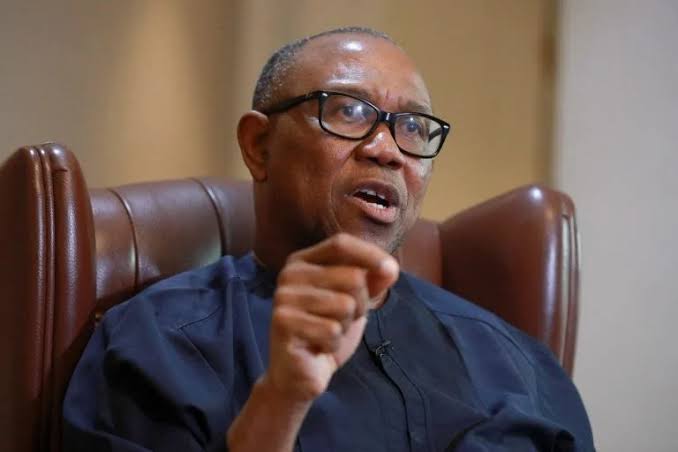
On September 8, 2026, Peter Obi’s convoy was blocked along the Gboko-Makurdi road while he was travelling to Yelwata to sympathise with communities affected by a recent deadly violence.
Reports and videos showed a group of youths obstructing the road and confronting the convoy. The Benue State Police Command confirmed the obstruction and said officers had been assigned to provide security.Obi alleged a government aide had mobilised. The state government denied involvement and disputed his account of the visit. The identities of those responsible for organising the blockade and their motives have not been independently established. That distinction matters. We must not allow justified outrage to become an excuse for making allegations that have not been proved. But uncertainty about who organised the obstruction does not make the incident acceptable.
I condemn the reported intimidation and obstruction of Peter Obi’s convoy. I condemn any attempt to use threats, violence, or mob action to prevent a Nigerian from exercising their lawful rights. And I call for a prompt, impartial investigation that establishes what happened, identifies those responsible, and holds anyone found culpable accountable under the law.
Nothing must happen to Peter Obi.
But that statement must mean something larger than the protection of one politician. The Constitution Does Not Recognise Political Strangers. Nigeria does not belong to the government of the day. It does not belong to the opposition. It does not belong to any governor, minister, political party, or presidential candidate. It belongs to its citizens.
The Constitution protects freedom of expression, peaceful assembly and association, freedom of movement, and freedom from discrimination. These protections are not privileges granted according to political affiliation. They are rights that belong to Nigerians, subject to lawful and constitutionally permissible limitations. A citizen does not lose the right to move freely because a governor dislikes his politics. A politician does not lose the right to visit a community because his presence may embarrass those in power. A supporter does not lose the right to assemble peacefully because another party considers the gathering inconvenient. An ordinary Nigerian is no less deserving of protection even if he has no convoy, no security detail, and no famous moniker.
Security concerns may require coordination. Public order may require lawful restrictions. But such concerns must be addressed through the legitimate institution, not through intimidation or the arbitrary exercise of power.
The Constitution is not a guest list from which those in authority may remove people by whim and caprice. That is the principle at stake. Today, it is Peter Obi. Tomorrow, Who? Some Nigerians will respond to this incident according to their political loyalties. Those who support Obi will be outraged. Those who oppose him may be tempted to minimise what happened. Some will ask whether he followed the appropriate protocol. Others will argue about the motives of his visit. Those questions may deserve examination. But none should obscure the central issue.
Would we consider this acceptable if the person obstructed were our preferred candidate? If the answer changes with the name, then we are not defending a principle. We are defending a person. And that is how democratic societies slowly surrender their freedoms. We tolerate intimidation when it is directed at those we dislike. We excuse unlawful conduct when it benefits our side. We call it politics when the victim is an opponent. Then one day, the same methods are used against us, and we discover that the principle we refused to defend was the very principle we needed.
A right protected only for one’s friends is not a right. It is a favour. And a democracy built on favours cannot protect its citizens for long. The Most Important People Were Already in Benue. There is another reason this incident should trouble us. Obi said he was travelling to Yelwata to console families affected by the 2025 attacks. The dispute over his visit should not cause us to forget the people he intended to see: Families have lost loved ones. Communities have experienced displacement and fear. Children have had their lives disrupted. People are trying to rebuild after violence that should never have become part of their ordinary existence. Their suffering must not become another stage on which Nigeria plays out its political rivalries.
Whether a visitor belongs to the ruling party or the opposition, the dignity of grieving citizens should remain central. The question should be how to protect them, support them, restore their communities, and prevent further violence. Not how to turn their tragedy into another contest over political access. The dead do not belong to a political party. The grieving should not have to choose one before receiving solidarity. Nothing Must Happen to Peter Obi. I repeat this deliberately. Nothing must happen to Peter Obi. Not because he is beyond criticism. Not because his political ambitions are more important than those of others. Not because his supporters are more Nigerian than anyone else.
But because he is a Nigerian citizen whose life, dignity, and lawful freedoms deserve protection. The same must be said of President Bola Tinubu. The same must be said of former Vice President Atiku Abubakar. The same must be said of former Governor Rabiu Kwankwaso, activist Omoyele Sowore, and every other political figure, whether we agree with them or not.
And the same must be said of the young man selling recharge cards in Makurdi, the woman returning from the market in Lagos, the farmer in Plateau, the student in Enugu, and the child in an internally displaced persons camp. The life of a presidential candidate is not worth more than the life of an ordinary citizen. The difference is that when a prominent politician is threatened, the country notices. When an ordinary Nigerian is threatened, the country too often moves on. That is the deeper tragedy we must confront.
Those stoking violence must desist
Political violence is not a campaign strategy. Thuggery is not grassroots mobilisation. Intimidation is not political strength. And the ability to prevent an opponent from moving freely is not evidence of democratic legitimacy. It is evidence of weakness in all its ramifications. Anyone who recruits, sponsors, encourages, or protects people who use violence for political purposes should understand the danger of what they are doing. Violence rarely remains obedient to the people who fire it. The young person who handed money to intimidate an opponent today may become the armed criminal threatening the community tomorrow.
The culture of impunity that protects political thugs today may eventually consume the politicians who believed they controlled them. And the society that teaches young people that violence is a legitimate route to political relevance should not be surprised when violence becomes a permanent feature of its public life. You cannot build a peaceful country by training its young ones to treat political opponents as enemies. Nor can you claim to love Nigeria while making Nigerians afraid to exercise their rights.
Responsibility of the state
The government’s responsibility is not merely to protect those who support it. It is to protect everyone. Indeed, the seriousness of a government’s commitment to constitutional democracy is often revealed most clearly in how it treats those who oppose it. The police must investigate the Benue incident without fear or favour. The relevant authorities must establish whether any public official, political actor, or private individual organised or encouraged the obstruction.
If wrongdoing is established, accountability must follow. If allegations against particular individuals are unfounded, that too should be made clear. The objective must be truth and justice, not political theatre. And as Nigeria approaches another election cycle, political leaders across all parties should make an unequivocal commitment: no supporter, aide, or associate should be permitted to intimidate opponents in their name.
The protection of political competition is not a concession to the opposition. It is a duty owed to the Constitution.
The Nigeria we need to become
I want to live in a Nigeria where a president can travel to any state and be received with dignity, where an opposition leader can visit a grieving community without fear, and where a journalist can ask difficult questions without intimidation, where a protester can assemble peacefully, and where a citizen can criticise the government without being treated as an enemy of the state, where political disagreement does not become a threat to life. And where the ordinary Nigerian enjoys the same constitutionutionutionutional protection that powerful people expect for themselves. That is not an unrealistic dream. It is the minimum promise of a republic.
We must stop treating constitutional rights as privileges that become available only when the right person is in power. We must stop waiting until a preferred politician is threatened before discovering the importance of freedom. And we must stop confusing political loyalty with patriotism. Patriotism is not the willingness to defend everything on one’s side. It is the courage to defend the country’s principles even when doing so protects an opponent. That is the kind of citizenship Nigeria needs.
No ambition is worth a life
Jonathan’s words echo a moral challenge to every Nigerian politician: “No political ambition is worth the blood of any Nigerian.” The principle is simple. No election is worth a life. No office is worth a life. No political party is worth a life. No governor’s reputation is worth a life. No presidential ambition is worth a life. And no disagreement over a visit, a campaign, or a political rivalry should ever be allowed to place a Nigerian citizen in danger. We can disagree fiercely. We can campaign passionately. We can criticise one another. We can vote differently. We can lose elections and try again. But we must never lose our humanity in the process.
So, I condemn the reported obstruction and intimidation of Peter Obi in Benue. I call for a credible investigation and accountability. I call on political leaders to reject violence unequivocally, including when it is directed at their opponents. And I ask Nigerians to defend this principle without waiting to know which party the victim belongs to.
Nothing must happen to Peter Obi. Nothing must happen to any Nigerian because of political disagreement, because the ultimate test of our democracy is not whether we can protect the people we love. It is whether we can protect the rights of those we oppose.
And the ultimate measure of our politics is not how much power we acquire, but how much human dignity we preserve while seeking it. Nigeria is worth more than any political ambition. And every Nigerian life is worth more than the office anyone hopes to occupy.
Ukoh, a PhD student and coauthor of Built By The Ancestors, writes from his base in New York, the United States.
The Independent Corrupt Practices Commission (ICPC) and Nigerian Financial Intelligence Unit (NFIU) on Monday in Abuja commenced a three-day stocktake meeting focused on converting financial intelligence into prosecutions and asset recovery.
The ICPC Chairman, Dr Musa Aliyu, SAN, said this at the opening of the exercise, held in preparation for Nigeria’s Financial Action Task Force (FATF) 3rd Round Mutual Evaluation Exercise.
Represented by the Commission’s Secretary, Clifford Oparaodu, Aliyu said the exercise would test how effectively ICPC investigations were converting financial intelligence into prosecutions, asset recovery and stronger enforcement outcomes.
He said the stocktake provided an internal mirror to measure performance under the Money Laundering (Prevention and Prohibition) Act 2022, POCA 2022 and POCR 2024 regulations.
According to him, the Commission had in recent years made parallel financial investigations mandatory in every corruption case to strengthen the tracing of illicit funds and recovery efforts.
While stating that previous reviews focused largely on laws and policies, he said the stocktake would drill deeper into operational performance and assess Nigeria’s enforcement effectiveness.
He listed five Immediate Outcomes as benchmarks, emphasising that the exercise focused on FATF Immediate Outcomes 1, 2, 6, 7 and 8 for institutional assessment.
He said these included risk understanding, international cooperation, financial intelligence use, effectiveness of money laundering investigations and asset recovery, adding that participants would assess operational implementation.
On corruption risks, he said participants would assess whether the ICPC and sister agencies were aligning investigations with Nigeria’s national risk profile and identified priority threats.
“We must show that our operations reflect where the real threats are, including bribery and grand corruption,” he said.
For cross-border crime, he said the team would review formal Mutual Legal Assistance channels and informal intelligence networks to assess Nigeria’s capacity for international cooperation.
The goal, according to him, was to demonstrate that Nigeria could swiftly share information, support investigations and secure convictions through effective cooperation with international partners.
“A major focus will be on financial intelligence under Immediate Outcome 6. The question before the room: are agencies not just generating reports, but actually using them to trace illicit flows and freeze assets before they disappear?”
He said enforcement would receive significant scrutiny under Immediate Outcomes 7 and 8, with Nigeria expected to demonstrate results from relevant money laundering laws and regulations.
“That means convictions, confiscations, and proper management of recovered assets,” he said, urging institutions to provide verifiable evidence of operational effectiveness during the stocktake exercise.
He urged visiting Country Experts to be blunt in their assessment, saying their feedback would help Nigeria close gaps, clean up statistics and sharpen strategies before the main evaluation.
He said the commission had aligned with the NFIU’s strategy by making parallel financial investigations mandatory in every corruption case handled by its investigators.
He added that the ICPC now leveraged the Corporate Affairs Commission Beneficial Ownership Register to expose corporate shells and strengthened systems for managing recovered assets.
He, however, warned that laws alone would not secure a good rating, stressing that effective implementation and measurable enforcement outcomes remained critical to Nigeria’s assessment.
“Technical compliance is only half the battle. What ultimately safeguards our financial system is demonstrating high operational effectiveness across these Immediate Outcomes,” he said.
He charged ICPC investigators and prosecutors to be candid and data-driven, while welcoming country experts to provide objective feedback that would help close gaps before the evaluation.
Speaking, the Chief Executive Officer of NFIU, Hajia Hafsat Bakari, said the exercise was designed to measure how effectively anti-corruption agencies converted financial intelligence into concrete enforcement outcomes.
Represented by Dr Emmanuel Sotande, an NFIU official, Bakari said the exercise was not about fault-finding but about assessing institutional preparedness ahead of Nigeria’s next FATF assessment.
“We want to be able to see how well the information and investigation lead to prosecution, seizure of assets and whether there’s a deterrent mechanism in place,” she said.
According to her, the core objective was to track the full value chain of intelligence use, from information supplied by the NFIU to enforcement outcomes.
“That includes how data supplied by the NFIU is consumed by the ICPC and other agencies, and whether it translates into convictions, asset recovery, and stronger deterrence against illicit financial flows.”
The NFIU boss emphasised that the timing was critical, noting that Nigeria was preparing for its 3rd Round Mutual Evaluation 2027 and needed institutional readiness.
“This is not a witch-hunt exercise but to ensure that we prepare for the next evaluation, which is going to be taking place next year.
“We want all institutional agencies and systems in Nigeria to be ready for the FATF assessors that will be coming from all parts of the world,” she said.
She explained that the framework for the stocktake was developed by the NFIU specifically to enable agencies to evaluate their preparedness and identify areas requiring improvement before assessment.
She said that assessors would demand detailed data and evidence, much of which the ICPC already held, making inter-agency coordination essential to Nigeria’s preparedness.
“It is in that context that the CEO of NFIU deems it fit to put the framework of the stocktake exercise in place for us to evaluate ourselves before the assessors will come,” she added.
She called for stronger collaboration, warning that the goal was to ensure Nigeria did not slip back onto the FATF grey list when the evaluation was concluded in 2027.
“The assessors will be asking for a lot of information, which I am sure the ICPC already have and it is only pertinent for us to work together,” she said.(NAN)
By Tony Obiechina, Abuja
The much-anticipated public offering of Dangote Petroleum Refinery and Petrochemicals FZE sparked a rush among retail investors on Monday, sending traffic on two major Nigerian investment platforms, Bamboo and Cowrywise, soaring beyond expected levels.
The unprecedented demand temporarily disrupted access to both platforms, with some investors reporting difficulties logging into their accounts as they attempted to subscribe to the Dangote Refinery share offer.
Bamboo acknowledged the disruption in a post on X, explaining that the platform was experiencing unusually high traffic from investors seeking to participate in the initial public offering.
“Hey everyone, we’re getting much higher than expected traffic trying to get into the Dangote IPO and it’s making it difficult for some users to log into the Bamboo app. We’re working on a fix and it will be up and running shortly,” the company said.
Cowrywise similarly reported a spike in activity on its platform, assuring users that its technical team was working to restore normal service.
“We’re currently seeing more traffic than usual on the Cowrywise app. Our team is already on it and working to get things back to normal. Thanks for your patience, everyone,” the platform said on X.
Bamboo and Cowrywise are among the approved fintech channels through which investors can participate in the Dangote Refinery public offer.
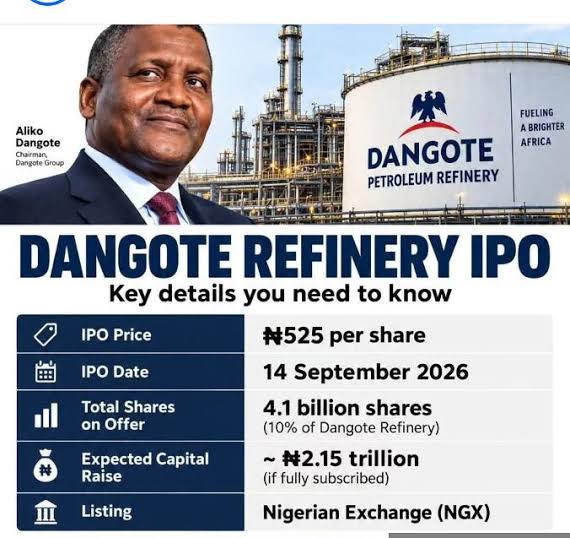
The offer opened on Monday and seeks to raise approximately N2.15tn through the sale of 4.1 billion ordinary shares at N525 per share.
To encourage wider participation, investors can subscribe for as few as 10 shares, requiring a minimum investment of N5,250.
The Dangote Refinery IPO ranks among the largest public share offerings in Africa. Owned by the Dangote Group, the refinery plans to deploy proceeds from the offer towards expansion and increasing its refining capacity.
The offer has attracted considerable attention from retail investors, particularly amid efforts to position the share sale as an opportunity for Nigerians and other African investors to take ownership stakes in one of the continent’s largest industrial projects.
The technical difficulties experienced by Bamboo and Cowrywise underscore the intensity of investor interest while also highlighting the strain that major investment campaigns can place on digital financial platforms.
The Securities and Exchange Commission had previously warned investors about unauthorised promotions surrounding a purported Dangote Refinery IPO before the offer received regulatory approval.
In June, the commission said no application for the IPO had been submitted or approved at the time and instructed capital market operators to stop accepting deposits or expressions of interest related to the proposed offer.
Following the necessary regulatory approvals, the Dangote Refinery public offer was cleared to proceed. The company subsequently released a list of approved banks, fintech platforms, mobile operators and NGX Invest through which investors can subscribe to the offer.



ENSIEC Assures 90 Per Cent Readiness for LG Election
ShareFrom Sylvia Udegbunam, Enugu The Enugu State Independent Electoral Commission (ENSIEC) said the commission is over 90 per cent set...
Group Backs Ekpo, Vows Ward-by-Ward Campaign for APC in Karu
ShareBy Tambaya Julius, Abuja The Association of South-East Igbo Winds has thrown its weight behind the All Progressives Congress (APC),...
Nigeria’s Silent, Lingering Battle with Lassa Fever
ShareBy Franca Ofili When Amina Peter’s fever persisted for days, her family initially assumed it was malaria, bought over-the-counter medication,...
Separate but Inter-dependent: The Four Quarters of Nigeria’s Campaign Season
ShareBy Chidi Anselm Odinkalu The beginning of the campaign season for Nigeria’s presidential election in 1979 was dramatic. Michael Ani,...
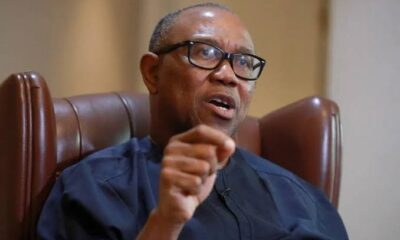

Beyond Peter Obi’s Benue Woes: Why Nigeria Must Defend Everyone’s Rights
ShareBy Ebuka Ukoh There are moments when a country must speak with one voice… not because its citizens agree on...

When Managers of Social Clubs Continue to Run Our Economy
ShareBy Uddin Ifeanyi The spectacle of a senior adviser on economics to the Tinubu government dissing the numbers on the...


LASCOPA Warns against Rusty Grinding Machines over Contamination Risks
ShareThe Lagos State Consumer Protection Agency (LASCOPA) has warned operators of pepper and grinding machines against using rusty or poorly...

ICPC, NFIU Open Stocktake on Financial Intelligence, Asset Recovery
ShareThe Independent Corrupt Practices Commission (ICPC) and Nigerian Financial Intelligence Unit (NFIU) on Monday in Abuja commenced a three-day stocktake...


Dangote Refinery IPO Frenzy Overloads Two Investment Sites
ShareBy Tony Obiechina, Abuja The much-anticipated public offering of Dangote Petroleum Refinery and Petrochemicals FZE sparked a rush among retail...


2027 Polls: Parties Demand Credible Vote, Vow to Protect Mandates
ShareBy David Torough, Abuja As preparations intensify for the 2027 general elections, political parties are stepping up demands for greater...