
NEWS
Why we Reject IPPIS, GIFMIS – ASUU


The Academic Staff Union of Universities (ASUU) has explained why it rejected two payment platforms of the federal government and insisted on University Transparency and Accountability Solution (UTAS), it created as alternative.
ASUU had rejected the Integrated Personnel and Payroll Information System (IPPIS), a platform the Federal Government uses to pay no fewer than 789,000 of its workers in various sectors of the economy.
ASUU members are also currently on the platform.The union had also rejected Government Integrated Financial Management and Information System (GIFMIS), the platform the federal government recently approved that ASUU payment should transit to, with effect from November
In an exclusive interview on Sunday in Abuja, the ASUU President, Prof.
Emmanuel Osodeke, said that the union’s stance is in line with the autonomy of the nation’s tertiary institutions.According to him UTAS conforms with the statutory provision that the university’s finances should be managed by its Governing Council.
“ASUU’s position is that the finances of the university should be managed by the Governing Council. That’s what the law says. It does not says by the Accountant General’s office.
”Every year, the governing council directs the Vice Chancellor to defend its budget at the National Assembly.When the budget is approved including salary, remuneration, overhead, it will go to the President for assent and it becomes a law.
”That money should be released to the Governing council to pay its staff members. That is the autonomy of the university we are talking about, as stipulated in the law,” he said
Osodeke stressed that the universities should be given autonomy, to be able to plan for its staff members’ recruitment and how to pay their salaries.
He recalled that the Union rejected IPPIS because its implementation does not only erodes university’s autonomy but meddles with its internal affairs and violates Section 24A of the Universities Miscellaneous Provisions (Amendment) Act 2003.
Osodeke also faulted the recent guidelines by the federal government detailing the process for the formal exit of Federal Tertiary Institutions (FTIs) from IPPIS.
In a circular issued on Oct. 8, the Accountant General of the Federation (AGF), Dr. Oluwatoyin Madein, said the payroll for FTIs in the month of October 2024 will still be processed on the IPPIS platform.
She added that, starting from November, the payrolls will be processed by the institutions themselves and then be checked by the Office of the Accountant-General of the Federation’s (OAGF)’s IPPIS department.
According to her, the payment will be made through the Government Integrated Financial Management Information System (GIFMIS) platform.
Osodeke, however, expressed dissatisfaction with the directives, stating that the AGF was playing games with the union.
“GIFMIS is still an appendage of IPPIS. When you look at the circular, paragraph two says after universities have finished preparation, it will still come to OAGF IPPIS, for verification before it is paid by GIFMIS, which means nothing has changed.
”As at now, no university knows who is being paid what. IPPIS has been paying people who have been sacked, people who are non staff members and people who have left the university system.
“The Vice Chancellors cannot discipline any erring official.Even when you are being disciplined, the IPPIS or GIFMIS will still be paying your salary and that is what we are saying,” he said
Osodeke said the insinuation in certain quarters that ASUU was insisting on UTAS, its own developed solution, to shield lecturers teaching in more than one institution, was misconceived
According to him, the establishment Act of University permits lecturers to teach in two institutions, but with laid down guidelines
“As stipulates by the law, a lecturers can serve as adjunct in another university, they can also work as part time in another university.
”They can serve as visiting professor in another university and this is the practice all over the world.
”For example, if you have a Professor who is highly knowledgeable in a particular field working in one university and another university has no one to handle such programme, what will they do?.
‘”That university will approach the other and appeal to the lecturer to come and teach their students on part time basis, which might be once or two times in a month.
”The institution is not expected to pay full salary to the lecturer, but allowances for the part time job.That is what it is. It is in the law and it is all over.
Osodeke also explained that lecturers do go on sabbatical; meaning, a lecturer, who has taught for six years, could apply for one year leave to go to other university or institution to teach.
According to him, it is not a new development, but the only caveat is that the maximum number of university a lecturer can practice such is two.Teaching beyond two institutions is tantamount to breaking the law.
”It is a global standard and that is why we have visiting professors from London, Ghana, among others coming here to impact their knowledge.
”When you look at UTAS that we developed, any lecturer who has gone to sabbatical for more than the approved number, will be rejected automatically.
”Also, any lecturer who has not met the six years requirement for teaching and want to go on sabbatical leave would be rejected. All these have been built into the UTAS,” he said.
The ASUU President noted, that the lack of exchange of knowledge by lecturers from one institution to another was partly responsible for the low ranking of Nigerian universities in the global ranking assessment.
Osodeke also described as misleading, the claim by the National Information Technology Development Agency (NITDA) that UTAS had failed three integrity tests.
The ASUU President said UTAS is a credible and trusted payment platform that captures the inherent peculiarities in the country’s university system.
According to Osodeke, NITDA, in an earlier integrity test conducted on UTAS, had written a report scoring the platform, 97.3 per cent, but later recounted.
He insisted that in the tests conducted by the agency, IPPIS came a distant last to UTAS and wondered why the government insisted on using the IPPIS.
Osodeke said that ASUU’s planned strike notice over the payment platform and other issues was still standing but the union had only given the government space to conclude on the new renegotiation committee that was set up.(NAN)

An 18-year-old woman, Fatima Dalha, has allegedly stabbed her 30-year-old husband in the stomach in Lirr Bajar, Dass Local Government Area of Bauchi State.
She stabbed the husband during a disagreement over wrappers, a phone and some money she claimed belonged to her.
Police Public Relations Officer (PPRO), Nafi’u Habib, who confirmed the incident to journalists in Bauchi, said it occurred on Sunday, 25th October, 2026 at about 06:00 o’clock.
He said the argument between the couple turned violent after the wife took a knife and stabbed the husband in the stomach.
Habib explained that trouble started after the wife confronted the husband and demanded her money, wrappers and a phone she claimed were with him.
“In a moment of rage and desperation, Fatima reached for a knife lying close by and stabbed her husband in the stomach. The husband fell, bleeding. The neighbourhood erupted. An angry mob gathered, ready to lynch the young woman.
“Police operatives from Dass Division raced to the scene and saved her from instant jungle justice, while the wounded husband was rushed to a Hospital, where he is now receiving treatment.
“Behind the uniform, behind the case file, are two young lives, a marriage of barely months, now shattered by anger that could have been resolved with words.”
Habib said the suspect had been detained while the knife allegedly used in the attack was recovered, adding that the case will be transferred to the State Criminal Investigation Department (SCID), Bauchi for discreet investigation.
According to the PPRO, the Commissioner of Police, Sani-Omolori Aliyu, expressed concern over rising domestic violence cases among young couples and advised couples to seek peaceful means of resolving disagreement, through family, elders and lawful channels, instead of resorting to violence.
He warned against jungle justice and reiterated the Command’s resolve to ensure justice is served professionally and humanely.

By Samson Itodo
To address this issue, it is important to understand the election results management process. Election results are first announced at the polling unit level and immediately made public through verbal declaration and the posting of result sheets.
The purpose of this public announcement is to promote transparency. Once results are announced at the polling unit, they become public information.Furthermore, the introduction of the INEC Result Viewing Portal (IReV) was designed to deepen transparency in the electoral process. The objective is to make results accessible to citizens and stakeholders, enabling them to follow the results management process, while reducing opportunities for manipulation during collation.
In that context, the media can report results that have already been officially announced at polling units because those results are already in the public domain.This is particularly important given the widespread concerns and distrust surrounding the results management process. Historically, the collation stage has often been viewed as the weakest link in the electoral process and the point at which political actors may seek to compromise outcomes. Media and citizen oversight therefore serve several important purposes:
It protects INEC from political pressure.
There is no doubt that electoral management bodies can come under pressure from powerful political interests. When results have already been publicly announced, documented, and aggregated by independent observers and media organisations, it becomes more difficult for any attempt to alter them to succeed. Public awareness of the results strengthens INEC’s ability to resist undue pressure and uphold the integrity of the process.
It strengthens the integrity and credibility of the electoral process.
Independent reporting, monitoring, and aggregation of officially announced polling unit results create an additional layer of transparency and accountability. This helps build public confidence in the process and discourages attempts at manipulation.
At the same time, it is important to distinguish between announcing results and declaring a winner. INEC is the constitutional authority empowered to declare election results and return a candidate as duly elected. Declaration goes beyond publishing polling unit outcomes; it is the formal legal pronouncement that a candidate has won an election and has been returned as the winner. Until INEC makes that declaration, no candidate can legally be regarded as having won the election.
However, reporting or aggregating results that have already been officially announced at polling units does not amount to declaring a winner. The media may report and analyse such publicly available results, provided this is done responsibly, accurately, and within established professional and ethical standards. That said, media organisations must remain conscious of the realities of the results management process. During collation, several factors can affect the final outcome. INEC may cancel results where there is confirmed over-voting, while adjustments may also arise from polling units where elections did not hold, were postponed, or were disrupted by violence or other incidents. These considerations are taken into account during the collation process and can ultimately influence the final results.
For instance, there are constitutional thresholds that candidates must satisfy before they can be declared and returned as winners. It is therefore possible for election results to be announced without an immediate declaration and return of a winner, if those constitutional requirements have not been met. In presidential and governorship elections, for example, the Constitution requires not only that a candidate secure the highest number of lawful votes cast, but also that s/he obtain at least 25 per cent of the votes cast in no fewer than two-thirds of the states in a presidential election, or two-thirds of the local government areas in a governorship election.
Determining whether these conditions have been satisfied requires a comprehensive assessment of the final collated results, a responsibility that rests exclusively with INEC. This underscores the distinction between reporting results and declaring a winner. While the media may responsibly share and aggregate results that have already been officially announced at polling unit, ward, local government, and state levels, only INEC has the constitutional authority to determine whether all legal thresholds have been met and to formally declare and return a candidate as the winner of an election.
This is precisely why all actors, including the media, should avoid declaring winners before INEC completes the collation process and makes its official declaration. Reporting results that have already been announced by INEC at the polling unit, ward, local government, or state level is entirely different from declaring an electoral outcome. The former promotes transparency and public oversight, while the latter remains the exclusive constitutional responsibility of INEC.
Therefore, media organisations can responsibly share and aggregate officially announced results as part of their public information role, but they must be careful not to present such reporting as a final declaration of the election outcome. Until INEC officially declares and returns a winner, all reported figures should be understood as part of an ongoing results management process. Ultimately, all actors, including the media, civil society organisations, and observers, must operate in accordance with the principles of integrity, professionalism, accuracy, and ethical conduct.
The publication of false, inaccurate, or misleading results can undermine public trust and attract legitimate institutional sanctions. However, where the media responsibly reports and analyses results that have already been officially announced by INEC, such reporting enhances transparency, strengthens public oversight, and contributes to democratic accountability without encroaching on INEC’s exclusive constitutional mandate to declare and return a winner.
Samson Itodo is an election, democracy, and public policy enthusiast. Itodo serves as the Executive Director of Yiaga Africa, Principal Partner of the Election Law Center and Chairperson of the African Union Advisory Group on AI in Peace, Security and Governance. He is also a member of the Kofi Annan Foundation board and the Board of Advisers of the International Institute for Democracy and Electoral Assistance (IDEA).
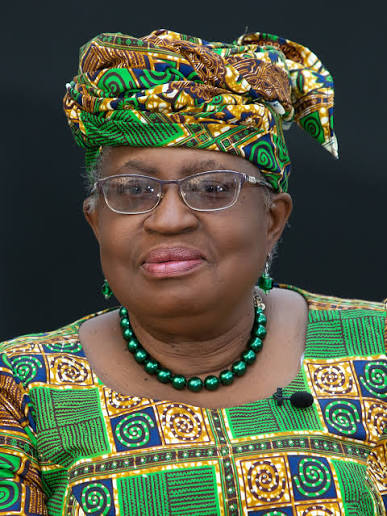
The Director-General of the World Trade Organisation, Dr Ngozi Okonjo-Iweala, has paid tribute to her mother, Prof. Kamene Okonjo, who died last Friday at the age of 96.
The former Minister of Finance described her late mother as a woman who lived a quality life until the end.
In a post on her official X handle on Sunday, Okonjo-Iweala thanked friends and followers for their messages of condolence and support to her family.
She wrote, “Today, I have been overwhelmed with messages of condolences and tributes to my wonderful mother. I just want to thank all my friends and followers and let you know how appreciative my entire family and I are of your support.
“My mother lived a quality life till the end and we are very grateful we had her for so long. May her soul rest in perfect peace.”
The 96-year-old was the matriarch of the Umu Obi Obahai Royal Family and mother of the Obi of Ogwashi-Uku, Obi Ifechukwude Okonjo II.
She was also the wife of the immediate past traditional ruler of Ogwashi-Uku, Delta State, late Obi (Prof.) Chukwuka Okonjo, with whom she shared 66 years of marriage.
Her death was announced in a statement issued on Sunday by Palace Secretary of Ogwashi-Uku, Ifeakanachukwu Emordi, on behalf of the royal family.
The statement described the late Okonjo as an extraordinary woman whose life was defined by intellectual brilliance, humility, compassion, dignity and an unwavering commitment to the advancement of humanity.
“An internationally recognised and foremost sociologist, Prof. Kamene Okonjo distinguished herself through her outstanding academic accomplishments, intellectual contributions and lifelong advocacy for women’s rights and empowerment.
“She was a woman of exceptional intellect, yet possessed a rare gentleness of spirit, humility and grace that endeared her to everyone privileged to know her.
“Her achievements transcended the boundaries of Ogwashi-Uku and Nigeria, earning her admiration and respect within academic and intellectual circles internationally,” the statement read.
The statement further described her as a devoted mother, grandmother, great-grandmother and a cherished pillar of the royal family.
“Her wisdom, kindness, quiet strength and exemplary character will remain an enduring inspiration to generations yet unborn,” it said.
The family added, “While we mourn her passing, we celebrate a life exceptionally well lived.”
It noted that at 96, the late scholar left behind an enduring legacy of scholarship, service, family values and advocacy for the dignity and advancement of women.
“We take comfort in our Christian faith and the assurance that she is resting peacefully with the Lord, having completed her earthly journey with grace and distinction,” the statement said.
The Umu Obi Obahai family extended its condolences to the Obi of Ogwashi-Uku and the deceased’s children, including Ngozi Okonjo-Iweala, Dr Njideka Okonjo-Udochi, Onyema Okonjo and Chichi Okonjo, as well as their spouses, grandchildren, great-grandchildren and the wider Okonjo royal family.
The family also called on the people of Ogwashi-Uku to join in celebrating the life and enduring legacy of the late scholar and matriarch, whose contributions to humanity, it said, would never be forgotten.




Delta Police Arrest School Bus Driver over Minor’s Kidnapping, Assault
ShareA 28-year-old school bus driver, Onome Ughagha, has been arrested by operatives of the Delta State Police Command for allegedly...


Wife Stabs Husband Over Phone in Bauchi
ShareAn 18-year-old woman, Fatima Dalha, has allegedly stabbed her 30-year-old husband in the stomach in Lirr Bajar, Dass Local Government...


Can the Media Announce Election Results Before INEC’s Official Declaration?
ShareBy Samson Itodo To address this issue, it is important to understand the election results management process. Election results are...

Okonjo-Iweala Pays Tribute to Late Mother
ShareThe Director-General of the World Trade Organisation, Dr Ngozi Okonjo-Iweala, has paid tribute to her mother, Prof. Kamene Okonjo, who...

Tinubu blames Opposition for Nigeria’s Challenges
SharePresident Bola Tinubu on Saturday blamed opposition leaders for Nigeria’s hunger and poverty, accusing them of creating problems they now...


Nearly 83 Per Cent Uneducated Nigerians Live in Poverty – W’Bank
Share Nearly 83 per cent of Nigerians without formal education are living in poverty, according to the World Bank, highlighting...

Ebola: NCDC Tracks 53 Contacts, Offers Each N100,000 Weekly
ShareBy Elijah Oguche, Abuja The Nigeria Centre for Disease Control and Prevention (NCDC) has stepped up efforts to contain the...

2027: Atiku Challenges Tinubu Over Alleged Ministerial Bribes
ShareBy Elijah Oguche, Abuja Former Vice President Atiku Abubakar has challenged President Bola Tinubu to identify those who allegedly collected...


Motorists Storm Minna NNPC Mega Station, Threaten Mass Protest Over CNG Scarcity
Share From Dan Amasingha, Minna. Angry vehicle owners on Sunday staged a peaceful protest at the NNPC Mega Station along...


Lokoja CMD Seeks More Investments in Healthcare Delivery
ShareFrom Joseph Amedu, Lokoja The Chief Medical Director of the Federal Teaching Hospital, Lokoja, Professor Abdulrahman Shehu, has called for...