
Foreign News
Worshippers Stop Axe Wielding Attacker in Canada


Worshippers at a Canada mosque have confronted and restrained a man who was allegedly wielding an axe and attacked them with bear spray during Saturday morning prayers, police say.
One worshipper knocked the axe from the man’s hands, and held him down until police arrived, local media reports.
A 24-year-old man was arrested at the scene in the suburb of Mississauga, and he has since been charged.
Some congregants had minor injuries from the bear spray, the mosque’s imam said.
One of the worshippers said the experience was “terrifying” and described hearing a scream before turning around to see a man holding an axe and using bear spray – similar to pepper spray – against three people.
“By the time he was spraying, the people in the first row realized something was going on and one of the young men turned around and knocked away the axe before he had a chance to use it,” Noorani Sairally told Canadian newspaper The Globe and Mail.
The young man then held the alleged assailant down until police arrived, the witness said.
“Before he could inflict harm on any worshippers, several congregants bravely were able to stop him in his tracks,” Imam Ibrahim Hindy said in a statement, describing the moment the attacker entered the site.
“Our community will never be broken and we refuse to be intimated,” he added.
Police have named the man they arrested as Mohammad Moiz Omar, and charged him with six offences including assault with a weapon and administering a noxious substance with intent to endang
Following initial uncertainty over a possible motive, investigators now say they believe the attack was a “hate-motivated incident.”
Prime Minister Justin Trudeau was one of a number of high-profile Canadian public figures to condemn the attack, which he described as “incredibly disturbing” and applauded the courage of the worshippers at the mosque.
Canada’s Muslim community has been targeted in a number of deadly attacks, including in 2017 when a shooting at a Quebec City mosque killed six people and left another eight wounded.
And last year, four members of the same Muslim family were killed after a vehicle hit them in London, Ontario, which was described by police as a deliberate Islamophobic attack.





Marcus Trescothick has insisted he wants to continue working with England’s Test team even though Mike Hussey has revealed an approach by incoming head coach Stephen Fleming to effectively replace him.
Trescothick has been a member of England’s backroom staff since 2021 and is currently leading the Test side on an interim basis ahead of Fleming’s arrival.
Former opening batsman Trescothick and returning captain Joe Root oversaw an innings and 103-run thrashing of Pakistan in the first Test at Headingley on Friday as the hosts went 1-0 up in a three-match series.
Former Australia international Hussey has said he is considering an offer to work as England’s Test batting coach, effectively Trescothick’s role, after being approached by Fleming, his former boss at Chennai Super Kings.
“I’d love to carry on, of course,” said Trescothick.
The 50-year-old, a member of England’s 2005 Ashes-winning team, added: “I’ve a huge amount of respect for Stephen and what he’s done in the game, he was a fantastic captain and leader, and has done a brilliant job doing what he’s done as a coach.
“It’s really not in my job (description) or position to judge that. We’ll wait until we get the tap on the shoulder.”
Iranian President Masoud Pezeshkian defended a recent memorandum of understanding as the best way for the country to move beyond what he described as a situation of “neither war nor peace.”
In a speech published by state-run IRNA early on Sunday, he said members of Iran’s Supreme National Security Council believed the memorandum represented the best possible agreement based on what he described as dignity, wisdom and the national interest.
“There is not a single provision in this agreement that amounts to capitulation,” Pezeshkian said. “The supreme leader sets the policies, and we will follow that path.
”The deal known as the Memorandum of Understanding that US President Donald Trump signed in June set an ambitious 60-day deadline for ending the war with Iran and reaching an accord on its nuclear program. That period ended last week, but the two sides remain far apart, with no signs of compromise on the crucial issue of reopening the Strait of Hormuz, vital to global shipping.
Pezeshkian also linked the agreement to Iran’s economic prospects, saying the country could not attract investment in this stalled phase.
“Capital and money are extremely sensitive to risk,” he said. “We have to remove this risk from the country.”
Nearly six months into the war with the United States and Israel, the Iranian economy is suffering under sanctions and a naval blockade.
Pezeshkian acknowledged that his country’s citizens face “many problems,” after the United States launched a new wave of sanctions seeking to further isolate its economy.
“I understand we have many problems in society right now. We are trying to prevent these as much as we can,” Pezeshkian said.
Pezeshkian said that, thanks to Trump, Iran was “in a full-scale economic, military and security war.”
“He says he is imposing the most crushing and terrifying sanctions on Iran,” Pezeshkian said.
Meanwhile, the hard-line new leader of Iran’s Supreme National Security Council warned Tehran’s neighbors against joining the new US effort to hurt Iran’s economy.
“If (Trump) wants to do something, we will retaliate in a seismic manner,” Mohsen Rezaei said in an interview with the state broadcaster that aired Saturday.
Rezaei was named this month as part of senior appointments widely seen as hardening Tehran’s political and military stance. His interview with IRIB is his most extensive public statement since then.
Rezaei said Iran would target oil-shipping routes out of the Persian Gulf — alternatives to the Strait of Hormuz — if neighbors join what he described as the economic war against Iran.
Trump in the past week has vowed to increase Iran’s pain by imposing an “unprecedented” level of economic warfare and isolation. Iran has lived under sanctions for years.
Foreign News
Iran FM, Pakistan Military Chief Discuss Regional Devts as US Eyes New Tehran Sanctions
Iran’s Foreign Minister Abbas Araghchi and Pakistan’s defense forces chief, Field Marshal Asim Munir, discussed regional developments and efforts to advance diplomatic solutions, Iranian state media reported on Sunday, as Washington plans to announce new sanctions targeting Tehran.
After nearly six months of war since the US and Israel launched airstrikes against Iran on February 28, the sides are not firing at each other but also showing no sign of pursuing peace talks.
Oil shipments are at a virtual standstill in the Strait of Hormuz, with Tehran threatening to strike any unauthorized oil tankers that try to transit the vital waterway, and Iran’s economy is already under immense pressure from sanctions.
Pakistan, which helped broker an interim US-Iran peace deal in June, has been engaged with the leaderships of the US and Iran in efforts to broker peace between the two countries since their conflict broke out in February this year.
“During the telephone conversation, both sides reviewed the latest regional developments and discussed various dimensions of the current situation,” Iran’s state-run IRNA new agency reported, following telephonic conversation between FM Araghchi and Field Marshal Munir.
“The two sides also exchanged views on diplomatic trends, ongoing efforts to advance political and diplomatic solutions, and ways to enhance bilateral consultations and cooperation.”
This is the second time Araghchi has spoken to Munir, who emerged as a key figure in US-Iran negotiations, about regional developments in less than a week.
The development comes after US Treasury Secretary Scott Bessent threatened “the toughest sanctions in history” on Iran. He has also urged cooperation with Washington by China, which buys more than 80 percent of Iran’s shipped oil, according to 2025 data from analytics firm Kpler. Beijing has urged diplomacy.
Iran’s Foreign Ministry spokesperson, Esmaeil Baghaei, said on Saturday the imminent US announcement of new economic sanctions was an “assertion of extraterritorial sovereignty over every independent member state of the United Nations.”
The US-Iran war has driven oil prices higher and created inflationary pressures, especially for countries like Pakistan who heavily depend on the Middle East for their fuel needs. Iran has frequently attacked its neighbors in its Gulf region since the war began, firing missiles and carrying out drone attacks the UAE, Saudi Arabia, Kuwait, Bahrain, Qatar and other countries.
Islamabad has repeatedly called for diplomacy to resolve the conflict and said last week it was making “all-out efforts” through direct and indirect channels to bring Washington and Tehran back to the negotiating table.


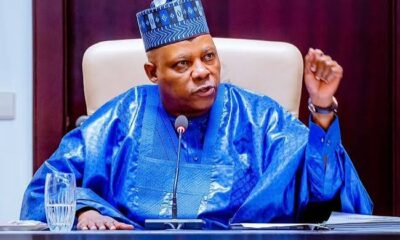

A Birthday Tribute to His Excellency Senator Kashim Shettima, Vice President of The Federal Republic Of Nigeria
ShareYour Excellency, On behalf of the National Executive Council, National Executive Committee and the entire membership of the Alumni Association...
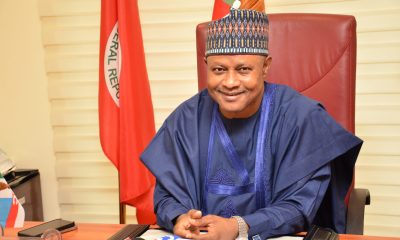

Tax Reforms: Kaduna IGR Hits N10bn Monthly — Uba Sani
ShareFrom Agbo Emmanuel, Kaduna Kaduna State Governor, Uba Sani, has said recent tax reforms have significantly improved Nigeria’s revenue mobilisation,...


ADC Inaugurates Reconciliation Committee, Seeks Unity Ahead 2027
ShareThe African Democratic Congress (ADC) has inaugurated a national reconciliation and peace committee to strengthen unity, rebuild trust and resolve...
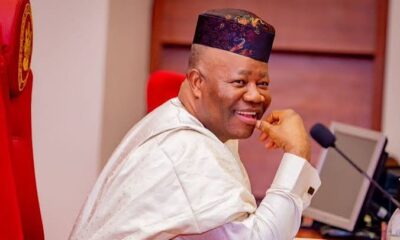

Akpabio Celebrates Shettima at 60
SharePresident of the Senate, Godswill Akpabio has felicitated Vice President Kashim Shettima on the occasion of his 60th birthday. Akpabio...


2027 Election: CAN Warns Politicians, Supporters to Leave ‘Jesus’ out of Political Struggles
ShareBy Laide Akinboade, Abuja The Christian Association of Nigeria (CAN), on Wednesday, warned politicians, and their supporters against dragging the...

NSCDC Arrests Two Armed Suspects for Terrorizing Legitimate Miners in Cross River
Share From Ene Asuquo, Calabar The Nigeria Security and Civil Defence Corps (NSCDC), Cross River State has disclosed that the command...
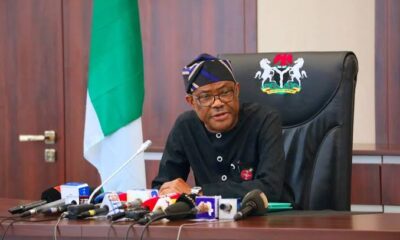

2027: Wike Raises the Alarm Over APC Govs, Backs Tinubu
ShareBy Laide Akinboade, Abuja The Federal Capital Territory (FCT) Minister, Nyesom Wike, has accused some governors of the All Progressives...
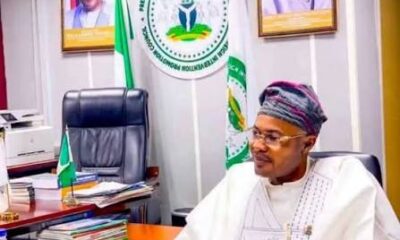

PFIPC Scandal: Reps Trace 58 Accounts to ‘Fake Agency’
ShareBy David Torough, Abuja The House of Representatives ad hoc committee investigating the purported Presidential Foreign Investment Promotion Council (PFIPC)...


10 Years. N1.2bn. 40+ Tertiary Institutions by 2026. OPay Is Here to Stay
ShareFor a Nigerian student, a scholarship can mean more than money. It can mean staying in school when a family...


NCS Sets Physical Screening for 2024/2025 Recruitment, Warns Candidates Against Absence
ShareBy Tambaya Julius, Abuja The Nigeria Customs Service (NCS) has fixed physical screening and documentation for successful candidates shortlisted in...