
Foreign News
Pope Francis Arrives in Canada on First Stop of Week-long Trip

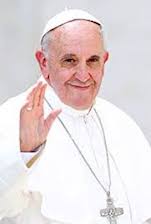
Pope Francis on Sunday arrived in Canada to apologise to residential school survivors on their lands for the Catholic Church’s operation of residential schools throughout the country.
The Pope will make three stops in the course of his five-day tour of Edmonton, Alberta, the province that hosts the most residential schools in Canada.
The Pontiff will also stopover in Quebec City, Montreal, for “an eastern hub”; and Iqaluit, Nunavut in the Canadian Arctic Archipelago, home to the largest congregation of Inuit people in Canada.
According to reports, Francis kissed the hand of a residential school survivor as he was greeted at the Edmonton, Alberta, airport by Indigenous representatives, Canadian Prime Minister Justin Trudeau and Mary Simon, an Inuk who is Canada’s first Indigenous governor general.
The gesture set the tone of what Francis has said is a “penitential pilgrimage” to atone for the role of Catholic missionaries in the forced assimilation of generations of native children.
Francis had no official events scheduled Sunday, giving him time to rest before his meeting Monday with survivors near the site of a former residential school in Maskwacis, where he is expected to pray at a cemetery and apologise.
Francis exited the back of his plane with the help of an ambulift, given his strained knee ligaments have forced him to use a wheelchair.
The simple welcome ceremony took place in airport hangar, where Indigenous drums and chanting broke the silence. As Trudeau and Simon sat beside Francis, a succession of Indigenous leaders and elders greeted the pope and exchanged gifts.
At one point, Francis kissed the hand of residential school survivor Elder Alma Desjarlais of the Frog Lake First Nations as she was introduced to him.
“Right now, many of our people are skeptical and they are hurt,” said Grand Chief George Arcand Jr. of the Confederacy of Treaty Six First Nations, who greeted the Pope.
“Yet he expressed hope that with the papal apology, “We could begin our journey of healing .. and change the way things have been for our people for many, many years.”
Indigenous groups are seeking more than just words, though, as they press for access to church archives to learn the fate of children who never returned home from the residential schools.
They also want justice for the abusers, financial reparations and the return of Indigenous artifacts held by the Vatican Museums.
Francis’ week-long trip — which will take him to Edmonton; Quebec City and finally Iqaluit, Nunavut, in the far north — follows meetings he held in the spring at the Vatican with delegations from the First Nations, Metis and Inuit.
Those meetings culminated with a historic April 1 apology for the “deplorable” abuses committed by some Catholic missionaries in residential schools.
The Canadian government has admitted that physical and sexual abuse were rampant in the state-funded Christian schools that operated from the 19th century to the 1970s.
Some 150,000 Indigenous children were taken from their families and forced to attend in an effort to isolate them from the influence of their homes, Native languages and cultures and assimilate them into Canada’s Christian society.
Then-Prime Minister Stephen Harper issued a formal apology over the residential schools in 2008.
As part of a lawsuit settlement involving the government, churches and approximately 90,000 surviving students, Canada paid reparations that amounted to billions of dollars being transferred to Indigenous communities.
Canada’s Catholic Church says its dioceses and religious orders have provided more than 50 million dollars in cash and in-kind contributions, and hope to add 30 million dollars more over the next five years. (NAN)



Marcus Trescothick has insisted he wants to continue working with England’s Test team even though Mike Hussey has revealed an approach by incoming head coach Stephen Fleming to effectively replace him.
Trescothick has been a member of England’s backroom staff since 2021 and is currently leading the Test side on an interim basis ahead of Fleming’s arrival.
Former opening batsman Trescothick and returning captain Joe Root oversaw an innings and 103-run thrashing of Pakistan in the first Test at Headingley on Friday as the hosts went 1-0 up in a three-match series.
Former Australia international Hussey has said he is considering an offer to work as England’s Test batting coach, effectively Trescothick’s role, after being approached by Fleming, his former boss at Chennai Super Kings.
“I’d love to carry on, of course,” said Trescothick.
The 50-year-old, a member of England’s 2005 Ashes-winning team, added: “I’ve a huge amount of respect for Stephen and what he’s done in the game, he was a fantastic captain and leader, and has done a brilliant job doing what he’s done as a coach.
“It’s really not in my job (description) or position to judge that. We’ll wait until we get the tap on the shoulder.”
Iranian President Masoud Pezeshkian defended a recent memorandum of understanding as the best way for the country to move beyond what he described as a situation of “neither war nor peace.”
In a speech published by state-run IRNA early on Sunday, he said members of Iran’s Supreme National Security Council believed the memorandum represented the best possible agreement based on what he described as dignity, wisdom and the national interest.
“There is not a single provision in this agreement that amounts to capitulation,” Pezeshkian said. “The supreme leader sets the policies, and we will follow that path.
”The deal known as the Memorandum of Understanding that US President Donald Trump signed in June set an ambitious 60-day deadline for ending the war with Iran and reaching an accord on its nuclear program. That period ended last week, but the two sides remain far apart, with no signs of compromise on the crucial issue of reopening the Strait of Hormuz, vital to global shipping.
Pezeshkian also linked the agreement to Iran’s economic prospects, saying the country could not attract investment in this stalled phase.
“Capital and money are extremely sensitive to risk,” he said. “We have to remove this risk from the country.”
Nearly six months into the war with the United States and Israel, the Iranian economy is suffering under sanctions and a naval blockade.
Pezeshkian acknowledged that his country’s citizens face “many problems,” after the United States launched a new wave of sanctions seeking to further isolate its economy.
“I understand we have many problems in society right now. We are trying to prevent these as much as we can,” Pezeshkian said.
Pezeshkian said that, thanks to Trump, Iran was “in a full-scale economic, military and security war.”
“He says he is imposing the most crushing and terrifying sanctions on Iran,” Pezeshkian said.
Meanwhile, the hard-line new leader of Iran’s Supreme National Security Council warned Tehran’s neighbors against joining the new US effort to hurt Iran’s economy.
“If (Trump) wants to do something, we will retaliate in a seismic manner,” Mohsen Rezaei said in an interview with the state broadcaster that aired Saturday.
Rezaei was named this month as part of senior appointments widely seen as hardening Tehran’s political and military stance. His interview with IRIB is his most extensive public statement since then.
Rezaei said Iran would target oil-shipping routes out of the Persian Gulf — alternatives to the Strait of Hormuz — if neighbors join what he described as the economic war against Iran.
Trump in the past week has vowed to increase Iran’s pain by imposing an “unprecedented” level of economic warfare and isolation. Iran has lived under sanctions for years.
Foreign News
Iran FM, Pakistan Military Chief Discuss Regional Devts as US Eyes New Tehran Sanctions
Iran’s Foreign Minister Abbas Araghchi and Pakistan’s defense forces chief, Field Marshal Asim Munir, discussed regional developments and efforts to advance diplomatic solutions, Iranian state media reported on Sunday, as Washington plans to announce new sanctions targeting Tehran.
After nearly six months of war since the US and Israel launched airstrikes against Iran on February 28, the sides are not firing at each other but also showing no sign of pursuing peace talks.
Oil shipments are at a virtual standstill in the Strait of Hormuz, with Tehran threatening to strike any unauthorized oil tankers that try to transit the vital waterway, and Iran’s economy is already under immense pressure from sanctions.
Pakistan, which helped broker an interim US-Iran peace deal in June, has been engaged with the leaderships of the US and Iran in efforts to broker peace between the two countries since their conflict broke out in February this year.
“During the telephone conversation, both sides reviewed the latest regional developments and discussed various dimensions of the current situation,” Iran’s state-run IRNA new agency reported, following telephonic conversation between FM Araghchi and Field Marshal Munir.
“The two sides also exchanged views on diplomatic trends, ongoing efforts to advance political and diplomatic solutions, and ways to enhance bilateral consultations and cooperation.”
This is the second time Araghchi has spoken to Munir, who emerged as a key figure in US-Iran negotiations, about regional developments in less than a week.
The development comes after US Treasury Secretary Scott Bessent threatened “the toughest sanctions in history” on Iran. He has also urged cooperation with Washington by China, which buys more than 80 percent of Iran’s shipped oil, according to 2025 data from analytics firm Kpler. Beijing has urged diplomacy.
Iran’s Foreign Ministry spokesperson, Esmaeil Baghaei, said on Saturday the imminent US announcement of new economic sanctions was an “assertion of extraterritorial sovereignty over every independent member state of the United Nations.”
The US-Iran war has driven oil prices higher and created inflationary pressures, especially for countries like Pakistan who heavily depend on the Middle East for their fuel needs. Iran has frequently attacked its neighbors in its Gulf region since the war began, firing missiles and carrying out drone attacks the UAE, Saudi Arabia, Kuwait, Bahrain, Qatar and other countries.
Islamabad has repeatedly called for diplomacy to resolve the conflict and said last week it was making “all-out efforts” through direct and indirect channels to bring Washington and Tehran back to the negotiating table.


Nigeria Pledges Stronger Ties with Sao Tome on Maritime Security
ShareBy Tony Obiechina, Abuja The Federal Government has reaffirmed Nigeria’s commitment to strengthening bilateral relations with São Tomé and Príncipe,...
NAICOM Launches Programme to Strengthen Insurance Sector
ShareBy Tony Obiechina, Abuja The National Insurance Commission (NAICOM) has officially launched the Insurance Sector Strengthening Programme (ISSP), a new...
NESG Convenes Pre-Summit Dialogue on Bridging the Gap from Learning to Earning
ShareBy Tony Obiechina, Abuja The Nigerian Economic Summit Group (NESG), in collaboration with the Federal Ministry of Budget and Economic...
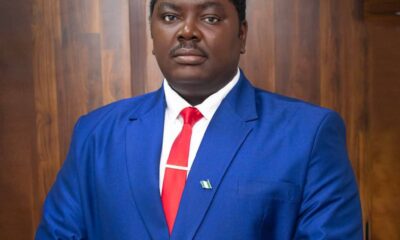

Enugu Govt Names Henry Okeke to Polytechnic Iwollo Governing Council
ShareBy Raphael Atuu, Abuja The Enugu State Government has approved the immediate appointment of Barr. Henry Okeke as a member...
NCS, Niger Customs Team Up to Revive Kamba Border Economy
ShareBy Tambaya Julius, Abuja The Nigeria Customs Service (NCS), Kebbi Area Command, has commenced fresh efforts to revive legitimate cross-border...
Equipping Educators for Excellence: Preparing for a New Academic Session
ShareBy Tolulope Sobiye Ogunbowale A new academic session is knocking at the door. But before the first lesson is taught,...
NFF: Why Nigeria Must Follow the Rules, not Sentiments
ShareBy Ken Ekwueme On Tuesday, September 1, 2026, the world football governing body FIFA formally accepted the resignation of Nigeria...


NOA Initiates Five-month Voter Education Exercise in Bauchi
ShareThe National Orientation Agency (NOA) in Bauchi State, says it will conduct a five-month voter education exercise to mobilise participation...


Sanwo-Olu Urges Media to Combat Misinformation Ahead 2027 Elections
ShareLagos State Governor, Babajide Sanwo-Olu has urged the media to uphold professionalism, verify information and combat misinformation ahead of the...


I Think I’d Have Won BBNaija Season 11 – Neche Speaks on Exit
ShareFormer Big Brother Naija housemate Neche said she believes she could have won the show if she had stayed, citing...